Hogboon
-
Posts
50 -
Joined
-
Last visited
Everything posted by Hogboon
-

Would a bigger pump compensate for small pipes?
Hogboon replied to Hogboon's topic in Air Source Heat Pumps (ASHP)
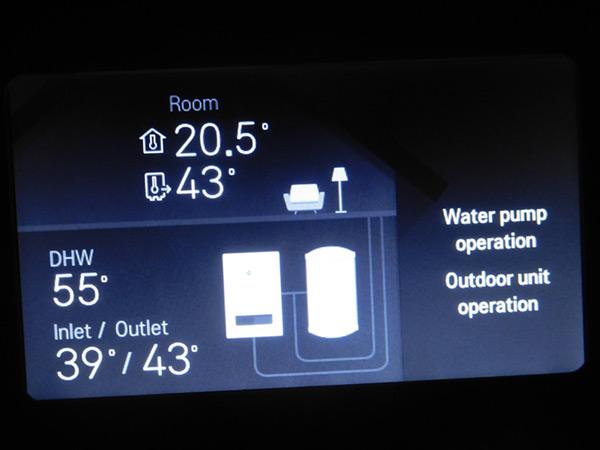
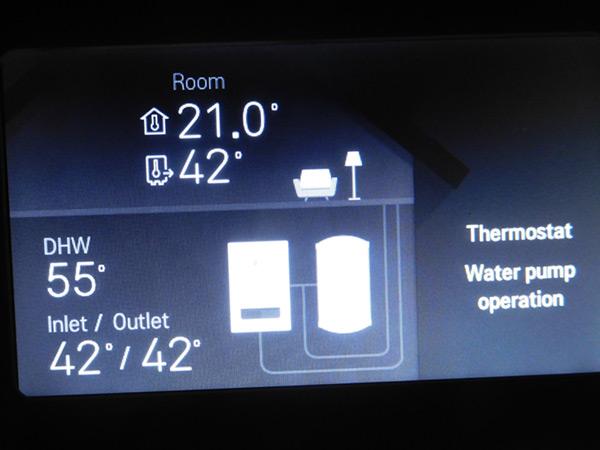
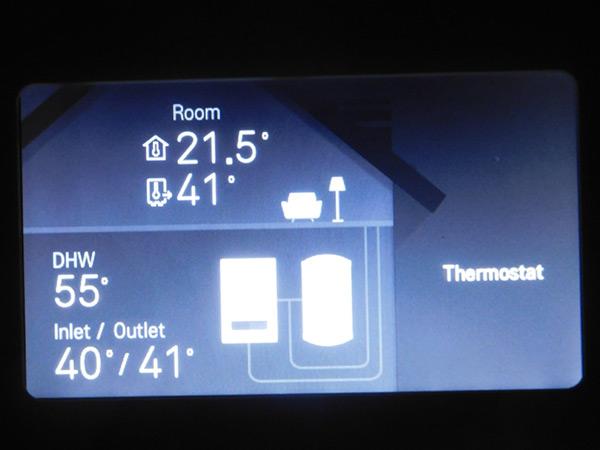
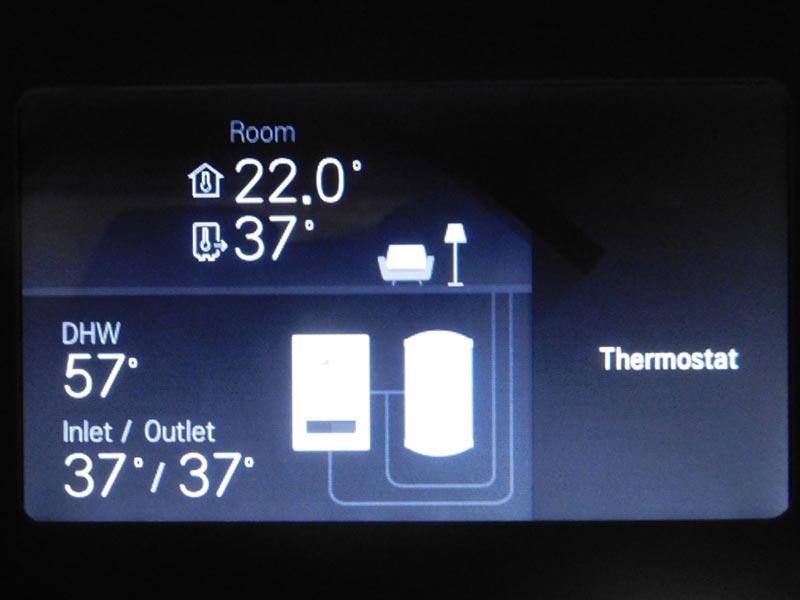
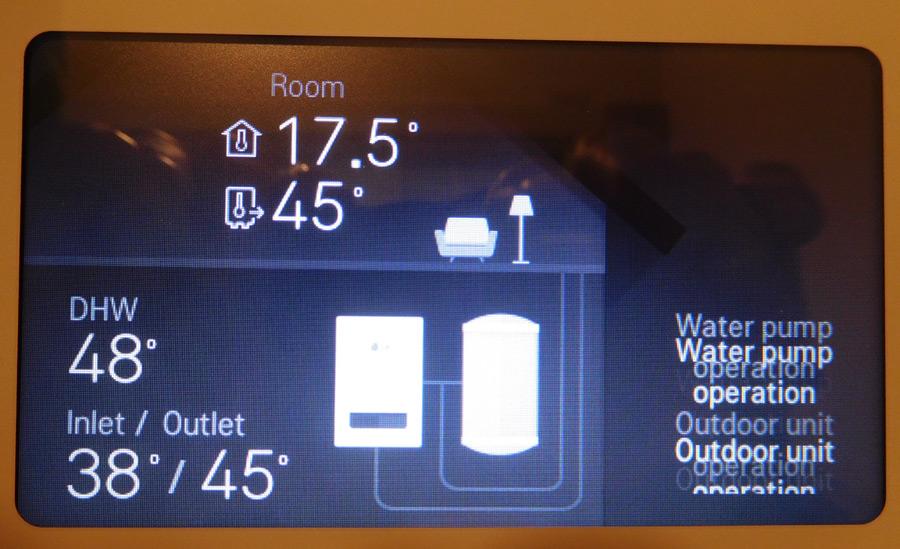
Only just seen your last message about the Hive setting J1mbo, so the following is as per the original set-up: target temp of 20ºC required starting at 07:00hrs. Here's the data. 17 Nov 2021 00’ 30’ 07:00 18.4º 18.3º 08:00 18.8º 19.3º 09:00 19.7º 20.0º Outdoor temp was about the same as for the original data set, about 10ºC at a guess. Household usage was also about the same but whereas no shower etc was run during house heating the water heating was already in progress at 07:00. And I confirm that the house temperature appeared to go backwards during the first half hour. However, today's performance seems to me a considerable improvement and I await with interest the promised cold spell! Below are 4 images of the controller; the first was taken at 07:00hrs, second and third at 08:00 and 09:00 and the last about 09:30 once the target temperature had been reached and the system powered down. I'm not sure why the room temps. according to the LG controller [images above] are shown as higher than the Hive temperatures [noted in the table] unless it is because the LG Controller has its own temp sensor in which case the difference is probably accounted for by the controller being in a smallish 'cupboard' in which the hot water tank is located and thus a degree or so warmer than the bulk of the house.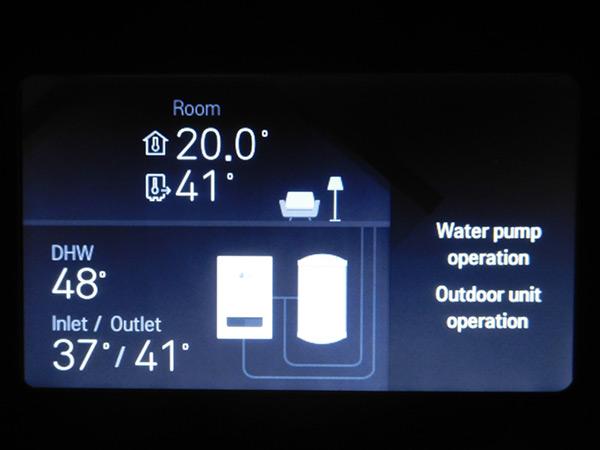
-
Would a bigger pump compensate for small pipes?
Hogboon replied to Hogboon's topic in Air Source Heat Pumps (ASHP)
I adjusted some of the settings as per your suggestions as follows; Outdoor temp for auto mode: min -10º max 15º changed to -1º/15º Indoor temp for auto mode: min 16º max 21º changed to 18º/23º LWT for auto mode: min 20º max 50º changed to 30º/50º The house temperature at the time, according to the Hive, was 19.9. Having made the changes the system fired up and I took an image [below] of the LG controller. Moments later the system had evidently executed whatever it had been set to accomplish as stopped and I took another image. The Hive showed the house temperature = 20º The first 'real' test will be to morrow a.m. when I will note times and temperatures as per my initial post for comparative purposes. Thanks again for all the help.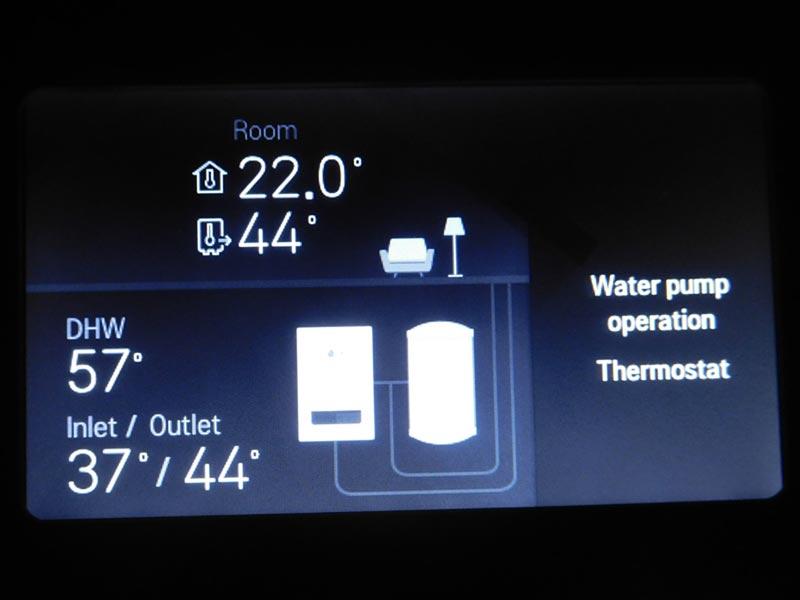
-
Would a bigger pump compensate for small pipes?
Hogboon replied to Hogboon's topic in Air Source Heat Pumps (ASHP)
Well, having spent a few more fruitful minutes in the broom cupboard, the current settings for your suggestions are: Outdoor temp for auto mode: min -10º max 15º Indoor temp for auto mode: min 16º max 21º LWT for auto mode: min 20º max 50º These are obviously different from your suggested values, but what I have no understanding of is whether the differences are significant or only minor? -
Would a bigger pump compensate for small pipes?
Hogboon replied to Hogboon's topic in Air Source Heat Pumps (ASHP)
Many thanks J1mbo for the homework and advice. I have every hope that tomorrow some of it will make sense! but right now I am the wrong side of a bottle to make head or tail of anything much. One thing I find very perplexing is just how complicated and poorly understood [or in my case not understood at all] is the efficient configuration and running of heatpumps. And yet they are going to be needed literally in their millions. Surely manufacturers have a duty to get the job right? and make what is required and what these machines are actually doing more transparent. Shan't drone on now, but thanks again and I'll let you know what if any progress I make. -
Would a bigger pump compensate for small pipes?
Hogboon replied to Hogboon's topic in Air Source Heat Pumps (ASHP)
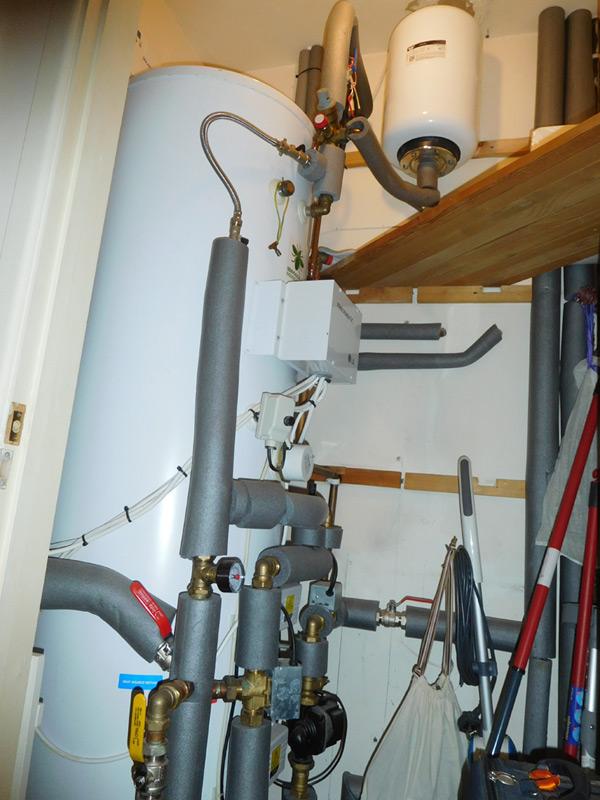
My Installer settings differ somewhat from those in the manual you sent. For example the Pump Frequency settings (RPM) does not appear at all as far as I can see on my control panel whereas in the manual it is immediately after CN_CC. So apart from confirming that the Temp. sensor selection = WATER I don't seem to have any of the info you request. Here, in case it helps, are the menu entries from my controller. 3 mins. delay Select temp. sensor Dry contact mode Central control address Pump test run Air heating set temp Water heating set temp DHW set temp Screed drying Outdoor temp for auto mode Indoor temp for auto mode LWT for auto mode Tank disinfect set 1 Tank disinfect set 2 Tank setting 1 Tank setting 2 Heater priority DHW time setting Use heating tank heater TH on/off var heating air TH on/off var heating water TH on/off var cooling air TH on/off var cooling water Heating temp set Cooling temp set Pump setting in heating Pump setting in cooling Forced operation CN_CC Pump capacity CN_EXT Anti freeze temp Add zone Use ext. pump 3rd party boiler Meter interface Pump prerun/overrun Pump op. time IDU op. time Zone RMC master/slave Energy state Data logging Password LG Therma V config I see nothing about seasonal settings anywhere, nor any ref to set points. As for your question about the immersion heater, how can I tell? [I am not a plumber ! which may or may not be reassuring.] But I have an image of the tank which may or may not enlighten you. Let me know if you need another or different shot. Many thanks for your help thus far.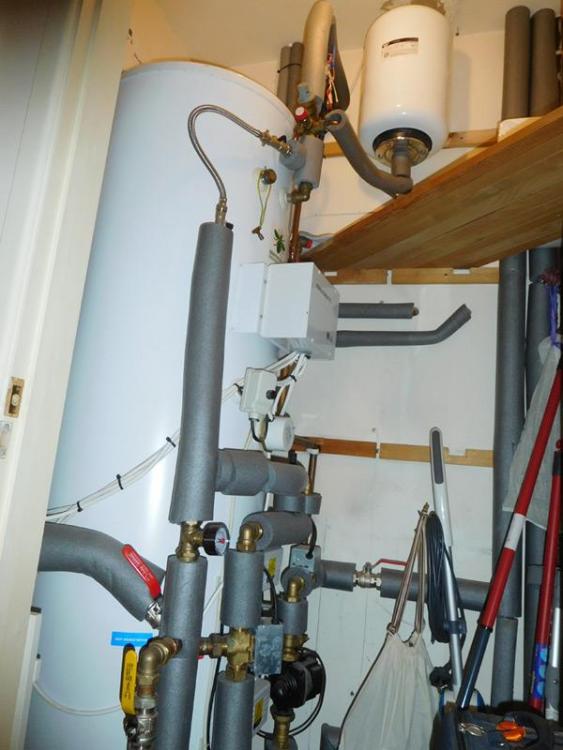
-
Would a bigger pump compensate for small pipes?
Hogboon replied to Hogboon's topic in Air Source Heat Pumps (ASHP)
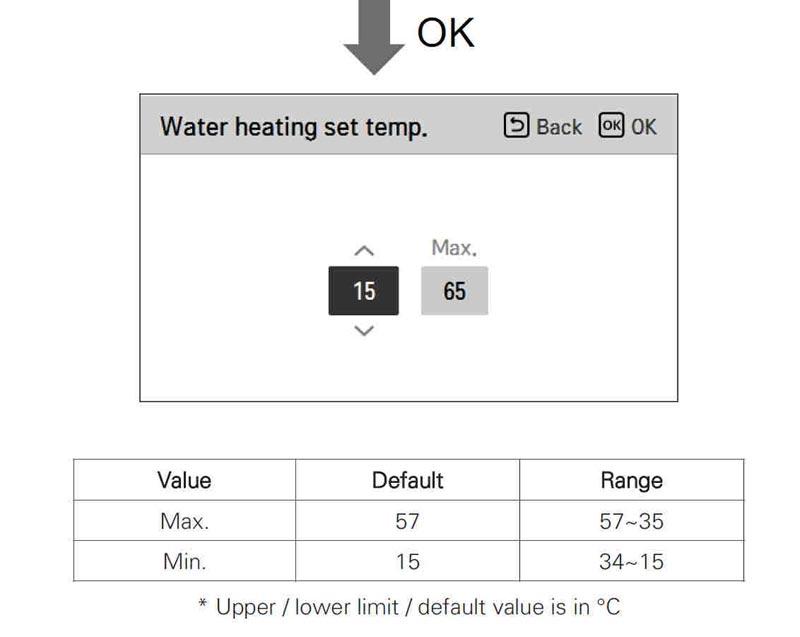
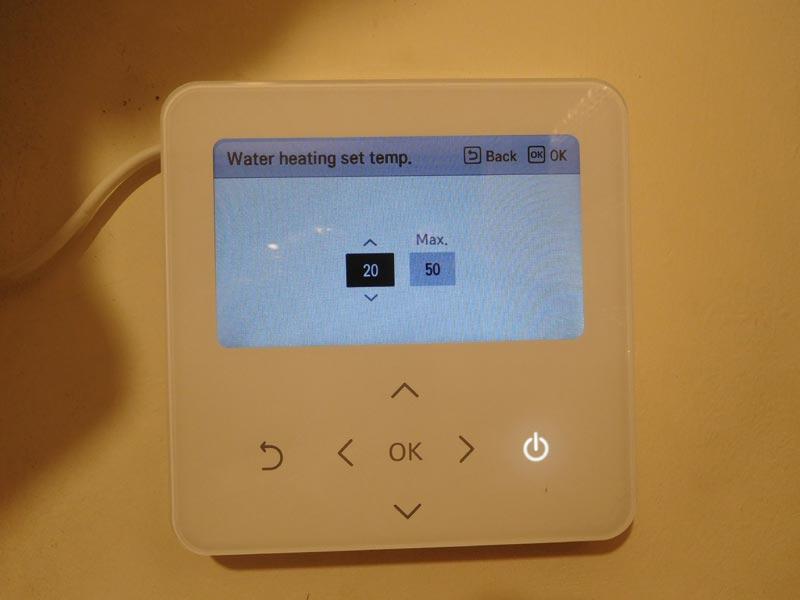
Rummaging over I am proceeding with caution, especially in view of the caveat [below] contained in the pdf manual you sent me - and, be it noted, not supplied to me by either LG or the installer. "...It must be set by the installation specialist with the installation license, and if it is installed or changed without installation license, all problems caused will be the responsibility of the installer, and may void the LG warrenty" Your brought my attention in particular to page 99 [INSTALLER > Water Heating set temp] as being possibly relevant to my problem. Page 99 has an image of the LG Control panel with min/max temperatures below in a table. How is the max temperature of 65 set in the image whereas the range is stated as 57~35? As you correctly deduced, the installation here was based on flow temp of 50ºC. Here is an image of my controller of the [INSTALLER > Water Heating set temp] screen. Given that my 'problem' is the efficiency of this unit when the outside temperature is around freezing, should I alter either of the above? and if so to what value? I need at least 2 'cold' days to test. According to a recent comment on BBC WS we have 'Icelandic' weather on the way with forecast temps of -8º which should do nicely! so I would like to be ready with my finger on the trigger. Day 1 will be with current settings; day 2 would be with whatever alterations to the above are suggested. The required outcome will be raising and maintaining the temperature in the house to 20ºC. One other item caught my attention. On page 111 Heater priority • Heater priority : determine electric heater and DHW tank heater on and off. • Example : If Heater priority is set as ‘Main+Boost heater ON’, then electric heater and DHW tank heater are on and off according to control logic. If Heater priority is set as ‘Boost heater only ON’, then electric heater is never turned on and only DHW tank heater is on and off according to control logic. • In the installer setting list, heater priority category, and press [OK] button to move to the detail screen. Too much gobbledegook in there for me, but what I would like to prevent, if at all possible, is the immersion heater ever being used or 'on' unless I specifically turn it on with the one exception of the 'sanitising' procedure. Is that possible? Cheers for now.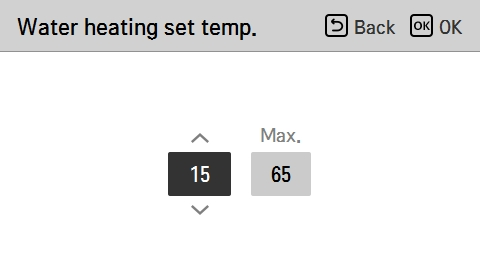
-
LG Therma V mono block Air Source Heat Pump
Hogboon replied to ProDave's topic in Air Source Heat Pumps (ASHP)
Ask LG, but my 14 kw Therma V was installed mid Feb this year and current software is same as yours. -
Would a bigger pump compensate for small pipes?
Hogboon replied to Hogboon's topic in Air Source Heat Pumps (ASHP)
Brilliant! Many thanks J1mbo. Password is the default software number displayed bottom right. [I suppose I might as well let the installer know while I'm at it!] I'll have a good old rummage and see what is what and take note, as you suggested, of anything I change. To conclude for the moment, am I right thinking that my brilliant idea of inserting a bigger circulation pump seems to have received a universal thumbs ? -
Would a bigger pump compensate for small pipes?
Hogboon replied to Hogboon's topic in Air Source Heat Pumps (ASHP)
J1mbo - after several readings I feel I have a slightly better grasp on some of what you have written. [Slow learner here etc.] I already have something called 'The Owner's and Installation Manual' which bears little relation to the manual whose link you sent. The latter looks much more like 'the bizniz.' My 'manual' consists of 16 pages of English text repeated [presumably] 34 other foreign languages, including some I have never heard of. Hands up who speaks Srpski [is this Serbian?] or Shqip ! Anyway, thanks for the grown-up's manual most of which is beyond my comprehension. The next problem is the password for the LG Remote Controller. In my case it is not 1001 nor any other obvious possibility so I have contacted the installer for my password. Meanwhile it remains very mild here so the heatpump has less to do than me. I have just had to cut the grass. In November! Your final comment... is a bit of a jaw-dropper. The original unit was inspected and tested by two senior engineers from LG. Assuming they were kept in the loop by the installer I wonder why LG did not point that out that? rather than sit idly by while the installer replaced the original unit with one nearly twice the size. One cynical answer might be "why should they care?" -
Would a bigger pump compensate for small pipes?
Hogboon replied to Hogboon's topic in Air Source Heat Pumps (ASHP)
Here are images of the LG 'remote controller' and the Hive thermostat at start-up this morning. JohnMo: Yes, three radiators with “output at flow (W)” = 316 were replaced with slightly larger ones with “output at flow (W)” = 433. I understand exactly the point you make in your last para. ProDave: I am not fussed by the temperature of the radiators; it is the overall ambient temperature in the house that interests me. My only way currently of assessing this is to note the temperature recorded on the Hive thermostat. When you say “I would start by turning the weather compensation function off” how would I do that? [Don’t bother answering that for the moment as I will plunge into the various screens in the LG Remote Controller later on and see if there is anything like ‘Weather Compensation: ON/OFF’] J1mbo: I think the original calcs were based on a flow temperature of 45º. As there is another sheet of similar calcs based on 55º with a line drawn through it I assume that whatever decisions were made were based on the 45º. But whether any of that was ‘correct’ at the time or now, bearing in mind the bloke behind the figures was apparently incompetent, I don’t know. As for how much oil we used pre heatpump, the short answer is ‘can’t remember’ but it would probably have been between 1000 and 1500 litres. Will see if I still have any receipts etc but I doubt it. And thanks for the installer’s manual. And I will try and digest your further suggestions about set points etc later on. Cheers for now as I have to take my wife to the station.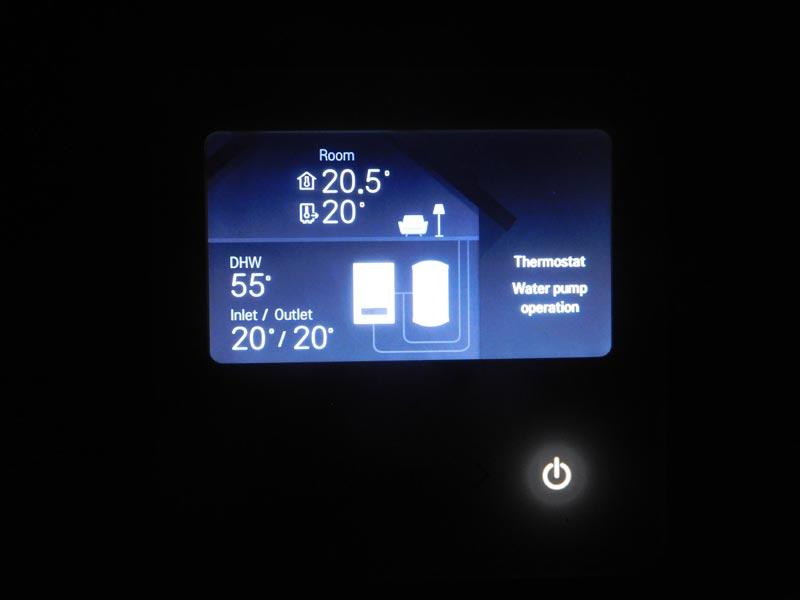
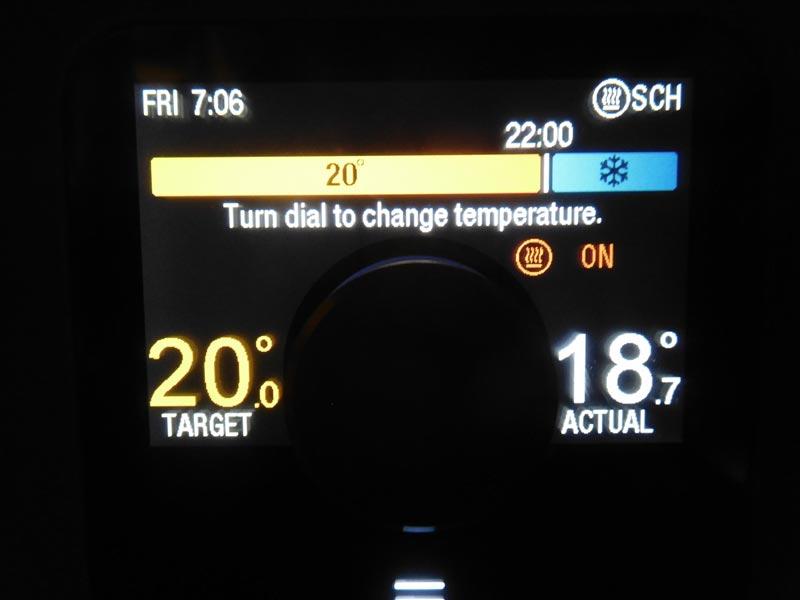
-
Would a bigger pump compensate for small pipes?
Hogboon replied to Hogboon's topic in Air Source Heat Pumps (ASHP)
Thanks ProDave [hello again!], J1mbo and Luke1 for your comments. Taking them in order; ProDave: I am not aware of any ‘tripping out’. Presumably if it did, I would be aware? The only info I get is from a more-or-less useless [as far as I am concerned!] LG ‘remote controller’. Image attached. However, when the image was taken the heating was already up to temp so I will take another snap tomorrow morning when it may show the in/out heating temps. Heating is by radiator only. J1mbo: no idea about the configuration you refer to. Where would I find that? I can attach the EPC etc but as this was prepared by the same man who was subsequently ‘struck off’ for incompetence it may have errors. Floor area is given as 176 m². “Current primary energy use per square metre of floor area = 165 kWh/m² per year” – but this presumably referred to the previous heat supplied from oil combi-boiler. Space heating demand: 16,184 kWh per year. Water heating demand: 3,537 kWh per year. Total heat loss seems to have been 21,729 but from the same document: Energy required to heat property = 16,184 kWh Energy required for hot water = 3,537 kWh MCS SCOP Heating 3.17 [whatever that is – but as it is highlighted in pink as is MCS SCOP Hot Water 1.75 I include it here.] As for total radiator output I have several tables etc none of which mean anything to me, but one gives ‘Heat Loss Calcs’ as Power [W] 4442; Energy HP [kWh] 21,729; Energy Bio [kWh] 20,956. Tot output from a table called ‘Emitter Log’ is 6,099 W. Does any of that answer any of your queries? Luke1: I am interested that you think the performance of my system is good! Perhaps it is and I am expecting too much but I am simply guided by the manufacturers claims etc which included that their pumps work efficiently down to -35º C. My experience to date is that even approaching 0º the heatpump struggles to extract sufficient heat to attain or maintain a temperature of 20ºC. The heating here is not under floor [if that is what you mean by UFH] but from radiators only. I am hazy about ‘weather compensated’ heating. What is it? Where/how can I tell if it applies? There is a Hive thermostat which controls the heating; hot water is controlled by the LG heatpump. “There is a chance that the system is set to run at lower flow temperatures over much longer periods.” How can I tell? Your final point is also interesting; “programming the heating to come on and off like a conventional boiler may not be appropriate” As far as I am concerned, what is appropriate is what I want, not what LG want. I got rid of a perfectly good oil boiler in order to do my bit for the climate etc. For the same reason [carbon footprint etc] I do not want the heatpump coming on in the middle of the night when air temperatures are generally lower than during the day and thus a heatpump must run for longer to extract the same total amount of heat as is possible at a warmer daytime temperature. Apart from it using more electricity [which in UK is still generated with a considerable input from fossil fuel – e.g. 75% according to BBC] it also wakes me up! and running during hours of darkness it is of course unable to make use of the PV panels installed to help power it. Many thanks again.
-
Around this time last year I posted about the poor performance of a recently installed LG heatpump at my home. The view at the time, both on this forum and from the installers, was that the heatpump’s 9kw capacity was insufficient to extract enough heat in cold weather to achieve a target temperature of 20º C in the house. ‘Cold’ at the time was hovering about freezing up to approx 5º C. The 9kw heatpump was installed on the recommendation of a surveyor to whom the installer at the time subcontracted such work. This surveyor subsequently had his licence revoked by STROMA, the regulating authority and the installer sees to such surveys ‘in house,’ but on advice from LG the 9kw heatpump was replaced by a 14kw heatpump. As the replacement was only installed last spring, the jury [me!] is still out as to its performance since the weather has been, and remains, so mild that the target temperature can almost be achieved by opening the windows! However, about a fortnight ago daytime temperatures dipped somewhat towards the norm [5-10ºC] for time of year here [Somerset] and during the few days it remained ‘chilly’ the heatpump seemed to me to struggle to attain the requisite temperature. Here is a record of a typical day when the heatpump is set to start [07:00hrs] till the house was 20ºC made on Nov 5th when the outdoor temperature was about 7ºC. 5 Nov 00’ 30’ 7 a.m. 17.6 17.9 8 a.m. 18.3 18.7 9 a.m. 19.0 19.3 Shower at 09:00 10 a.m. 19.2 19.2 11.a.m. 19.6 20.0 This struck me as unspectacular to say the least! Realistically there seem to me only 2 possible explanations. 1 LG heatpumps are incapable of performing efficiently at temperatures below 10ºC. 2 The pipework is too small. When the heatpump was installed the existing 10mm microbore was replaced with 15mm 3 Some other reason! A friend of mine recently renovated a 4 bedroom four-storey town house which was completely gutted. They installed a heatpump with 28mm pipework to the radiators. Since heatpumps operate by delivering a larger quantity of water heated to lower temperatures than that from say an oil boiler, presumably the larger the diameter of pipe the better – especially bearing in mind that doubling the diameter of pipe more than doubles the possible volume. A solution for me, if the poor performance is indeed the result of too small pipes, could be to replace the 15mm pipework with say 22mm but at present I reject that on grounds of cost and disruption. My question therefore is: might the same outcome be achieved by installing a larger circulation pump to increase flow? or could an additional pump be installed somewhere to achieve the same result? If the latter, where should the pump go? Should it ‘push’ or ‘pull’ or would that make no difference? i.e. push colder water towards the heatpump or pull heated water from the heatpump to the radiators. And how big a pump could I safely install to avoid damaging the joints etc in the pipework? The tank is a 210 litre unvented one made by World Heat Cylinders rated at 3 BAR max pressure. Would an image help? Finally, I should add that I emphatically do not intend to tackle any of this work myself ! If anything is done it will be by the original installer. Many thanks for any help or advice.
-
As far as I can see LG's website says absolutely nothing about SCoP at all [is that the same as SCoP?] - but then I am left wondering what the point of these figures is. I can, with a bit of imagination, work out how many kWh of electricity have been used but have no idea at all how many kWh of heat the LG pump has produced. There seems to be zero useful data that I can extract from LG’s ‘Remote Controller’. I have looked under ‘settings’ and in fact have searched through ALL the ‘Remote Controller’ menu options but can find not a hint of ‘data logging’ or any sort of performance statistics, so a general question is; Q1. Is such data recorded? And if so where/how can I access it? The ‘Remote Controller’ software appears to be v. 3.05.5a (Master) Without such data how can SCoP be calculated? A couple of engineers from LG visited here a month or so ago and connected a laptop to the ASHP. I was getting around to doing the same myself a week or so ago when it decided to chuck it down - for about 4 days as I recall - and I have not summoned up the enthusiasm to remove all the panels again. Were I to do so, here's another question; Q2. Is the data likely to require special software to access? or will it be some sort of CSV output? Many thanks. P.s. Got daffs out in the garden now - eat your hearts out!
-
-23º ? What are they whingeing about? Tell them to get an LG Therma V. LG's website [still] claims: which just goes to show what a keen sense of humour the Koreans have.
-
Apologies for opening old sores as it were; I had hoped to be back in triumph long before this. As nothing seemed to be happening apart from the weather getting a few degrees colder I gave the installer a nudge to remind him that round here all the brass monkeys lack cojones. According to them [the installer rather than the brass monkeys], having initially proposed replacing the existing LG Therma V 9kw heatpump with something larger, they were told or came to the conclusion themselves that this would not solve the problem. The explanation they gave me was something to do with ‘modulation’ along with more hot air than the heatpump currently seems capable of producing. There was even a suggestion of using the immersion heater in some way to ‘boost output’ but I stamped on that immediately. [I am waiting to hear if this was LG's bright idea.] As things stand at present therefore the installer is reverting to plan A; i.e. replace current 9kw with something bigger. All of which has given me time to think and ask a few questions. Here are two. 1. I have yet to hear a good word spoken about LG apart from those of the installer – not that I have heard particularly bad things about LG from others; as one man put it yesterday “they are all pretty reliable but…” and went on to say that in his opinion [he's CEO of an advisory group for heating engineers] LG were at the lower end regarding quality, performance, reliability etc. I have no axe to grind here and wonder whether this is an opinion shared by frequenters of this forum. By the same token one name seems to recur as first choice and that is Vaillant. Does anyone have a view on that? They seem to use propane as the refrigerant. 2. What exactly is the difference in performance between say any 7kw heatpump and a 14kw heatpump? Presumably a 14kw does not extract twice as much heat from a given volume of air as a 7kw heatpump? but does a 14kw handle twice the volume of air in a given time as a 7kw thereby extracting twice as much heat in a given time? Or is it simply that a 14kw heatpump has a larger compressor, fan and pump and requires twice as much energy to operate as a 7kw heatpump? Or is the difference something else? Thanks for your patience - meanwhile I am ordering more logs!
-
LG Therma V mono block Air Source Heat Pump
Hogboon replied to ProDave's topic in Air Source Heat Pumps (ASHP)
Thanks DannyEvs for the info about the LG remote controller and apologies for slow response but my eye has been off the ball. I had hoped to be back with a triumphant shout of “good news.” However, nothing has changed since I last posted apart from the weather being a degree or two colder. I can find no log of boiler functions on my LG Remote Controller. Presumably I access ‘settings’ via the cogwheel icon? Doing so takes me to a ‘Settings’ screen with 3 sub-sections: FUNCTION: >Low noise or >Wi-fi Pairing USER: >Language or >Temp. unit or >Screen saver or >LCD brightness or >Date or >Time or >Summer Time or >Password or >Schedule or >Theme or >Auto return or >System reboot SERVICE: >Service contact or >Model info or >RMC version [in my case 3.05.5a (Master) or >Open Source Licence Am I looking in the right place or do you think my controller does not output data on functions and errors? LG sent a couple of blokes here for a ‘look see’ in the course of which they connected a laptop to the heat pump. If I did the same might I be able to access any data via Excel or csv? or do you think I would need special software? Good job we’ve got a fireplace! Ref. Chris Bottomley [hail fellow Somersetter!] being a retired hammerman I am somewhat in the dark about LWT, AI and most other heating shorthand, but our heatpump came with the LG 'Remote Controller' which as far as I can see is all we'd need but in addition we have a 'Nest' Thermostat which appears to over-ride the room heating part of the Remote Controller. The Nest thing is a massively over-priced but pretty toy as far as I am concerned. When you tell it you want the house heating to come on at 08:00 at 18ºC you have the option of setting it to do just that; start the pump at 08:00. This means that if the house temp. has dropped overnight to say 16º it will be an hour or two [or all day in our case!] before the house is up to the requried temp. It's default setting however seems to assume that it is the temperature rather than the time which is salient, so in the above scenario it will calculate from the prevailing indoor and outdoor temperatures what time it needs to start the heatpump in order to have the house heated to 18º by or at 08:00. In my case this means the heatpump fires up aroun 04:00 - which is a right pain. -
The installer is MCS registered and room by room calcs were done - I assume by the same bloke who did the EPC so whether he got them right or not I don't know. The guarantee is 7 years. Ref. Larry's remarks about dirty electricity etc remind me of an excellent recent speech in the House of Commons [I know; I need to get out more...] by Jerome Mayhew Carbon debate HoC [whole speech is about ½ hour and v.g. and interesting i.m.h.o.] in the course of which the boast last year by OFGEM [or whoever is 'in charge' of the grid] that UK grid gone 'carbon neutral' for the first time - albeit briefly - was achieved only by dint of topping up whatever was required from the grid by importing electricity from Holland. What was conveniently suppressed from the boast was the fact that this Dutch electricity was generated with - you guessed - coal!
-
Morning all - and to coin a phrase "Well! Well! Well!" ProDave would appear to be psychic! His first thought that "... the heat requirements of your house are too high for the heat pump you have" seem to have been spot on. The installation company rep confessed that they had installed the wrong size pump! The original calculations suggested a 7kw whereas it should have been a 14kw! My uninformed increase of pump size to 9kw, while seemingly a step in the right direction, still fell way short of the mark. So within the next week or so they are to fit a 14kw heatpump. As this 9kw almost does the trick I assume a 14kw should cope easily? A word of explanation won't be amiss even though I have named no names. The installer is a privately owned company who specialise in heat pumps. Until recently i.e. within the last few days! they sub-contracted out the EPC and heat calculationss to a fully qualified third party who it seems f.u.b.a.b. [b.a.b. = beyond all belief]. Mine were not the only calculations he got wrong; there are two other installations that are apparently similarly afflicted. The installation company is now doing all its own calculations 'in house'. Hey ho. For what it's worth, having turned back ON the 'True Radiant' option on my thermostat, the heatpump was thashing away more-or-less all night long. Come the appointed hour [08:00] the temp was 17.5º [as opposed to the 18º demanded]. Temp outside most of last night was about -2ºC according to a rather unreliable trail camera I have set up to record hedge hogs; it is now around 8ºC according to an equally unreliable cheap stick-on thermometer and the heatpump is chassing the target temp of 20ºC demanded from 10:00 til 15:00. Thanks for all the help and I will report back once the new heatpump is up and running.
-
LG Therma V mono block Air Source Heat Pump
Hogboon replied to ProDave's topic in Air Source Heat Pumps (ASHP)
Morning all - thanks for the suggested line of interrogation with the company rep ProDave but I only saw it this morning! But things have moved on a bit and the details will appear on my introductory page - Heat Pumps, Lock Down and Darkest Somerset - rather than pollute your thread. But in a word they are going to install a new pump. Hoooray - possibly. -
My thanks to all for your replies. I thinlk I explained somewhere that I am a retired 'hammer man' so my starting point, as outlined in my first post, was to stop burning fossil fuel, and reduce my carbon footprint as much as possible. The ramifications of this were not explained at all by any of those I consulted - and you're damned right Joth; "a crash course in thermodynamic physicals is not sexy enough" - not by a long way. So, as DavidO says, I am where I am. It was retro fit and rads not underfloor etc. But I am not utterly averse to the notion of 'ripping out my brand new ASHP and starting again' - although that remains one option. I did not install the ASHP to save money but to reduce my carbon footprint. [Although by the time one works out all the implications of the retro-fit there will probably be precious little in it.] But one thing from Rich123 and others seems apparent; I am not giving the ASHP enough time to do its job, especially when I confess to the cavalier attitude I have to the 'intelligent' thermostat which, in spite of my telling it to come on at say 08:00 would often come on way earlier until I discovered that rather than coming on when told to, it was assuming what I really meant was that was the time at which I wanted my target of 18ºC to be effecive. Instant gratification etc. But I discovered that I could stop it second-guessing in this fashion [by turning OFF the 'true radiant' option on my t'stat] so that 'on' meant 'on' only at the time set not 1½ - 2hrs earlier. In view of what has been said above by Rich123 and others I shall allow the thermostat to revert to its earlier 'bad' behaviour. My thinking was [and remains] that PV panels don't work in the dark; therefore the ASHP should only be operational in good daylight hours in order that the PV panels can have some chance of contributing to the power consumed. I could not [and still can't] see the point of getting rid of the carbon footprint generated by burning cheap oil only to replace it with another courtesy of expensive juice from the grid.
-
LG Therma V mono block Air Source Heat Pump
Hogboon replied to ProDave's topic in Air Source Heat Pumps (ASHP)
I posted my second image before seeing your reply - for which many thanks. I'll tinker. As it happens I am waiting for a visit from a bloke from the installation company later this afternoon. As for defrosting, I noticed this morning it was doing that about once an hour and that was before I altered anything. About the first images I posted you say "...the FLOW temperature, currently 50 degrees and shows the DHW target temperature as 52 degrees. Third picture shows the flow temperature is 45 degrees and the return temperature is 38 degrees." These images were taken within seconds of eachother. How come the first one shows flow temp = 50º and the third one 45º ? I don't know how old your Remote Controller is but presumably 2018ish. Mine was installed August 2020. The RMC software version in mine is 3.05.5a (Master). It seems to be Open Source but how to hack it or update it remain mysteries at present. Whoever wrote it needs horse-whipping i.m.h.o. as they/he/she seem not to realise that the Gregorian calendar has been in use since about 1582 whereas the software seems to expect manual entry of leap years and summer time etc. What would be a considerable improvement from my point of view [and I imagine yours] would be the addition of a simple sine function with editable parameter of latitude and longitude to take account of optimal generation from PV panels during daylight hours, but that would appear to be an ask too far. -
LG Therma V mono block Air Source Heat Pump
Hogboon replied to ProDave's topic in Air Source Heat Pumps (ASHP)
I haver increased the reading of 50º [above] to 55º - which seems to be the max - and left everything else the same. The image, which remains incomrehensible to me, was take some 3 hours after the one above.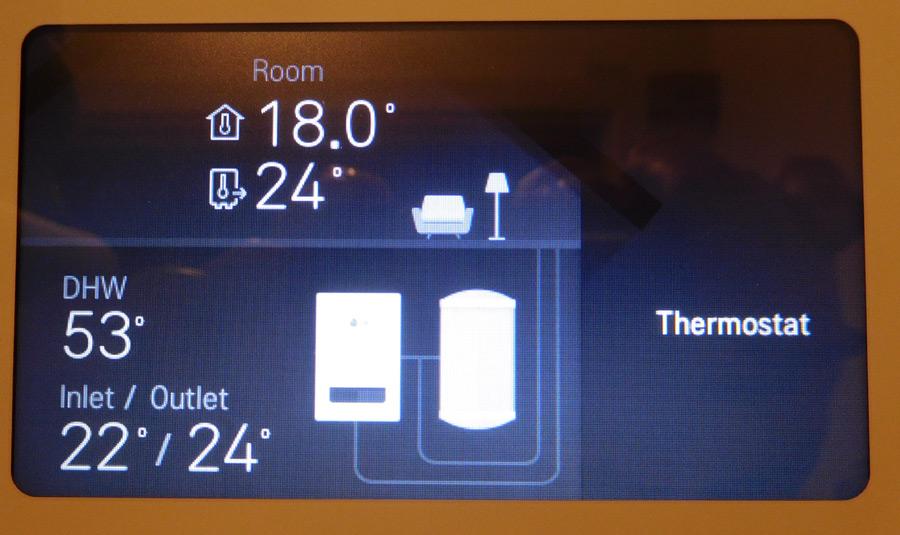
-
LG Therma V mono block Air Source Heat Pump
Hogboon replied to ProDave's topic in Air Source Heat Pumps (ASHP)
Thanks for the reply ProDave. The short answer is "I have no idea" but one picture etc please see attached images which are of my LG 'Remote Controller' which, as you have remarked is less than user-friendly. E.g. I have absolutely no idea what is 'Off'. The central heating is controlled by another gizmo - a Nest [over-rated] Thermostat but I see nothing in its equally convoluted menu that might regulate temperature. Do I infer correctly from your reply that you don't think it is a flow issue? and adding a pump would not cure? and where are these CH14 errors reported? My family is from Orkney. That's why I live in Somerset!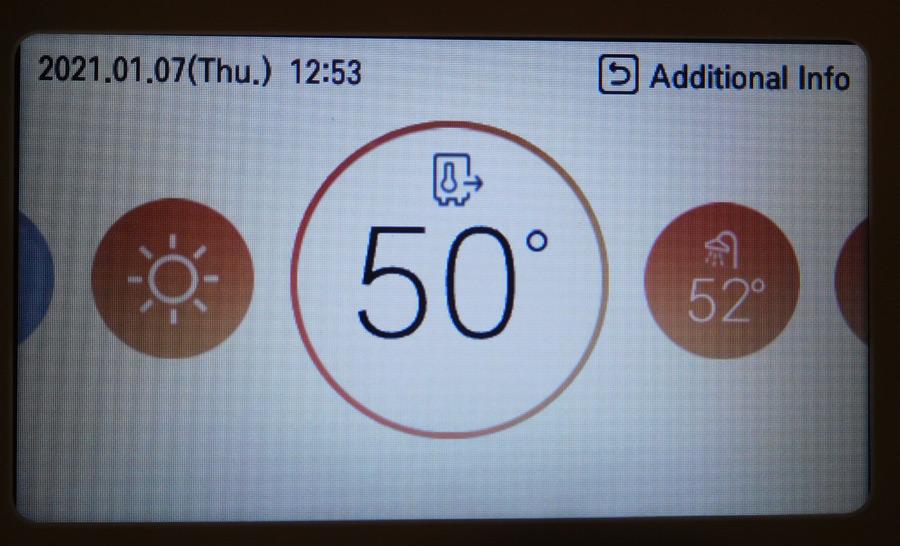
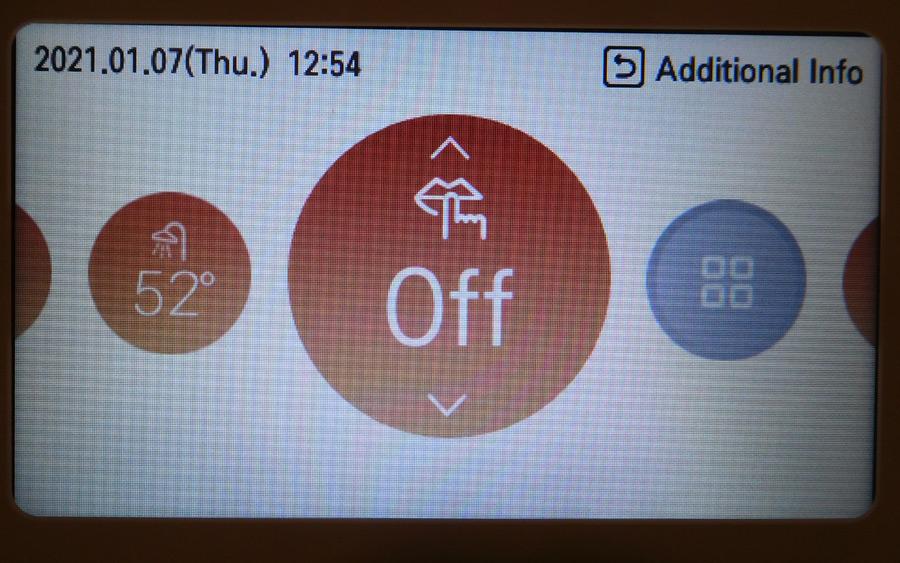
-
LG Therma V mono block Air Source Heat Pump
Hogboon replied to ProDave's topic in Air Source Heat Pumps (ASHP)
I have aproblem with a similar setup to thast installed by ProDave The PROPERTY: detached bungalow TA21 0BZ built c. 1975 rendered conc. blocks, tile roof. Insulated loft and walls. Solid floor probably uninsulated. Double glazed throughout. Ground floor: 9 rooms [incl. bath room] plus hall and corridor with 11 rads in all. First floor: 3 rooms [incl. bath room] with 1 rad in each. Apr 2016 EPC total floor area = 169 sq m and the EER = 56. “Current primary energy use per square metre of floor area = 180 kWh/sq m p.a.” “Space heating [kWh per year] = 14,873” “Water heating [kWh per year] = 3,534” May 2020 EPC total floor area = 176 sq m and the EER = 59. "Current primary energy use per square metre of floor area = 165 kWh/sq m p.a.” “Space heating [kWh per year] = 16,184” “Water heating [kWh per year] = 3,537” HEAT PUMP INSTALLATION AUG 2020. LG Therma V 9 kw HM091M.U43 [Flow: 50 SCOP: 3.17] 200 litre Worldheat unvented WH + 18 litre expansion tank 12 x Perlight 320W Mono 60 PV cells Solis 4kw inverter The original quotation, based on the above May 2020 EPC was for a 7 kw LG Therma V but as increasing the heatpump to 9 kw did not significantly add to the cost I asked for the 9kw heatpump, thinking that would guarantee delivery of more than sufficient heat. This has not been the case to date. The then existing oil-fired radiators were connected to 10mm microbore. It was suggested that the pipework be replaced with 15mm to improve flow. This was done. The spec on the quotation states: 22mm flow and return. 15 mm drops to each radiator. All the rads have thermostatic valves. There is one other significant heat source. The sitting-room has a small woodburner with door. I don’t know the ‘output’ but the fire-box measures about 13” wide 10” high and 8” deep. For the moment, all I am concerned with is the central heating, not hot water. I am now able to control the heatpump’s wayward behaviour of turning itself on in the middle of the night by a programmable thermostat. The regime is as follows. Starting at 08:00 the required temperature in the house is 18ºC. From 10:00 till 15:00 it is increased to 20ºC. From 15:00 till 22:00 is reduced to 18ºC From 22:00 till 08:00 it is 12ºC In cold spells I start it ‘manually’ at 07:00 [set to 18ºC] as I did on 2 Jan 2021. I do not intend to alter the above schedule. If the machine can’t cope then the machine has to go. Below is how the heatpump performed on 2 Jan 2021 with no additional internal heating [i.e. no fire lit in the sitting-room] until after 15:00. The outdoor temperatures are only approximate as taken from a cheap stick-on thermometer of dubious accuracy. Time INSIDE Temp ºC IN required ºC OUT ºC 0700 15.5 18 2 0800 15.5 18 5 0900 16.0 18 5 1000 16.5 20 5 1100 17 20 6 1200 17 20 7 1300 17.5 20 8 1400 17.5 20 8 1500 <18.0 18 9 1600 17.5 18 8 1700 18 18 7 1800 >18 18 7 1900 >18 18 7 2000 >18 18 6 2100 >18 18 5 2200 >18 12 5 At 15:00 we lit the fire in the sitting-room. The weather outside was sunny till about noon then increasingly overcast. At no stage did the house achieve the required temperature until after 17:00 by which time, of course, the fire had been alight for 2 hrs. It seems absurd that a very modest temperature [18ºC] should be attainable only with the help of ‘technology’ that would have been familiar in the stone-age. There is a paucity of hard data from LG concerning their pumps. It is hard enough even getting hold of a manual. [LG’s telephone customer help line has limited options about TVs and washing machines etc but absolutely no mention of heat pumps. The same goes for their website.] As things stand at present LG claims the Therma V “operates reliably at external temperatures of -25ºC” and they claim their heatpumps are “powerful heaters with leaving water temperature up to 65ºC.” See https://www.lg.com/uk/monobloc My experience so far suggests that both these claims are at best misleading exaggerations, at worst mendacious deception. On the same page are images of LG’s ‘Remote Controller’. One shows an ‘Energy Monitoring’ screen; another shows a ‘Data Logging’ screen. I can find neither. Does anyone know how to access these? The software on mine seems to be v.3.05.5a [Master]. I have of course contacted both LG and the installer about the poor performance as exemplified on 2 January and have yet to hear back. I wonder if anyone here might have any bright ideas. In particular; 1. is the 15mm pipework likely to restrict delivery of sufficient heat? Should I have bigger [e.g. 22mm] tails to each rad? ProDave makes frequent reference to ‘CH14’ errors. I have no idea what these are and have seen none. 2. Where might they appear? 3. Could a larger or additional pump improve flow and performance? If so, any recommendations? [I think ProDave inserted a Grundfos somewhere…] -
I'm here because I found the thread started by ProDave https://forum.buildhub.org.uk/topic/6385-lg-therma-v-mono-block-air-source-heat-pump/ to which I will add my two penn'orth in due course. I'm a woodworker but no longer compelled to hit things with a hammer to pay the bills - apart from the occasional recalcitrant tenant. I live in a bungalow [built c. 1975] with loft conversion. The heating and h.w. was from an oil-fired combi boiler which worked fine but the writing on the wall early last year seemed clear enough. Global warming is a fact staring all of us in the face. We are where we are because of our [8 billion of us!] collective greed, stupidity and laziness. Among other things, burning oil no longer seemed acceptable behaviour. The boiler was then about 12 years old and at some stage would inevitably need replacing. Waiting till it died, which Sod’s Law would ensure happened at the moment of greatest inconvenience, would almost as inevitably have compelled me to replace it with another oil boiler. [There’s no mains gas where I live.] So come April 2020, with the economy stagnating under the first lock-down and people going out of work and business, it seemed to me the right moment to put my money where my mouth was, the more so as spring was well under way and the prospect of being without heating or hot water for however long it took was not something to give pause for thought. According to the EPC [Apr 2016] the total floor area = 169 sq m and the EER = 56. “Current primary energy use per square metre of floor area = 180 kWh/sq m p.a.” “Space heating [kWh per year] = 14,873” “Water heating [kWh per year] = 3,534” I canvassed the market, had a few quotes, made a decision and went for it. The work included; Installation of an LG Therma V 9kw ASHP together with a tank that looks like it escaped from Hinkley Point [15 miles away]. Installation of 8 PV roof panels intended a] to power the heat-pump b] contribute to heating hot water and c] earn me a fortune flogging surplus generation to the grid – Octopus in my case. And that’s a laugh! Following the installation [finished in early August] the company doing the work gave me a ‘Customer Satisfaction’ questionnaire. Among other questions, they asked; “Please rate the quality of your installation” to which I replied; “Unable to answer this. If you mean ‘technically’ I have no idea. If you mean functionally, ask me in February.” The only thing I would change now is the month which should have been January. A few years ago it got to -13ºC. This year has been nothing like that but for about the last week the daytime temperature has hovered between 5-10ºC and night time has been 2º to -2ºC. The system is currently configured to fire up at 08:00hrs when the internal house temperature is 15-16º. The target temperature is initially 18ºC till 10:00; then 20ºC till 15:00O then back to 18ºC till 22:00 then 12ºC overnight. At present the system struggles ever to make it to 18ºC let alone a sweaty 20º. So I had a little test day on 2nd January the results of which I shall add to the post started by ProDave.