BobAJob
-
Posts
133 -
Joined
-
Last visited
Everything posted by BobAJob
-
It's a smallish conservatory extension to back of a house. Rest of the house is a pitch roof with concrete roof tiles from the 1980s. The pitch roof runs down to the flat roof on the conservatory, so about 40% of the main pitched roof feeds to this flat roof extension. A previous owner did the changes as it used to have a polycarbonate roof when originally built about 20 years ago according to the paperwork for the house (previous owner who did it was a builder).
-
How do you find a structural engineer? Do I need a surveyor to examine it and advise? Lots of £££ I think I might get the whole thing ripped off and start again. I think it might cost around £12k to get it done right. I don't mind paying. It's finding a decent tradesman round me is almost impossible. They all just want to get the job done quickly not correctly and onto the next job. Then you end up paying multiple times when you could have just paid once to get it done right. It's a disgrace.
-
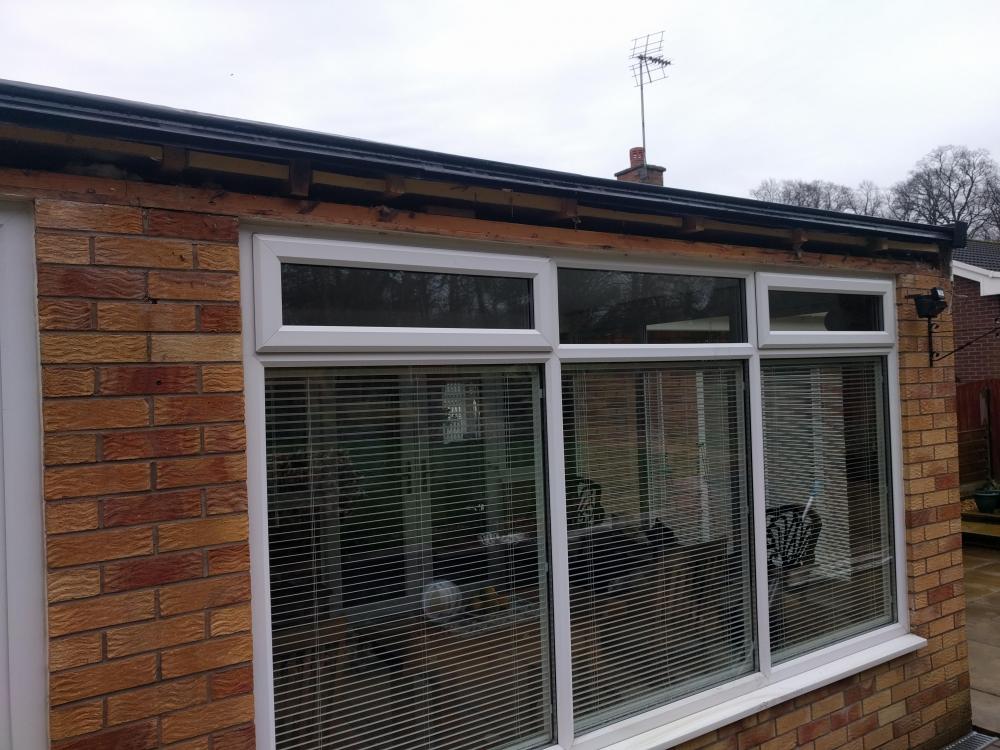
Can anyone help me with this, please? There are bits of wood running across the roof with yellow insulation boards in between, but the bits of wood running across the roof don't land on a piece of wood on the window/wall side and are just floating there. I think I might need to get the entire thing replaced in the summer. The roofer who did the new rubber roof on it didn't mention any problems with it. It was originally installed by previous owners about 10 years ago. I want it safe, water tight and well finished. It's about 6m x 2m. How much would that cost? Thanks
-
I caught a Firestone trained EPDM fitter putting nails through a gathered fold of EPDM and then gluing an EPDM patch over the top of it instead of trimming the EPDM and gluing it flat. Unfortunately, I only caught him at the end and it was too late to do anything about it. He covered the only thing with an edging strip to hide it from view. When I challenged him about it he said "Everyone does it". I told him it's not right and he told me "Customers don't know what good looks like, so I get away with doing that. It's on a raised edge and under a patch and an edging strip so no water is going to get into it." This guy turned up to quote wearing Firestone branded T-shirts and then for the job he turned with two day labourers he hires from a local shelter and himself in different t-shirts. He tried to strip and relay two flat roofs in a single day and spent the entire time on the roof and never looked at the side of the roof until the end.
-
Unfortunately the 10 yr warranty is only on the material NOT on the installer's fitting of it. Plus lots of training companies insist you buy the material through them in order to get the warranty.
-
A couple of years ago we had our EPDM covered flat roof recovered as the previous installer hadn't glued it to the roof. Today I had a fascia board on the roof replaced and the fascia board installer remarked that the roof wasn't the best. I'm no roofing expert, so I wondering if someone can tell me if this cross-section of the roof looks correct? To me it looks like nothing is supporting the wood spanning the roof so it's effectively floating in the air, which doesn't sound right to me.
-
Does anyone know where I can get white bullnose fascia board corners that are 60mm each of the corner? I'm told that there's a shortage of this stuff and that nobody makes fascia boars corners that are 60mm each side. The standard fascia board corners seem to be 40mm each side of the corner. Thanks
-
Is Mitre Bond non-destructive, so if I needed to take it off it would come off without damaging? Is Mitre Bond a brand?
-
What's the best way of sticking UPVC trim to UPVC? This is for the mitre joints on a bay window which seems to have developed big gaps between a couple of the frames. Super glue? Silicone grab and seal? Silicone sealant? Thanks
-
Yeah you have felt, which usually makes dip between the two sides of the roof but when they do a dry ridge they fit wooden battens down into the dip which they attach to the rafters and then they lay the waterproof membrane over the top and then the tiles and union joints go on top. The ridge tiles get fitted and the screws for the union joints go through and are secured to the wooden battens in the dip. The top screw in the union joint pulls the union joint tight against the underside of the ridge tile to stop water getting in. I'm not sure how they've created a seal on yours as you don't appear to have the standard union joints between your ridge tiles. I have a union joint and some spare ridge tiles so I'll try to take a cross section photo to show you how I think they're supposed to work.
-
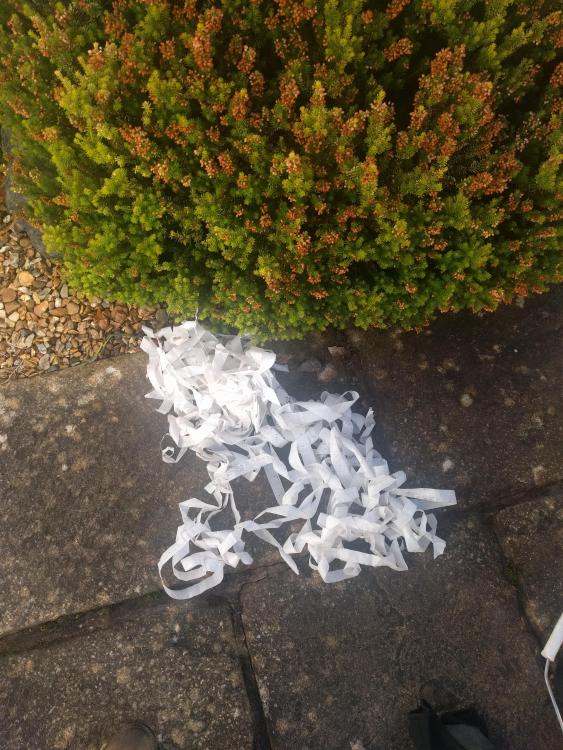
You should check that the roofers took the backing tape off that's over the adhesive on the roll. It's on the bottom edge where the membrane touches the tiles. I had a dry ridge down back in September and to me it looked like the membrane wasn't sitting properly. I asked the roofer to check it and he refused and told me that it supposed to be like that. I didn't believe him and hired another roofer to check it and he discovered that none of the backing tape had been removed along the whole 30 metres of roof. I ended up not paying the original roofer and he hasn't bothered hassling me for the money as he knows I have photos of every screw up he made on the job and I could ruin him if I posted them on review sites.
-
But I can't see anything between the ridge tiles to pull the union joints tight to create a seal to stop rain getting in. There's some really thin stuff between the tiles but if it's not pulled tight against the inside of the tiles then there is no seal.
-
Why did they fit your dry ridge like that with 2 screws in each ridge tile? I thought that the standard way of doing it was to have screws going through the union joints in the middle, so that the screws pull the unions tight against the tiles to crrate a seal to stop the rain getting in. Why is there only 1 screw in the ridge tile at the very end of the ridge. Without an end cap on doesn't the wind and rain blow down the entire length of the ridge?
-
BTW: Is there no end cap on your dry ridge?
-
What's the pitch of the roof? How many storeys?
-
Boarding/Sheeting between the rafters and felt
BobAJob replied to Kev1312's topic in Roofing, Tiling & Slating
Looks like it's holding the roof felt in place like maybe some sections were replaced. Kinda odd. -
Dry Hip and Dry Ridge problem on new build
BobAJob replied to Tomfromsurrey's topic in Roofing, Tiling & Slating
Looks a bit bodged to me. -
Does anyone know of anywhere where I can buy reclaimed Redland dry verge end caps for a house built in the early in 1980s? Thanks in advance
-
Dry Hip and Dry Ridge problem on new build
BobAJob replied to Tomfromsurrey's topic in Roofing, Tiling & Slating
That was a toilet back in 1970s. Another new build my parents bought. No overflows fitted to any of the toilets. The water ruined all the new carpets downstairs. I know that new ones don't need overflows. They had a neighbour who never decorated his house in 40 years because the plaster on his walls all came off. He ended up suing the builder and eventually won after 15 years. I also know someone who moved into a house with a swimming pool and one day they put their foot down in the middle of the pool and one of the tiles came off. On closer inspection they found that a number of the tiles were coming off and one of the walls was bulging. A surveyor later discovered that the builder hadn't used waterproof grout and the whole thing had to be redone. Another court case against the surveyor which was eventually won. Total cost £10,000s of repairs and one marriage. -
Dry Hip and Dry Ridge problem on new build
BobAJob replied to Tomfromsurrey's topic in Roofing, Tiling & Slating
Back in the late 1980s my parents bought a new build. They lived in it for 5 years and then one day the Study ceiling fell through. It turned out that whoever installed it had cut the pipe from the bath to the drain slightly too short and for 5 years trickles of water had been running down onto the ceiling below. However, new builds these days seem to be worse than they were 20 years ago. I've heard stories like the following: 1. 2 neighbours on a new build estate living in the same style of house asking each other about a light switch by the door to the cupboard under the stairs. One had a switch that did nothing and one had a switch that turned on a light in the cupboard. It turned out that the builder had forgotten to install the light in one house. 2. Concrete floors in kitchens that were uneven and had to be ground level while people were living in the house. 3. People moving into new build and discovering "Fix this" and an arrow pointing to a defect in the way the kitchen was fitted and the defect hadn't been fixed. 4. Overflow pipes from toilet cisterns being totally missing 5. People having from seal around bath not being done properly and ending up having to have the ceiling below replaced. 6. Extractor fans from bathrooms that aren't connected to the hoses that run to the outside of the house, so fan is putting a load of moist air into the loft 7. Cracks opening in brick walls when front doors opened and closed. -
Dry Hip and Dry Ridge problem on new build
BobAJob replied to Tomfromsurrey's topic in Roofing, Tiling & Slating
I wonder what happens when it rains and water comes down that downpipe on the porch. Presumably it spreads to the left and under those strange looking tiles between the garage and the porch. I suspect that the ridge tiles will all lift and rattle in a strong window as the top clip looks like it hasn't been pushed down before the screw was put it. Usually the top clip has a teeth on it that hook into the dry ridge union and it can be set at different heights to handle different thicknesses of tiles. -
Dry Hip and Dry Ridge problem on new build
BobAJob replied to Tomfromsurrey's topic in Roofing, Tiling & Slating
Sadly, I think you're right. A lot of trades people seem to focus on doing jobs quickly, so they can get on with the next one instead of doing them right and they leave a trail of shoddy jobs behind them and then customers have to get the job redone a few months or years later when they find out what they did. I recently confronted one roofer about this and he told me that customers don't know what roofs are supposed to look like, so they get away with doing a quick shoddy job instead of a correct one that would have taken just slightly longer. -
Dry Hip and Dry Ridge problem on new build
BobAJob replied to Tomfromsurrey's topic in Roofing, Tiling & Slating
Checkout this YouTube video on how it's supposed to look. The same company has another video on dry ridges. -
Dry Hip and Dry Ridge problem on new build
BobAJob replied to Tomfromsurrey's topic in Roofing, Tiling & Slating
My thoughts are: 1. Hip - should there be a black plastic bit under the silver V shaped bits. The black plastic bit should fit into the dry ridge and force the black plastic union pieces tight against the tiles when the silver V shaped bits are screwed to it. The black plastic bit also stops the metal V bits from digging into the tiles. On yours you only seem to have the silver V shaped bits so possibly nothing clipped into the dry ridge union to pull it tight against the underside of the tiles 2. Hip - the dry ridge waterproof material isn't stuck to the tiles. Maybe they didn't remove the backing tape on the material 3. Ridge - the silver V bits should be flush against the tile, so that the black dry ridge union pieces are pulled tight against the underside of the tile. Without that happening water is likely to get in behind the tiles plus the tiles will rattle in the wind as they're not held tight against the roof. 4. Ridge and Hip - the tiles seem very flat to me. Have they got enough wooden battens under the dry ridge material for the dry ridge/hip unions pieces between the tiles to be screwed to? -
I don't think this one will leak. My concern is that he tried to do it fast and then he forgot to do certain things and I had to point them out to him 3 days later at which point he couldn't undo bits of the roof to fix them, so he did a number of bodges to cover things up. I am getting really hacked off with trades people trying to do things quickly instead of taking the time and doing things properly. This is someone's main financial asset and it needs to be treated with respect and contingency time allowed for when you do a job as unexpected things always come up on jobs.