AliMcLeod
-
Posts
317 -
Joined
-
Last visited
-
Days Won
1
Everything posted by AliMcLeod
-
The tale of the sale of our old house
AliMcLeod replied to Jeremy Harris's topic in General Self Build & DIY Discussion
Aren't all churches set up a charities for tax purposes? -
The tale of the sale of our old house
AliMcLeod replied to Jeremy Harris's topic in General Self Build & DIY Discussion
People can be funny - they want things because other people want them (fear of missing out) but, conversely, there is a risk that others on your list will be reticent to move ahead because of what has happened (if it wasn't good enough for them, its not good enough for us). For that reason, i'd be mindful to put something in the mind of the next set of prospective purchasers that distances them from the people who pulled out, making it clear that the issue does not apply to them. You can also reiterate that you had a list of prospective buyers, playing on their fear of missing out. -
This is what the manual for the boiler says: In the event of a fault, the reset button will flash once per second and the blue mains indicator light will flash. 1. To reset the boiler press the reset button for approximately five seconds. When the boiler resets the reset button will no longer be illuminated. 2. The mains indicator will no longer be flashing. If the fault remains and cannot be cleared by pressing the reset button, contact Worcester, Bosch Group for assistance. Unless one of the experts here can think of something, I fear a service call might be required. There's a few YouTube videos with the same problem too. Here's one: Google "greenstar 24i flashing blue" to see more.
-
Does the light beside the flame symbol ever come on? That indicates the gas burner is on (I have a larger WB Greenstar boiler - beefier version of this). When you turn the timer so it should switch on, does it do anything to suggest its coming to life? Any noises? The spanner button is the service button but my user manual does not give any instructions for that - it must be in the secret manual only gas accredited folks get.
-
The tale of the sale of our old house
AliMcLeod replied to Jeremy Harris's topic in General Self Build & DIY Discussion
Definitely makes sense with your approach - hopefully it'll all go smoothly. -
The tale of the sale of our old house
AliMcLeod replied to Jeremy Harris's topic in General Self Build & DIY Discussion
Any idea what's involved in getting a covenant changed? Cheaper than fees to move to a different buyer? -
The tale of the sale of our old house
AliMcLeod replied to Jeremy Harris's topic in General Self Build & DIY Discussion
If i were them, there's no way I'd agree to have such a covenant removed carte blanche - I'd want it replaced with something specific as to the new intended use. Remove it completely and the church could sell 6 months down the line to someone mending cars in their back yard, with the resultant eye-sore/noise/smell. And I'd want the legal work to have the covenant changed done so at the sellers cost. Its definitely worth asking the question, but i'd also be ready to reach out to the other people who put in an offer. -
The tale of the sale of our old house
AliMcLeod replied to Jeremy Harris's topic in General Self Build & DIY Discussion
I suspect you're correct and this is the issue that has halted the church's interest in your house. Despite the covenant owners "owing you one" do you really think they'd just remove this covenant outright, with the risks that entails? I think it more likely that they'd be open to relaxing the covenant and replacing it with something less onerous, but then you'd have to know the intentions of the proposed purchasers. Or perhaps they want to build another outbuilding (covenant 1) - is there room to do that? -
The tale of the sale of our old house
AliMcLeod replied to Jeremy Harris's topic in General Self Build & DIY Discussion
Shouldn't your solicitor be telling you what their issue is? -
If you do down the demolition and rebuild approach, you should be able to reclaim the 20% VAT. However, if the approved planning states a conversion, you may have an issue with HMRC when you come to reclaim. Might be judicious to resubmit planning as a new build if financially beneficial from a VAT perspective?
-
Optimising Domestic Heating (UFH and Radiator mix)
AliMcLeod replied to AliMcLeod's topic in Underfloor Heating
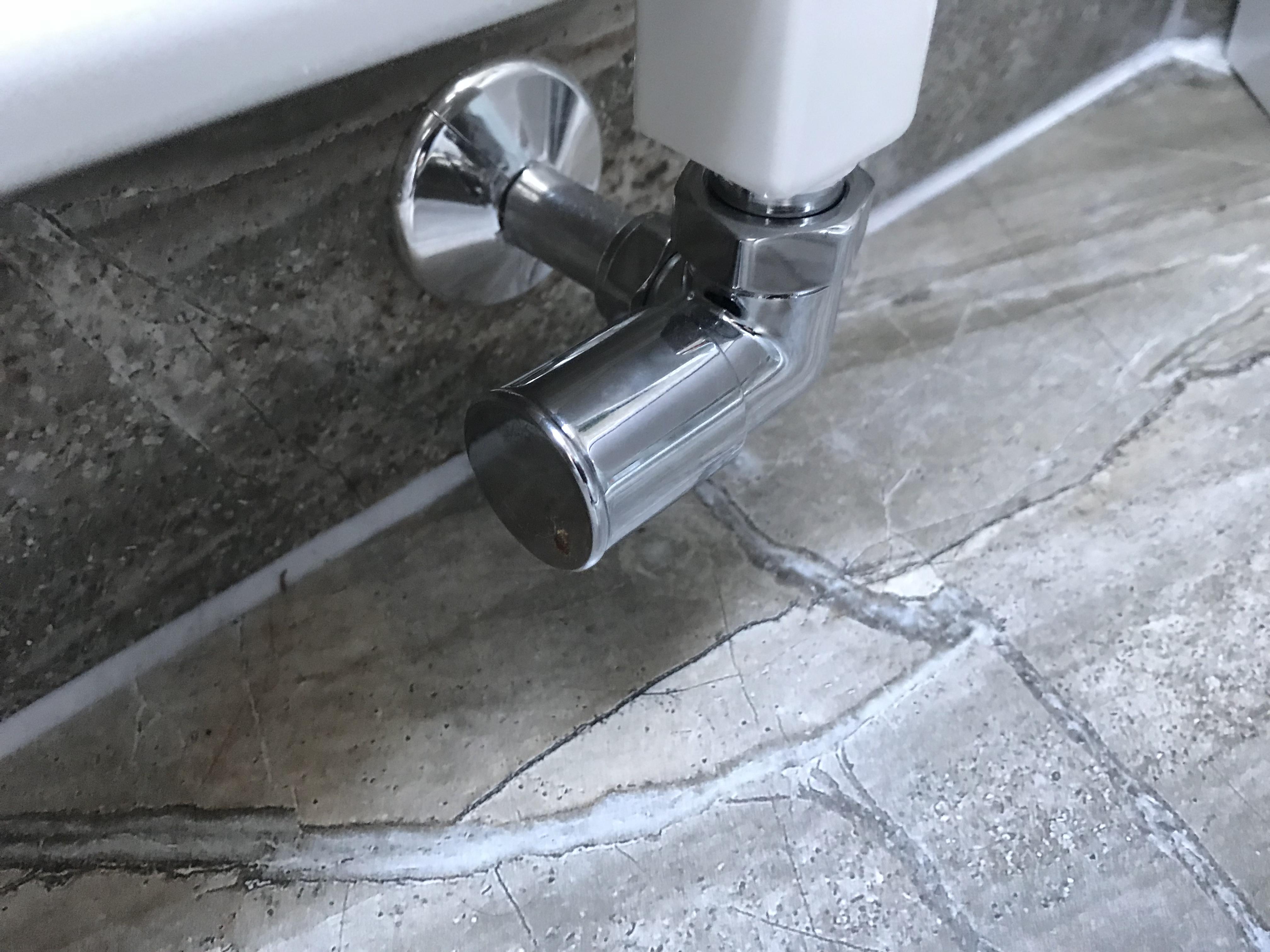
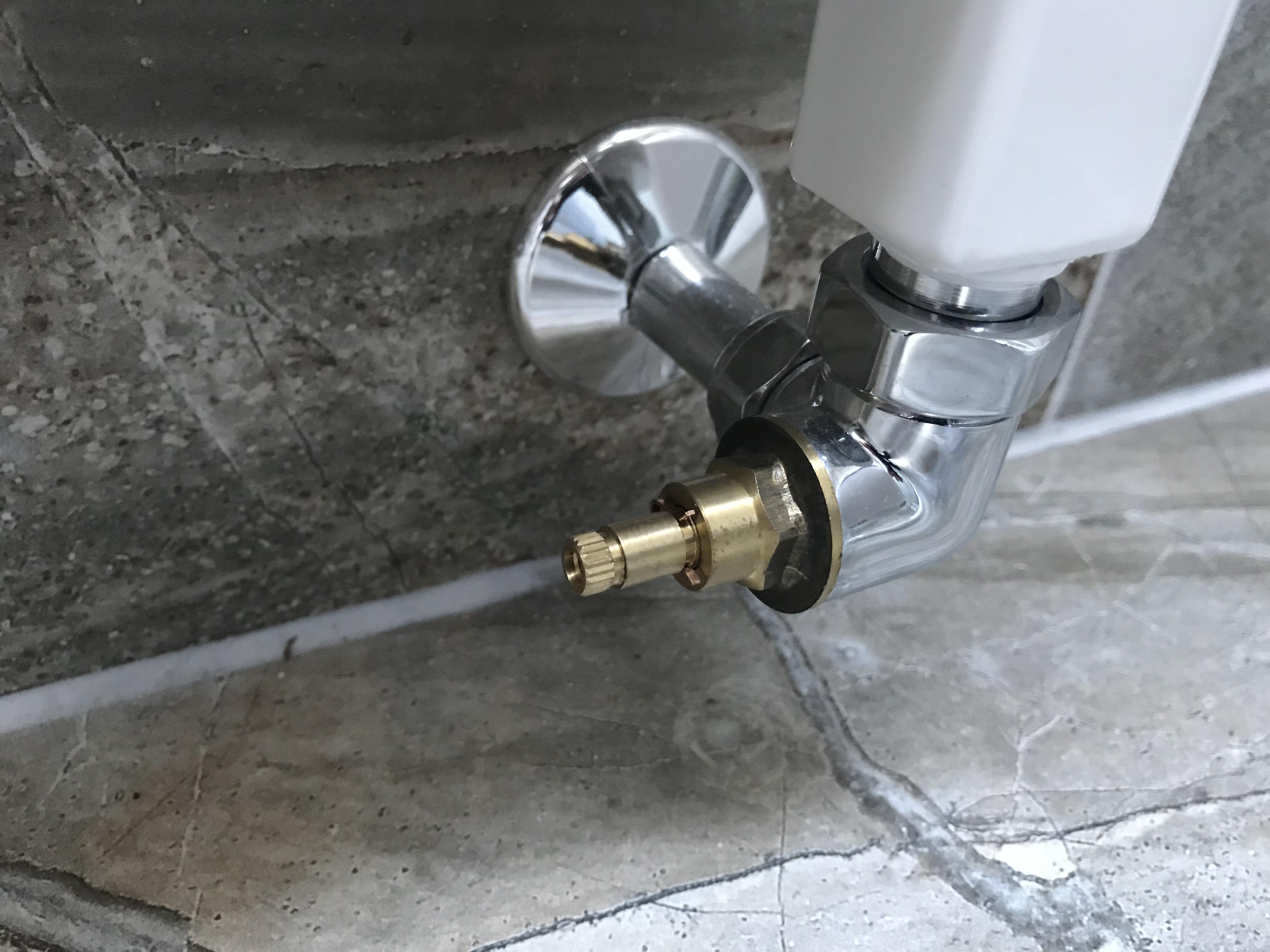
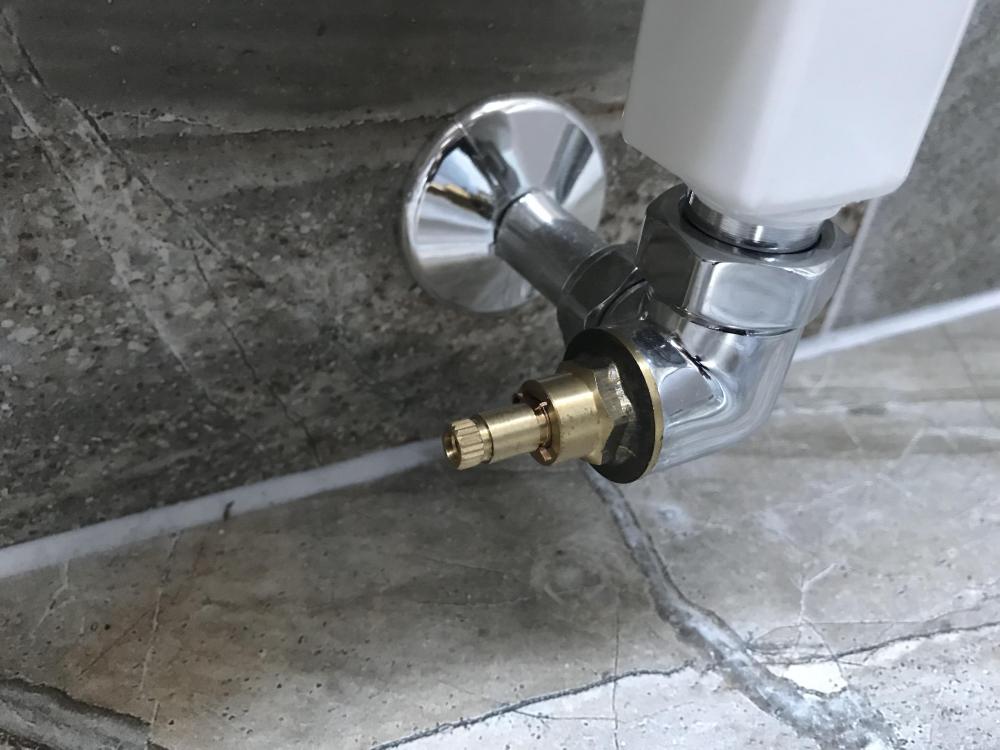
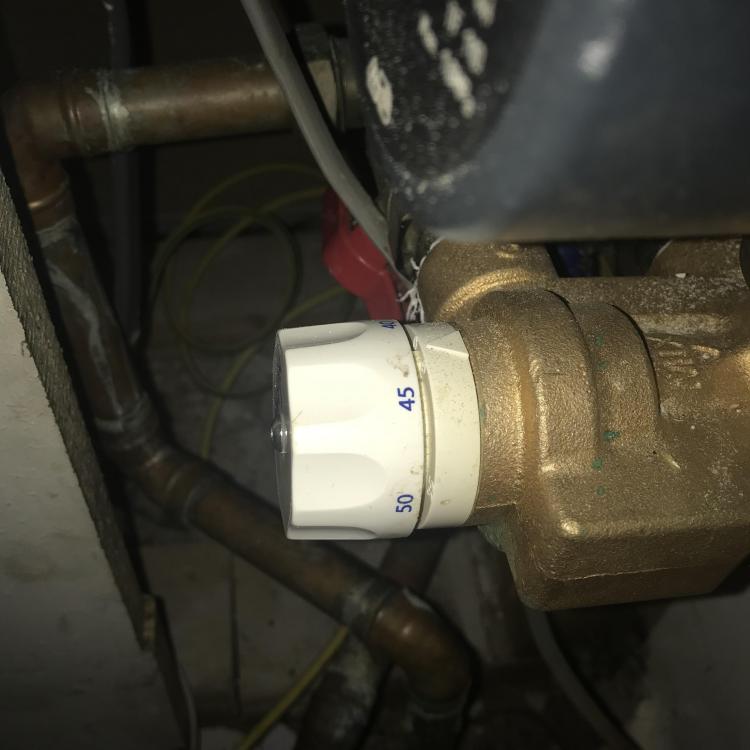
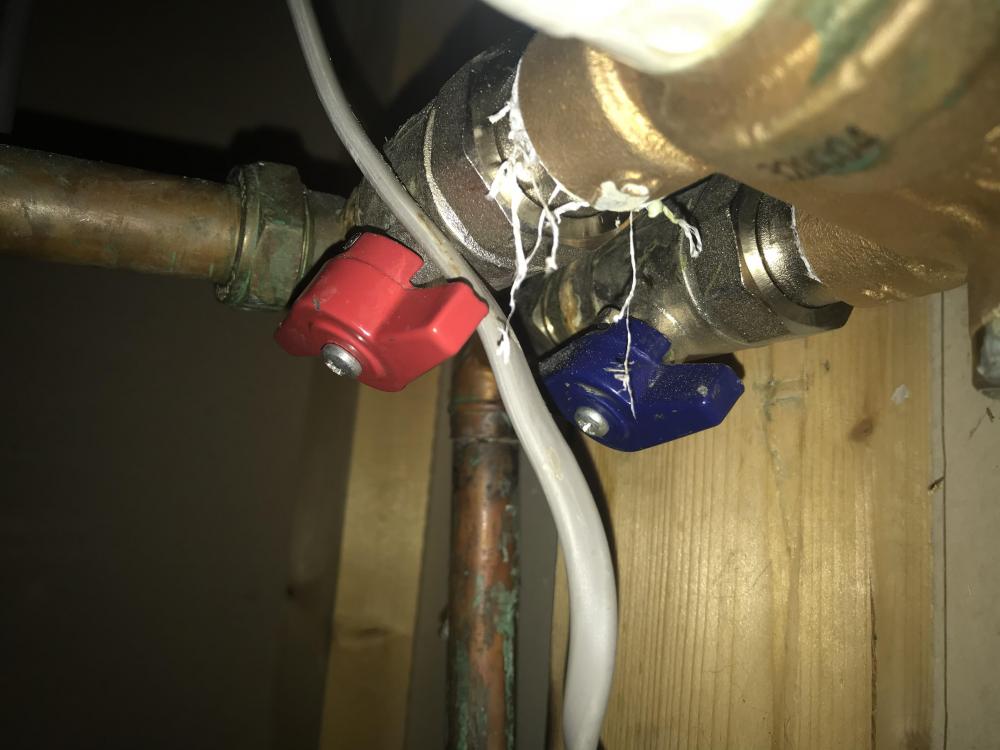
Valves - no idea why I thought they might be TRVs.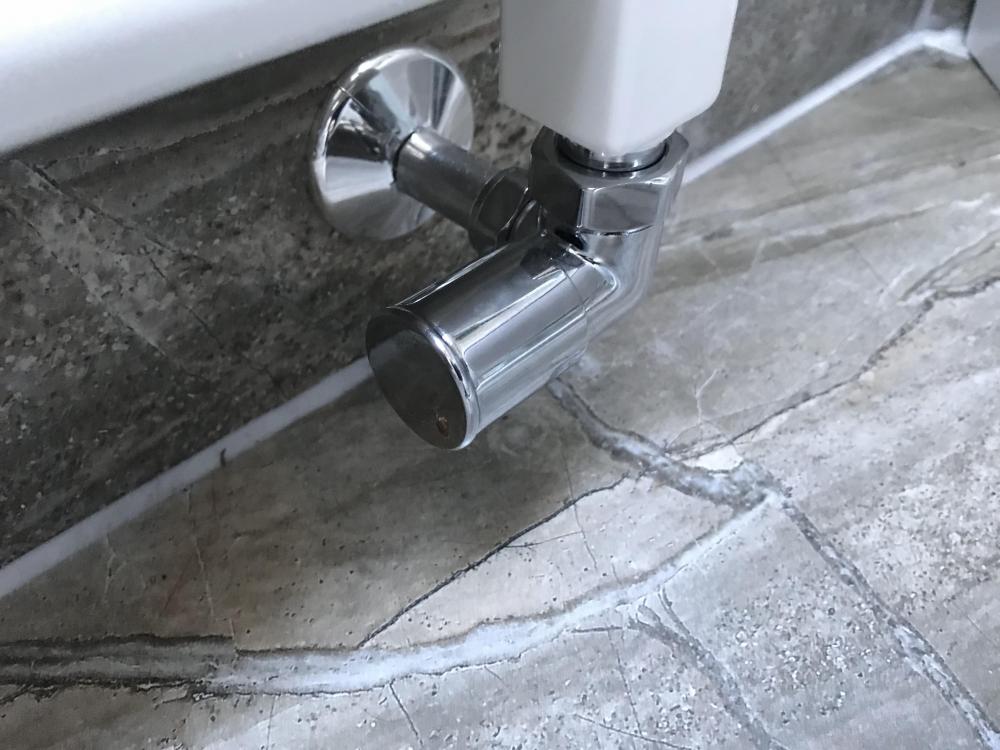
-
Optimising Domestic Heating (UFH and Radiator mix)
AliMcLeod replied to AliMcLeod's topic in Underfloor Heating
They're probably just valves then. Same question: If i turn both towel values off - would that cause an issue with the water nowhere to go (I'm showing my lack of knowledge in this area here ?) EDIT: But... with my setup where the rads can only get flow when the downstairs UFH is on, could the lack of flow actually happen? -
Optimising Domestic Heating (UFH and Radiator mix)
AliMcLeod replied to AliMcLeod's topic in Underfloor Heating
Will take a photo tonight. I did have a brief look at it a month or so back. It turns and the control unscrews to reveal what i'd call a standard radiator valve that a TRV fits to. What issues would i have without a bypass? As i said initially, i was concerned about this as all 3 rads have TRVs and both towel rails have these valves (same towel rail in each upstairs bathroom) -
Optimising Domestic Heating (UFH and Radiator mix)
AliMcLeod replied to AliMcLeod's topic in Underfloor Heating
Towel rails have turnable values, but no markings - but I suspect they are TRVs? Room stats are programmable (TP5000si-RF) -
Optimising Domestic Heating (UFH and Radiator mix)
AliMcLeod replied to AliMcLeod's topic in Underfloor Heating
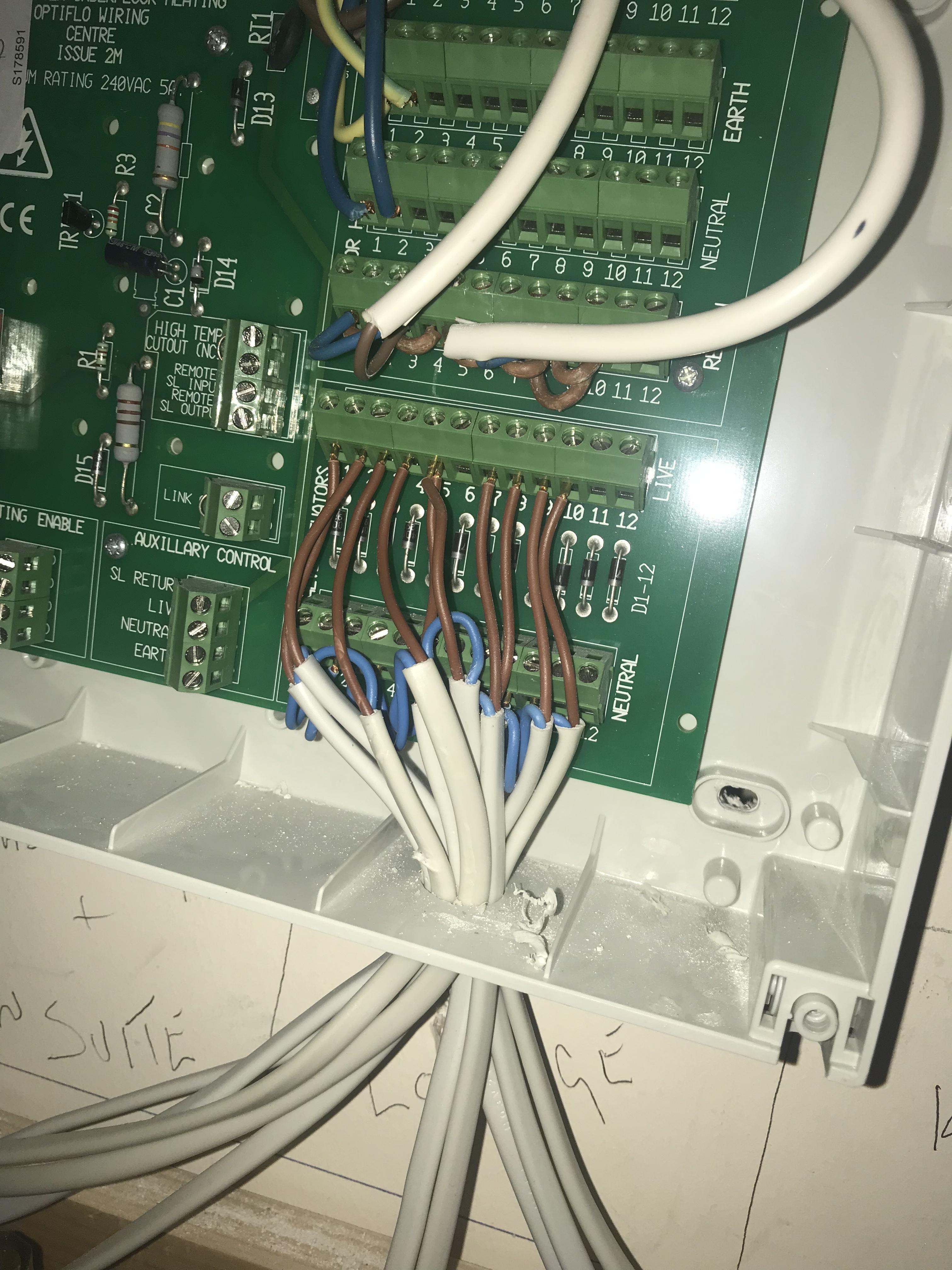
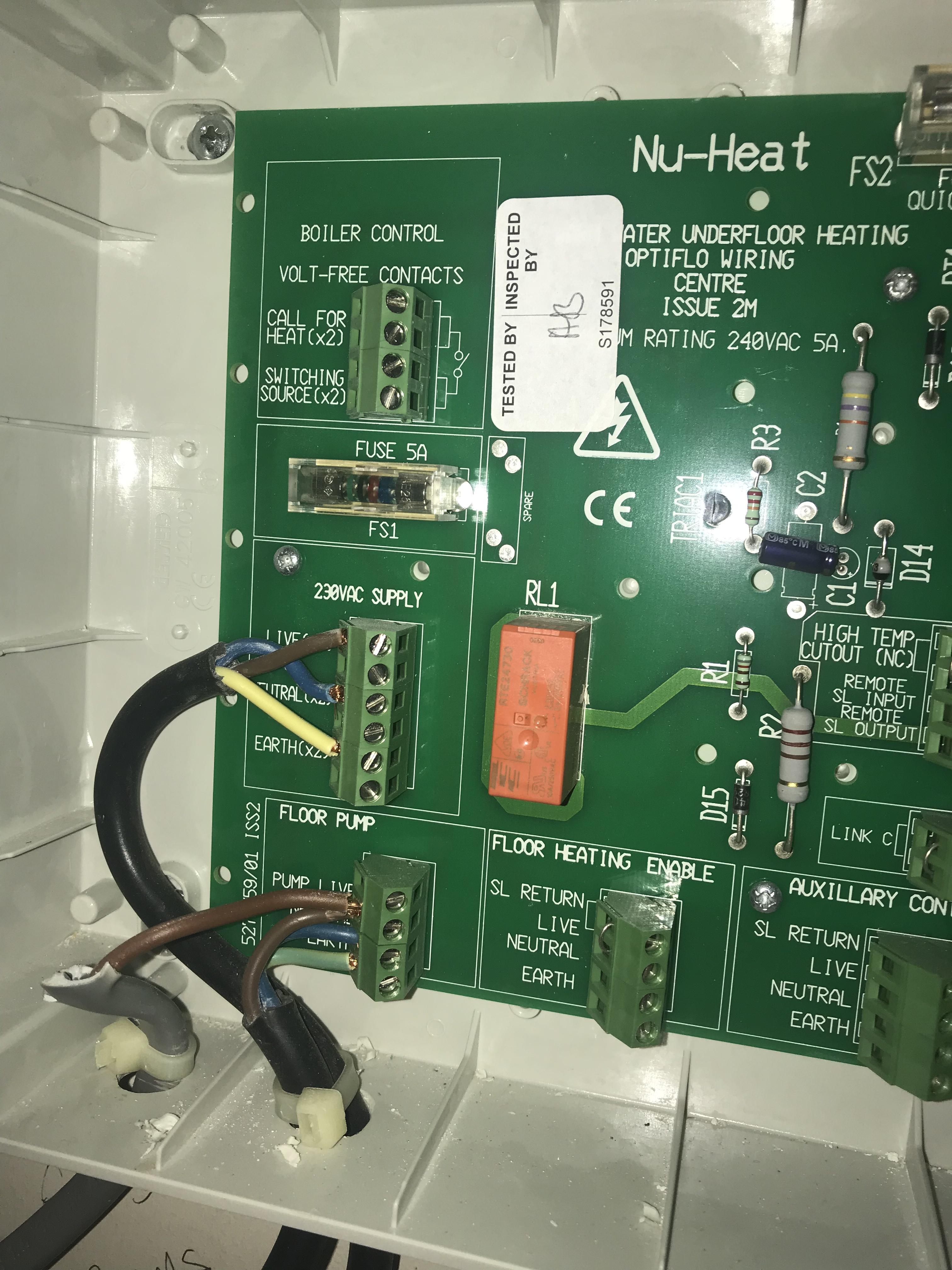
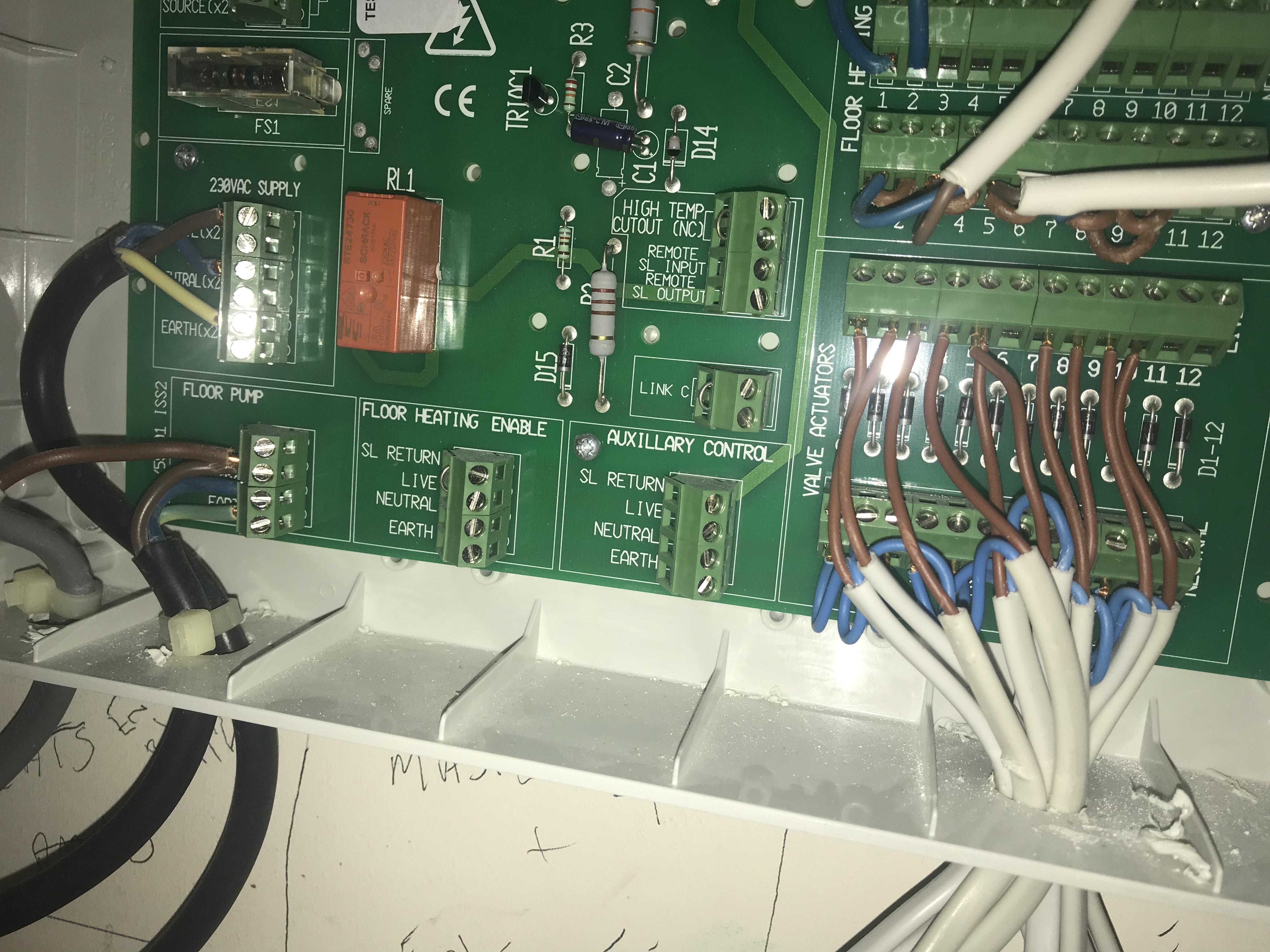
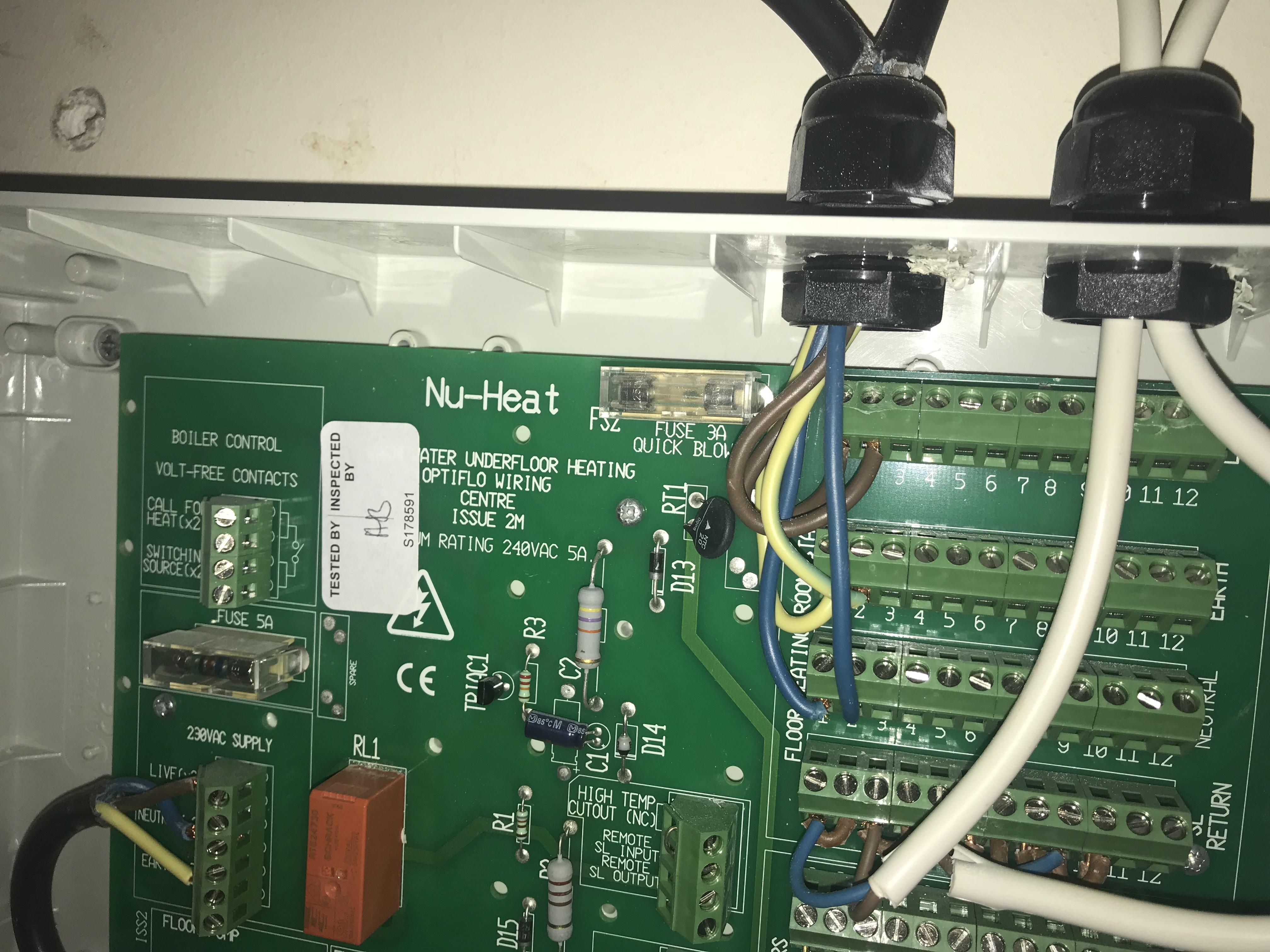
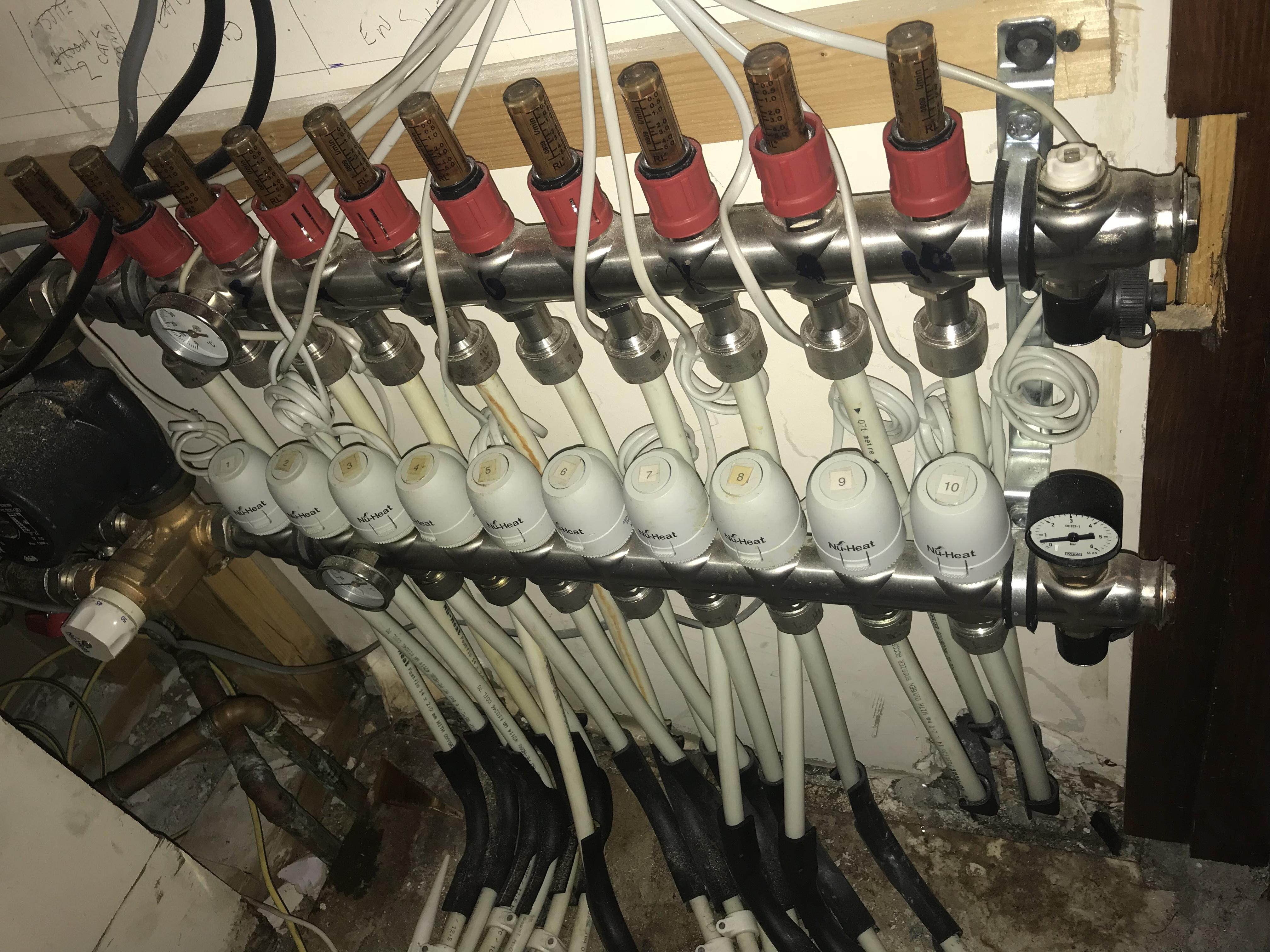
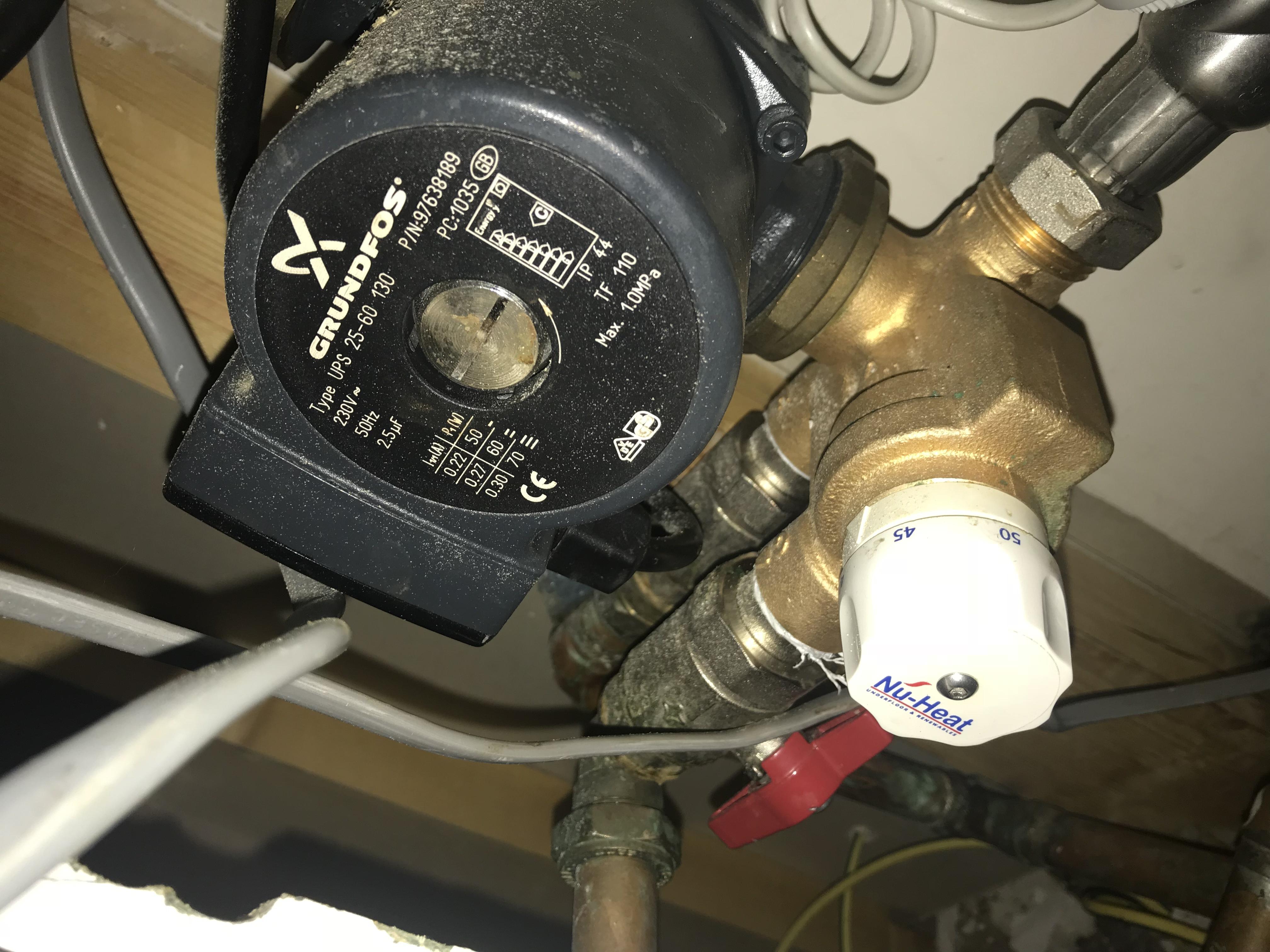
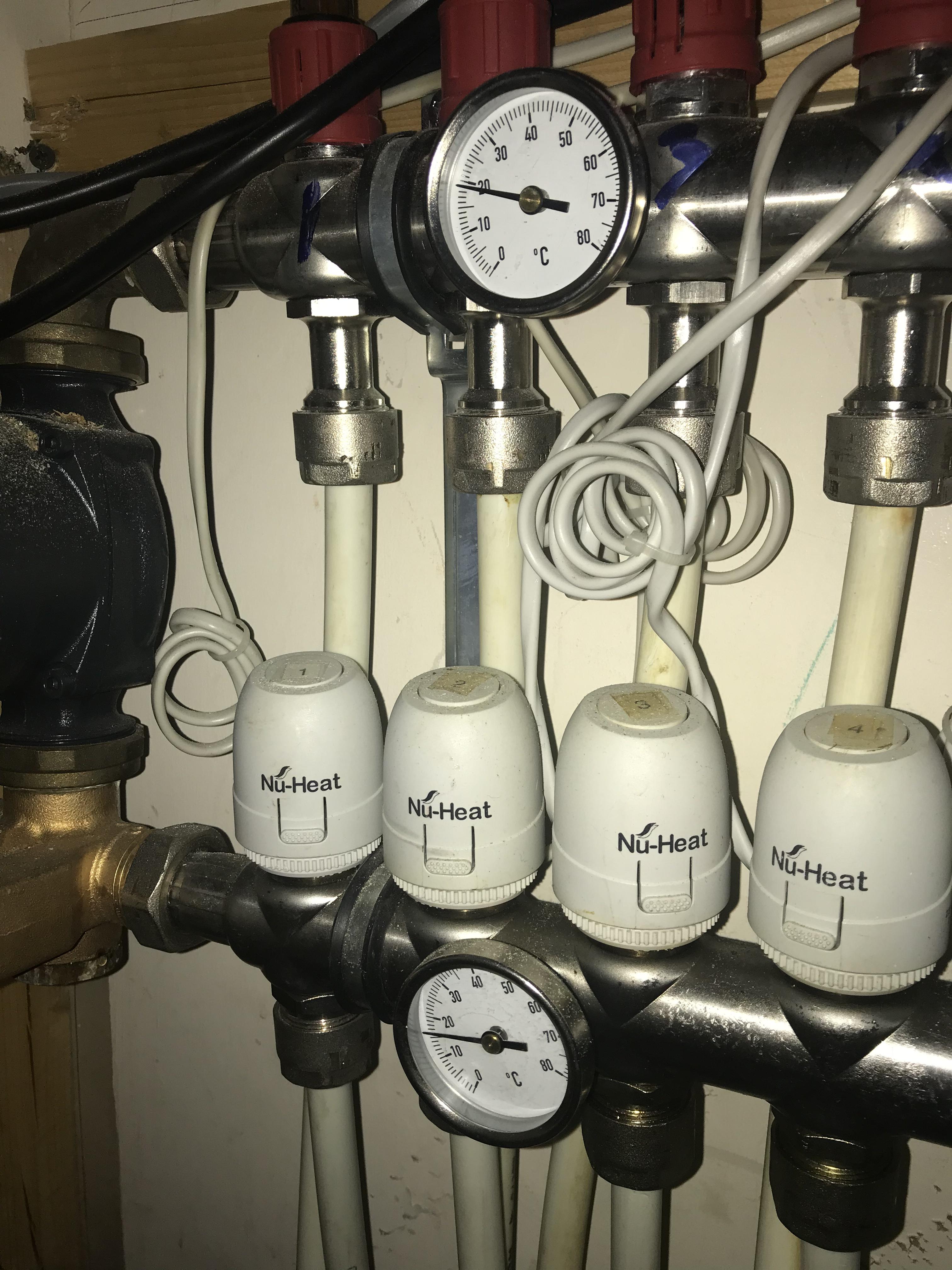
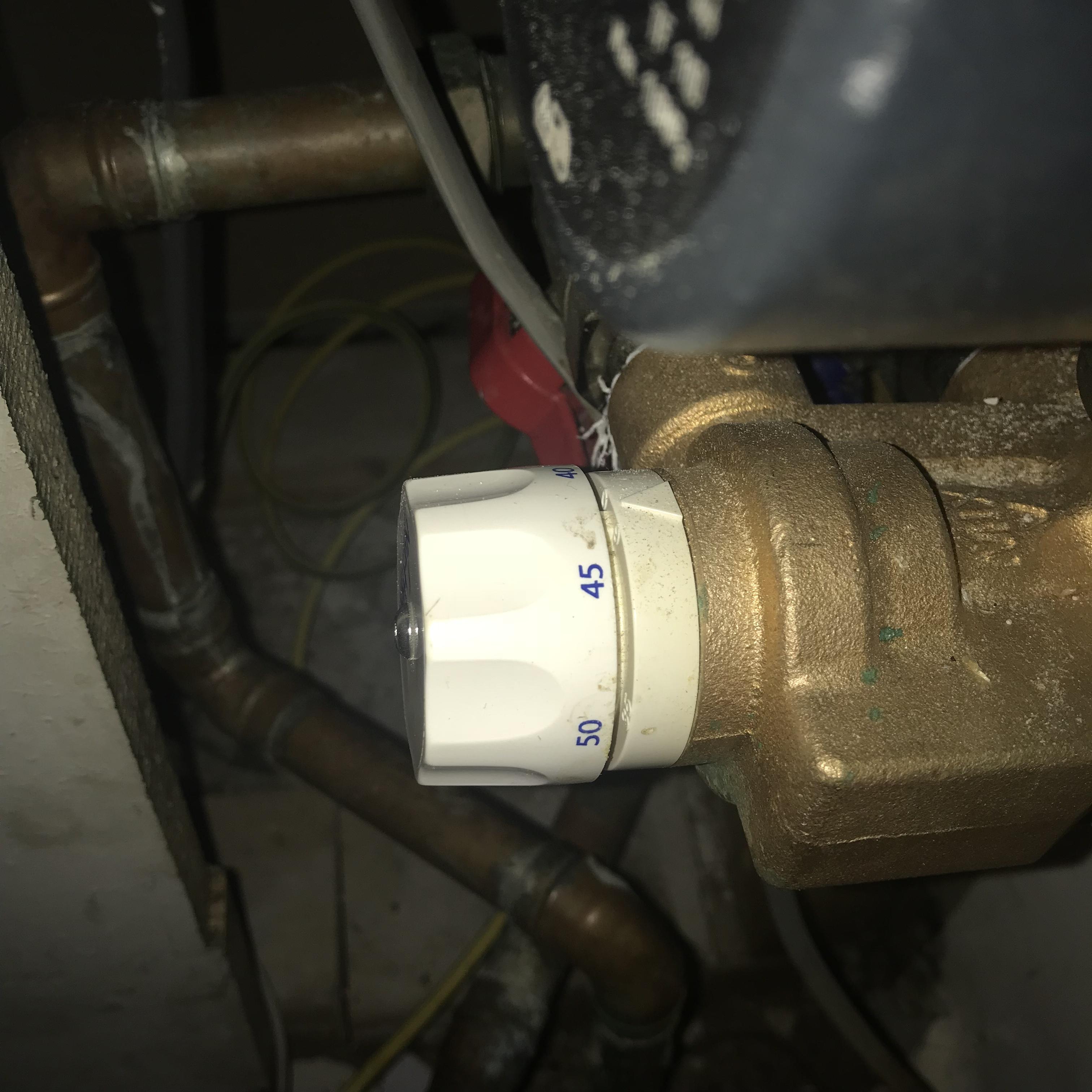
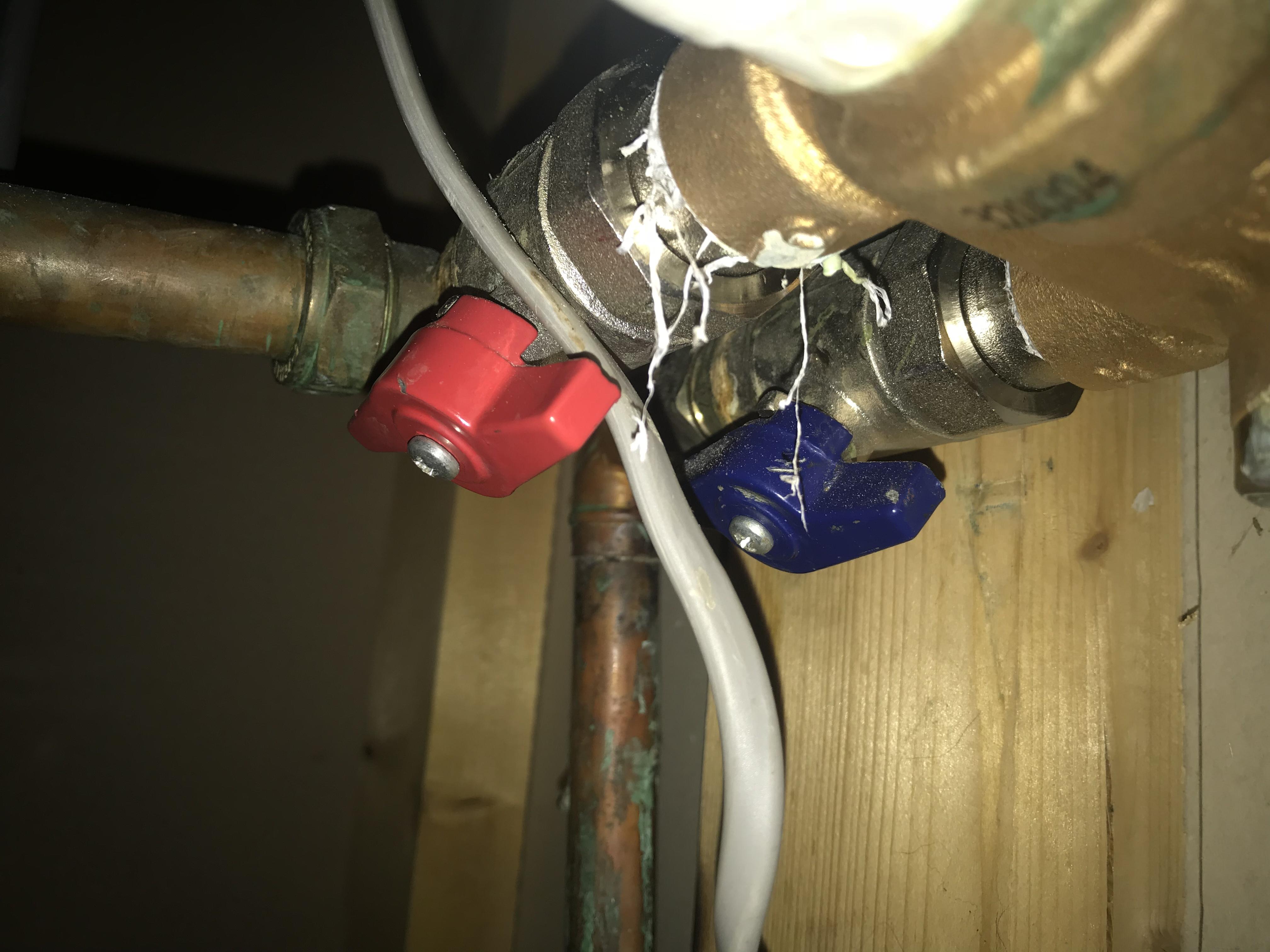
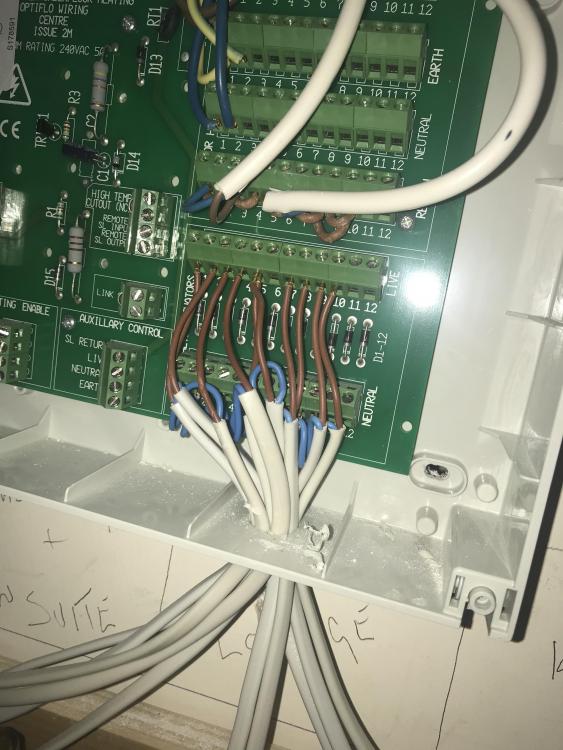
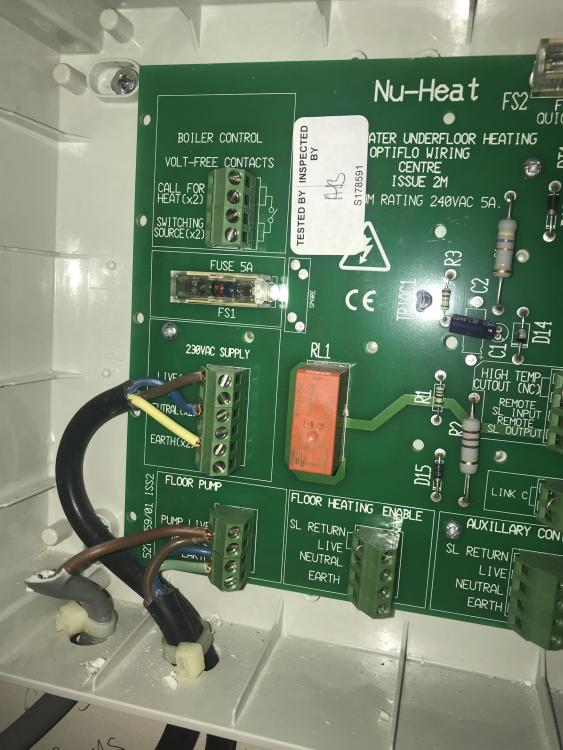
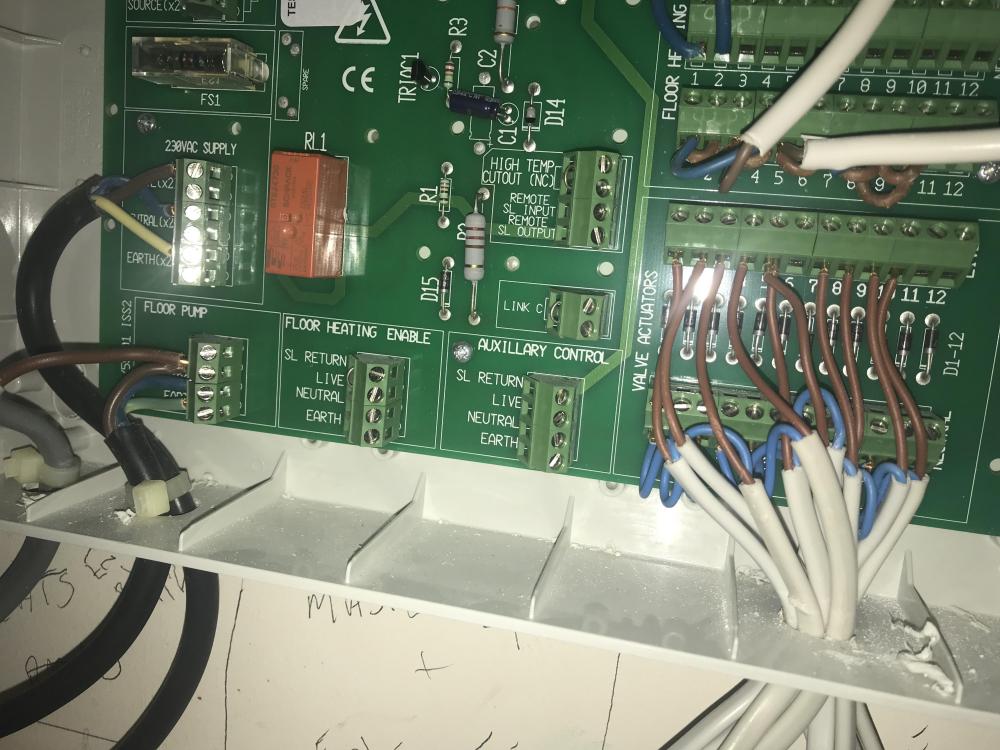
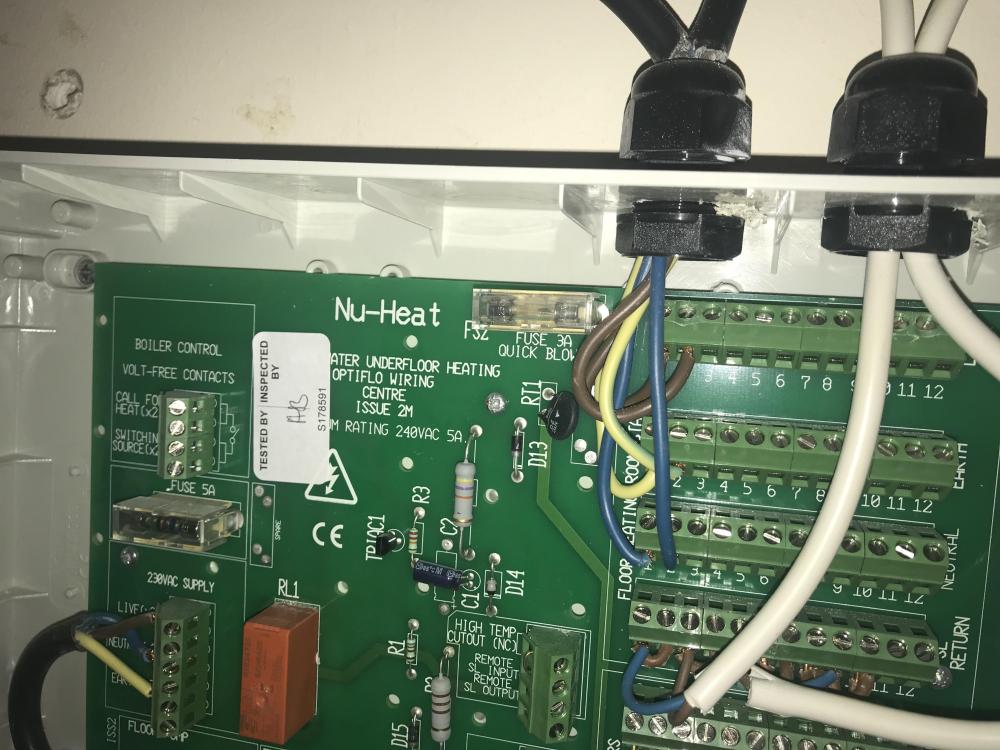
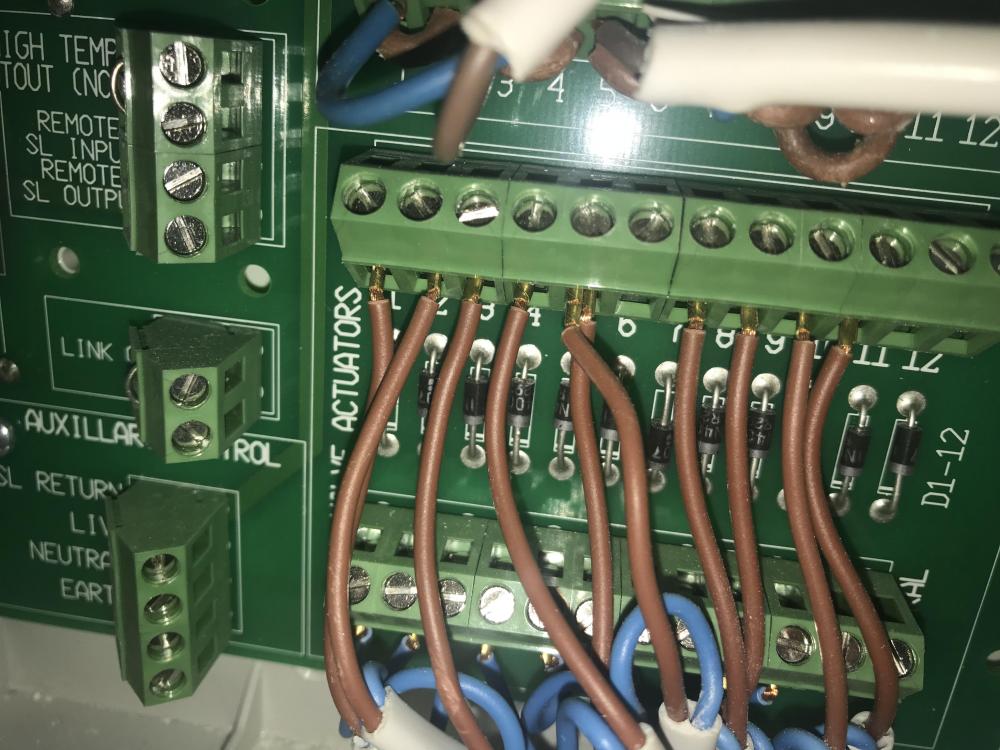
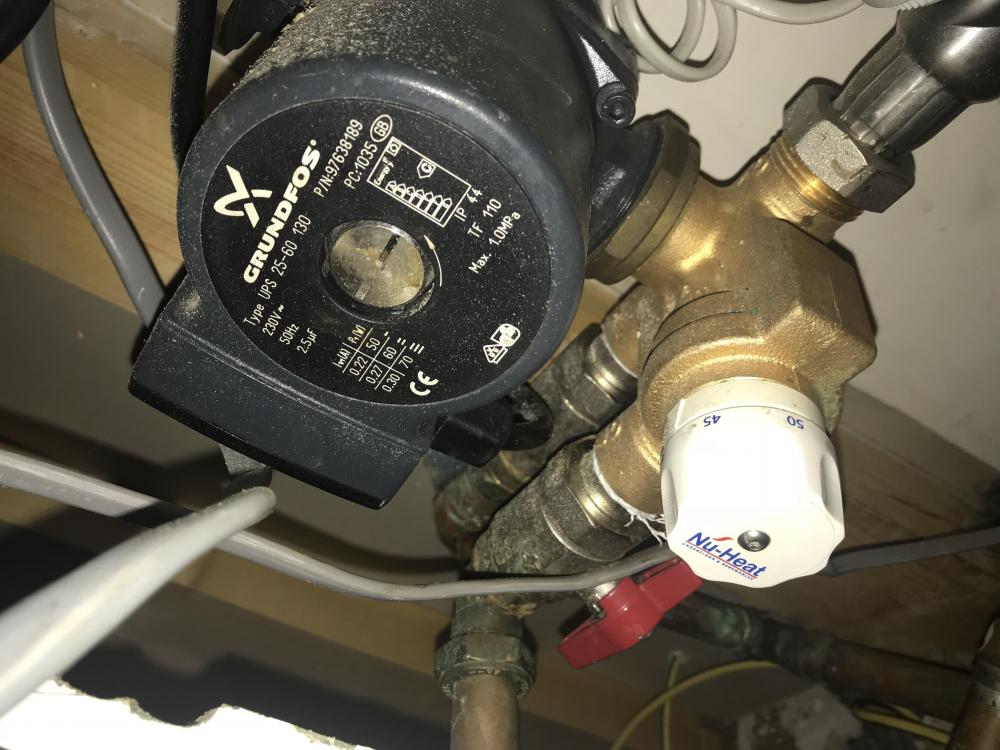
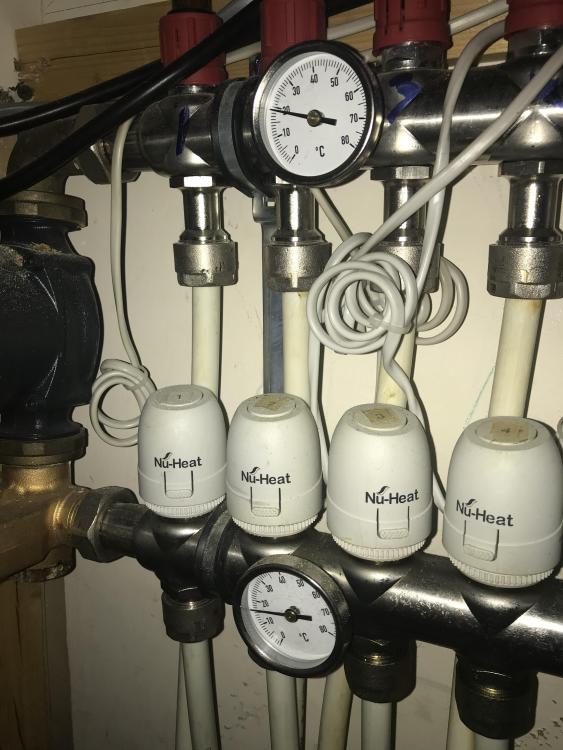
Not at home now but here’s what else i took last night. Whilst not necessarily ideal, is there actually anything wrong with triggering the boiler at the same time as the manifold pump is switched on?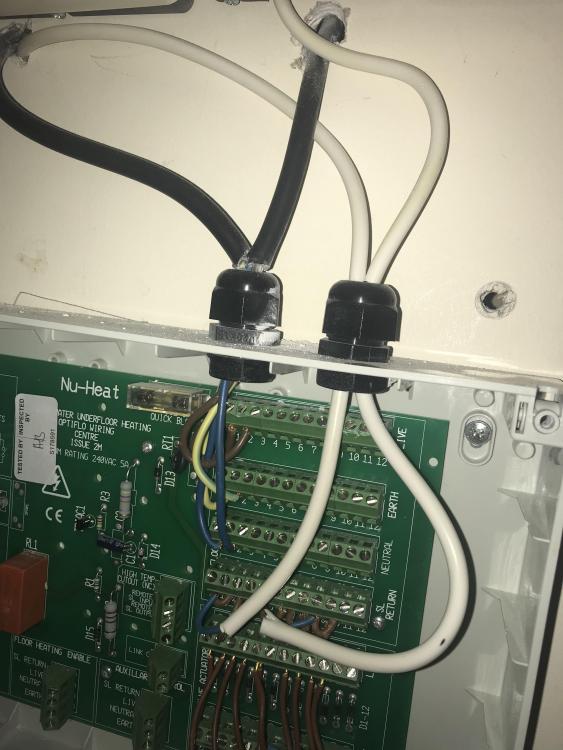
-
Optimising Domestic Heating (UFH and Radiator mix)
AliMcLeod replied to AliMcLeod's topic in Underfloor Heating
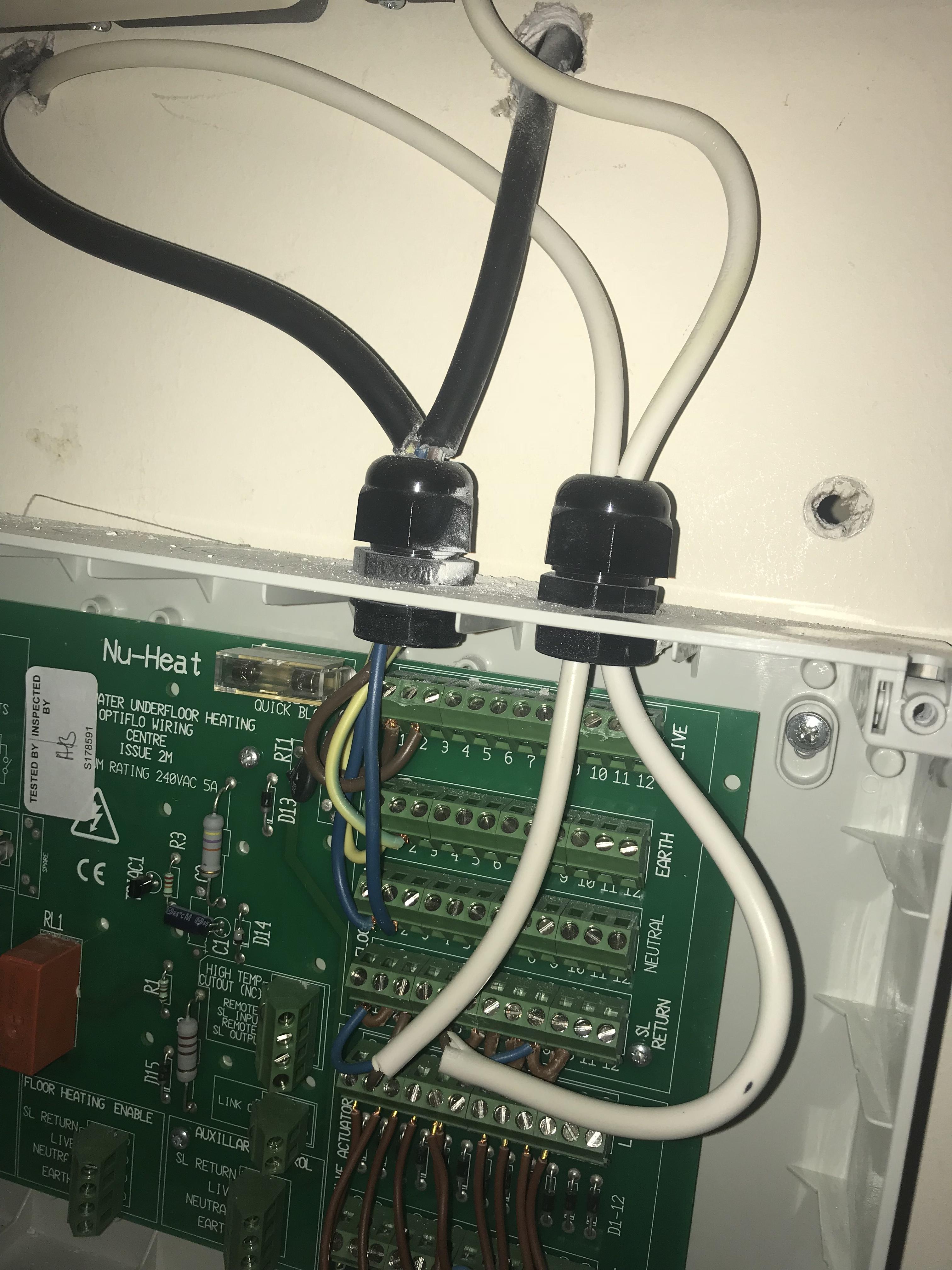
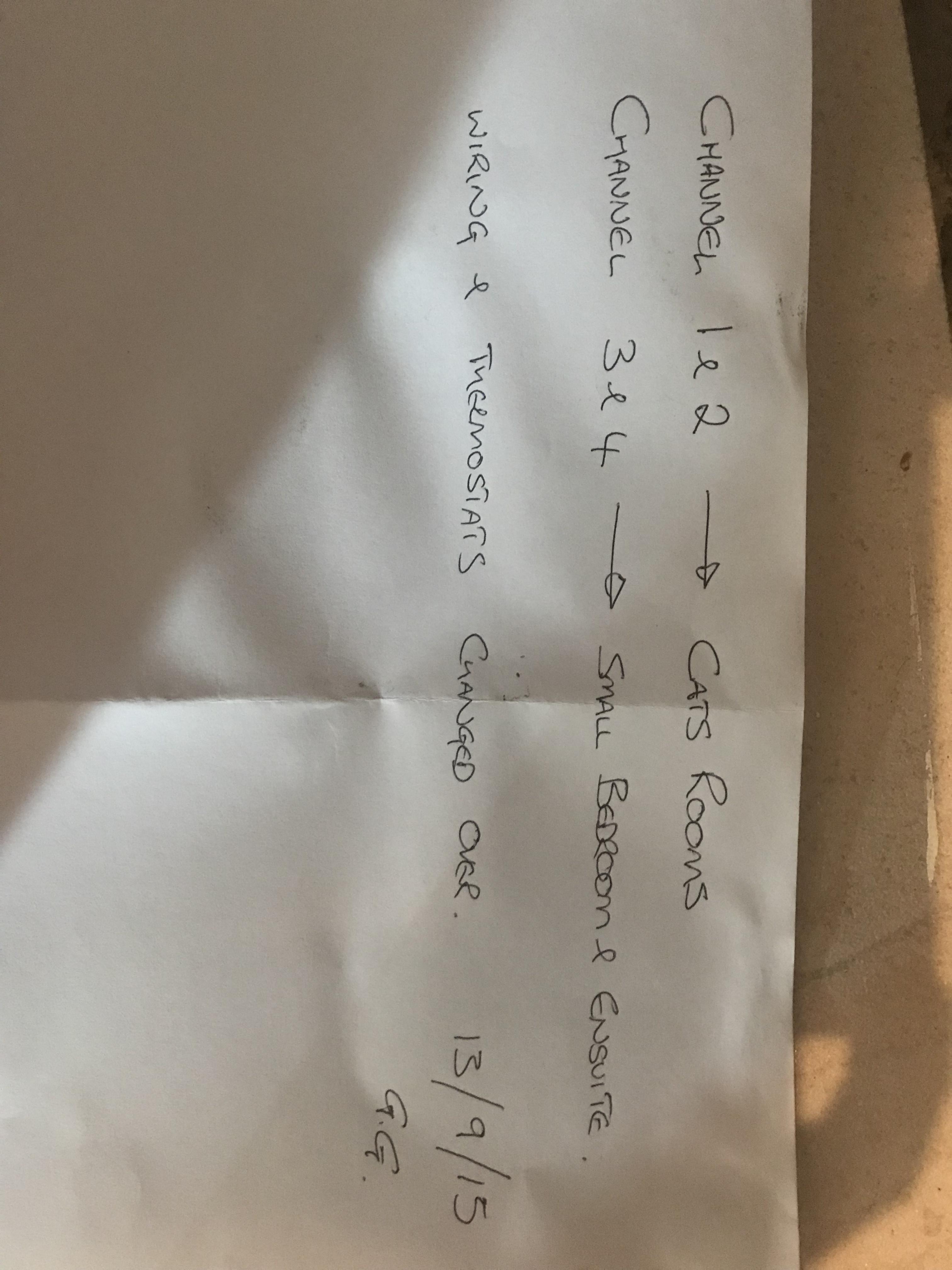
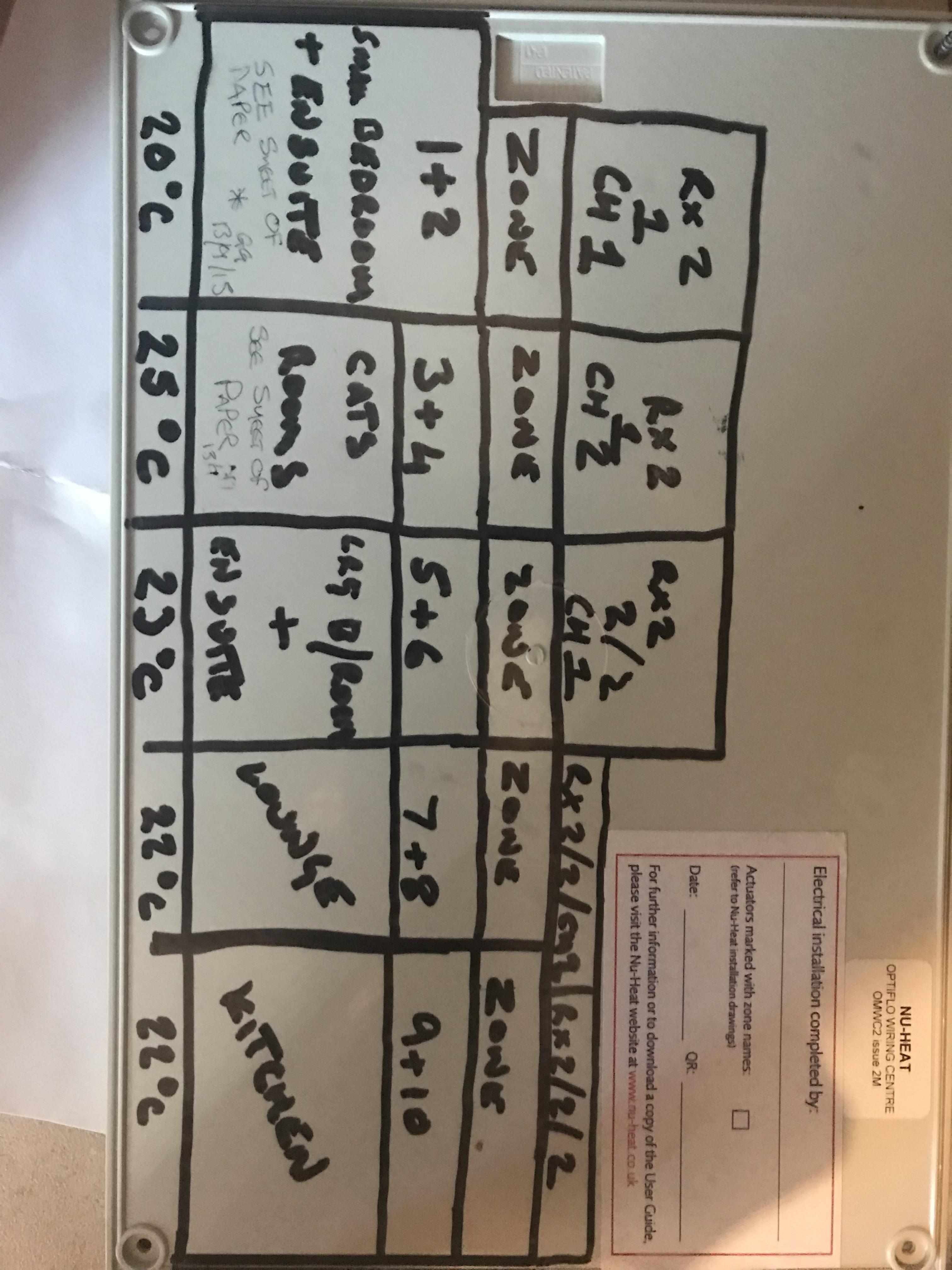
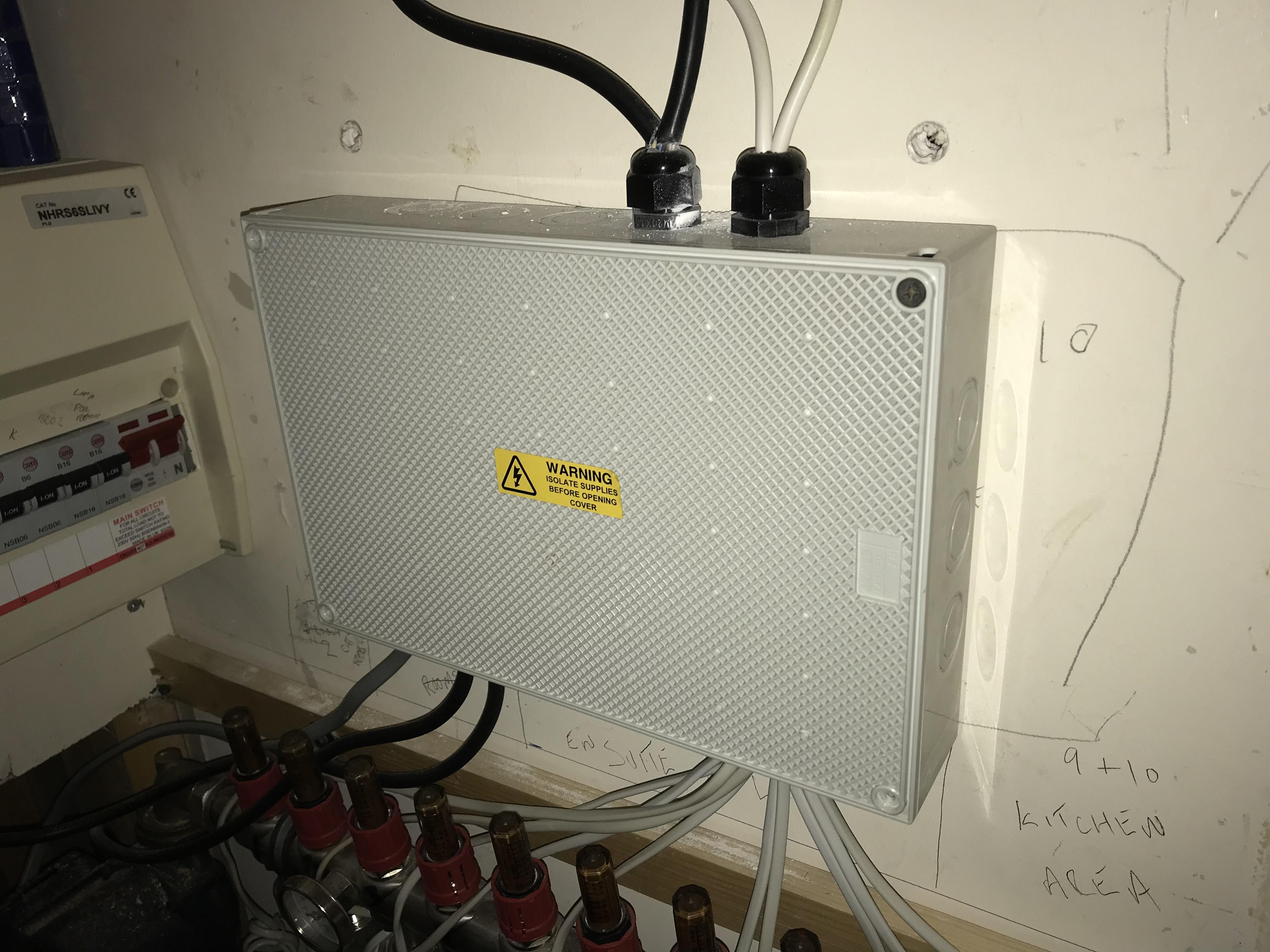
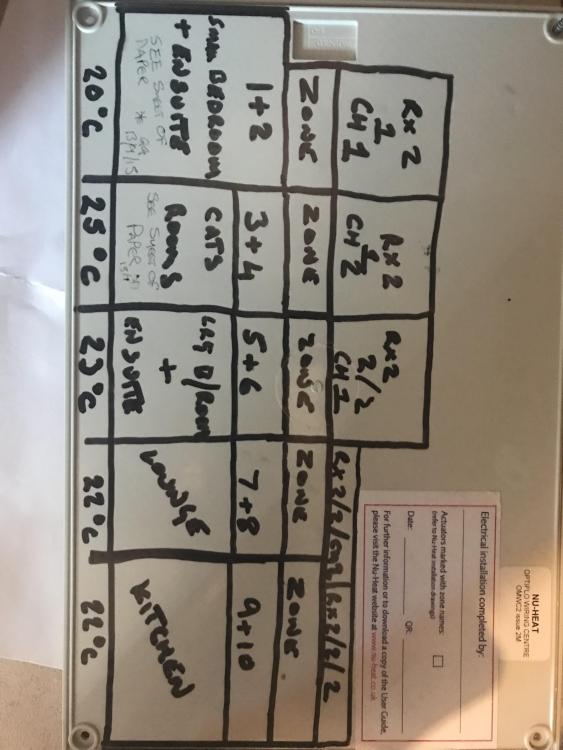
No neutral to the boiler, just live (brown). 4 stats control the 10 zones (3 with 2 zones and 1 with 4 zones) and i'm pretty sure that's all working fine. By returns, do you mean the "SL Return" block - i do see loops in there. Can post a closer picture if needed? Here's the inside of the wiring box cover, along with a hand-written piece of paper that was tucked in there when it was changed in 2015. The previous owner bred cats (we're still trying to get rid of the smell from the under-stair cupboard!) hence the "Cats Room"! No NuHeat controller or stats. 4 Danfoss stats and the 2 Danfoss wireless receivers you can see in the first pic above.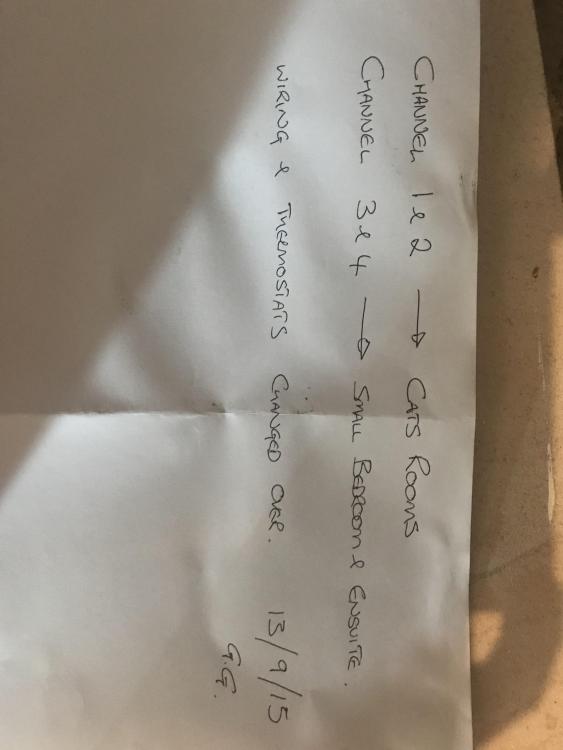
-
Optimising Domestic Heating (UFH and Radiator mix)
AliMcLeod replied to AliMcLeod's topic in Underfloor Heating
So I did some testing yesterday evening. The setup - Boiler at 3.5 (55C) - Manifold pump at speed 3 - Blending valve at 40C I triggered a request for heat via one of the UFH room stats and then the system fairly predictably followed this sequence - The boiler kicks in and the temperate rises on the boiler display - The actuators (there's two for this stat) open (the top bit kind of rises up showing blue) - The manifold flow temperature gauge starts rising - The boiler temperature rises to around 60C before falling back - At that point, the boiler stops burning (short cycling?) but I think on on occasion the temperature fell back but the burner was still on (modulating?) - At the point where the boiler has reached its max, the flow temperature gauge has overshot the blending value setting, maxing out at around 50C, thereafter falling back to 40C - it fairly consistently bounced between the two temperatures - Throughout this test, the return temperature gauge varied little, between ~18 and ~22 Any way to stop the short cycling? -
Optimising Domestic Heating (UFH and Radiator mix)
AliMcLeod replied to AliMcLeod's topic in Underfloor Heating
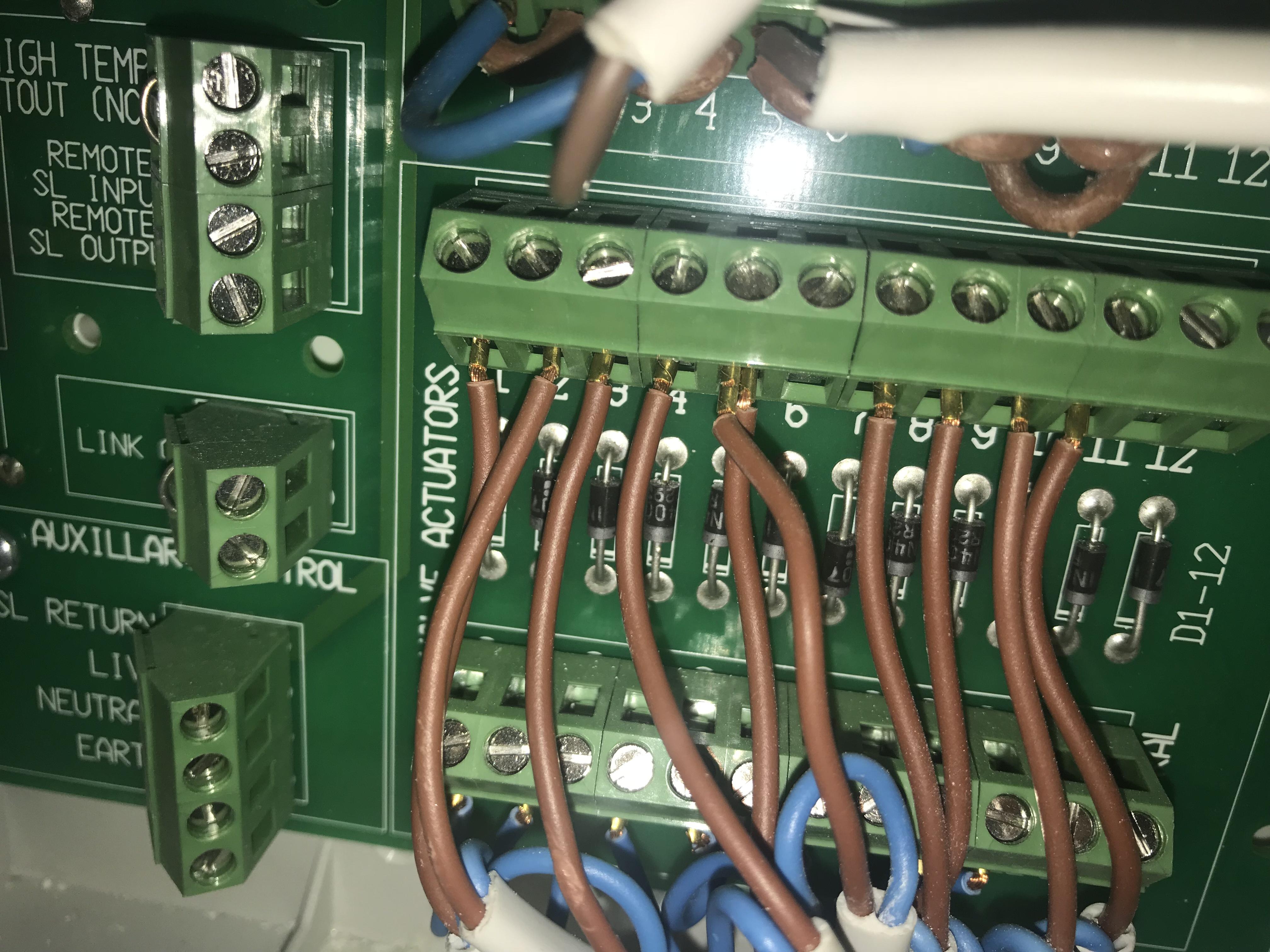
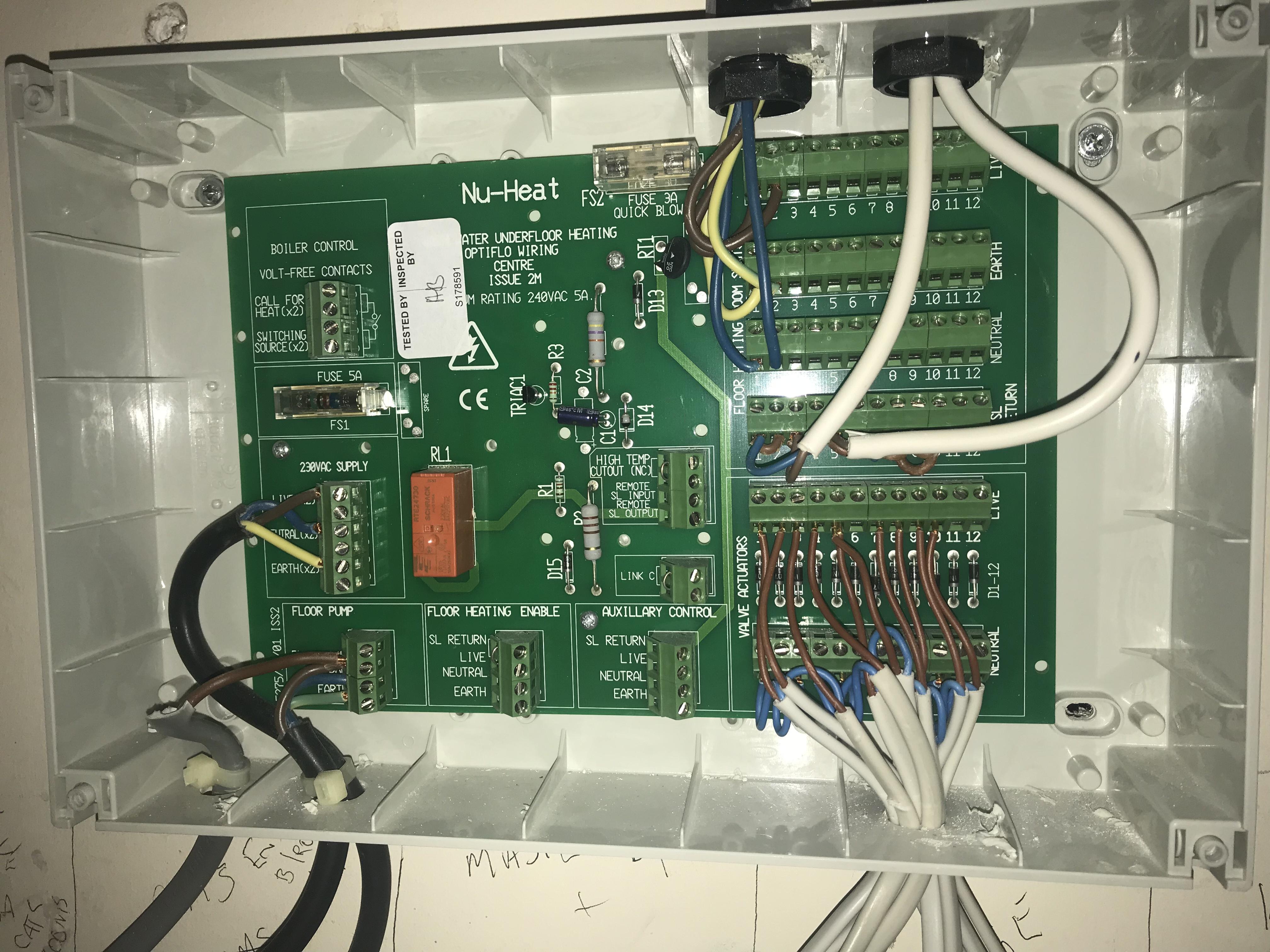
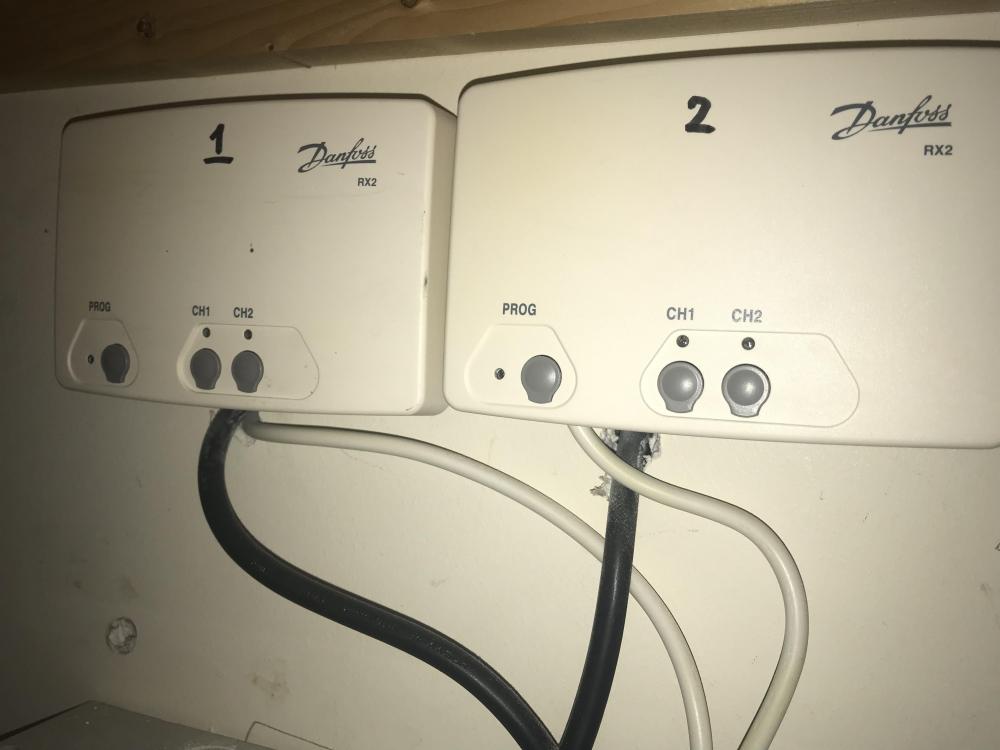
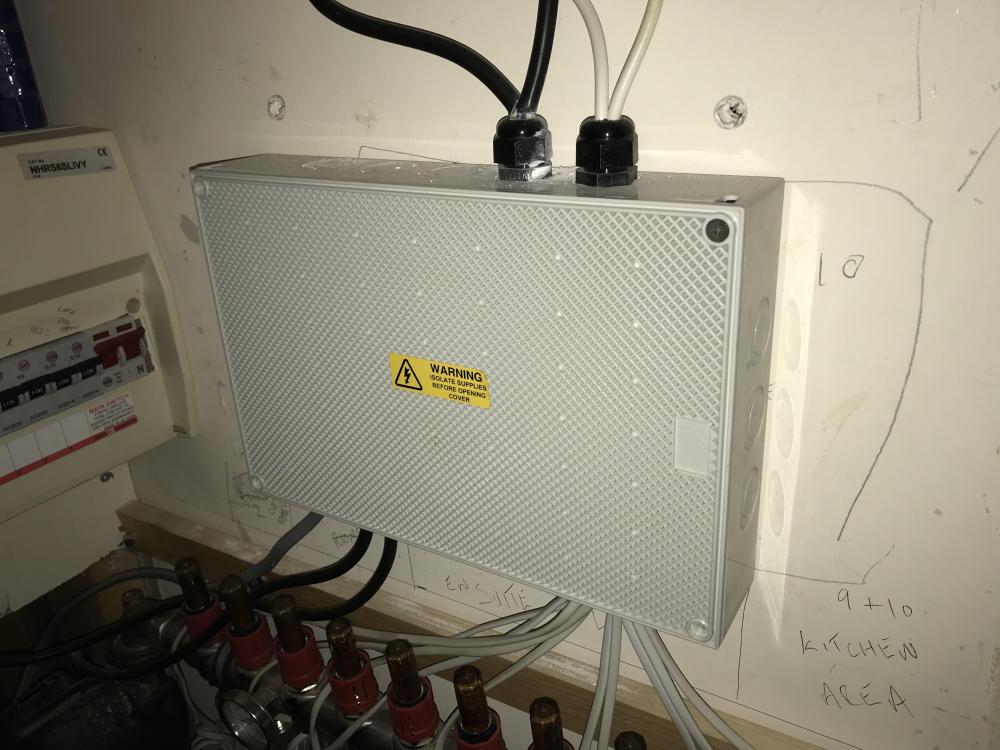
Here's the wiring. The brown (with grey sheath) wire at the bottom left leads to the boiler. The two black ones nearby are the power from the CU (via an isolator switch) and to the manifold pump. The one weird thing i noticed is that in the connection panel to the actuators, connection 5 leads to two actuators and 6 is empty. Any reason why that might be? I can confirm that with the UFH off, the upstairs rads do not call for heat. The only pipework at the manifold is the feed from the boiler and the return to the boiler. The pipework for the upstairs rads is not accessible but I can only assume it is fed directly from the boiler. I also noticed that the manifold pump is on speed 3.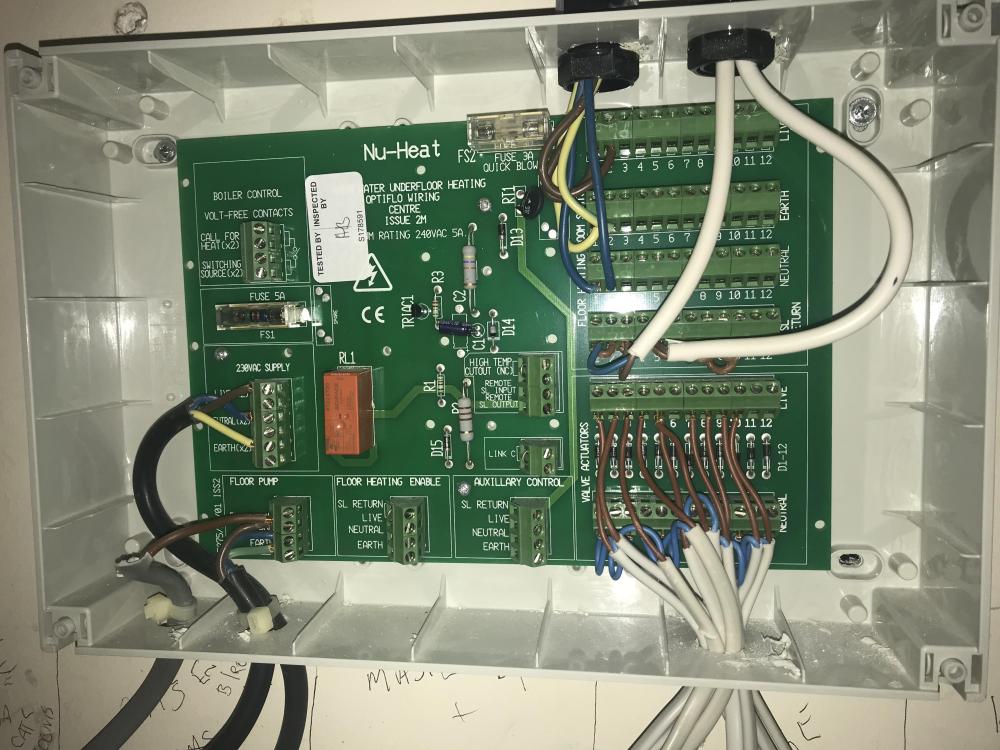
-
Optimising Domestic Heating (UFH and Radiator mix)
AliMcLeod replied to AliMcLeod's topic in Underfloor Heating
Can you elaborate on how that would happen? Do you mean the boiler pump is circulating hot water but it'll get "blocked" at the manifold (blending valve/flow gauge/actuators?) How could I tell? -
Optimising Domestic Heating (UFH and Radiator mix)
AliMcLeod replied to AliMcLeod's topic in Underfloor Heating
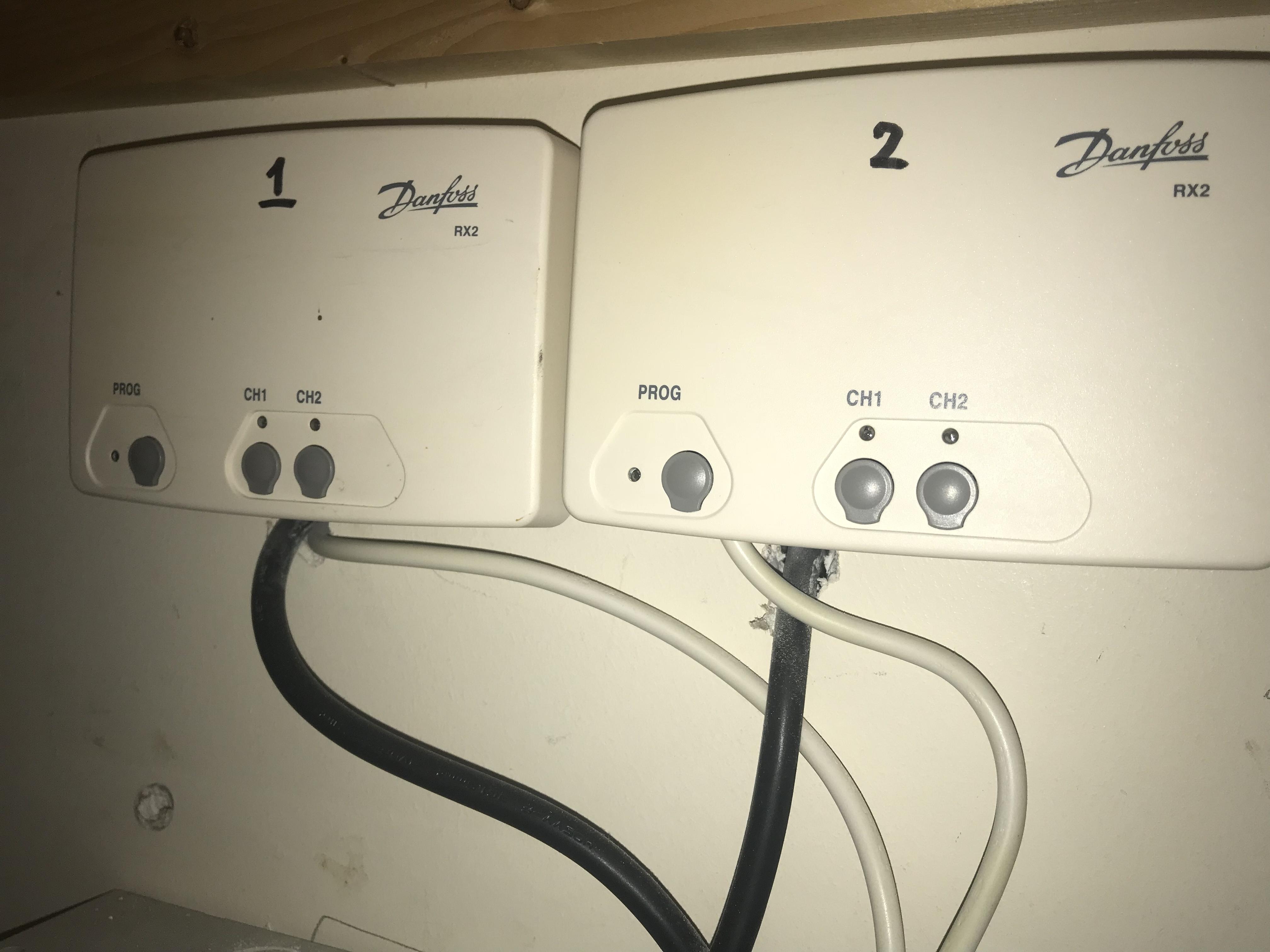
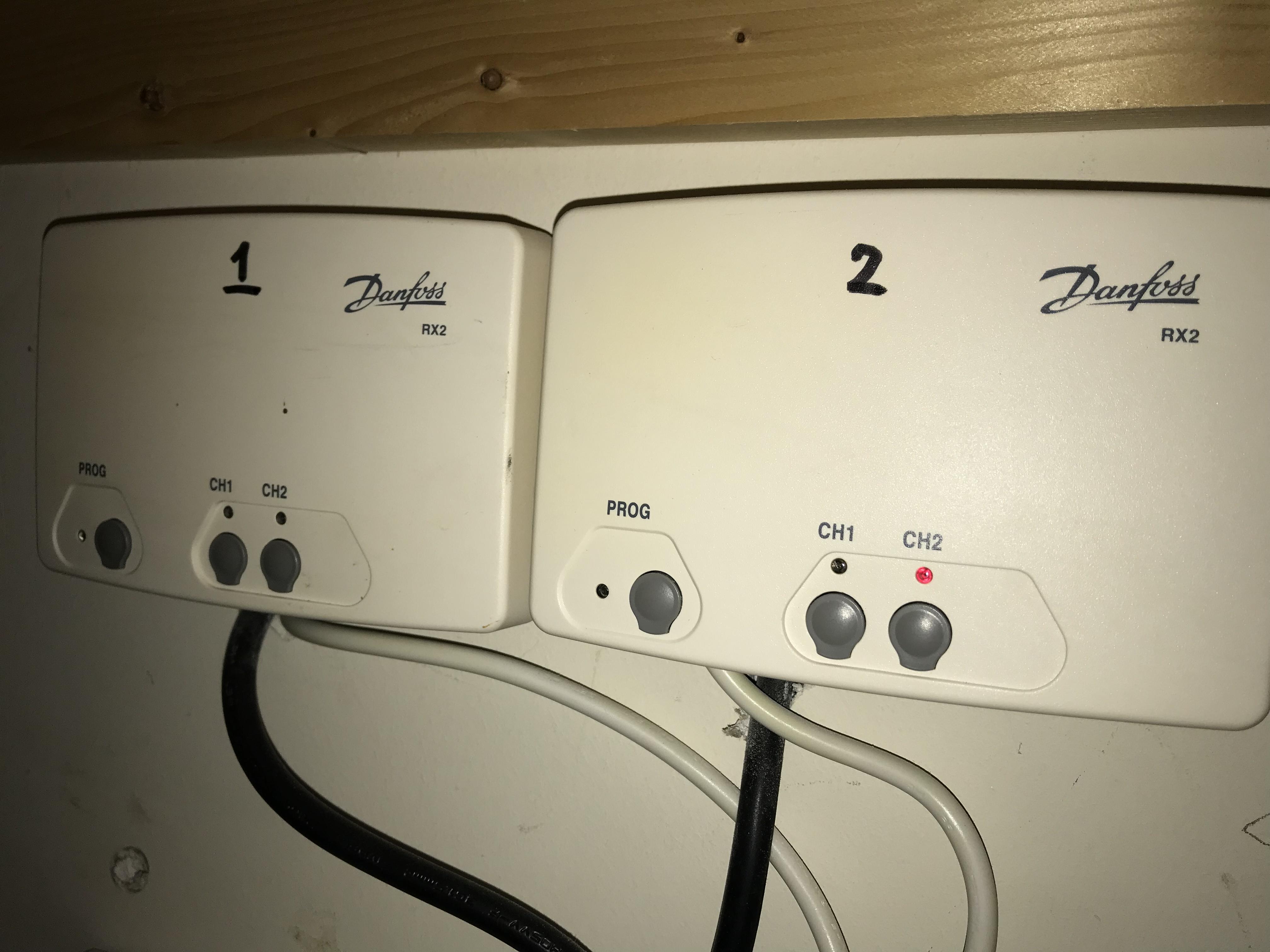
Here’s the photos I have. The stat wireless receiver feeding into the (as yet unopened) wiring centre. I’m sure that has the trigger wire to the boiler but will check tonight. In the second picture, you can see the entirety of the very detailed documentation the previous owners left for us!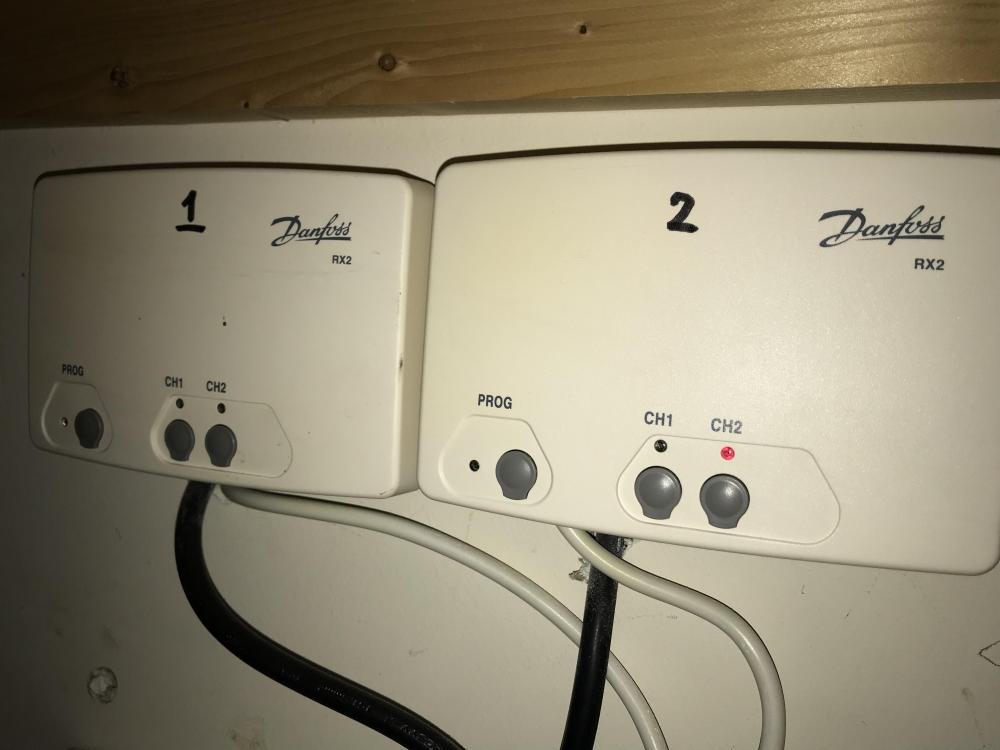
-
Optimising Domestic Heating (UFH and Radiator mix)
AliMcLeod replied to AliMcLeod's topic in Underfloor Heating
Thanks @ProDave - would the boiler pump not be enough to circulate the water around the rads? I think (but will confirm) that even when the boiler timer has the CH on (I didn't mention that above - i have the boiler stat have the CH on during the day and off overnight but am thinking it should eventually be on 24/7), the burner does not kick in even if the rads are turned up full and I'd be expecting them to call for heat. The burner only kicks in when at least one UFH zones call for heat - but let me confirm. I can definitely confirm that the upstairs rads heat up when required when the UFH IS calling for heat. Our guests go home tomorrow so I'll have a more detailed look once they're gone - i'm not home till late tonight (Ediburgh Fringe) and don't want to be overheating the house before everyone heads off to bed. -
Optimising Domestic Heating (UFH and Radiator mix)
AliMcLeod replied to AliMcLeod's topic in Underfloor Heating
Its definitely not to PH standards, but when we had the bad snow in March, the UFH sufficed in keeping us warm. So, I'm not overly concerned we don't have enough to heat the space, just that our fuel bills don't end up silly. And, i forgot to add - there was a wood burning stove in the double-height living area when we moved in, but it was ugly, verging on unsafe/contravening regs (flue too close to wall) and leaked smoke when we tested it, so we've recently had a gas fire installed in its place (Corner Bell 3 Large). Its as much for room aesthetics as heat, but it will be good to augment a low UFH heating setting for the living area when there's just the four of us (including cats) there. -
Optimising Domestic Heating (UFH and Radiator mix)
AliMcLeod replied to AliMcLeod's topic in Underfloor Heating
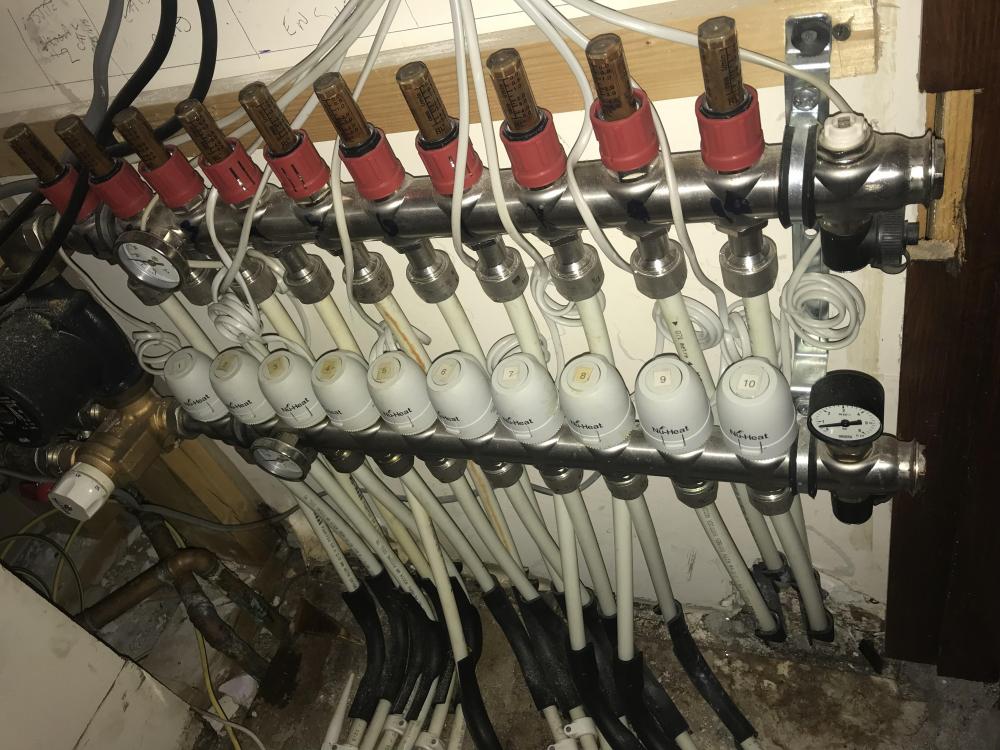
-
For various reasons (I can go into details on a separate thread if anyone is interested) my wife and I had to postpone/put on hold our self build and instead moved house at the end of last year. I’m not convinced the heating setup in this new house is as optimised as it should/can be so am looking for some pointers. I know you guys like details, so here’s what my investigations have found. Apologies if this is too much ? The house was originally build around 15 years ago – it is 1.5 floors with 2 upstairs dormers into the roofspace - and then extended 9 years ago. The extension used the full house height to add a 4 meter high open plan area and new master bedroom suite (again, into the roofspace). So the current downstairs setup is an open plan kitchen-dining-living area, with the double height dining-living area and a double height master bedroom/en-suite. Downstairs also has a separate family room, a small study, and another downstairs bedroom, also en-suite, but this bathroom is a weird Jack-and-Jill type setup where it also doubles as the downstairs public bathroom. Upstairs has two bedrooms, one en-suite and there is also another public bathroom. The downstairs has UFH throughout and is tiled. Upstairs has 3 radiators with TRVs (one in each bedroom, one in top hall) and there is a towel rail with valve in each of the bathrooms. The stairs and top hall are carpeted. Both bedrooms have laminate flooring. Both upstairs bathrooms have tiled flooring. As well as the 4 showers, we have one bath - a monster in size but only used approximately once a month. I don’t know the makeup of the insulation of the house walls or the UFH. The original house was developer built, one of 3, so I suspect it’ll have passed the reg’s (of the day) but little more. The extension was done by a local builder. We’ve not been in long enough to really understand the heating needs of the house yet - we had a mild winter, then that mad snow in March, so I haven’t yet got a handle on how good or bad it might be. We do have 3 south facing Velux windows (on the sloping part of the roof) and lots of North facing glazing to the open plan living area, another 3 Velux windows to our master bedroom and 1 to the master en-suite, and we do get quite a bit of solar gain in that space. The boiler is situated in cupboard by the front door and is a mains gas powered Bosch Greenstar 42CDi Classic. The 8 port manifold is around 10 feet away in a cupboard further into the house and was fitted by NuHeat. It serves the 4 downstairs zones (living area, master en-suite, second bedroom en-suite/bathroom/study and family room), each with its own thermostat (Danfoss stats with wireless comms to the two Danfoss receivers fitted above the manifold). As far as I can ascertain, the upstairs radiators/towel rails are fed directly from the boiler but there is no upstairs stat! This means that, unless I am missing something (I can’t follow all the pipework), the upstairs rads can only work when at least one of the UFH zones is calling for heat! There is no Thermal Store (is that @Nickfromwales screams I can hear....) and no easy place to add one. There are no PV panels and no plan to add any. From a usability perspective, just me and my wife (and 2 cats) live here for the majority of the year, so the upstairs is pretty much shut off unless we need to get to storage or our daughter is home from university (not regularly). We do have family visiting 2-3 times a year in which case typically have a full house (we have 5 staying with us at present, 3 adults and 2 teenagers) so all 4 bedrooms are in use. Based on my reading of the threads here’s here, and taking into account the advice posted on ensuring condensing/modulation/reduced short cycling etc, this is what I’ve done with the setup: I’ve put the boiler DHW setting at the E setting (economy, approx. 50C according to the manual) I’ve put the boiler CH setting at around 3.5 (approx. 55C according to the manual) Reduced the manifold blending value to 40C (it only goes down as far as 35C and the UFH has not actually been on since I did this so this is a placeholder for future experimentation once the it starts to get colder –typically September in Scotland ?) Put the TRVs for the 3 upstairs rads to 15C and turned off the two towel rails, I’ll change this as we come into winter if we have people to stay or if it starts to get cold in this part of the house – it has been overheating in the summer unless we open upstairs windows. I topped up the boiler pressure which had dropped to 0.5bar (the manifold blending valve has a very slight leak) Some questions: Does the above setup seem a reasonable starting point for me to experiment with further as it starts getting colder? Am I missing anything? In particular, could there be a way the upstairs rads call for heat without a stat when all the UFH zones are at their respective setpoints? Is there an issue with all my upstairs rads having TRV/values – did I read that there should be somewhere for the heat to flow if these are all off? Could there be something in the pipework that I’m not seeing that is achieving this? Any other advice on what other optimisations I could make? To those that made it this far, thanks for reading. (I’m going to try get some manifold pics off my phone and will post them next)
-
The tale of the sale of our old house
AliMcLeod replied to Jeremy Harris's topic in General Self Build & DIY Discussion
You could automate this with a home automation system. If you can monitor the increase in electrical usage when your oven is on (you can do this via wall plugs but I doubt your ovens are going via that but there are also things you can connect at the CU end) and assuming you can also remotely trigger the MVHR boost, you could do it that way. If there's no way to monitor the power usage, a bit more basic would be use motion sensors and trigger the boost when there is consistent movement in your kitchen area for x minutes (assuming its not an area people typically walk through at other times) and then have it turn off again when it stops for x minutes.