


Raks
-
Posts
66 -
Joined
-
Last visited
Everything posted by Raks
-
Yes I am considering to remove whole floor of the house (around 90m2) Is there any other way? (the void is 30cm so not enough space to work from underneath)
-
How about Vaillants's or Veismann's "storage combi"s? Or is there a way to circulate the water in the pipe intermittently if the temperature drops. (like using a loop pipe connection as a small hot water storage) And on the pipe size, even if I have 3 areas with their own manifolds, still no need for 22mm? 3 areas/3 manifolds : kitchen, bathroom, ensuite. 15mm pipes will run to the tabs/showers in these areas from the manifold in this area but I was considering a 22mm with 2 "T connection" to supply DHW to these manifols. IS it better and enough to run everything 15mm?
-
The problem is where ever I move the combi some of the hot water taps or showers would be at least 10-15 m away. Other then a good pipe insulation, is there any other method or technology to minimise this hot water delay because of the pipe length ?
-
I would like to insulate the floor of a bungalow. Its suspended floor with 38x128 mm joists. The void is about 30cm. If I would like to put 75mm kingspans between joist, whats the easiest way to fix them? (batten each joist sides seems a lot of work) And another concern is the rodents. How can I protect the insulation being chewed by mouse? (there was a lot of advice not to use plastic pipes in void areas for this reason on an other tread!) or is there any better way to insulate without compromising the air circulation of the void area and without rising the floor level.
-
Still part of the house and its a warm area. Fully accessible for service or checking. a 7-8 meter main pipe will run to the manifold in the house first (under the staircase) then 8 radiators will get their return and supply from this manifold separately so full room by room control possible. Same for the hot water plumbing, three manifolds (kitchen, bath and ensuite) all getting their hot water directly from the combi then the wash basin, shower or the kitchen sink gets their from the manifold.
-
I am considering to put my combi in a small old utility area at the side of the house. Because we are changing the layout, now we can't access to this old utility area from inside the house but from the garden side entry only As far as I see with the new boilers every thing is remote controlled and monitored. My question is how convenient is it to put a combi in a remote area like this? I am not that lazy to walk but in a cold winter night going around the building not something that I like if I have to do often
-
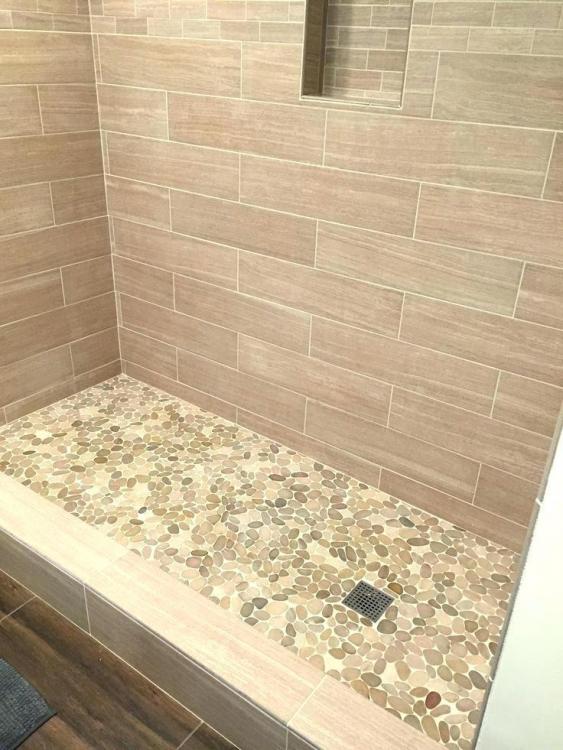
I like these pixelated effect colour gradient tiles on walls as a feature. Are they custom designed or where can I find them? An other question about pebble mosaic tiles as a shower floor. I feel its better to use large tiles on the floor as less grout less dirt but I may be wrong. Whats your experience if you have one of these pebble mosaic on your floors?

-
Looks nice. Is this the wood effect Italian tiles? As an expert, which brand do you recommend? And to make the transition level even (on a joist/timber floor), do we have to put plywood and backer boards under the wood floor area as well?
-
have a look to the comments here:
-
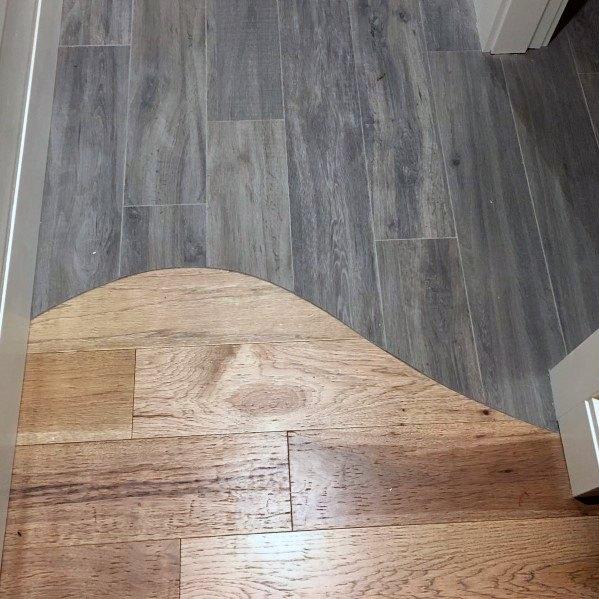
I decided not to put hardwood flooring to the open plan kitchen floor but still the living area would have engineered wood flooring. I have seen these kind of nice tile-wood transitions. It seems no visible trim in between and no expansion gap . Curved cutting and even levelling requires extra skills as well. Has anyone done this kind of curved transitions from hardwood to tile or LVT?
-
I have a utility cabinet by the entrance hall and open plan kitchen which will have wood flooring. Is it a good idea to put floor drains inside the utility cabinet as well as under the kitchen sink unit where my wet appliances will be to minimise the damage of pipe burst flooding accidents?
-
engineered wood or hardwood for the kitchen?
Raks replied to Raks's topic in Wood & Laminate Flooring
Is it Amtico's domestic LVT? Do they have different quality or types for bathroom or kitchen? -
In an open plan kitchen, I would like to put wood flooring (its a an elevated timber joist floor structure). I do not want to put half tile, half wood as I find tile in a living area a bit cold but as you know in the kitchen environment; water, oil splashes and food, knife, plate drops are inevitable. In my case, is hardwood or engineered wood flooring better option for the kitchen ?
-
The chrome sleeve pipe solution was not just for the look but to protect the plastic pipe above the floor for accidental damages. A short copper or chrome pipe above the floor means a connection to the plastic pipe underfloor which is not prefered in some cases and chromes are not good for push fit connections with plastics. Then I found these brass-copper pipes which can slide over the plastic pipes end for the radiator connection. Its not the cheapest solution but this way, -no connection below the floor and just one piece plastic pipe for point to point manifold plumbing -solid straight pipe protection against accidental damages to the connection end of the plastic pipe with radiator. -nice chrome look as well. (actually, I think we can buy 18mm chrome pipes by meter and some 18mm flanges which would be cheaper)
-
No, these are not chrome effect plastics which clips on to the pipe. They are actualy 18mm chrome-brass pipes which has a inner diameter big enough to slide over to 15mm.pipe. It is safer if you are using point to point plastic pipe connections but with the decorative chrome pipe protection over the floor. You just slide to the end of pipe before fitting the valve as you can see from the following video:
-
I am about to change my radiators. I have seen these kind of connection radiator pictures mostly from european countries and the US. Any one see or use one of these in the UK?
-
anyone use these chrome sleeves for plastic pipes? Could it be the "best of both world" solution? https://www.victorianplumbing.co.uk/chrome-sleeving-kit-130mm?campaign=googlebase&gclid=EAIaIQobChMIuP2Ij_-N5gIVGLLtCh2FDwGUEAQYAyABEgLS7vD_BwE&gclsrc=aw.ds
-
This is what i would like to do. Any advice about the manifold model/brand, the connection to radiators and planning?
-
Hi; My radiators and pipes will be replaced. The plumber will install a "manifold for Wall Hang Radiators" so each radiator will have its own 15mm supply and return with plastic pipes. -should we connect the plastic pipes directly to the radiators or copper pipes above the floor and a copper-plastic connection below the floor board? -is push-fit good enough for connections or do you suggest any better and cheaper connection method for plastic pipes. I like the idea of single piece of pipe from point to point with plastic ones but as some plumbers suggested, is it always better to go for a full copper-solder pipe system ? Thanks
-
I just wonder if its better (and comply with regulations) if I put a usual small split load dual rcb consumer unit and then put all separate rcbo or mcb in the distribution panel instead of terminals for each load on feed from the from the consumer unit supply. And when it comes to cable management, this kind of "industrial solutions" makes things quite tidy:
-
Same concerns and considerations here. One consumer unit similar to @ProDave's and a separate larger distribution box filled with terminals, low power supplies, logic controllers and relays smiliar to this one: https://www.hackster.io/stefaanv/building-automation-with-open-source-components-327b68 Even this configuration could be in two separate location if having space problem as I do to fit two boxes in one place. In distribution/control box, probably two sets of terminals, one for supply from the consumer unit and other for loads from the rooms and in between all the control gear. Another concern is what if I decide to sell the house or in case of automation controller failure and want to remove/replace my automation gear? Simply just take all the gears and connect directly these two sets of terminals. I was looking for the possibilities of change-over switches or terminal jumpers to make this "automation by-pass" easier temporarily in case of new installation or failure. Lets see what the professional electricians will say regarding to this separation concept and regulations.
- 25 replies
-
- 1
-

-
- automation
- wiring
- (and 2 more)
-
that makes the board neater. Is there any modules to repeat the dual bus-bar on multi-row boxes ? I was thinking to install a 3 row din rail, 36 module box.
-
I wonder if there are special terminal blocks which makes this switch-light connections easier with jumpers
-
I would like to see some real domestic distribution panel pictures if you have yours please. Mix of room by room rings for sockets and separate circuits for each lights sounds reasonable for distribution box configuration. Instead of ceiling rose, using the wall switches as junction box makes the use of some smart switches easier. Also there are suggestions not to use wall switches as junction boxes but do all the connections at distribution box terminals even for the switches but not sure if this makes it too complicated. (so cables from lights and wall switches runs directly to the terminals at the distribution box) ps: Yes I have seen that Loxone site and their system but I prefer to install open systems and with commonly available controllers rather than one source , closed, proprietary systems even if sometimes its more challenging to install them.
-
Hi all;Whats the realistic way to estimate the cost of different stages of a house renovation.Once I have seen website with some useful tables and excel sheets to make these estimates but now I couldn't find it What are the estimated London daily rate range or labour per sqm cost for the diffrent stages of building work/renovation?Some of the work and stages are:- general labourer for kitchen, bathroom unit removals, ripping off wall paper, tiles, carpets etc.- removal of the some wall and doors for remodelling- cleaning, skip hiring- building new partitions, walls, doors- putting new electrical cables- repair of existing walls & ceiling, plastering & skimming of old and new walls- bathroom/shower fitting- central heating, radiator pipework- boiler and gas installation- Underfloor heating for joist floors- new drainage for toilets- plumbing- tiling- hardwood flooring- carpentry works for cabinets, doors etc.- kitchen unit installation- CU upgrade and electrical second fix- paintingAnd which online sources do you recommend to find multi-skilled house renovation teams for the whole project ?


