sniederb
-
Posts
31 -
Joined
-
Last visited
Everything posted by sniederb
-
What is the clean solution to damp in century-old buildings
sniederb replied to sniederb's topic in Damp & DPCs
Thanks Dave. The house is really nice, the location fabulous, but I hear you ... from this thread I'm getting the impression dampness in these old buildings is not something easily fixed, but more an issue you learn to live with. Not the outcome I was hoping for. -
What is the clean solution to damp in century-old buildings
sniederb replied to sniederb's topic in Damp & DPCs
I apologize for possibly not getting the humour here .. but would you say that dampness in those old croft buildings is something not worth the effort, and building new is the way to go? -
We're looking at buying a property which would need renovation of pretty much the entire interior. The original building was built around 1870 (afaik), and later extended. There is a damp issue (see other post), no central heating, and the entire interior is rather old. Furthermore, there is a separate building labeled "barn" which we'd like to refurbish as a home office. So, our list: Resolve dampness in 150 year old building (sustainably? £1,000 Install central / underfloor heating: £2,500 Rewiring: £2,500 Replace all floors (probably with stone and/or wood): £3,000 Replace all windows and doors: £4,000 Replace staircase: £1,000 Replace all wood panel walls: £2,000 Reopen fireplace living room: £800 Put in new kitchen: £5,000 Put in new bathroom: £2,000 Finish "barn" to be used as office space (additional window, redo bathroom, change sink, finish walls, ceiling, floor): £8,000 The price estimates are taken from https://www.homebuilding.co.uk/renovation-assessing-the-potential/, and I personally find many of them ridiculously low. However, having absolutely no experience with house building / renovation, who am I to judge. From the above, I get the feeling with a budget of about £50,000 we might be ok. Does that seem rather low, high, or reasonable?
-
Might have a major house renovation in the Assynt area
sniederb replied to sniederb's topic in Introduce Yourself
Yeah, Ben More Assynt. The house is on the Stoer peninsula, North of Lochinver. -
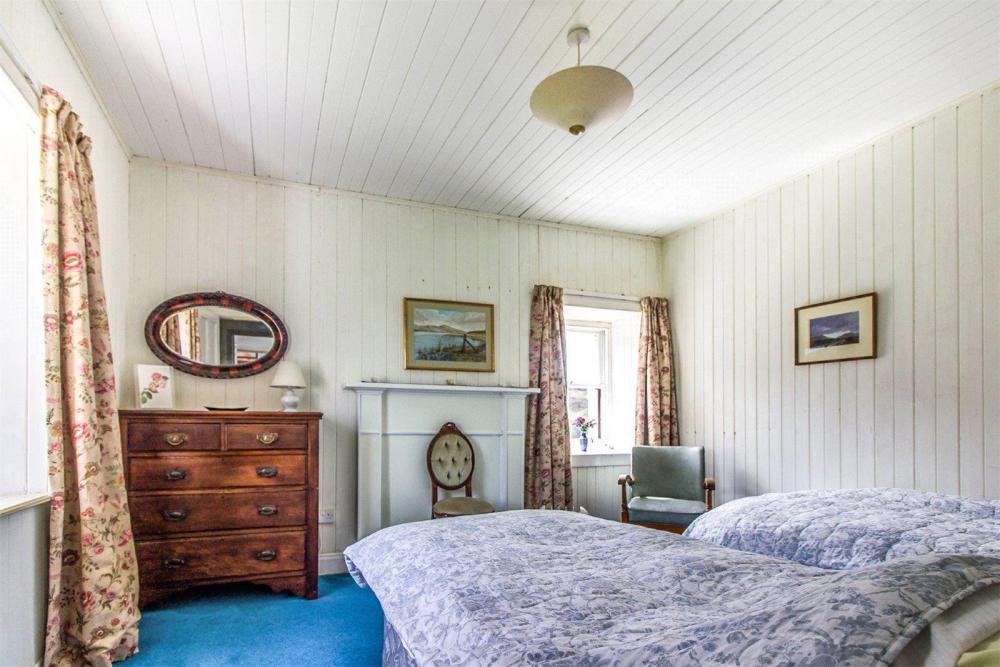
We've looked at quite a few old buildings in the last few months, "old" meaning build in the area of 1860 - 1920. All of these buildings have issues with damp. My understanding (but this is more speculation) is that these buildings were originally built with an open dirt floor, so the dampness just went into the entire house and ventilated out. Putting in a floor creates a sealed off space where dampness accumulates and then seeps into the floor and walls. We've seen plenty of statements to the like of "that wall just needs some repointing or similar". This doesn't seem to be fixing the problem, just the symptom. How is the dampness problem in these buildings fixed for good? (Attaching image of one room showing the wood paneling of the original outer wall, along with the typical signs of damp, esp. in the far top corner)
-
Might have a major house renovation in the Assynt area
sniederb posted a topic in Introduce Yourself
We're in the process of buying a property in NW Scotland, currently looking at a beautiful property in Assynt. The house would need a major overhaul, though, with pretty much the entire interior requiring renovation.