


jimseng
-
Posts
170 -
Joined
-
Last visited
Everything posted by jimseng
-
Buffer tank and secondary pumps. Do I need them?
jimseng replied to jimseng's topic in Air Source Heat Pumps (ASHP)
Low and slow for me. Minimum amount of electricity consumed for maximum comfort. What comfort actually means will only be established once I move in but "efficient" for me is highest cop. -
Buffer tank and secondary pumps. Do I need them?
jimseng replied to jimseng's topic in Air Source Heat Pumps (ASHP)
The threat keeps them quiet. I expect the older one is a bit chewy. -
Buffer tank and secondary pumps. Do I need them?
jimseng replied to jimseng's topic in Air Source Heat Pumps (ASHP)
Assuming the heat loss column is in watts then 3320. I think that tallies with the SAPS data, although that is reams of info and hard to decipher. I'm very grateful for you taking the time to explain this. I have not managed to find anything detailed for this unit yet, just a single page data sheet, but I am looking, in between the cooking my nieces and nephew expect of me. And if the regurgitated potato the dog left for us on the floor this morning is anything to go by she needs to go to the beach. (She has since re-eaten the potato). -
Buffer tank and secondary pumps. Do I need them?
jimseng replied to jimseng's topic in Air Source Heat Pumps (ASHP)
Yes. Just the ground floor so far with a manifold and nothing else. Can you explain what that means? I am finding that I have to double check everything the "qualified" professionals tell me because it seems no one cares nowadays. I'm happy to do this myself if I have the means, I really want to get this right before it goes in. These images may be of interest, maybe not.

-
Buffer tank and secondary pumps. Do I need them?
jimseng replied to jimseng's topic in Air Source Heat Pumps (ASHP)
This is probably my fault but after going through various options I elected to have the UFH designed and installed by a different company to the ASHP supplier. But this is where I am, it's too late to change that now. But I can get the ASHP design right with the right knowlege. This is the bit that concerns me. The worst thing I find is those who say "That's the way we always do it". So to summarize: I am gleaning from this thread that, given that I want to achieve the most efficient system, I don't need or shouldn't have a buffer or secondary pumps? To me this leaves the flow rate up to the heat pump control system which, from the little I know as of now seems like the best option. I'm going to go back to the installer in the new year and query this and, to be fair, they are responsive, if a little dismissive of my technical questions. I need to be in a reasonable position to argue the case if I am to change the system design. As for the DWH cylinder. I chose a large one and have not had any push-back on it being over-sized for a 3 bedroom house. Yes it is big but to me, and my need for deep, long baths I would be furious if I installed one too small. I would never get over it. -
Buffer tank and secondary pumps. Do I need them?
jimseng replied to jimseng's topic in Air Source Heat Pumps (ASHP)
It is a 5kw heat pump. PWM flow control. According to the UFH designs the pipework length is 920m for the whole house. With 16mm pipe / 12mm ID I make that 104L. The spec for the heat pump states a flow temp of 15 - 75 deg. Is it possible the "buffer tank" is in fact an expansion vessel, or does the fact there are secondary pumps in the quote mean it is in fact a buffer tank? I'm going to go back to the installer and get more information, this is all useful to me. So the main point of the question is do I need a buffer? The answer seems to be no. The second is do I need secondary pumps if I don't have a buffer. Are they specified because of the buffer? The UFH on the ground floor is already installed and the screed is down. (150mm insulation, 75mm screed) The FF heating is 22m routed boards and 16mm pipes, that won't be going in for some months. The DHW is possibly for a different conversation although FYI I have opted for a 300l cylinder, despite me being a single person with no kids. It is a house suitable for a family. Yes solar, yes immersion strategy. -
Hello. I don't know what more information is needed to guide me on this but I have been trying to learn about my installation before it takes place and after having watched quite a lot on line (dangerous for someone ignorant as I am) I am wondering if I really need a buffer tank and secondary pumps. I am half way through a new build of a 158 sqM house which is designed to be very efficient (MVHR and masses of Warmcell insulation) I have been quoted for a Samsung Gen 7 R290 ASHP, the data sheet says a min flow rate of 7 L/m and max flow rate of 48 L/m and the design flow temp for my system is 35 deg. There is UFH on both floors with a design flow rate of 7.3 L/s (gf) and 12.1 L/s (ff) and I am not planning on doing any zoning. The ASHP quote specifies a 30L buffer and secondary pumps so I am assuming that is one pump per manifold. I have seen it stated that buffer tanks are not always necessary and I am wondering why this is, why I have been quoted for one and whether I am fussing about nothing. I'm not looking to shave extra pennies off the installation but I am obsessing over getting the most efficiency out of my system and I am averse to "that's the way way always do it" approach. There is a possibility that the 30l tank is an expansion vessel and not a buffer tank. If so that would leave the question why do I need secondary pumps. If it is a buffer tank then I am wondering if I should consider secondary pumps with controllable flow rates rather than set and forget. Happy Christmas by the way.
-
Surge protection, fuses and MCBs in loft from PV array.
jimseng replied to jimseng's topic in Photovoltaics (PV)
I don't think it is really about having a disconnection point in the loft. I started this thread wondering if there was any point in having the SPD/Fuse/MCB box in my first post. I have concluded that it isn't as @Dillsue pointed out, what is the point of a fuse given the short circuit current of the panels? So I think I will stick with MC4s and buy a cheap crimper for the 8 terminations or so I will have to do. This seems the safest way to make the connections over any period of time, day or night when I come to it. -
Surge protection, fuses and MCBs in loft from PV array.
jimseng replied to jimseng's topic in Photovoltaics (PV)
Thanks. Lower risk is the important phrase there! -
Surge protection, fuses and MCBs in loft from PV array.
jimseng replied to jimseng's topic in Photovoltaics (PV)
I'm actually thinking of buying a pair of MC4 cables and cutting them in half. This would give me 4 MC4 connectors outside the roof to connect to the ends of the two strings and I would bring the cut ends through a cable entry and through the internal membrane inside the loft. (I don't have roof felt, it is OSB and a breathable membrane under the panels.) So really I either choose MC4 connections and buy a crimper or terminate them in something like an Isolator or a termination box, whatever the term for that is. Personally I think the isolator fire risk is slightly overblown, especially as I will be able to easily inspect it. It's not like it is tucked away in a crawl space. I'm going to have to make a decision. -
Surge protection, fuses and MCBs in loft from PV array.
jimseng replied to jimseng's topic in Photovoltaics (PV)
@Dillsue Really the only reason I am thinking of putting any termination in the loft is to avoid MC4 connections in the run from the last panels to the inverter. It is not a living space from the building inspector's perspective but I will be using it for some purpose other than spider accommodation and it will have a fixed stair case. (a 10m Scalextric track and guitars perhaps?) An isolator seems like a neat way of terminating the feed through the roof to the cable run to the ground floor. I guess that means it is quickly and easily accessible (and therefore inspectable on a regular basis). -
Surge protection, fuses and MCBs in loft from PV array.
jimseng replied to jimseng's topic in Photovoltaics (PV)
The thing that confuses me over the SWA discussion is that I plan to use PV ultra cable, which now comes in an SWA version. I was planning on running it from the loft to the ground floor and to the inverter inside the service voids/posi joists using safe zones. This is only a 3m drop. This is from Doncaster Cables: This strongly suggests I don't need to use SWA which adds about £3.00/ metre. I'll use SWA if I have to but unless "without the need for conduit installations" means "must be run in conduit" then I'll go for the cheaper option. -
Distance to combustibles flue passing through wall
jimseng replied to jimseng's topic in Stoves, Fires & Fireplaces
@ProDave Can you remember if this has to be fitted to the flue pipe first (I suspect it needs tightening but I can't tell from the image) or can the flue pipe be inserted through it once it is in place in the wall. It makes a difference to me in planing the date for the insulation. Thanks -
Distance to combustibles flue passing through wall
jimseng replied to jimseng's topic in Stoves, Fires & Fireplaces
I think I have found it: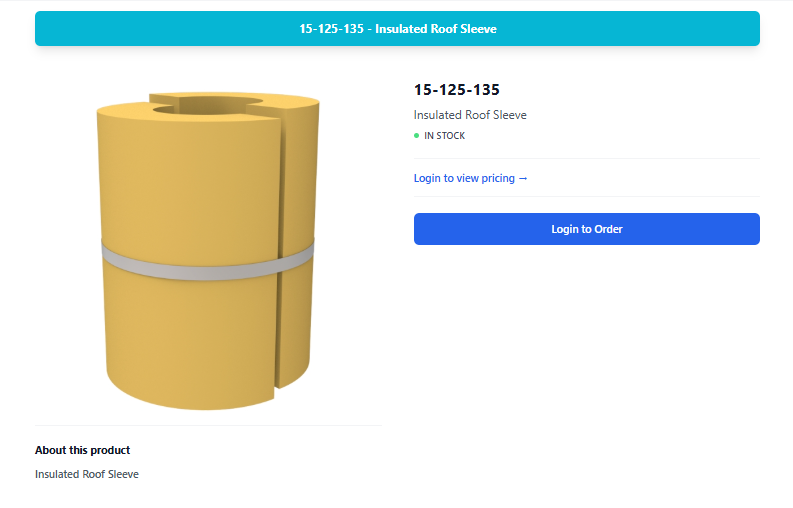
-
Distance to combustibles flue passing through wall
jimseng replied to jimseng's topic in Stoves, Fires & Fireplaces
Indeed, but it's the regs I have to follow! -
Distance to combustibles flue passing through wall
jimseng replied to jimseng's topic in Stoves, Fires & Fireplaces
@ProDave. That looks like the sort of thing. Do you have a supply reference for that? I assume, being described as a sleeve that the 125mm twin wall sits inside it? Or is it actually an insulated twin wall flue in itself? -
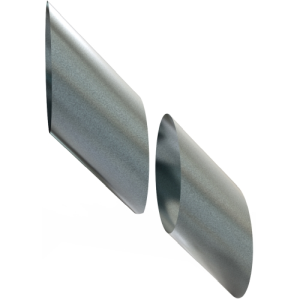
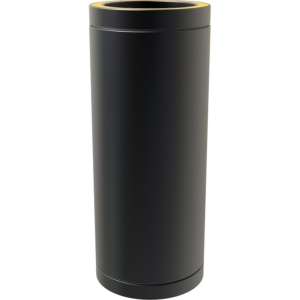
Hello. I have had a flue designed and I now have all the bits on site. The issue is the installer is now not available for some time and I really want to fit the flue through the wall to the outside before the insulation goes in. I haven't been able to get hold of the installer so I thought I would ask here. I have a timber frame building with 350mm Warmcell insulation. The installer has specified 2 45 degree bends and twin wall flue to pass through the bedroom wall to the outside of the house and then up. This means passing through plasterboard, intello membrane, Warmcell then through larch wood cladding. I have been supplied an expandable wall sleeve to surround the twin wall flue where it passes through the wall: This wall sleeve is barely wider internally to the twin wall flue which specifies a 50mm minimum distance to combustibles so I am confused as to how I maintain the minimum distance, unless I have mis-understood, or been supplied the wrong thing. Can someone advise? I'm trying to get all parts that pass through the wall installed before I seal up for the insulation.
-
Surge protection, fuses and MCBs in loft from PV array.
jimseng replied to jimseng's topic in Photovoltaics (PV)
Thanks for the replies. I'll fit an isolator. That's another one ticked off the list. -
Surge protection, fuses and MCBs in loft from PV array.
jimseng replied to jimseng's topic in Photovoltaics (PV)
So do people see the need for fusing/spd/MCB between the panels and inverter, or as @JohnMo says, nothing between panels and inverter. If it is nothing then I am either going to have to fit MC4 connections to the PV coming through the roof or find some suitable method of terminating them safely, giving me a method of continuing the cable run at a later date. The panels are going on the roof sooner than the rest of the build. Edit: I should say MC4 connections to the ends of the PV cables that have come through the roof into the loft space. -
Surge protection, fuses and MCBs in loft from PV array.
jimseng replied to jimseng's topic in Photovoltaics (PV)
I also have two 16k batteries which won't be going up there. -
Surge protection, fuses and MCBs in loft from PV array.
jimseng posted a topic in Photovoltaics (PV)
Hi All When I come to install my panels on my roof I was thinking of installing one of these in my loft (or something similar). I will have two strings: Much of my thinking is that it would give me a way of terminating the solar cables and allowing me to fully connect up the array before I continue to do the rest of the cabling to the inverter on the ground floor. (Eliminating un-terminated high voltage cables seems like a good thing). I just want to check that this is a sensible thing to do. I have some nagging doubts: The inverter already has class II surge protection. Is the current protection and fusing necessary given that the arrays are inherently current limiting in their output? If anybody wants to suggest putting in a DC islolator how does that square with the current advise not to fit isolators and rely on the inverter DC isolator? Is there any alternative I should consider if any of this is unnecessary such as a simple termination bus bar. (Does such a thing exist?) I am considering that I could probably do away with having to crimp my own MC4 connectors given that the Growatt PV input seems to be gland and screw terminal, not MC4 for the PV input. Comments?
-
Thanks @Peaklander That is an interesting IET article
-
Solar cable runs from roof space to plant room on ground floor.
jimseng replied to jimseng's topic in Photovoltaics (PV)
That PV ultra cable seems to solve many problems. Good tip! -
Solar cable runs from roof space to plant room on ground floor.
jimseng replied to jimseng's topic in Photovoltaics (PV)
@Nickfromwales PVC trunking? Does that fit with: PVC would be cheaper but it is only a 3m run straight down into the posi joists and then on to the inverter wall. -
Solar cable runs from roof space to plant room on ground floor.
jimseng replied to jimseng's topic in Photovoltaics (PV)
So according to the latest guidance, don't fit DC isolators as they are a fire risk, except do fit them because the fire brigade like to isolate the PV when tackling a fire. What fun! Having climbed back up the scaff and looked at it again it is a really easy vertical run down from the roof to the plant room posi joists so fitting trunking should be easy.

