sb1202
-
Posts
61 -
Joined
-
Last visited
Everything posted by sb1202
-
Converting a drystone wall to a mortared wall
sb1202 posted a topic in Landscaping, Decking & Patios
We have a drystone boundary wall that was professionally built with granite field stone. As much as it looks nice, it's gets damaged a lot by sheep and it's been knocked a couple of times by a combine harvester going into the field opposite. I've genuinely grown sick of repairing it now because it never goes back the same way and being granite, it's stupidly difficult to work with and dress. I'd like to convert it into a mortared wall and I was wondering if it can be mortared in place without digging out the foundation stones and installing a concrete footing. The foundation stones are about 400 years old by the way. I know in some areas, field stone walls are mortared with clay from the surrounding fields, so I'm guessing my wall can be mortared in place too, but as we don't have clay around, a lime mortar would work? Any advice/experience appreciated.
-
Installing parquet over overfit type UFH boards
sb1202 replied to sb1202's topic in Underfloor Heating
200micron is the thickest foil available. I haven't seen 400mircon anywhere? Tile can be direct bonded on thinner foil boards, it's the kpa rating that matters for tile. These are 400kpa rated for tile, which is overkill for engineered wood. Cracking may not an issue with slc over concrete, but these are xps boards which have a lot more movement. There are a lot of horror stories with Wunda floors, particularly with slc and glued down floors. Common issues are chunks of slc lifting, hollow spots and slc turning to dust along cracks. Most problems are with lvt, but people have had the same problems with tile and engineered floors. Over 27°? Curious you say this as I install a lot of this parquet. I've never seen any engineered wood that's rated over for 27°. I haven't heard or seen any complaints about the wunda system needing to run at high temps. -
Installing parquet over overfit type UFH boards
sb1202 replied to sb1202's topic in Underfloor Heating
I've tested this with some spare boards and the SLC doesn't fill the gaps as well as direct bonding the parquet to the boards. The parquet is fixed with an MS adhesive which is sticky, has a viscosity similar to honey and has self levelling properties. When the parquet blocks are laid onto the adhesive and slid into place, the adhesive spreads and is forced into any gaps. It makes a solid seal. With the SLC, it's less viscous and certainly flows faster but it flows along edges before settling and leaves small pockets under the foil. A spiked roller didn't make any difference or compress it into the pipes. -
Looking for advice from anyone who has installed a "wunda" rapid response type UFH system. Currently installing one in a reno property but getting so much conflicting advice from manufacturers and floor installers about fixing the finished surface, which will be 15mm engineered parquet. Wunda, who are the market leader, say that engineered wood (and ceramic tile) can be bonded direct to the xps tiles. However, from googling, speaking to suppliers etc, the Wunda overfit boards and pipes are identical to all every other suppliers. The boards are all exactly the same spec which is essentially 20mm overfit, EPS400 (400KPA compression strength) boards with a 200 micron foiling on top. Whilst the boards are all the same, no one seems to be in agreement when it comes to installing the finished floor. Some say there needs to be a min 5mm SLC screed over the boards, some say min 10mm, some say min 12mm. Flooring installers say min 15-30mm? After numerous searches on installing SLC screed over the boards, I found loads of posts where people have experienced the SLC cracking - despite following instructions. With that said, it's made me a touch uneasy about this system and looking for anyone's experience. (I have since found a few influencers who installed parquet direct to the overfit and so far, they don't have any problems. (See pic))

-
No connection on boiler to receive wiring centre - what to do?
sb1202 replied to sb1202's topic in Underfloor Heating
See the OP. It was originally spec'd with an 8 zone WC. The reason this has gone off topic is because someone suggested using the navien (which comes with the boiler kit). -
No connection on boiler to receive wiring centre - what to do?
sb1202 replied to sb1202's topic in Underfloor Heating
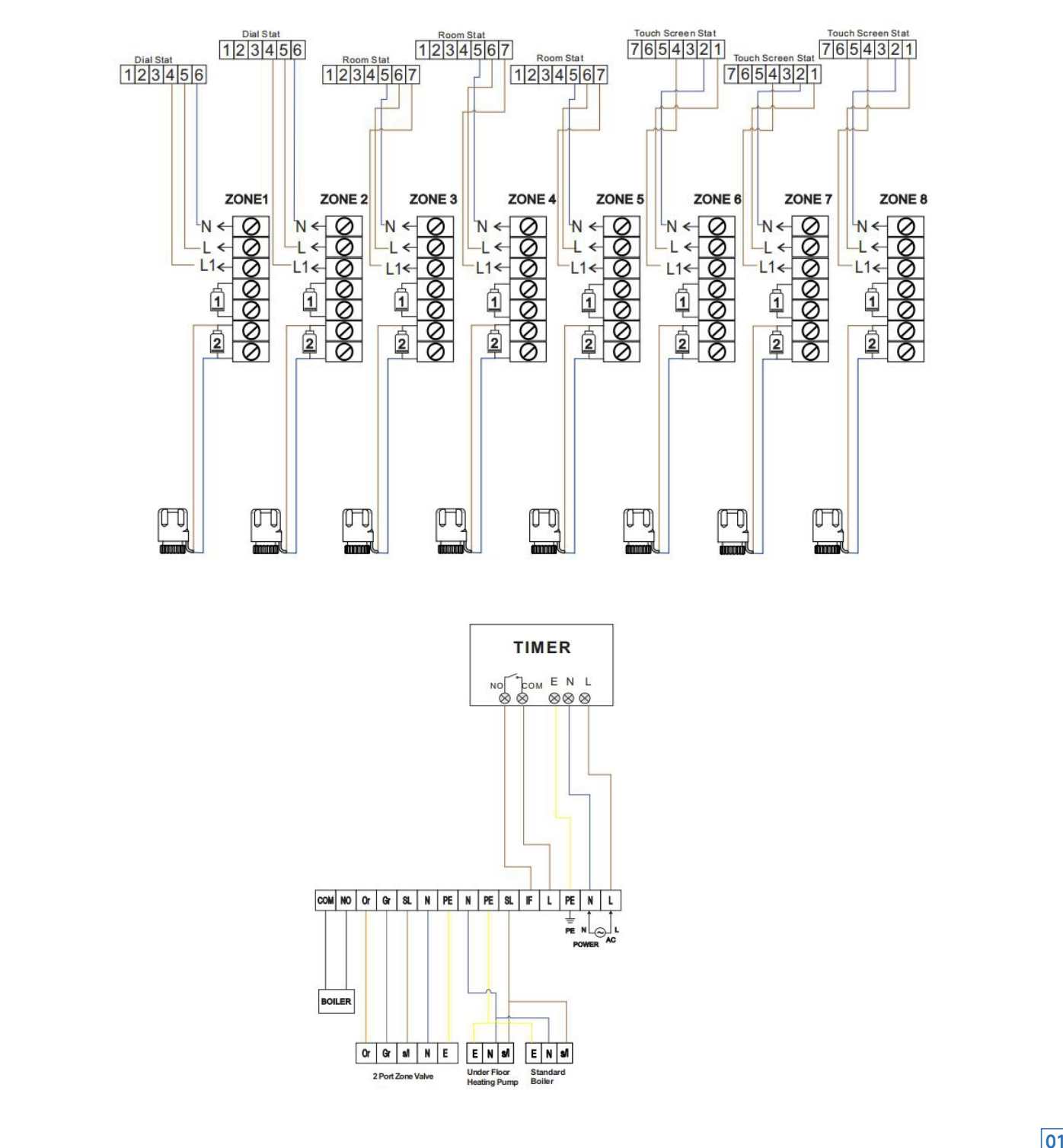
No, they didn't and if you read the OP, you can see its an 8 zone wiring centre. The navien WC is supplied as part of the kit. No. -
No connection on boiler to receive wiring centre - what to do?
sb1202 replied to sb1202's topic in Underfloor Heating
That's my reading of it too. The problem is the drawings don't match the mainboard on the boiler. When we spoke with Navien tech about it, they walked us through and asked us to remove a jumper on the mainboard but when I said there was no jumper, they went "oh!". I suspect the mainboard is a newer model and the manual refers to an earlier model. Waiting on Navien to come back to us meantime. As for the UFH 8 wiring centre, it's a nightmare. It has no branding, manufacturing batch number to go by. All I know is that it's a "Waterline" circuit board and there are different revisions of this particular circuit board and different manuals. As soon as Navien come back, I'll probably end up ditching the current UFH-8 wiring centre and buy a branded one. See above. You're right, it should have been simple. -
Contesting final invoice - please help!
sb1202 replied to Tom's topic in General Self Build & DIY Discussion
The company I used are lawyers as are the other companies I contacted for quotes. They all informed me of the same process. Due dilligence checks performed on debtors, nature of debt, director checks etc. This all had to be provided before they would accept and enter a service agreement with me. In the end, I got the full invoice total back plus 8 interest back dated 2 years. The interest covered their fee and left me with more than the invoice total. -
No connection on boiler to receive wiring centre - what to do?
sb1202 replied to sb1202's topic in Underfloor Heating
We spoke with Navien and the plumber beforehand. They were given the UFH spec and they said it's no problem. The boiler can modulate to demand and the flow rates are set at the manifold per zone. If Navien had concerns, they would have told us. Thanks for taking the time to reply, but this is going off topic. -
No connection on boiler to receive wiring centre - what to do?
sb1202 replied to sb1202's topic in Underfloor Heating
Sigh.... read my OP. Boiler is 2 ZONE s-plan pipe circuit. CH = ZONE 1. UFH = ZONE 2 UFH ZONE = 5 ROOM ZONES which need an 8 ZONE wiring centre in order to accommodate wiring for 5 actuators, thermostats, zone valve etc, The Navien wiring centre is a 3 ZONE wiring centre - which means it physically cant take all the wires for 5 actuators, thermostats etc I'm certainly not going to rip out a £6k bolier and replace it. -
No connection on boiler to receive wiring centre - what to do?
sb1202 replied to sb1202's topic in Underfloor Heating
Cant. It's only for 3 zones. -
No connection on boiler to receive wiring centre - what to do?
sb1202 replied to sb1202's topic in Underfloor Heating
Yeah, and that's the problem. It uses their own "smart plus" technology which us LORA RF based. All calls are made from RF smart stats to a RF comms module that is wired to the boiler. Presumably, with all the calls to the module, they decided there was no need for a volt free terminal on the main circuit board. It does s-plan, multi zone etc as standard, but it relies on adding their smart RF wiring centre, and again, this communicates with the RF module. -
Contesting final invoice - please help!
sb1202 replied to Tom's topic in General Self Build & DIY Discussion
It should be 8% annual interest accrued daily. It's a statutory interest charge - see here - https://www.gov.uk/late-commercial-payments-interest-debt-recovery/charging-interest-commercial-debt Yes. If they're talking about adding interest and refusing to back down, I'd take this as a signal that they are considering debt recovery/collector. You entered a contract with them when you instructed them to start work on your project. If you part or pay any invoices, that cements the fact you entered the contract. I've been through all this a few weeks ago, but I was the pursuer. If a debt collector does get involved and starts contacting you, you can be assured that they will have done the legal due diligence to ensure they get their money. -
No connection on boiler to receive wiring centre - what to do?
sb1202 replied to sb1202's topic in Underfloor Heating
The COM/NO connection here is a volt free/relay connection. It sends a signal from the wiring centre to the boiler to call for heat. Most boilers will have a 230v terminal side and a low/no volt terminal side on the main circuit board for connecting external controllers. This particular boiler doesn't and Navien confirmed it doesn't. The plumber knows his stuff and has never came across this scenario before.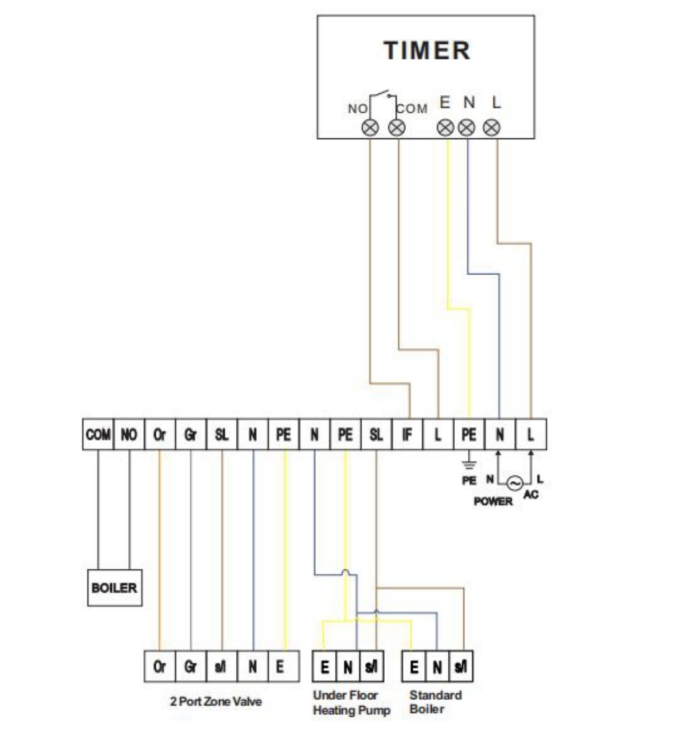
-
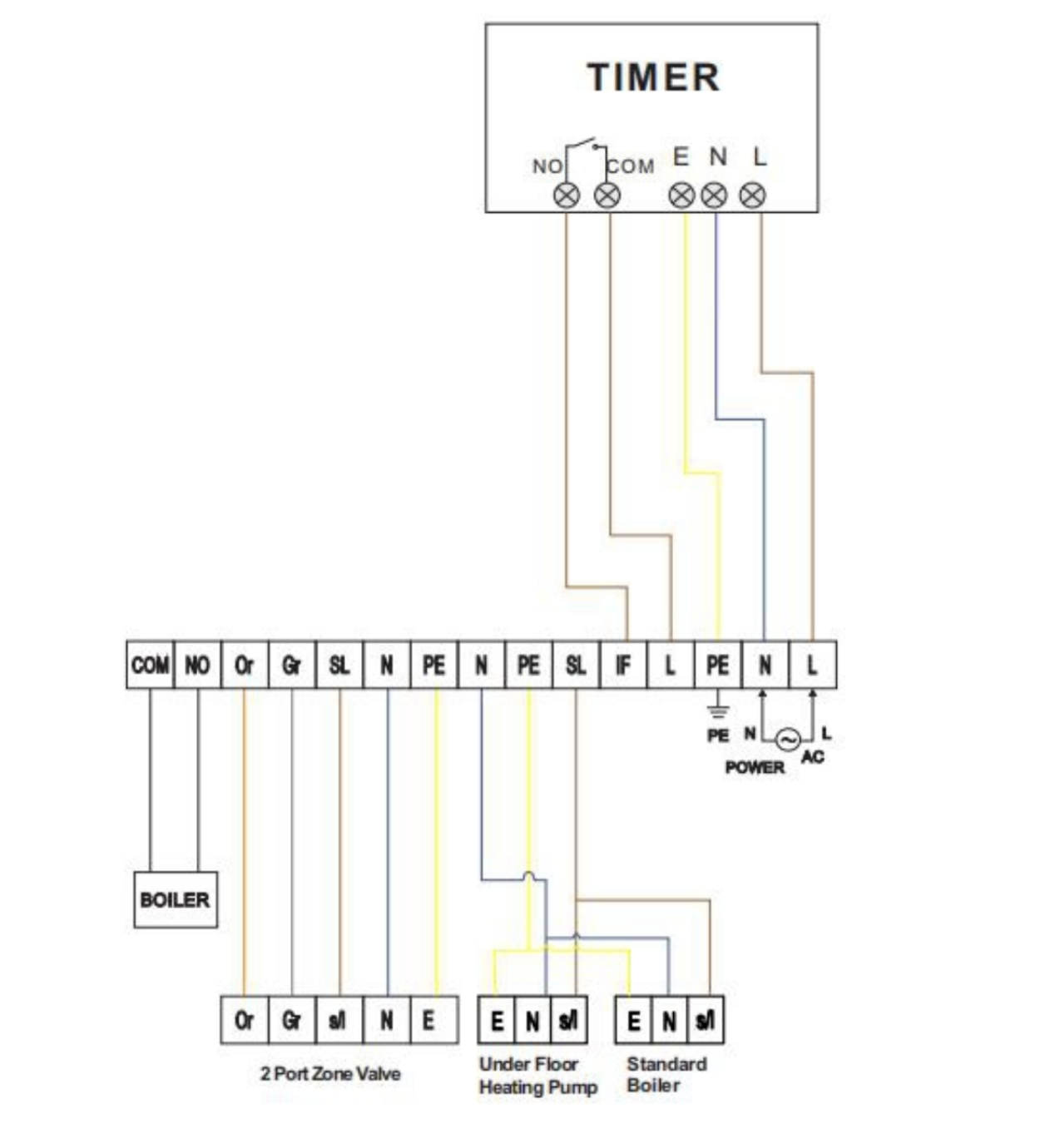
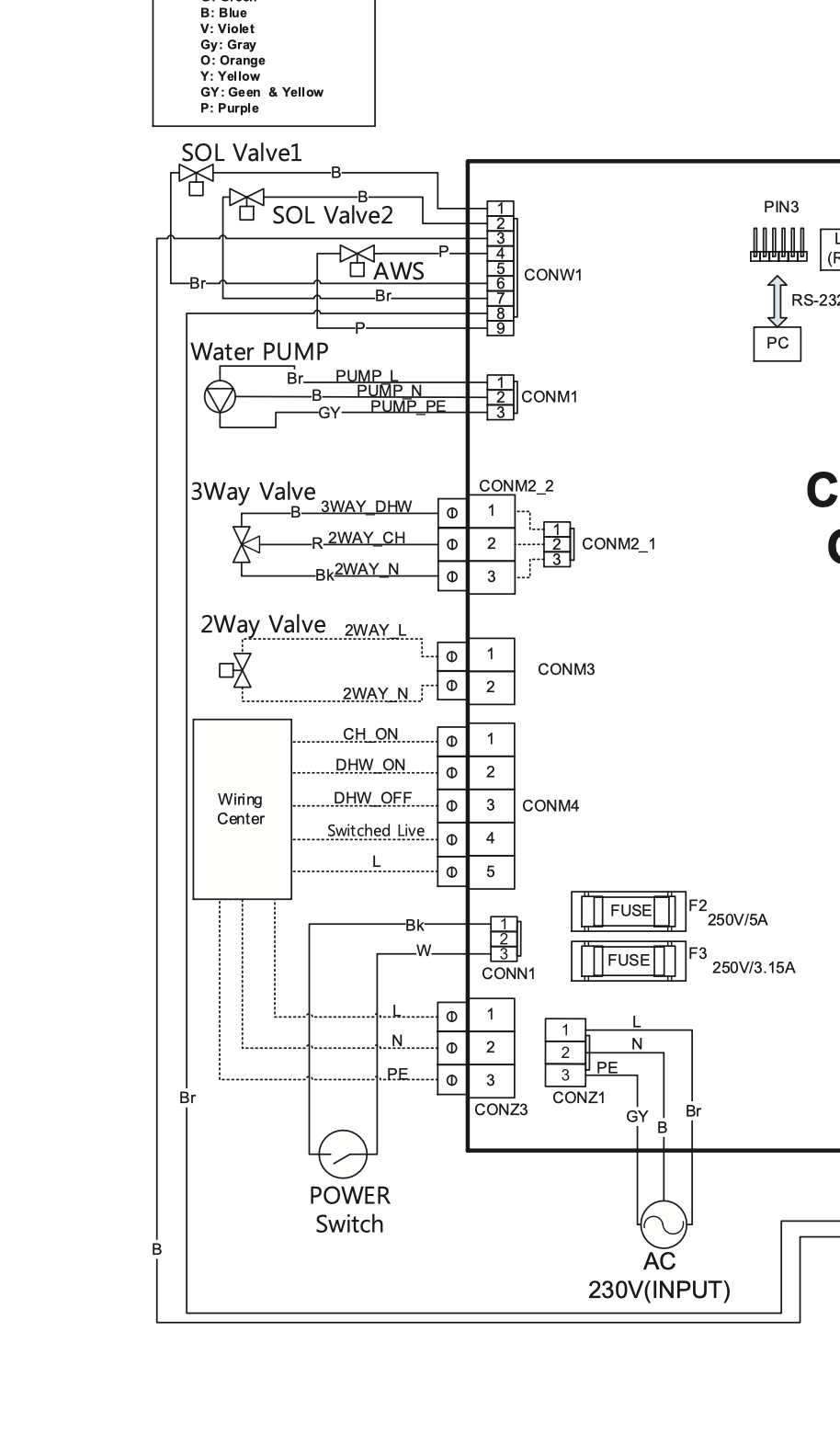
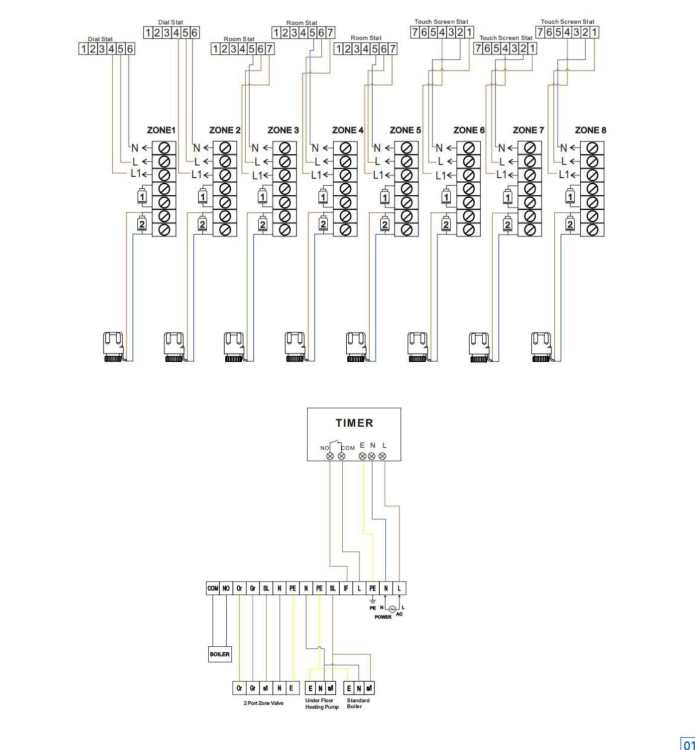
Need a workaround for this situation. Having retrofit UFH installed. Plumber installed the s-plan pipework for 2 zone (UFH + CH). Everything went to plan until we tried to connect the wiring centre to the boiler and hit a big snag. There is no connection on the boiler for the COM/NO from the wiring centre. It's a Navien LCB700 oil and when we spoke to their tech support, they confirmed there is no connection. Setup is: ZONE 1 (CH/DHW) = Drayton 2 port zone valve to be wired to boiler via Honeywell wiring centre/terminal. ZONE2 (UFH) = Drayton 2 port zone valve, 5 port manifold + 5 actuators, 5 wired room stats. Waterline wiring centre (diagram attached). Everything hooks up to the UFH wiring centre correctly, but we can't connect the wiring centre to the boiler and we're both stumped. Would this work for the UFH zone? Connect a timer to the wiring centre, and use the COM/NO connection on the timer instead. (Thinking of a Danfoss TS710). This way, leaving the timer on full time, the room stats will control the UFH. The timer would connect to the boiler via the CONM4 terminal live/switched live. (See Navien diagram)
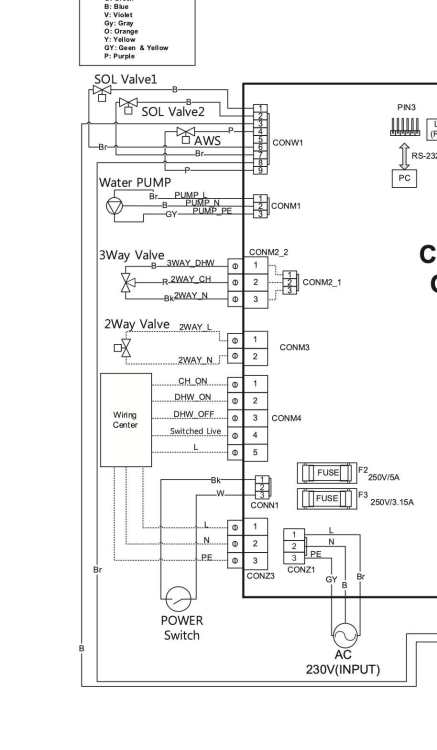
-
Mortar mix for pointing granite.
sb1202 replied to sb1202's topic in Bricklaying, Blockwork & Mortar
It's definitely VERY old so it's not cement. It's at least 300 years old according to historical maps and possibly goes back to the 1400s. Our deeds say it was part of an estate and the castle was built in 1604 on top of an existing watch tower from the 1400s. The walls aren't regularly wet - we're in Aberdeenshire which is broadly similar to the SE of england for rainfall. I've been researching what I can but drawn a blank. I do know that the rubble isn't bound with a mortar - it's just mud/soil. The folks at historic scotland said this was common and this type of property last hundreds of years with the original walls. -
Mortar mix for pointing granite.
sb1202 replied to sb1202's topic in Bricklaying, Blockwork & Mortar
It's definitely lime based. It was renovated in 1982 and the plans stated the pointing and binder were lime mortar - it doesn't specify what though. -
Mortar mix for pointing granite.
sb1202 replied to sb1202's topic in Bricklaying, Blockwork & Mortar
4-1 what? -
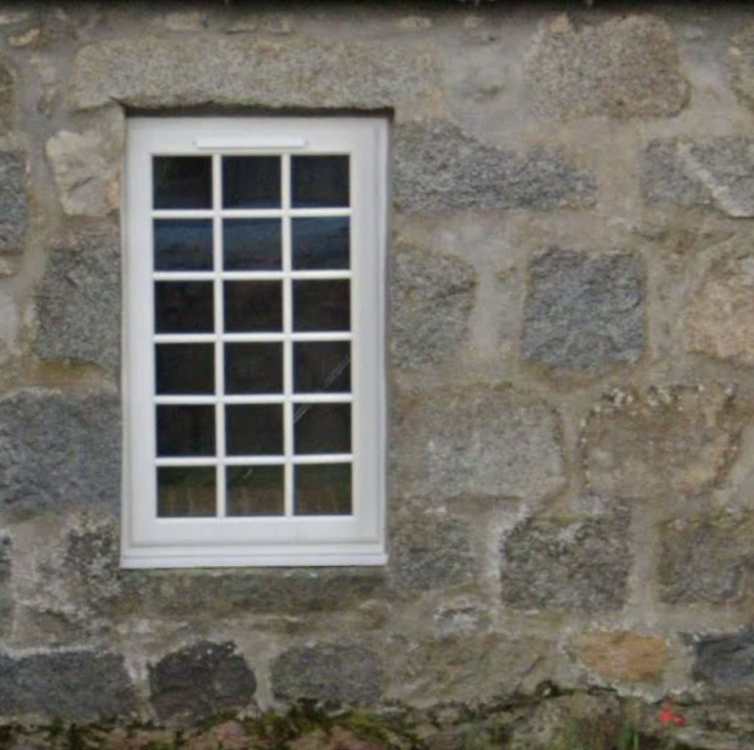
Need to do remove and repoint a granite wall where the previous owner seems to have slapped some postcrete type mortar. Spent the last 2 hours reading/googling on which mortar to use and I'm more confused than when I started. Some say, as its granite and very hard, to use a hydrated lime mortar of 1+1+5 or 1+1+6, other say use NHL5 and my head is bursting. Walls are granite 600m with a rubble in fill. Pic shows the original good pointing but I have no idea what mortar mix this is. Any advice appreciated.
-
Insulated plasterboard over existing wall or something else?
sb1202 replied to sb1202's topic in Heat Insulation
The room is light sealed for loading IR film and I have a laminar flow cabinet so it's not like a household extraction system. Laminar flow is what is used in clean rooms (I was a semiconductor engineer) which pull air in a set direction and eliminate turbulence in the rest of the room. Household extractors aren't used in darkrooms as they suck the air, create turbulence and can pull light seals away over time. I'm fairly sure there will be a significant difference. Until a few months ago, the wall had Jackoboard pinned to it as a temporary insulation measure. Since it's been removed, ambient temps dropped quicker and development times extended etc. -
Insulated plasterboard over existing wall or something else?
sb1202 replied to sb1202's topic in Heat Insulation
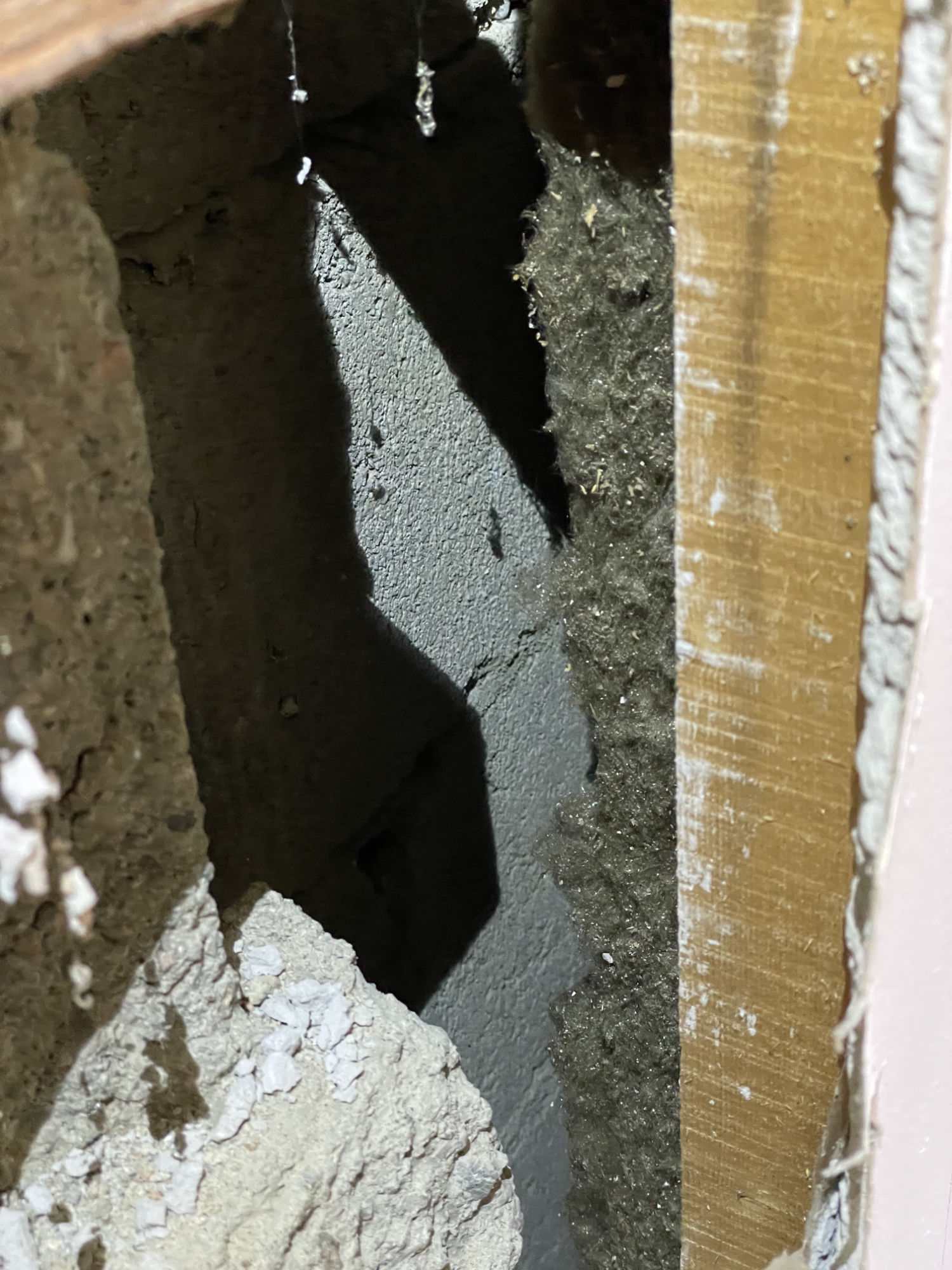
See image. I opened up a section and there is a 50mm gap between the insulation and the breeze block. The insulation is held in place with string. That's what the plans say (I typed in badly 1st time).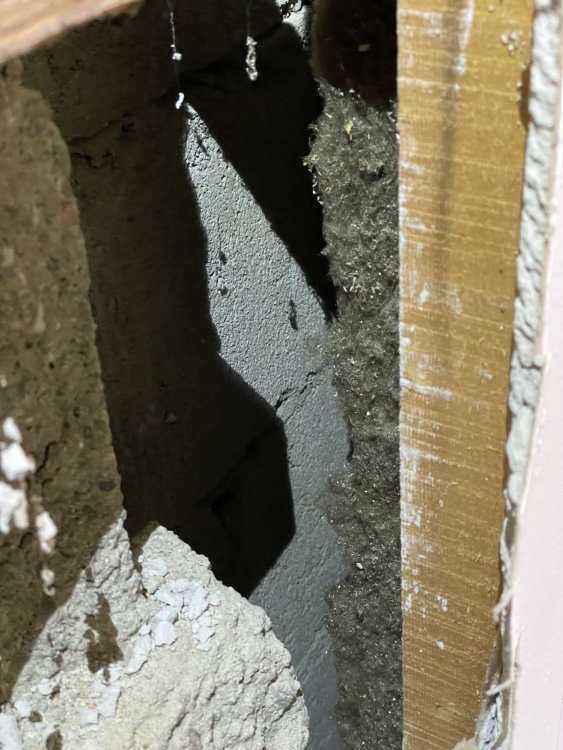
-
Insulated plasterboard over existing wall or something else?
sb1202 replied to sb1202's topic in Heat Insulation
I should have made this clear at the start but it was late - this will be a "test' on one wall initially. The room itself is due for renovation/conversion to a photographic darkroom later in the year as part of my project and I'm ok with testing this out. The costs aren't much and the minimal disruption is key here. The reason I'm considering this particular method is based on trials that have been done by various trusts and agencies throughout Scotland. Where factors such as floor loss, cost and financial returns are concerned, thin internal wall insulation (e.g. 40mm) has been shown to be more effective overall than installing a thicker insulation (e.g. 120mm) that targets optimal/regulation U values. Being a darkroom, its similar to a kitchen in that there are always high moisture levels present due to trays of solutions left uncovered, but the extractors prevent any damp issues. My reason for improving insulation is to keep the ambient solution temps constant for longer whilst reducing warmup costs. There are also a lot of splashes, accidental spills to consider and every couple of years, plasterboard outside needs repaired. -
Insulated plasterboard over existing wall or something else?
sb1202 replied to sb1202's topic in Heat Insulation
The studs. (In correct order -> fyfestone, gap, block, gap, studs, insulation between studs, vapour barrier, plasterboard) -
Considering upgrading the internal insulation on some external walls. House was built in 1982 and the plans say the external walls are: 100mm fyfestone, 2 coats of synthapruffe, cavity, 100mm concrete block, 50x38 studs, 60mm quilt insulation, 50mm gap, vapour barrier (non breathable) 9.5mm plasterboard. I can afford to lose a little floorspace (50-60mm), and I know the better solution would be to strip the existing plasterboard, install 4x2s, 100mm insulation and vapour barrier but I'm under instruction to keep the disruption to a minimum. To that end, I'm considering insulated plasterboard as an option. Specifically, dot an dab 55mm plasterboard over the existing plasterboard...or 25mm batten and 27mm insulated plasterboard over the existing wall. (I'm presuming no vapour barrier required). What are the pros and cons of either of these options?
-
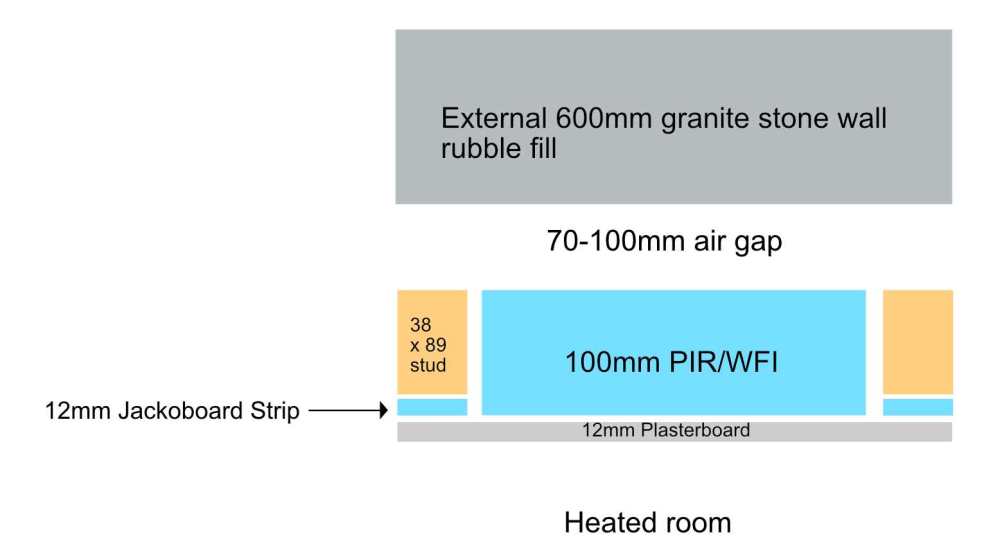
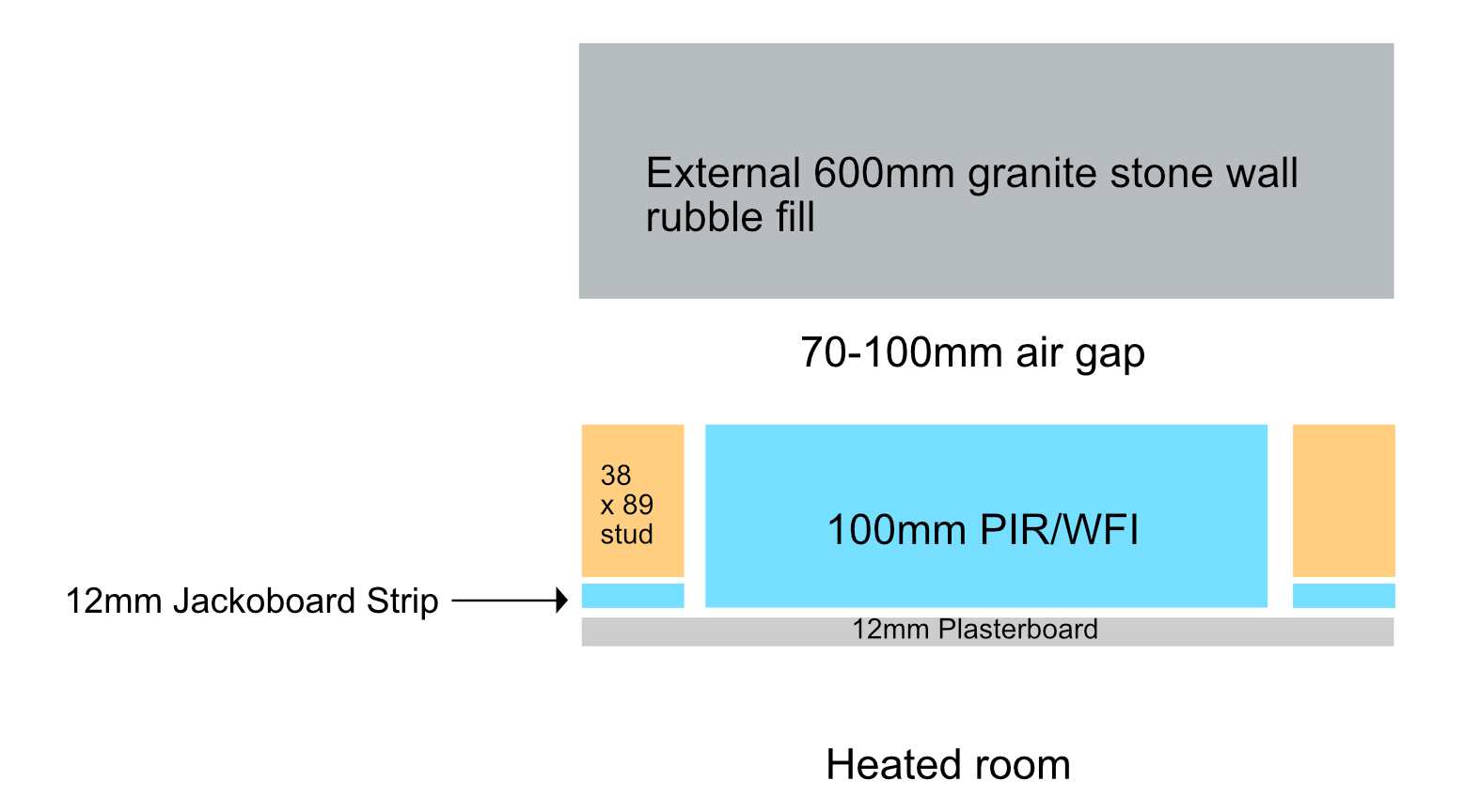
Apologies - thermal bridge. Heated room, Stud wall, 70-100mm air gap to 600mm granite and rubble external wall. As per image