


sb1202
-
Posts
61 -
Joined
-
Last visited
Everything posted by sb1202
-
Been looking at ways to reduce bridging on studs and wondered if anyone has tried this. 89mmx38mm studs with 12mm Jackoboard (insulated tile backer board) shims over studs and 100mm insulation between. I'm figuring that Jackoboard's insulation will break the bridge (to an extent) and since it can take screws and hold tiles etc, it will be plenty strong enough for plasterboard. A 1200x600 board costs around £10 and can make 15 shims so its not too much of an add on cost. Image gives an idea of what I'm thinking.

-
This is the crown's lodge at Holyrood Palace which is a listed building. They can't just drill holes, instal stuff and test everything at once. This is just one of hundreds of trials that are going on across Scotland and they need different data from different tests in buildings - that all gets pieced together and analysed. Historic Scotland are sharing their results which they should be applauded for because it helps lots of people looking to do renovations on old properties. There's work being done in other buildings on air tightness, ventilation paths and that will be shared too. Rennie McIntosh's Glasgow house for example is undergoing massive humidity testing so that's one to watch out for.
-
They didn't install any membranes. If you look at the roof, its a traditional Scottish slate/felt/sarking roof which is the same as mine. No roof vents required because the sarking gaps ventilate the roof. This is part of a country wide experiment trialing different methods of insulating trad buildings. In this experiment, they used WF between the rafters. Half the rafters had a 50mm gap, the other half had no gap. The objective was to test for a difference in humidity levels between both methods. At 8m40s she explains this. Over a 2 year period, they recorded no difference in humidity between the 2 methods which suggests* that WFI on its own is good enough without the need for installing a membrane. *if there were a recorded difference in humidity, this might require the need for a membrane - that's how I understand the experiment.
-
Apologies if this is teach granny stuff but I thought this was worth sharing for anyone renovating/working on a trad Scottish house (like mine). Historic Scotland have been running a number of trials in trad buildings with insulation upgrades and there's some really good info I've found on their website and videos. The video below is about a trial done in Holyrood house and the interesting part is about the insulation trial in the roof. This was WF insulation installed with the standard 50mm gap vs butted hard against the sarking. The trial lasted 2 years and conclusion is at the end. Essentially, there was no difference in humidity levels in both methods where WF insulation was concerned.
-
I won't because the walls are hugely uneven. This is a classic Scottish stone wall cottage from the 1800s - which is a bit like a tall dry stone dyke with a roof on it. The internals are made from large rocks and the gaps from stud to wall range from 150mm to 50mm. The existing studs are only 50mm deep, so when I'm building the new stud walls from 4x2s, it's bringing the walls in by around 40 mm Have a look at the image attached - it gives you an idea of what the walls are like.

-
That's what I'm going for. I'd like to include the service gap but the rooms are already small. Adding 25mm battens plus 9.5mm PB for a service gap will bring the rooms by an extra 70mm so I need to give this some thought.
-
Ah. This isn't PB stuck to the wall though. This is a stone/granite cottage 600 thick. The PB sits on stud walls about 150mm from the main walls which are pegged to leave the void. I'm stripping back all the internal PB, building new studs and insulating with wood fibre. Breather on the cold side and intelligent membrane on the inside. Will plasterboard over it again.
-
You'll need to excuse my ignorance but what exactly is a plasterboard tent?
-
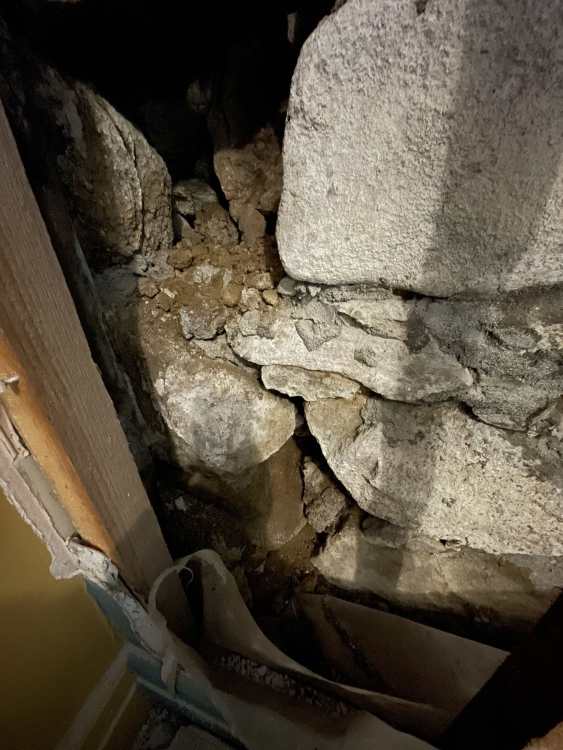
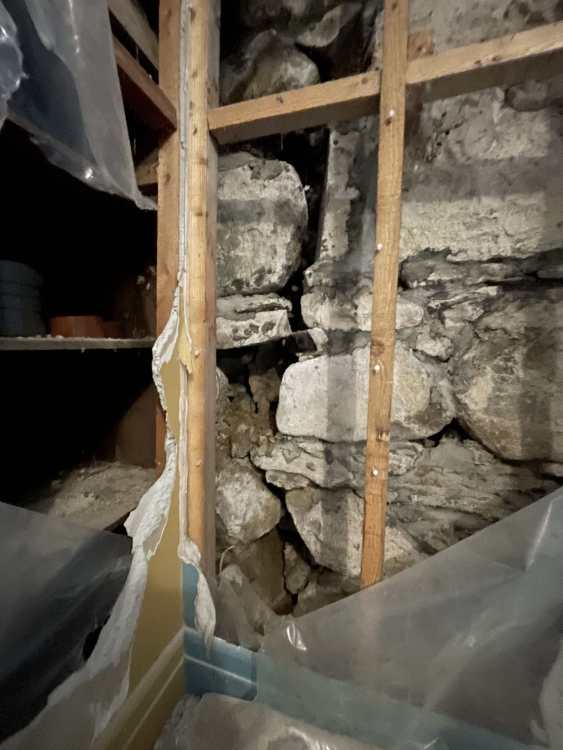
It's granite. I think so.. There's no crack on the other side of this side but there is a crack on the outside of the wall to the left . From what I can gather, this was a self build by a quantity surveyor who (the locals say) had a reputation for cutting corners. He certainly cut this corner by the looks of it.
-
I know - you can guess my reaction.
-
Just pulled back some plasterboard to discover a significant gap in the stone walls. It's a trad scottish rubble fill wall that was converted around 40 years ago. There's no fallen stones or dust in the cavity floor which suggests it was left this way when the work took place. The stones aren't damp or wet but the brown clay like stuff is slightly damp - ie will form a lump when squeezed. Is this something to worry about and is it something I fix or fill myself? (I'm not a brickie, stone mason) Everything else around it seems to be solid.
-
Yes Not sure what you mean by this. Do you mean to pin a 25mm batten on to the short face of the stud? I can easily rip a 10mm strip for this. Electrical only, through the insulation and sealed over the VCL with tape. This is a renovation so I can't afford reduce the room space with a service layer.
-
Apologies if this is a daft question but I can't find an answer in any tech sheets or on here. I'm looking to order 100mm steico flex 1190 x 375mm WF insulation and fit it into new stud walls. The stud walls are standard CLS at 38x89mm and will be built to 400 centres, so I'm presuming the 375mm insulation will give a nice tight fit and I can work out for the long side with dwangs. My question is about the depth. Does this insulation compress into the depth of a 89mm stud against a membrane or do I need to pack out the joists with strips to get to the 100mm? (I couldn't get 95mm cls anywhere and 120mm/140mm deep studs are too deep for my application) Cheers
-
That's my concern. We've got our running costs down significantly since we bought the house we're in and I'm not wanting to go back the way.
-
Definitely - no intention to ever use tiles. I've used foam backed LVT in a couple of areas and they are amazing. Visitors think its real tile.
-
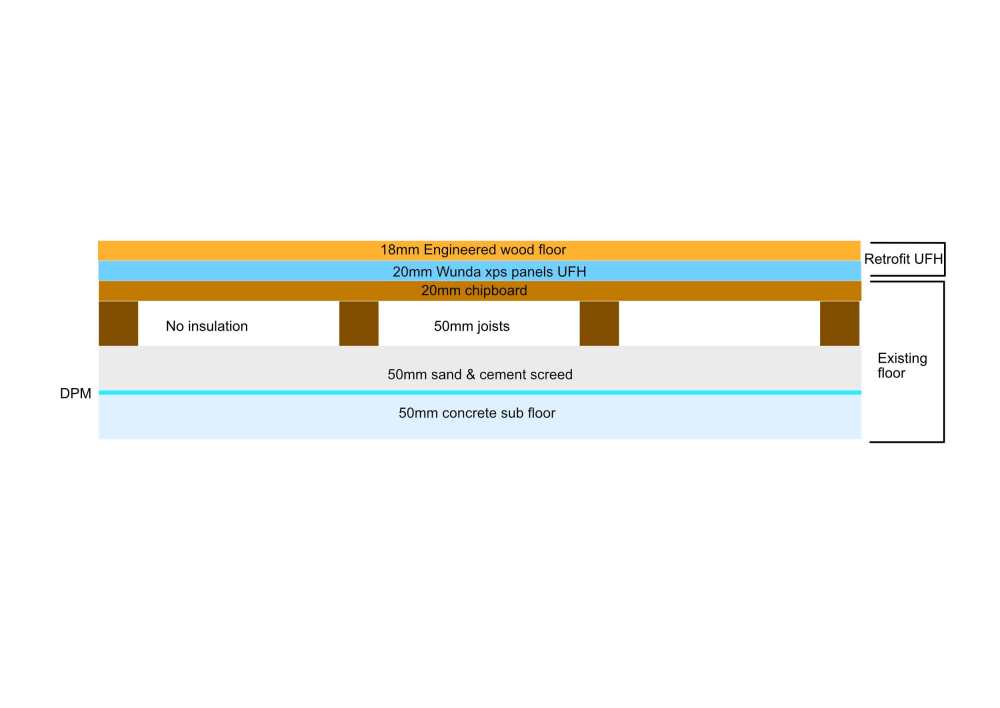
Having doubts about UFH over rads. Project is an extension/annexe old stone cottage 600mm thick walls with no insulation in walls or floor, difficult to heat. Walls are in the process of being insulated. Existing rad circuit in place. The annexe is occasional use and my thinking was to install UFH with the Wunda retrofit system, 3 rooms, hall, & bathroom. 5 zones, with thermostats and probes. Total area 45sqm. The existing floor is suspended chip on 50mm joists on sand & cement screed (see diagram) No insulation between joists and only 50mm space available With the wunda retrofit, they've said just to stick the panels down over the existing chipboard and the disadvantage is that te floor height is raised by 25mm, meaning refit skirtings etc. Also, the lack of insulation beneath the chipboard has me thinking this is going to cause problems - e.g. it might need to run hotter, which is not good for an engineered wood floor and will require more to heat. Am I better just sticking with the existing rads and insulating the floor with 50mm pir, replacing the chipboard and installing the wood floor? Upgrading the rads. Maybe spend the money on heat recovery? Any advice welcomed
-
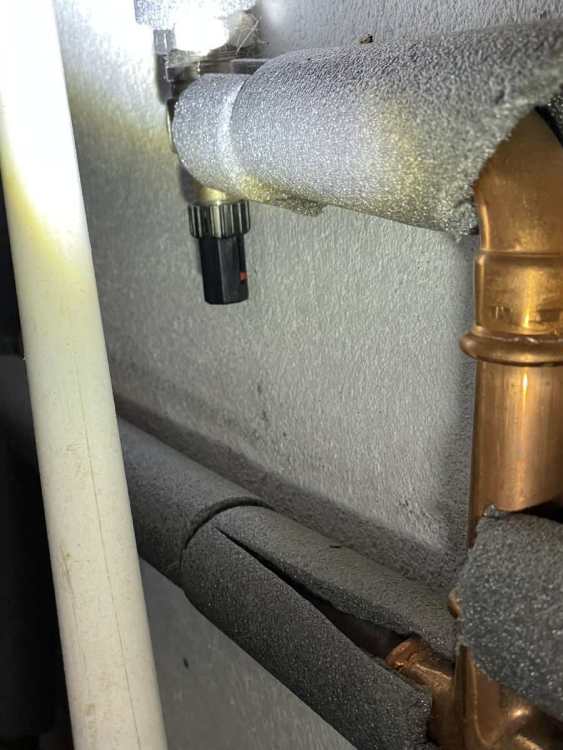
I know, but we've made a huge saving on our oil use. We were using around 3500L a year and are now at around 2200L a year and even the plumber who services the boiler was impressed. We moved in 3 years ago. The house had a 25 year old boiler & panel rads with trvs throughout. We upgraded the boiler and this saved us a lot. During a decoration, we replaced a few of the panel rads with column rads which came with manual valves and we noticed a huge difference in warmup and comfort levels. I also noticed the oil use dropped. We took the plunge and replaced all the rads with columns and our oil use dropped significantly. I've removed the floorboards and it's teed off the main circuit. I've checked the boiler room and there is a bypass valve beside the boiler. I presume this is where the return comes in. (I'm no plumber by the way, ust learning this stuff as I go along)
-
Yeah, the rest of the house works fine None of the rads in the entire house are on TRVs. They're all column rads with manual valves. It's a Navien Oil combi that was installed about 2 years ago. I'm presuming when they installed it, the added an automatic bypass valve as the manual says "An automatic bypass with a flow rate of at least 6 l/min must be installed (as far away as possible from the boiler) if radiators with thermostatic valves have been connected to combination boilers and in front of any motorised valves for system/regular boilers." (Thanks for replying by the way)
-
Anyone able to answer this?
-
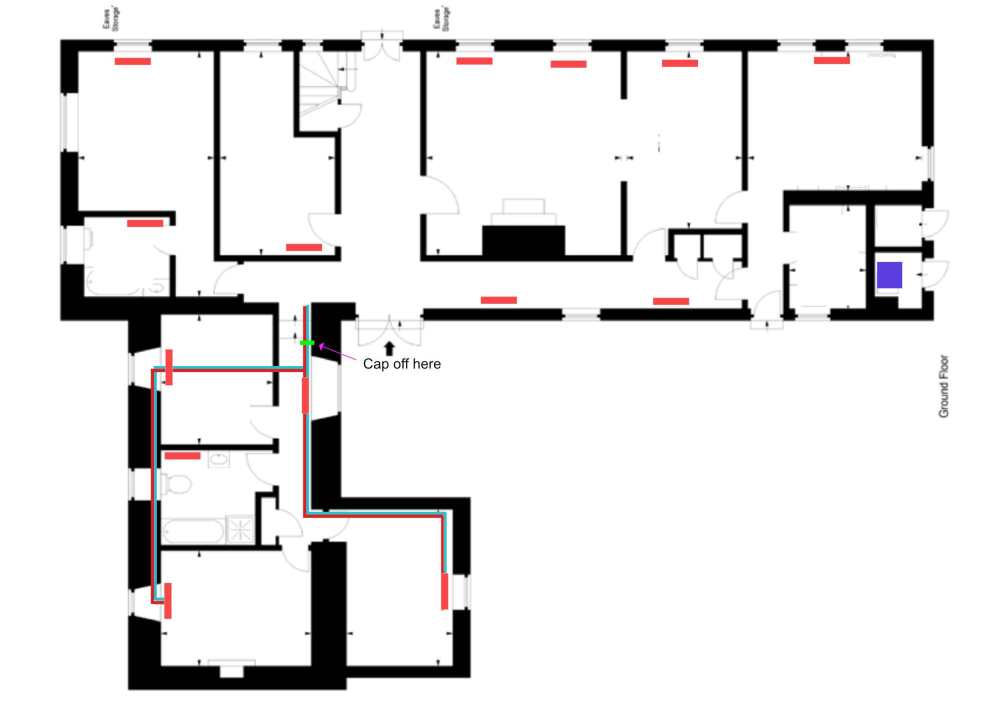
Howdy, I'm prepping for installing UFH and was wondering if it is ok to cap off a radiator circuit as per the diagram. The boiler is in purple and I'm presuming the pipes run along the length of the hall and tee off into the smaller extension part of the house. I've taken up as much boards as I can and this is the pipe layout as far as I can tell. Cheers for any help.
-
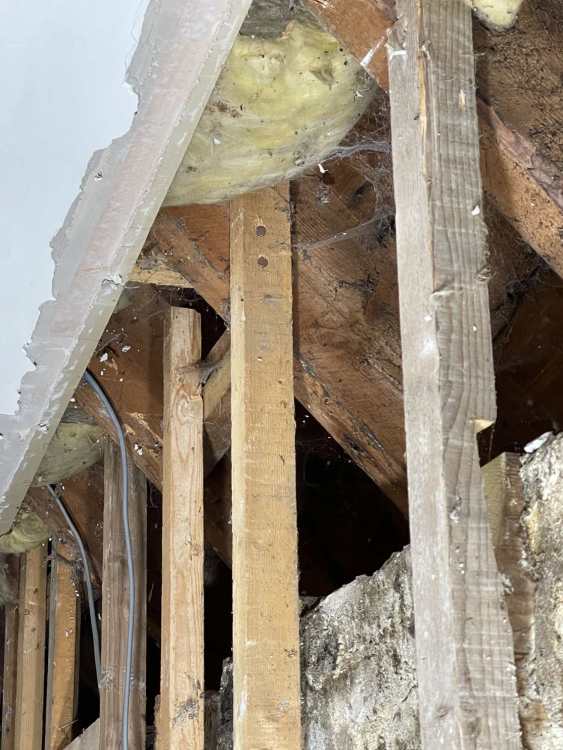
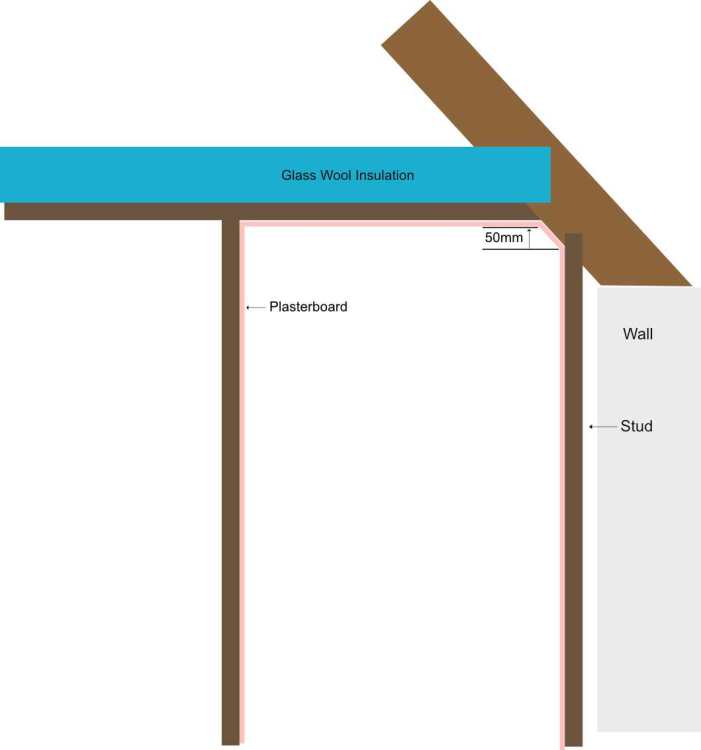
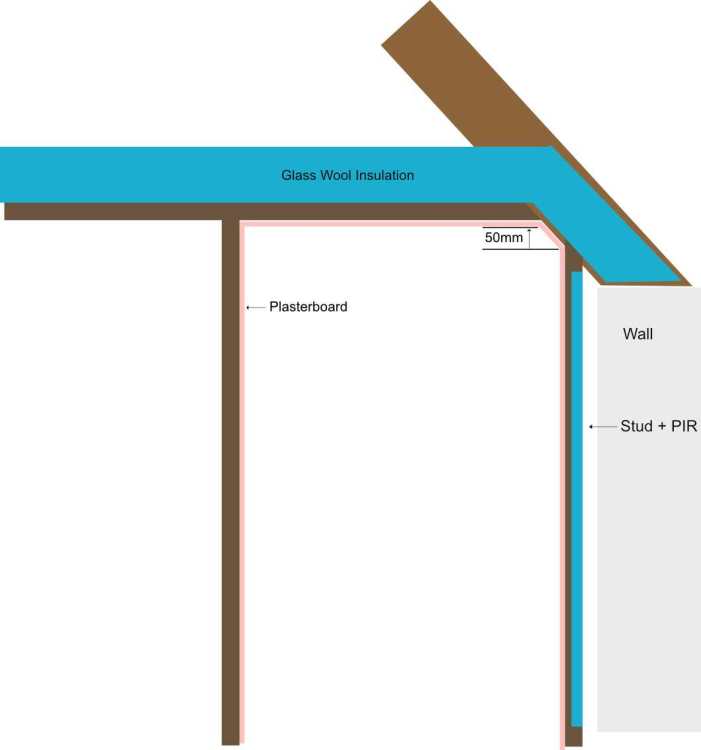
I've just stripped back the walls in a small hallway to discover that the cornice in fact a strip of plasterboard pinned to the rafters. (See the images) This leaves me with a dilemma as I'd ideally prefer to build new stud walls and have 90 degree corners but I can't afford to bring in the walls and lose floor space because the hallway is only 850mm wide as it stands. If I build the stud wall and bring it up to the rafters, this leaves a cold void, so the simplest solution is to pack the rafters with more wool insulation and lay it down as in the 3rd image. The problem is the rafters will still be a cold bridge if I understad it correctly. That being the case, would it be ok to infill the sloped part of the ceiling join with some insulated plasterboard?
-
Stone built internal wall insulation advice please
sb1202 replied to sb1202's topic in Heat Insulation
Done! -
Stone built internal wall insulation advice please
sb1202 replied to sb1202's topic in Heat Insulation
Yeah, I get that but the confusion is the type of vapour barrier. Should this be breathable or non-breathable on the cold side? If I go to toolstation of screwfix for example, and search for vapour barrier, they sell plastic sheet under this and there are lots of different types. Also, does the vapour barrier on the cold side need to be completeley sealed or can it be overlapped? It would be etxrtremely difficult to seal large sheets with a 50mm gap for example. -
Stone built internal wall insulation advice please
sb1202 replied to sb1202's topic in Heat Insulation
Sorry, I'm more confused now than when I started. The walls aren't damp. In other parts of the house that are insulated albeit different walls, there is plasterboard, plastic sheet, wool insulation and air gap. There's no vapour barrier and no damp anywhere. There's no damp anywhere in the stone cottage. I've seen and read that there's no vapour barrier needed if the PIR is backed. Is this a breathable vapour barrier or a plastic sheet? A plastic sheet on the cold side would trap moisture coming from the warm side and would be wicked into the timbers would it not? -
Stone built internal wall insulation advice please
sb1202 replied to sb1202's topic in Heat Insulation
Yeah, used these in a lot of other work.




