alfaTom
-
Posts
45 -
Joined
-
Last visited
Everything posted by alfaTom
-
An introduction... Renovation + 1950s + subsidence = a challenge!
alfaTom replied to alfaTom's topic in Introduce Yourself
Thanks for the warm welcome back all, great to see so many people interested in our project. In that case I will try get something up this evening as a more substantial update. Sounds like fun! I am still going through the airtightness work at the moment so it's not comprehensive but some of the bits I found were: Sockets & Switches - one of the sockets had a nice 25mm hole through the brickwork and the ring main travelled through the cavity. That gave me quite the breeze! Cable is now chased into brickwork and the cavity gap is sealed. Skirting boards - A lot of our skirting boards were nailed into bits of timber offcuts that had been squeezed between bricks. This meant a lack of continuous pointing and again a nice easy way for the cavity air to get in the house. Old vents - We had vents all over the house, one had a lighting cable going through it up the wall to a wall-hung light. That got pulled out quick and sealed. Joists - All our 7x2 joists are in pockets on the inner leaf. Whilst they have mortar around them this is also a good place for a breeze as well. Windows - I know you said you've done some sealing here, but when we had our windows out and replaced we noticed not all of the window reveals had brick returns on them. We've put some cavity closers in now with insulation to hopefully reduce any thermal bridging. A can of insulation foam plus back of the hand works well round a lot of places, or if you're a bit of a nerd there are some USBC thermal cameras you can get for your phone. That was pretty useful at spotting cold spots and narrowing down where to look. Since I'm thinking about some service cavities on the older walls now I am starting to wonder if something like an AVCL + IWI could be an idea since the older walls are 50mm cavity with blown fibre and therefore a bit pants on the u-value (Heatpunk reckons 0.6 if it's to be trusted 🤮) Happy for you to move this, but I had planned this to be a more of a general update/build diary on the project as it goes. I'd planned to raise some topics in the other areas that could be a bit more specific and use this as a central page to link to the other areas. Since the first proper update would be on the demolition & foundations I'm happy to start a new post in the foundations section with our experience and move the discussion to there to keep it from being buried? -
An introduction... Renovation + 1950s + subsidence = a challenge!
alfaTom replied to alfaTom's topic in Introduce Yourself
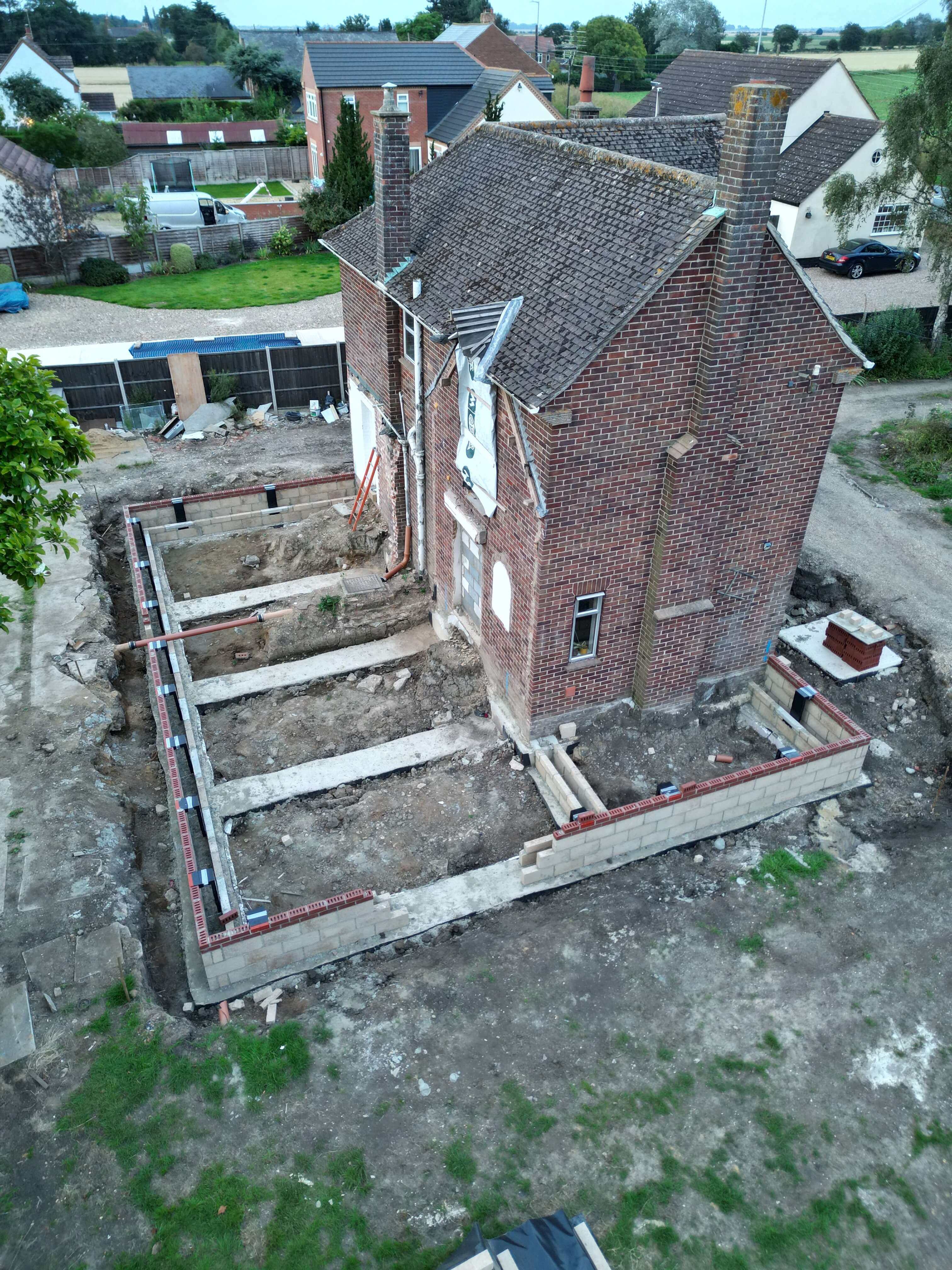
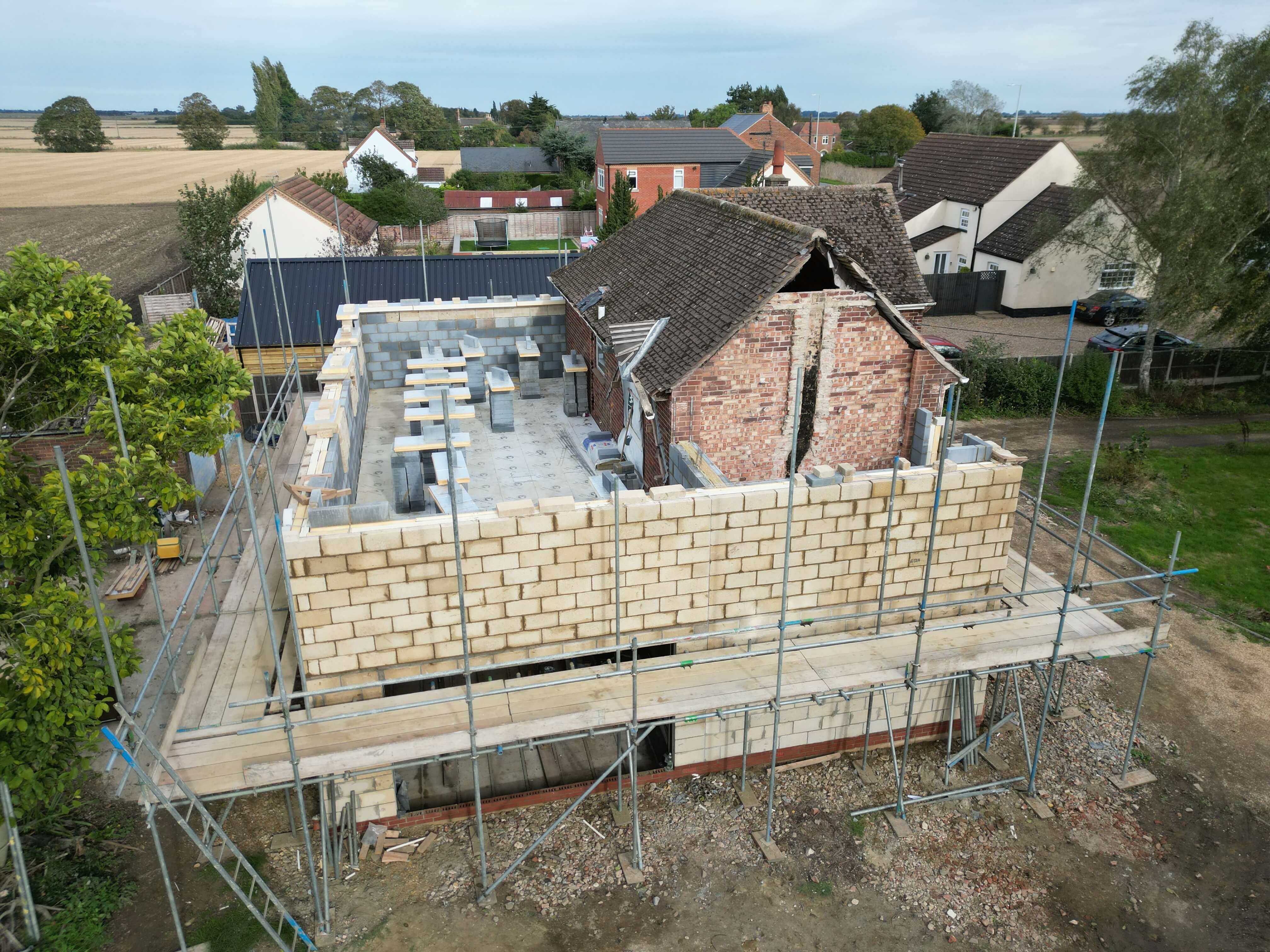
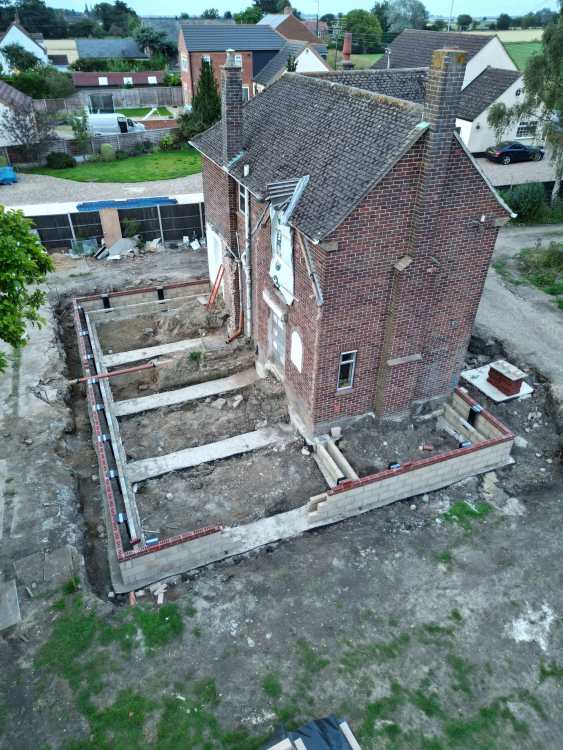
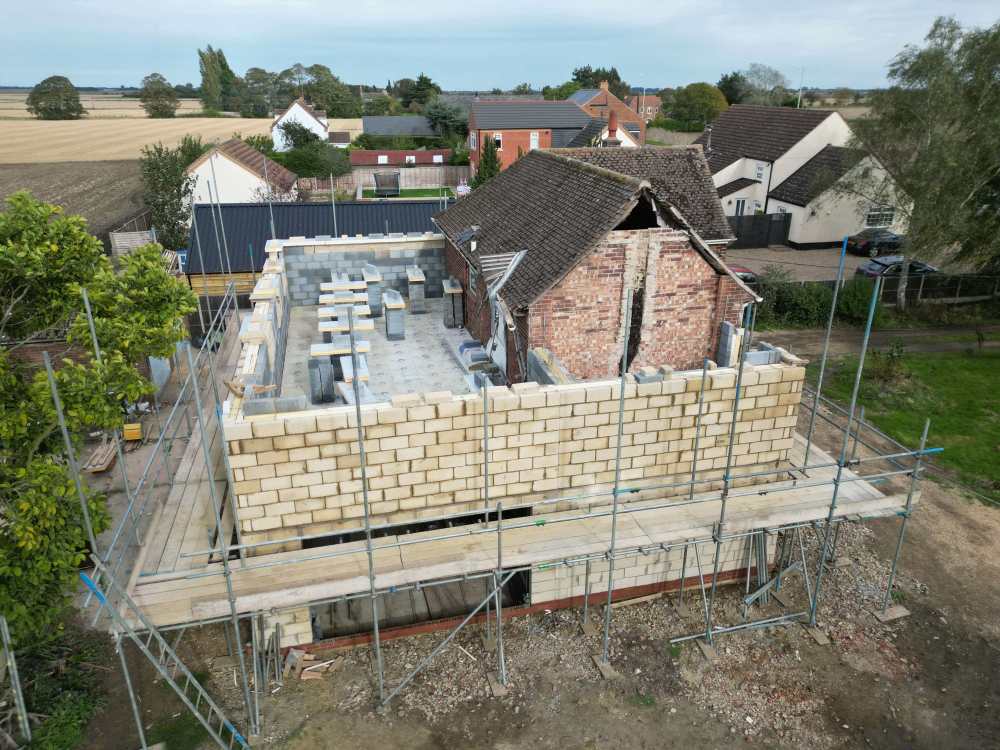
I return... nearly 18 months later. The project is still ongoing, but I thought it was worth updating everyone on our experiences so far. I admit we've probably made a few mistakes but as a first attempt at a big project I'm pretty happy how we've dealt with issues and moved on; every day is a school day! If any of this helps anyone else then it's worth it even if I look a bit daft during it! So - onto the project. We started by demolishing the old extensions since the foundations for them wouldn't be up to supporting a floor above them, plus they were built inadequately for our needs (solid walls, weird floor buildups, even weirder roofs). There was plenty of advice on this site around the existing foundations and how to proceed with them which we really appreciated, but in the end we were led by the structural engineers and underpinned the property for peace of mind to avoid any differential movement. The extension foundations are piled down to about 8-9m and the existing property was cantilever underpinned using piles too. Overall we're pretty confident the house won't be going anywhere (we now have 36 piles!) We've then wrapped a fair chunk of the house in a new extension to better use the space, and put the poorer performing old external walls further into the property. Cavity is 200mm with 190mm PIR made up in two layers incl interlocking boards and tape, and the flooring is 240mm EPS insulation in the new areas, whilst we've just finished digging the old flooring out of the house which should be insulated to 170mm. I'd like more here but we're restricted by the depth of existing foundations which is a shame. The old electricity supply has gone from overhead to a nice new underground supply, complete with 3ph up to the DNO supply head so we're future-proofed (still only 1ph currently) and I'm waiting for a response to my request for a new water supply. Wet UFH is throughout, with the oil boiler gone and an ASHP to replace it (When I can get an installer on the BUS grant that won't rinse me). Spent a fair bit of time playing with Heatpunk and Jeremy's spreadsheet for heat loss predictions which is fun when half the property is 200mm cavity and the other is 50mm. I really wish here that we'd stepped the walls outwards and then EWI'd the older walls but I didn't think about this until it was too late - a good reminder to plan ahead here. I'm also scheming for 10kWp of PV to go on since we're having a new roof fitted. The savings in tiles & labour lets me man-maths my way into some GSE trays and panels 😁 My current focus is looking at the air tightness, not as much of an issue in the new section but the older part of the house is good fun, so I guess there will be updates on this part from time to time as I'd love to get MVHR fitted as well. Words can be boring sometimes, so the tl;dr is: should we have listened to you all knocked it all down and started from scratch? In hindsight, Yes 😂 Did we? No... (Be gentle 😳) time to learn from it and make the best of it! And the pictures: Steel reinforcement for ringbeams in place after piling at the back Starting the build to DPC Second lift and on the way to wall plate. Will maybe dump a few more before & after shots in the coming days or a specific focus on parts if anyone is interested. Poor house has been battered about a bit - for the greater good I hope!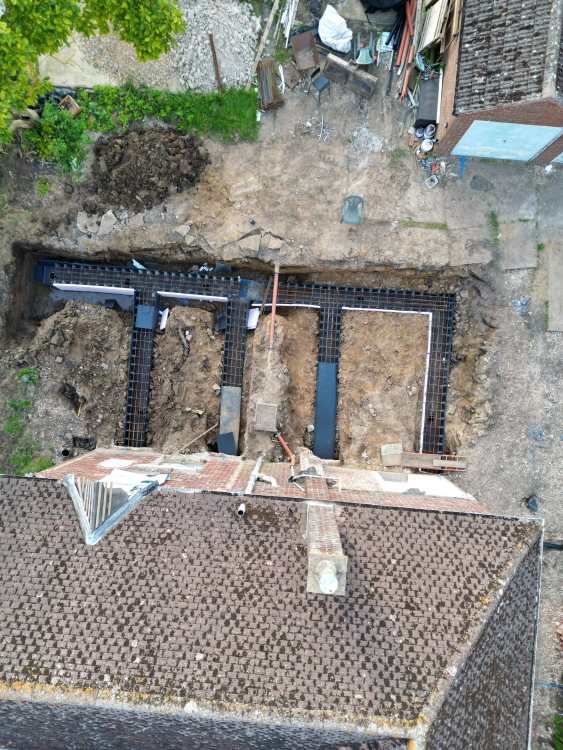
-
If you are a competent DIY'er then depending on your location you may be able to dispose of the asbestos roof sheets at your local household recycling centre. This should save you some cash from paying a specialist to do it, but you'll need to invest in quality PPE beforehand and obtain the sheet bags from your recycling centre. You could then use that extra cash on the roof - I'd go OSB and felt as you'd get a good roof from that but not sure what state the rest of the garage in - might be more effort than it's worth.
-
An introduction... Renovation + 1950s + subsidence = a challenge!
alfaTom replied to alfaTom's topic in Introduce Yourself
It's certainly a variety pack! Curious to see what I find elsewhere. I may try to cut the plasterboard below off so I can get almost a cross-section idea of the lintel. A shame the SE's seem to be taking their time coming back to me at the moment as that is holding us up currently. My understanding is that the wallpaper is newer, from 2012 when some work was done to the property. It doesn't seem to have a vinyl layer so it which reduces the chances as far as I am aware. There is plenty of asbestos elsewhere though; garage roof sheets, soil pipes, guttering etc as well as some tiles in the downstairs w/c. -
Help: Single wall brick extension, what to do?
alfaTom replied to CloGanga's topic in House Extensions & Conservatories
I have a single skin extension on the back of our house that holds the washroom, downstairs WC & boiler room. I have no idea the sort of foundations it sits on but I doubt they would be up to current regs. Luckily the external door & structural wall is still in place from the main building, so we will be knocking the single skin down and rebuilding. I doubt it'd add much to your cost to knock down and rebuild vs the extra labour costs in retrofitting fit wall ties etc. -
An introduction... Renovation + 1950s + subsidence = a challenge!
alfaTom replied to alfaTom's topic in Introduce Yourself
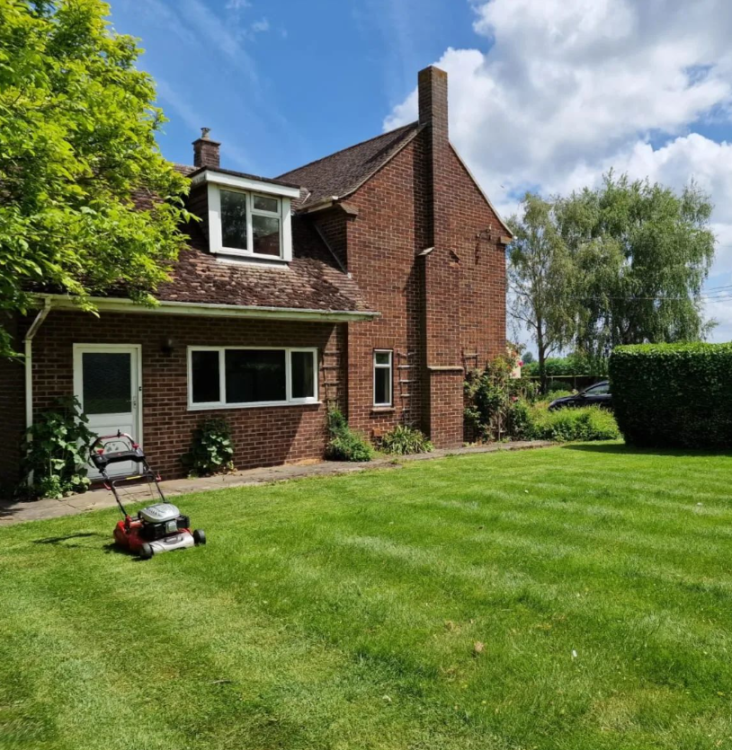
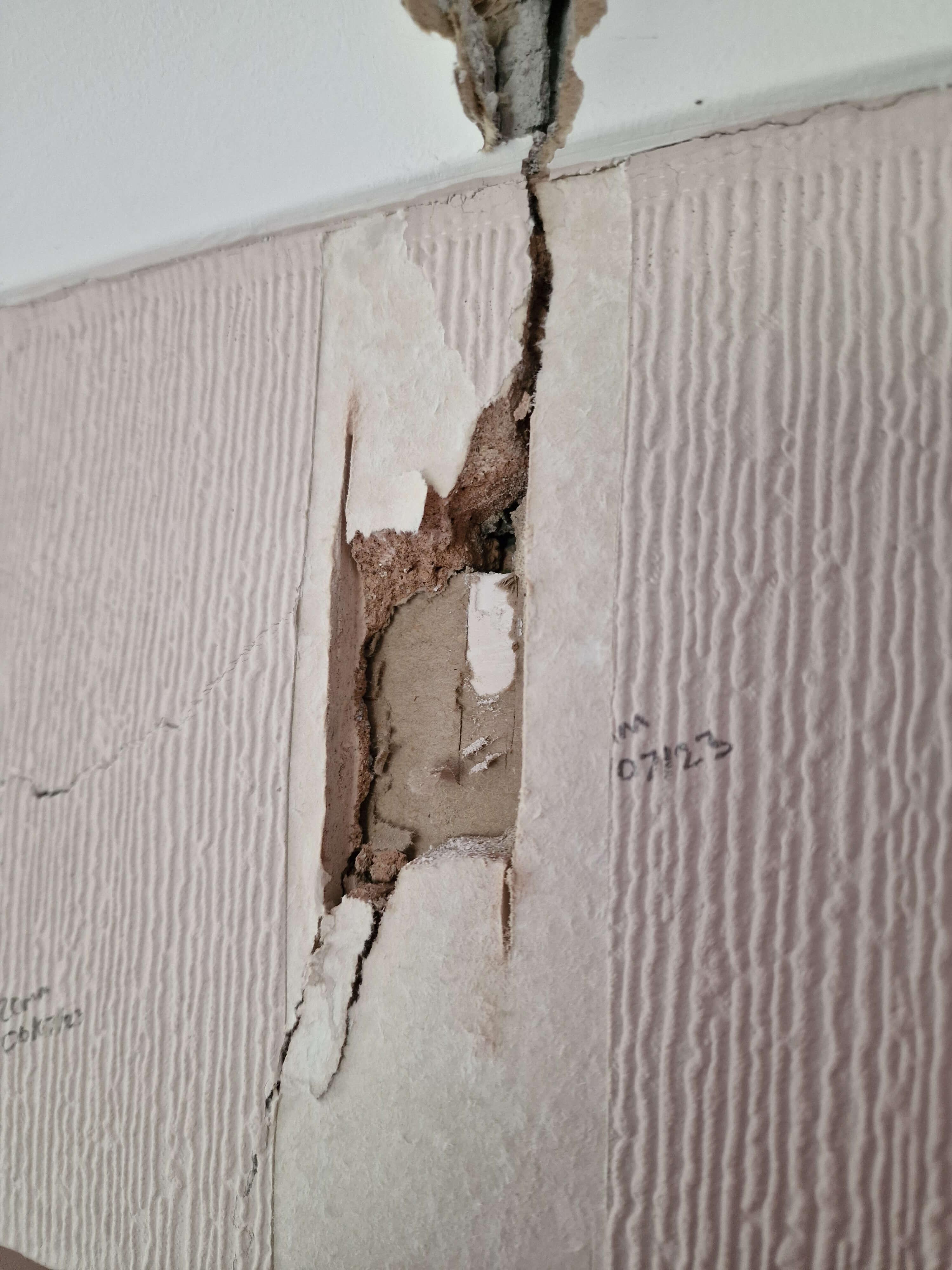
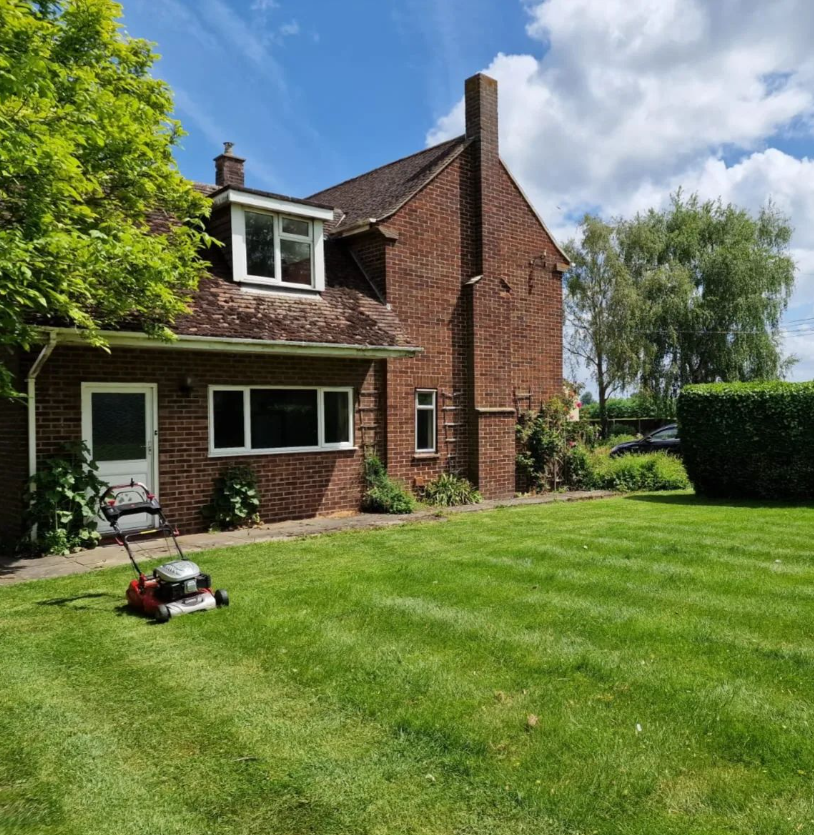
I have been a bit quiet recently - unfortunately, the weather at the weekend was terrible so no investigations outside were completed. I did however get the old cylinder lawnmower running again in the (relative) safety of the garage! I did finish the cut-out above the doorway though. After getting through a layer of plaster, roughfill AND plasterboard I found the lintel over the doorway. It looks like there is a metal lintel (can be seen below the timber and in the shadow) with the timber resting above it. I need to get more of it cut out to see how it sits but I didn't want to disturb it too much. Waiting on the SEs to respond to my queries at the moment around the soil vs drains, and I am waiting for the underpinning company to come back to me with answers about complications from partial underpinning and more info on guarantees. When I get more information I'll update this thread so the information is there for anyone in the future that may need it.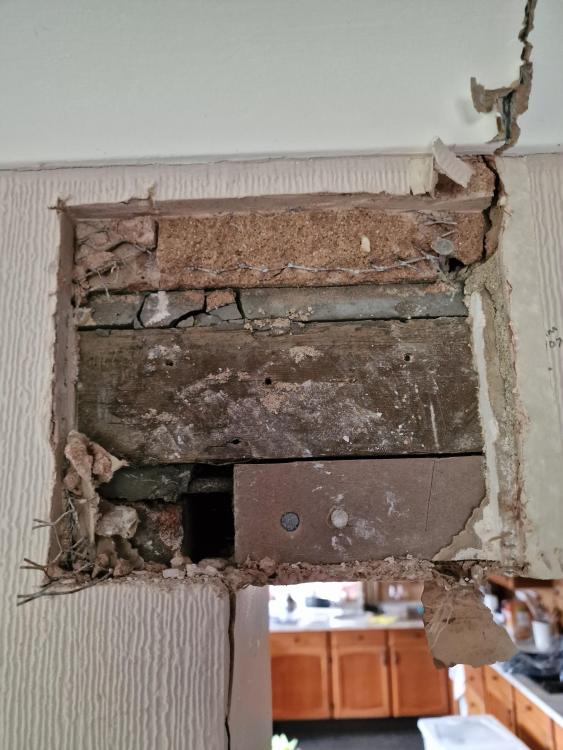
-
Think about the fact you've taken a pond out and added sub-base in. If the fence stayed where it was when a pond was present then it should stay where it in once you have the sub-base in. You're not leaving it hollow so it'll have something against it. For sub-base I would use MOT1, Wacker plate it and sand blind. Might be a bit OTT but I think you'll need to compress it well into the old pond space to stop it sinking. As for ensuring it sits flush...you measure it and level it. Get the depth of your new patio slabs and subtract that from the build up, allowing for a cement mix underneath. I'd do full cement on the slabs, none of this 4 dots in the corner like some companies will do.
-
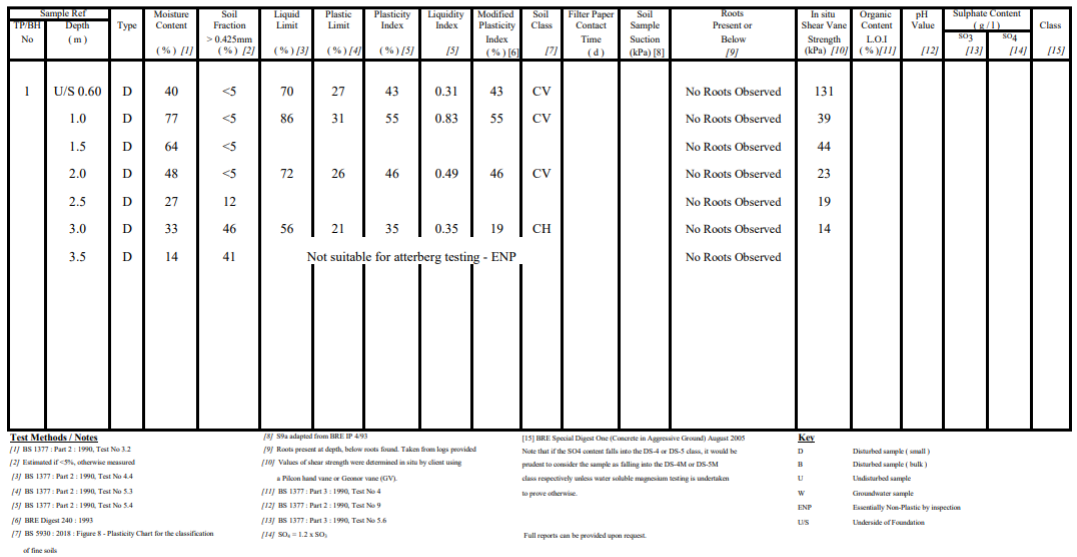
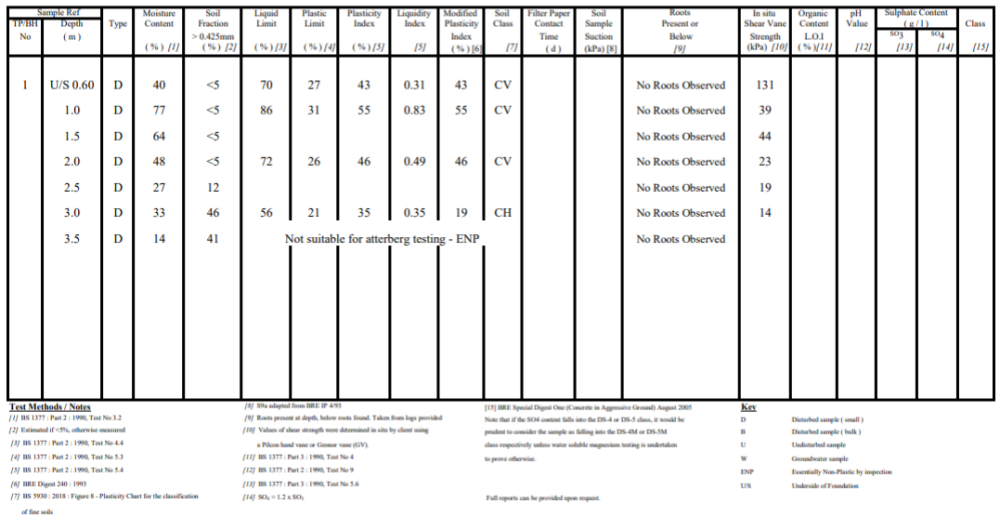
I believe that's what the modified result is - a way to scale up to the overall sample size. The 0.425mm filter is used as part of a control method for testing as the results can be reproduced consistently and the modified plasticity index can then be calculated if we know the fraction that passed through the filter vs the total sample. My understanding is that it's this modified index that gives you the overall figure as if the soil had not been disturbed for the purposes of the test. This is the SI report for one of our boreholes. You'll note the Plasticity Index and Modified Plasticity Index remain the same until we get to 3.0m depth where the Soil Fraction >0.425mm changes drastically. At this point the Modified Index reduces. The test method for Plasticity Index was BS 1377 Part 2 1990 Test No 5.4, and the Modified Plasticity Index was BRE Digest 240: 1993. Having a google finds the below theory if it's any use to you (otherwise you'd have to buy a copy of BRE 240) Hope that helps

-
An introduction... Renovation + 1950s + subsidence = a challenge!
alfaTom replied to alfaTom's topic in Introduce Yourself
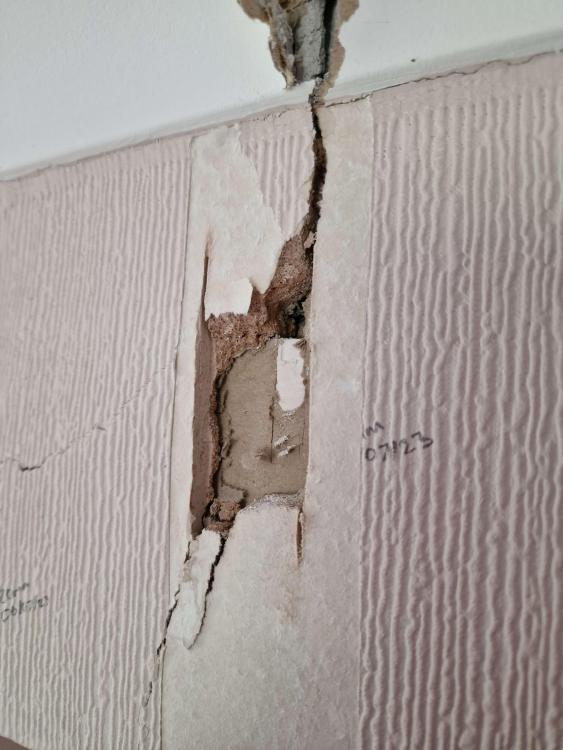
Got bored of work - the crack is above my desk so went back to it. Found what I believe to be a timber lintel behind the plasterboard. I am not sure what "repairs" this company did previously but it currently looks like they chucked repair mesh over the old plasterboard and covered it? More needs to come off to find out how far the lintel goes as well as the makeup in between, but if the wood has dried or shrunk I can see this causing some movement upstairs... Agreed, I think next steps will be to provide our SE with TP & SI reports, plus the suggestions from the underpinning company.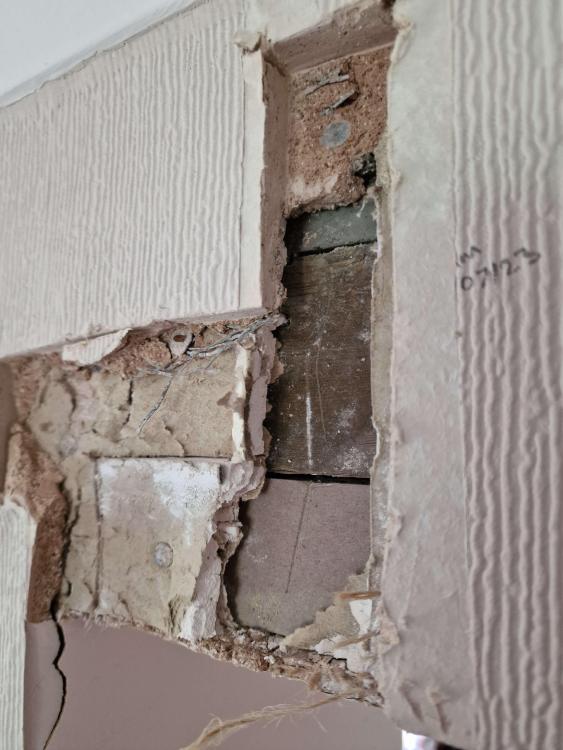
-
An introduction... Renovation + 1950s + subsidence = a challenge!
alfaTom replied to alfaTom's topic in Introduce Yourself
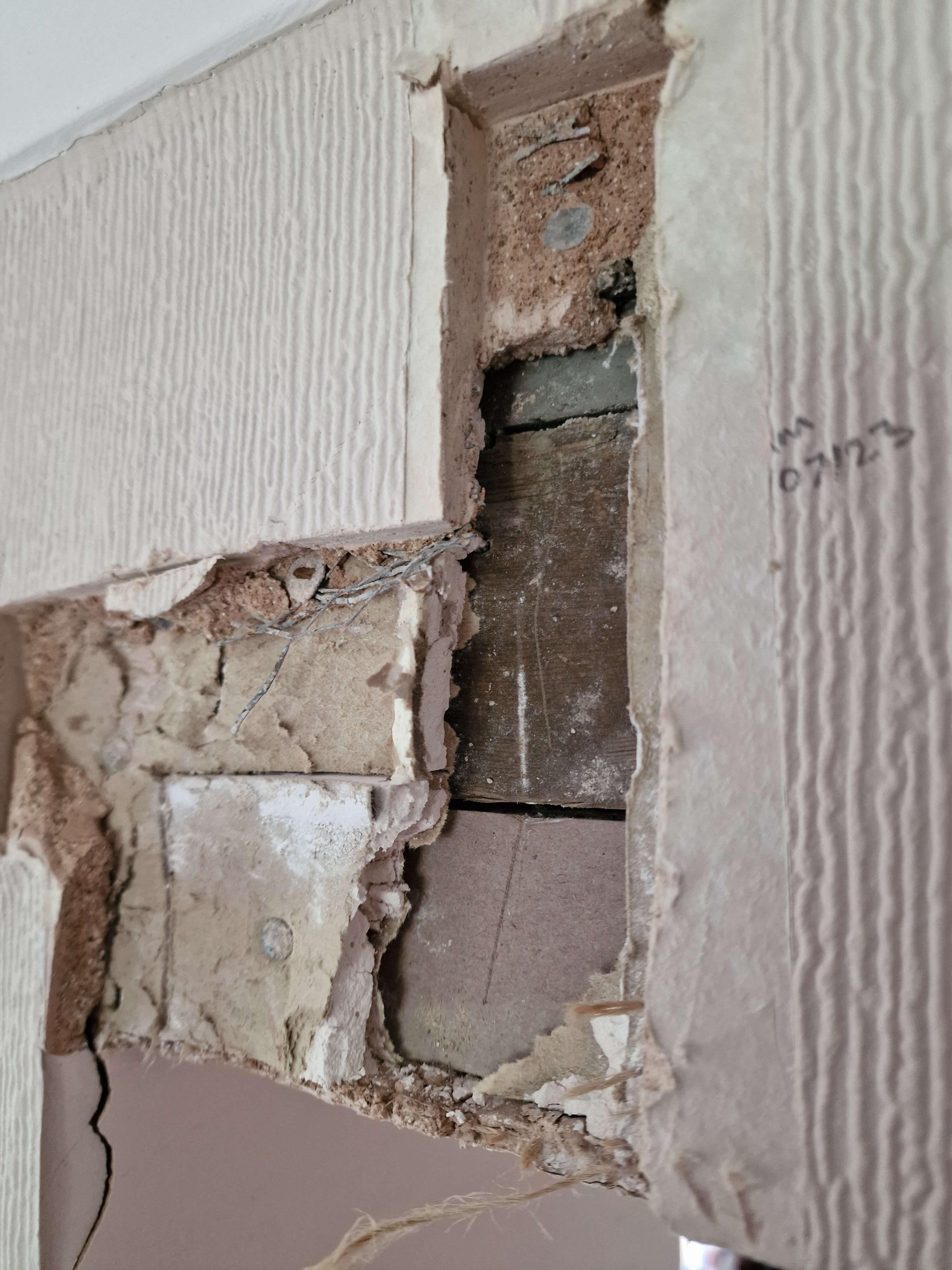
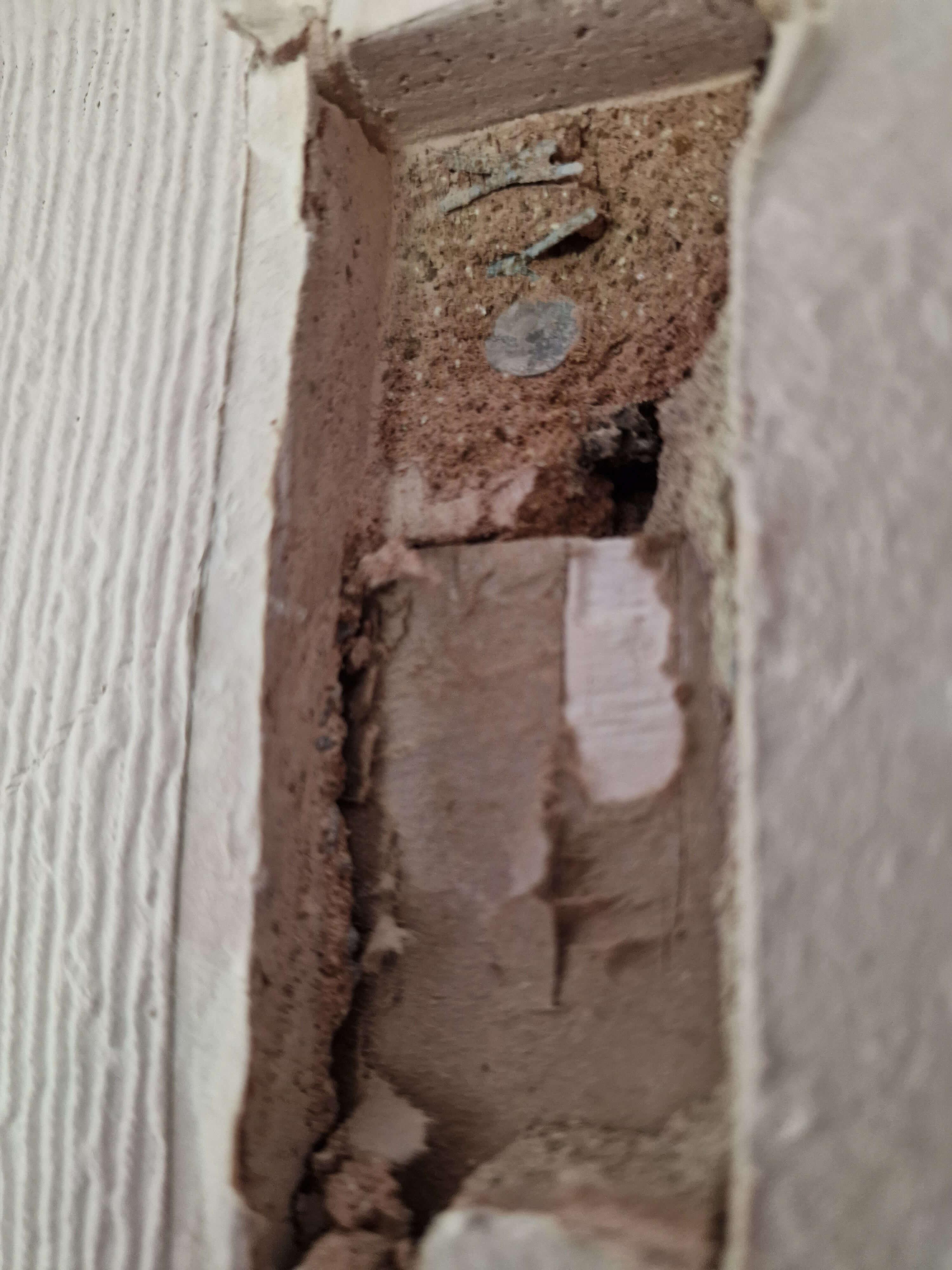
Very quick lunchtime investigation on the downstairs crack reveals a fair amount of roughfill, and what looks to be a metal mesh, I assume from the previous subsidence repair as there were references to repair meshes being installed. First image is a small cutaway as well as investigating the coving - this is plaster so explains the tears. In the below image you can see where I've come across the repair mesh as we as something else under it, not sure what it is yet but it looks to just be sitting in roughfill again. Below the roughfill is what I assume to be plasterboard as it's not solid like a lintel, but it's also sat about 10-15mm beneath the top layer of plaster which seems excessive. The doorway cut into the wall is about 42cm in depth which is much thicker than other external walls in the house are roughly 28cm there is definitely some buildup on it... I will have a closer look at the assumed plasterboard as well as the crack to the left of it after work. R.e. the next steps: Drain repair sounds sensible, I am just waiting on plans coming back so I can work out best place to put new soakaways in. Thankfully the size of the gardens mean I have a decent choice of locations as long as they pass percolation tests. I would be more than happy with this tradeoff too. Assume at this point we'd level internal floors/ceilings/walls as necessary and leave the house to it's controlled movement. Edit: For clarity, this doorway is one we would be planning to block up as part of our plans.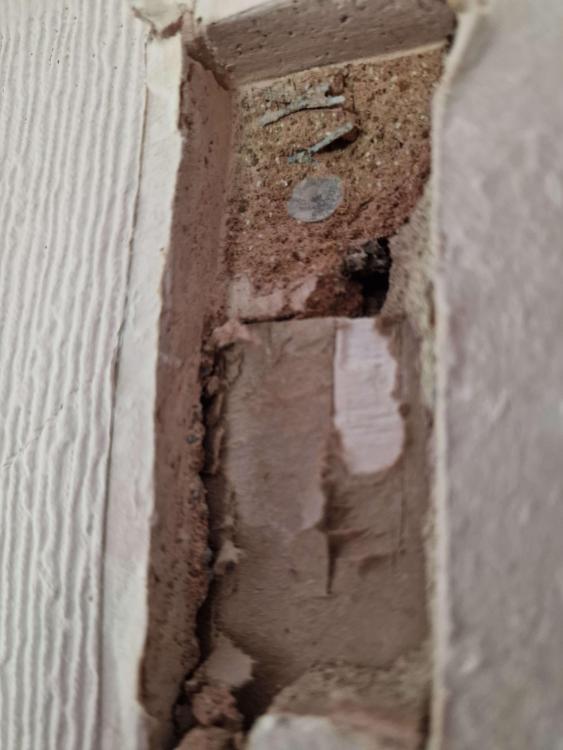
-
Do you mean the test to get the Modified plasticity index instead of the normal plasticity index? If so then it's just the results of the plasticity test (Ip) multiplied by the percentage of particles that made it through the filter in the first place.
-
An introduction... Renovation + 1950s + subsidence = a challenge!
alfaTom replied to alfaTom's topic in Introduce Yourself
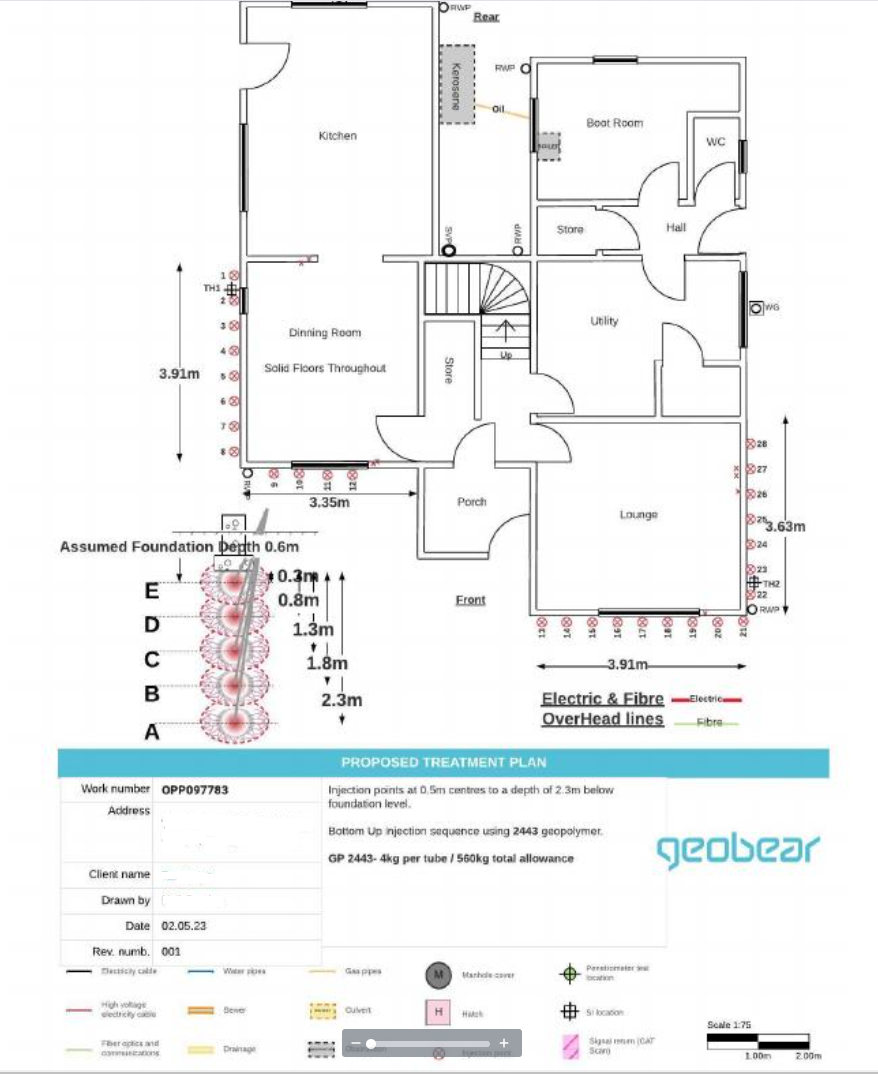
Lots to unpack here from yesterday and today's replies... First off thanks to all that have responded, it's appreciated and the wealth of knowledge here is astounding. So the previous owner who built it was a builder by trade and he's built a few houses in the village. I know he built the bungalow next door and that has been underpinned with no further movement apparently but no details on the rest. @Gus Potter wow - those are some detailed responses there! To answer your questions: The 2-storey part of the house came first. The 1.5-storey extension came after, believed to be completed late 1970's just before the chap passed away. The underpinning company we have been talking to is Geobear, who do a resin-injection form of underpinning rather than traditional mass concrete. This was after the SE said that the resin injection may help to stabilise the house & lift the ground slab. Below is their suggested works, which involve resin injection across the majority of the front elevation as well as around the gable ends. Total cost works out about £30k inc VAT I honestly did not know about the "upside down" ground aspect and this is something I definitely need to look into more, especially as we'd rather use that cash on other parts of the property if the underpinning is going to cause issues with the rest of the property. The use of shadow gaps and hiding expansion points is a great idea, and one I had already been thinking about when it comes to replacing the front porch. There will be some non-load-bearing walls going as well as some load-bearing walls. We are looking to extend the utility bit into the Store/hall area as shown on the above map and extend out to the west from the dining room (this is a gable end so hopefully not as much load on it) Plans should be back from the architect soon at which point we will be able to have some informed discussions with SE on the best approach for what we are looking to do. There is a chance the foundations for the Kitchen and boot room extensions are not deep enough for a 2-storey build so they'd both have to go which would give us a chance to tie it into the rest of the property in a more sympathetic manner to work with the movement. These stories plus Gus' explanation of the movement are definitely making me think twice about the footings/underpinning aspect. I had thought solid = better but I can see now that perhaps we need a better solution. Whilst the SE originally surmised the ground had dried out to cause the subsidence initially I am not sure if the soil survey backs that. Perhaps some light reading tonight once finished with work! Are there SE's that would specialise in this sort of soil or should all chartered Se's be good for working out the correct loading and understanding of the soil? p.s. Happy Friday!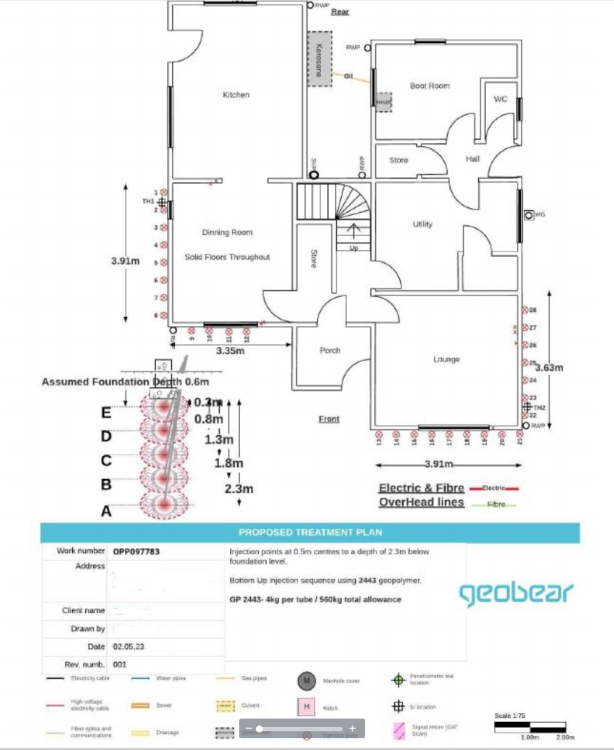
-
Welcome! Your proposal sounds very similar to what we are trying to achieve, although we weren't planning on EWI. As Mr Punter suggests, do a heat loss calculation. I have it in plans to UFH & insulate on first floor but once I have done some calcs it may not be needed. I am leaning towards overengineering at this point though. Curious to know what your MVHR proposals are; will you be dropping ceilings or boxing the vent runs in? As you are looking at 30mm interior ground and 100mm exterior upper have you thought about airtightness tests? 1950s + MVHR will need a fair bit of gap-plugging I imagine to be effective...
-
An introduction... Renovation + 1950s + subsidence = a challenge!
alfaTom replied to alfaTom's topic in Introduce Yourself
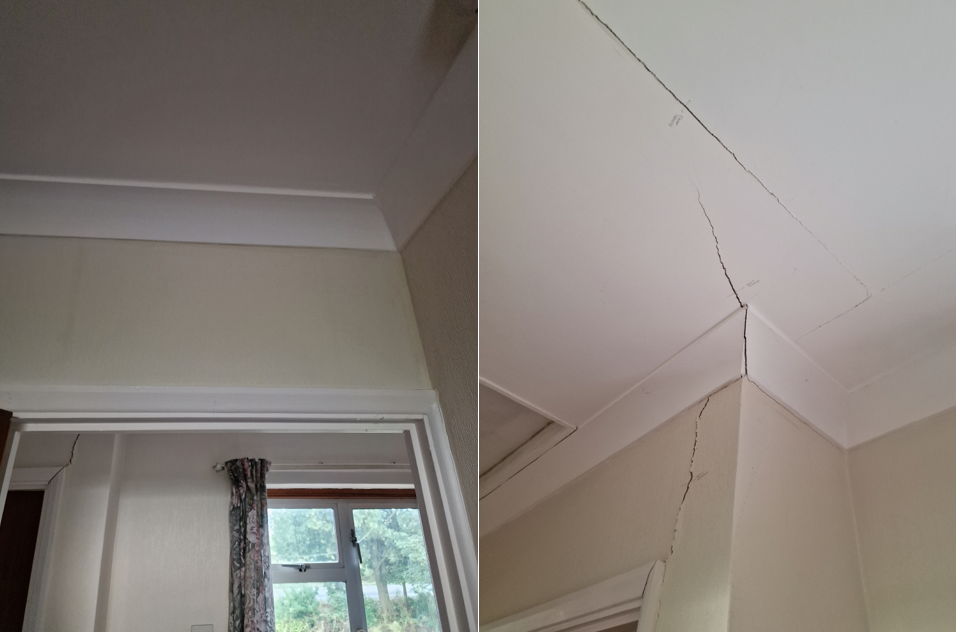
Will make that a weekend job to do a bit of discovery, cheers for the suggestion. It's definitely dropped as there is a significant slope. A lot of the floors in the house are uneven, but the plan was always to have them up and insulate + UFH so as long as the underlying (no pun intended) problem is resolved we should be ok. A few more pictures of other sections: This is above the doorway crack, as you can see the plaster side has cracked a bit more dramatically than the side without plaster. You can also see where some remedial work has been done in the past. This is the upstairs landing where it has cracked from the doorway in the front bedroom (right image). This crack runs along the ceiling to the bathroom door, but as can be seen in the left image there is no cracking visible from this side: Finally; the downstairs dining room floor. Whilst the floor meets the skirting still, there is a fair decline to the corner. This is the corner referenced in the outside picture of my previous post. I'll be moving the large rose bush at the weekend from it and clearing the rest of the vegetation around it to see what state the ground/drainage is in. I may also try to cut out a section of the ground slab to see what the construction is like beneath it. We always expected to redo the interior walls/floors/ceilings, but we just want to make sure the movement isn't ongoing before we start work.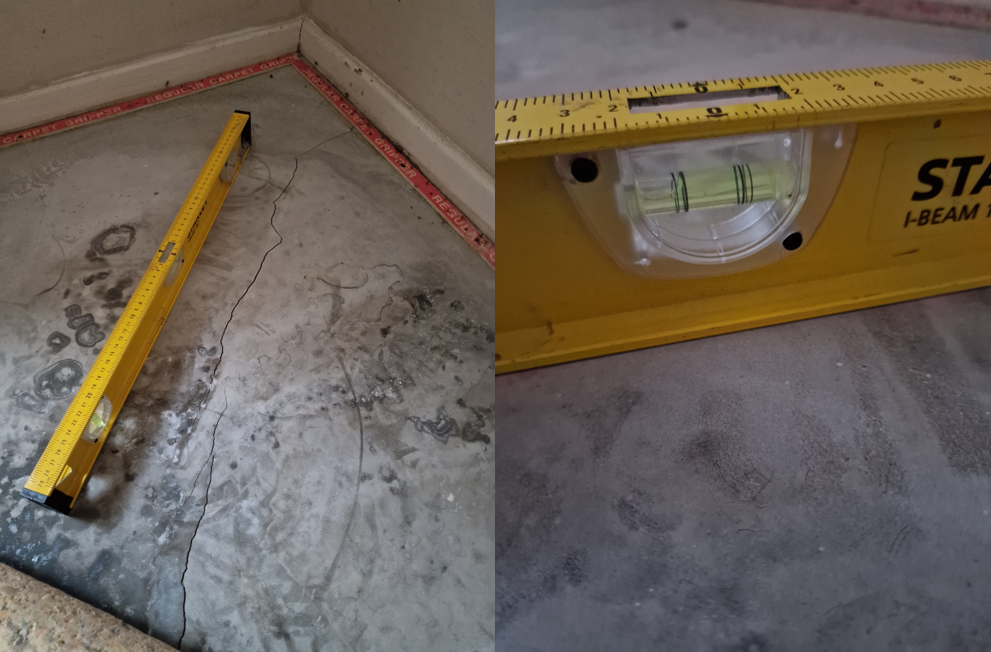

-
An introduction... Renovation + 1950s + subsidence = a challenge!
alfaTom replied to alfaTom's topic in Introduce Yourself
Ok - as requested pictures below. Internal cracking looks to be worse than external. I've yet to have wallpaper/plaster off to check behind as had been waiting for a specialist to see it before I hack the plaster away. Above is cracking on the doorway between old house and the extension. Below is the external join. This one is towards the bottom of the property in the front left corner of the property where there seems to be the most drop. It's also next to a gutter downpipe where the soakaway has failed. There are other cracks throughout the house that generally suggest the house has sunk along the front aspect. As mentioned previously the structural engineer said he did not feel the roof was being stressed too much and the only reason he'd say it was suffering from ongoing movement was due to the fact the internal cracks had not been covered. We've had TPs and SIs done as well as drainage surveys and I had the info through today, although I am not yet fully understanding of the info. The soil lab results for TP1 (which was completed close to the extension join) is below: There is other data for me to go through, or if people wish for me to upload it I can look to do so, but didn't want to dump it all on you. @Mike the initial structural engineer visit was just a GSI for the whole property, although this was from a proper MIStructE fella. I had to clear out the drains yesterday as they had become blocked from debris, that plus some misaligned drain pipes and the failed soakaways would suggest some soil washout in addition to the previous desiccation via nearby trees. As you'll note from the first image I've started a basic monitoring across some of the cracks, although I do not believe they have gotten worse over the past 6 months. I wouldn't be too concerned about external cracks along mortar lines as we have had some very hot weather to allow for some seasonal changes, but I am less keen on the cracked brickwork and the internal cracks. The ground slab has also dropped and sloped towards the corner referenced from picture 3, but I've not investigated it yet to know the composition below. I will have to look into some cavity wall tie investigation work as that is a good shout. I know the house was originally built by the owner, and the construction itself does seem to be pretty good (some good detailing around the joist pockets on internal walls and not loads of crud left under floors etc), but I guess they didn't foresee the tree/ground issues.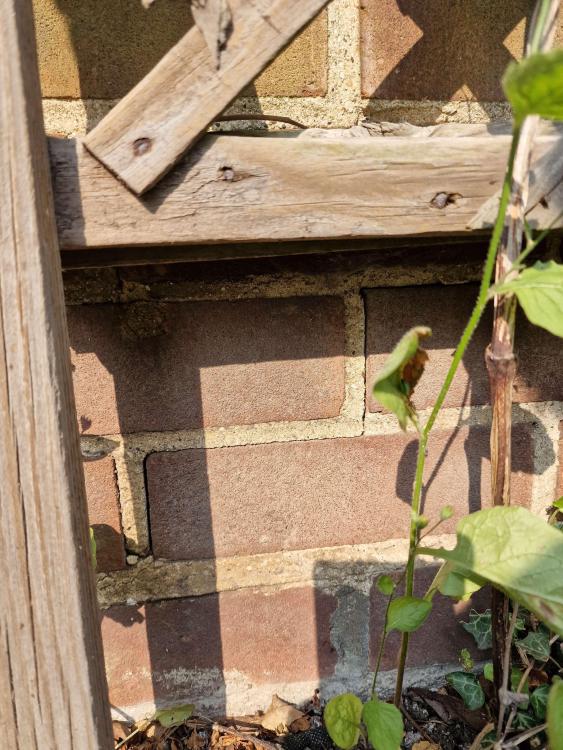
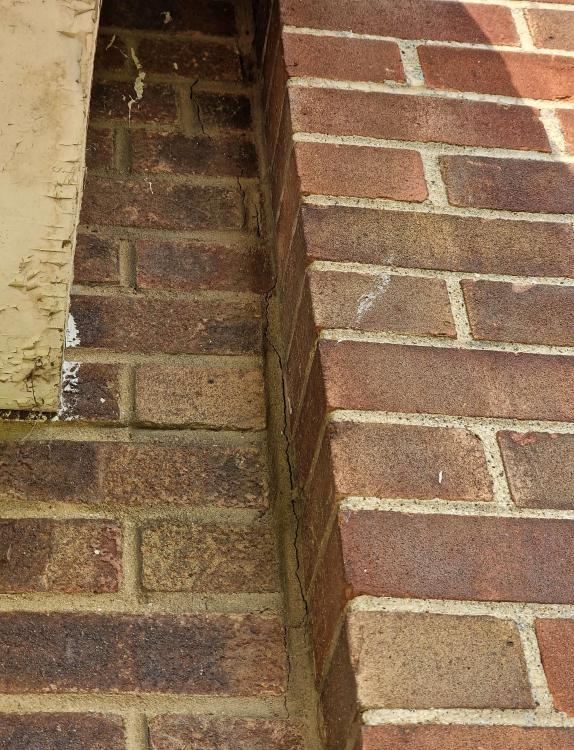
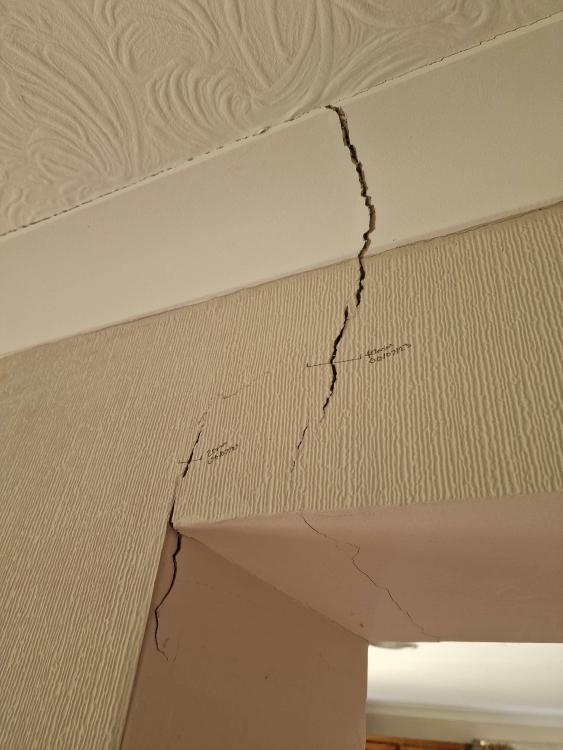


-
Evening all, First post outside of my hello thread from yesterday and I think it'll be a good'un. If you've not seen the hello thread with a little background on the house/situation (subsidence!) check it out here: Onto the question: How would you level a floor that has a drop towards the external wall? I have seen a variety of methods and I am not sure which I prefer so thought it best to ask those with experience. The room that we are looking at first has a slope towards the front elevation, and the joists run perpendicular to this. The current joists look to be 7x2" timbers and are in good condition, albeit it is notched here & there for pipework. The flooring is as follows: ------ 22mm T+G floorboards ==== 7x2" timbers ______ Plasterboard ceiling No thermal or acoustic insulation is present currently. I am torn between sistering the joists and counter-battening to add a service cavity, or taking them out completely and replacing with fabricated I-beams or posi-joists (perhaps overkill, but would make service routing such as rewire & MVHR easier). The span is just shy of 4m and is from one external wall to another, with the joists sitting on the inner leaf in pockets. Current ceiling height is about 2.4m for both ground & first floor so there is some wiggle room. No work will be completed until the remedial subsidence work is done, so I avoid levelling the floor to have it 'heave' after the subsidence treatment is completed. Thoughts? Questions?
-
An introduction... Renovation + 1950s + subsidence = a challenge!
alfaTom replied to alfaTom's topic in Introduce Yourself
thanks all, as mentioned before a rebuild would be nice but realistically it's not going to happen - whilst we have a decent amount of funds to use it wouldn't cover a rebuild, whereas a renovation allows us to start different stages as and when funds allow. To answer @joe90 the main house is constructed with cavity wall, external walls being about 250mm thick. CWI already in place and some old 80's glass fibre insulation in the loft. Appreciate it will be harder to get to some of the targets on energy efficiency but there will be some easier bits to tick off such as replacing the old windows & doors, improving loft insulation etc. The plan is for some form of cladding or rendering externally in the future which could be linked with EWI if needed to hit the right U-values. -
An introduction... Renovation + 1950s + subsidence = a challenge!
alfaTom replied to alfaTom's topic in Introduce Yourself
Morning all, few replies to catch up on! Thankfully our subsidence is nothing like that @twice round the block otherwise we wouldn't have bought! Whilst I get the calls for rebuild and agree it would result in a better and more modern home it's not on the cards. The house is 200 sqm and our budget is not likely to cover a rebuild of this scale to our desires. I work in the insurance industry so thankfully know a bit about the perils and how to go about insurance for a property like this. Unlike what the media proclaim we've been able to obtain reasonably priced policy with good coverage (£550). Our intention is to live here for a long time so the resale value isn't a primary concern, but we're happy that we bought for a discount so will have to sell for a discount. Either way the intention here is to be open & honest and document our findings for others to benefit from. Back to the property however: Prepped to lift floorboards yesterday but the dishwasher developed a drain fault so I didn't get to see what was under there. A job for today perhaps... -
An introduction... Renovation + 1950s + subsidence = a challenge!
alfaTom replied to alfaTom's topic in Introduce Yourself
It had crossed our mind, but we're confident the source of the issue was soil desiccation from trees and can be managed. We'd rather keep the house as it has some history instead of knocking it down. Once underpinning is complete we'll be fully covered by our insurance provider so whilst any future movement would be a pain it wouldn't have the same financial impact to resolve. Appreciate the callout though, always good to challenge things to see if a better alternative out there. -
Hi everyone! Thought time to make myself known as I will inevitably be asking some questions shortly. At the start of the year my wife and I found a project house that had the potential to be the 'forever home'. We got the keys last week so we're finally getting started, and whilst she has it all on Instagram I doubt I'm going to get any decent discussions going in the comments on there compared to here. Now, onto the house... it's a 3-bed detached house on half an acre of land, estimated to have been built around 1950s. It's had a couple of extensions during it's life although we are likely to take them off and start again. Heating is an oil boiler, drainage/waste is via a septic tank, windows are old aluminium DG units and the garage is waiting for a decent wind to fall over. The house does have BT FTTP though so it balances out pretty well all things considered... Did you say subsidence?! Yep. Built on clay soil in Lincolnshire when the house was first built they planted trees. A LOT of trees. I don't think it surprised anyone when they all matured and absorbed all the moisture in the ground. In 2012 the house suffered subsidence with cracking in the walls. This was repaired with helifix tie bars and the nearest trees being removed, but no underpinning. A CSA was issued confirming all was well. Fast forward to now, and there are some decent-sized cracks in internal walls which suggest new movement. Structural engineers have been and gone, and they've said the outside of the house looks good with few cracks and no split bricks, the roof trusses are in good condition (free from stress) but they'd have to assume there has been further movement due to the internal cracking. We purchased the house from the previous owner's daughter so we have little historical information to go on aside from what we can find out. What next? We're in this for the long haul, and we're living in the place while we do it up. I know, I know; we're mad but we have no other commitments or responsibilities so now is the time to do it. It's old, it's leaky and it's in need of some TLC. Architect plans are being drawn up, subsidence underpinning companies have been drafted in and hopefully, in a few weeks, we'll have a date for getting that resolved. The plan is to seal up the house as best we can, then go for ASHP/Solar/UFH/MVHR to get as eco-friendly as possible. Current EPC is an F, as in "F**k, that's a bad score" I'll leave that for another post however in case your attention span is as good as mine...