


GaryChaplin
-
Posts
54 -
Joined
-
Last visited
Everything posted by GaryChaplin
-
I'm not idle, it's just that I've got to trawl through loads of nonsence that I can't be botherered to read! I've just found searching for 'zoning' in this section helps. Heat is a air source heat pump. Floors U-value of 0.145 W/m²K or better, walls 0.122 W/m²K and roof 0.097 W/m²K or better.
-
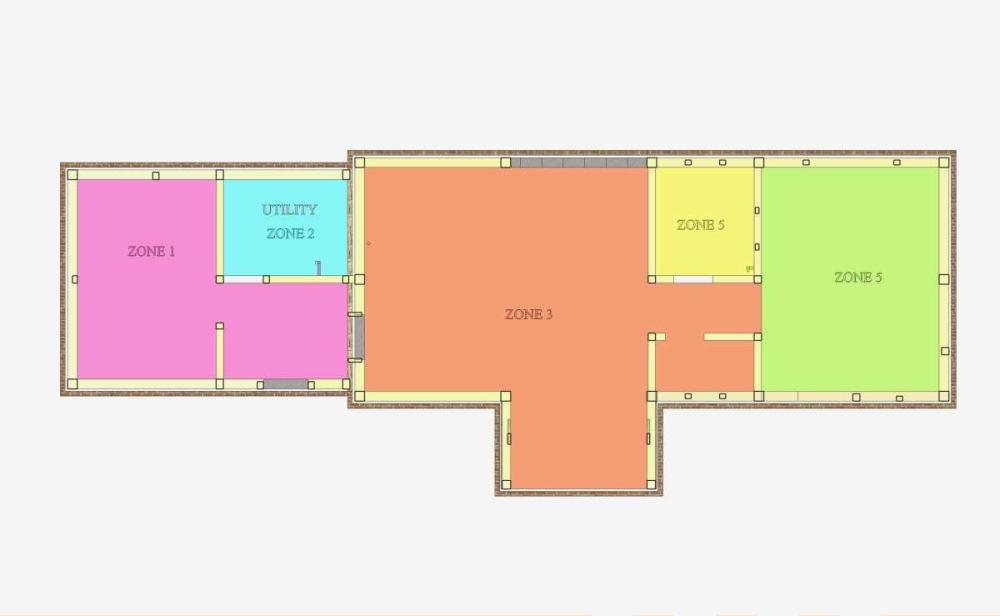
Hi all, I’ll firstly admit I’m pretty lazy when it comes to reading / scouring through loads of posts for the answer I’m after, so thought I’d just gauge an opinion... I’ll soon be at the stage where I’ll be installing the UFH and I’d originally thought zoning was still common practice. Though it would appear it’s not advised so much any more? (according to this forum) I’d like to know what’s common practice nowadays? Here is my plan from last year, however the whole ground floor is only 100 sq m, so I’d prefer to just have two zones if possible, with manifolds in the utility space. The simpler the better I guess. Thanks in advance. G.
-

Efficient slimline aluminium window suppliers?
GaryChaplin replied to GaryChaplin's topic in Windows & Glazing
Thanks. Though we are trying to reduce the sightlines on the mullions, None seem that impressive to me, with about 100mm at the miniumum. -
Efficient slimline aluminium window suppliers?
GaryChaplin replied to GaryChaplin's topic in Windows & Glazing
The windows have opening casement & mullions, so not the case I'm afraid.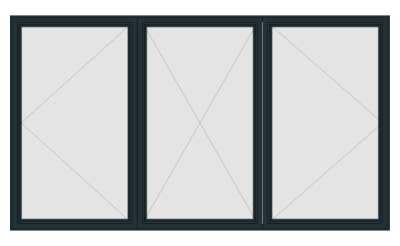
-
Efficient slimline aluminium window suppliers?
GaryChaplin replied to GaryChaplin's topic in Windows & Glazing
Exactly. I did the calcs and the triple is worse than double! Even though Origin state otherwise! -
Hi all, I'm in the process of specifying some slimline aluminium windows for my project. I'm getting frustrated trying to extract technical details from both suppliers and various manufacturers websites. I'd be interested in hearing any feedback from anyone with experience with the following products: Origin OW-70, Aluk 77IWE, Smart Systems Alitherm 600, Reynaers Slimline 68, SAS PURe, Aluhaus Warmcore. I'm looking for a thin profile frame that can accomodate 44mm triple glazing. Outward opening casements, flush and square beading if possible. Ideally with a matching sliding door (3 panes). I've been bouncing a few emails back and forth from an Origin supplier. The Origin website is good, with technical sections for frame widths etc. However the slimline OW-70 does not have the capacity for more effiecient triple glazing, due to the limit of only 28mm glass panes. I called Origin a few times, who seemed less than interested in helping me (and they ignored my emails). None of the other suppliers appear to wish to share sectional information on various frame configurations? It seems I have to use a reseller to get info I suppose? I'm looking for supply only, which could well be part of the problem. Why do none of the suppliers have an online configurator? Surely that would be easy enough to do? Perhaps resulting in downloadable BIM products to insert into CAD model? Any experience with any of the above windows and suppliers of each would be appreciated. Thanks, G.
-
Insurance for an unoccupied property
GaryChaplin replied to IronMike's topic in Self Build Insurance
I'm now at the stage at renweing my insurance and the above company could not insure me due to not having wiring or plumbing!? I did explain that I was a self-build, which has to start somewhere. Any reccomendations? -
Hello and foundation type opinion and cost?
GaryChaplin replied to greenqueen's topic in Foundations
Thanks for asking me to comment, though I've way to busy to read this whole thread. Sorry. I would always design an greeb oak frame to be within an insulation 'envelope'. This can be acheived with SIPS (expensive) or a continuous layer of PIR, taped at the seams. The oak will shrink within this envelope and not give you issues with airtightness. I have dozens of examples of how this can be done. However, these sectional details may be of use.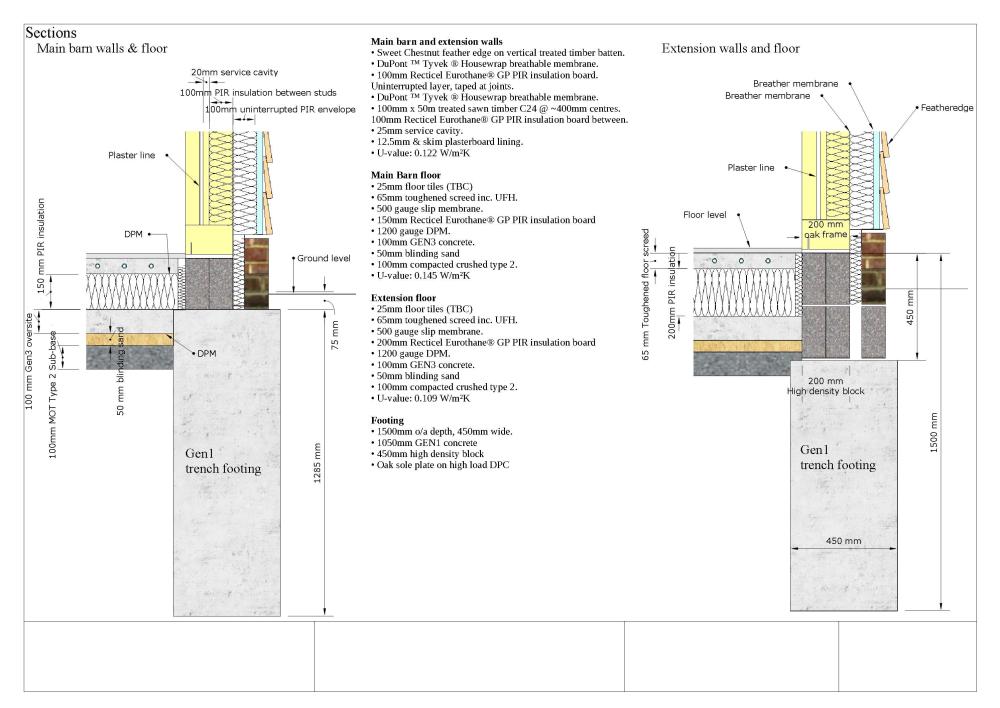
-
SS Dowels instead of Mortise and Tenon joint
GaryChaplin replied to Wayne88's topic in General Self Build & DIY Discussion
Can you explain exactly how you intend to use the stainless dowel? A drawing would be useful. Traditional mortice and tenon joints in green timbers are draw-pegged, meaning the hole in the tenon is off-set to the mortice and causes the joint to be pulled together tight. This also helps maintain a tight joint as the timber shrinks. Using mechanincal fixings you may get loose connections over time? Also, 'proper' timber framers use pegs, not dowels. Pegs are cleft from straight grain timber and hand finished with a draw knife on a shaving horse. The should be tapered and octagonal to get optimum bit and performance. Dowels are typically straight and turned, which means they can be significantly weaker and jamb in the peg holes easily. I hope that helps and not rambling off-topic! -
You may find the oak frame company wish to set the frame down on packers, on top of the DPM. It is unlikely the oak is dead straight and flat and in time will distort anyway. I would suggest taking their advice and pointing up between sole plate and DPM as late as possible in the build. For air-tightness, you could consider using and expanding foam tape, such as EXP6 to keep a tight seal until the frame has fully dried.
-
Your thoughts on this design?
GaryChaplin replied to Alan Ambrose's topic in New House & Self Build Design
It's hard to tell from the CAD drawing, but it looks like you don't have any tie beams at wall plate level? The collars in the trusses simply will not be able to cope at that low pitch of a roof. I would try and introduce some tie beams and full height centre posts in the intermediate walls that will be in-filled, also the gable ends. -
Your thoughts on this design?
GaryChaplin replied to Alan Ambrose's topic in New House & Self Build Design
There are other timbers that look similar to oak, i.e. Sweet Chestnut. however the issue is structural characteristics when it comes to engineering calculations. It's hard enough finding an engineer that will provide reasonable calcs for oak, let alone other species. -
Your thoughts on this design?
GaryChaplin replied to Alan Ambrose's topic in New House & Self Build Design
I've not read all the replies, but I would highly reccomend ensuring the design accounts for the 'rule set' of oak framing before you submit for planning. Having windows and doors where there should be key structural elements could create engineering challenges. Also bear in mind very large spans can be an issue. A general rule of thumb is to keep any clear span less than 5m. -
Hi, I have one downstairs room with solid timber floors. The whole ground floor was to be screeded with UFH before partition walls erected. However, after reading a little I'm not sure what to do in this one room. I'm using dried 25mm hardwood and have two options: • Cement screed and glue boards • Battens over insulation with UFH between. Nail and glue boards. Any advice on the better option? Thanks, Gary
-
Chat GPT for building regulations - insane!
GaryChaplin replied to GaryChaplin's topic in Building Regulations
The stove I'm looking at is the Esse Bakeheart. This is for cooking & heating. https://www.esse.com/wood-fired-cook-stoves/bakeheart/ I'll probably buy it and do a few tests first to see what heat it kicks out. -
Chat GPT for building regulations - insane!
GaryChaplin replied to GaryChaplin's topic in Building Regulations
Oh, and I did just follow up with ChatGPT with a final question, though not sure the stats are right? Can you tell me the distance I can have a wood burning stove from a combustible surface According to the Building Regulations Approved Document J (Combustion Appliances and Fuel Storage Systems) in the UK, the minimum distance between a wood burning stove and any combustible surface is typically measured as follows: From the front of the stove: at least 50mm (2 inches) From the sides of the stove: at least 150mm (6 inches) From the top of the stove: at least 225mm (9 inches) It is important to note that these are the minimum distances and it is always recommended to have greater distance to reduce the risk of fire. It is also important to note that these are the standard guidelines and some local building codes may have different requirements, so it is always important to check with local authorities before installation. A professional installer should also be consulted to ensure that the installation complies with all safety regulations and guidelines. -
Chat GPT for building regulations - insane!
GaryChaplin replied to GaryChaplin's topic in Building Regulations
Blimey, I didn't mean to start a debate on the topic of AI. I just thought it was a useful shortcut to getting to the correct information source material. Anyway, I thought I'd follow up with the results of my search about wood burning stoves and distance to combustible surfaces. The supplier (ESSE) did not have their own data. They just quoted the 500mm from back and 400mm from sides. Though with shielding it can be dramatically reduced. See pdf installationsWithShieldingOfCombustibleWall90degree45degree.pdf -
Hi all, I'm new here, but I thought I'd share my recent experience using ChatGPT (google it if you have no idea what I'm talking about) I spent most of my morning trawling through the current building regulations as I just wanted to know how close to combustible walls (oak frame) as wood burner could be. I did'nt get very far, so I thought I'd see what ChatGPT could do, see thread below. It referenced the appropriate documents and helped point me in the right direction in seconds.
-
DIY design of MVHR acceptable?
GaryChaplin replied to GaryChaplin's topic in Mechanical Ventilation with Heat Recovery (MVHR)
I can't beleive how responsive this forum is! Many thanks to all for such prompt discussion! 😀 Air tightness should be excellent. The entire build has a seamless and taped insulation envelope, with two breather membranes and further insulation taped on the inside! -
DIY design of MVHR acceptable?
GaryChaplin replied to GaryChaplin's topic in Mechanical Ventilation with Heat Recovery (MVHR)
I've tried to design the system with the most amount of through flow. I can't see why the vents being by the windows would have any bearing on condensation. They will be triple glazed and I hope the MVHR will deal with moisture content. -
DIY design of MVHR acceptable?
GaryChaplin replied to GaryChaplin's topic in Mechanical Ventilation with Heat Recovery (MVHR)
Thanks for the replies. The primary construction is oak frame and in hindsight I would have considered the MVHR before the initital design. However it was designed and built as a well insulated barn, then permission gained for conversion to residential. I have the design modelled in sketchup, but it may not be clear from the following drawing as it's pretty cluttered. I plan to run the pipes vertically stacked along one wall in a hidden cavity within the insulation envelope. Red indicates extraction, blue is clean air. It's only a 1 1/2 storey build with a very open and simple layout. Extracts from kitchen, bathroom & utility. Elevations.Plans.Sections.ServicesPlanning_V7.pdf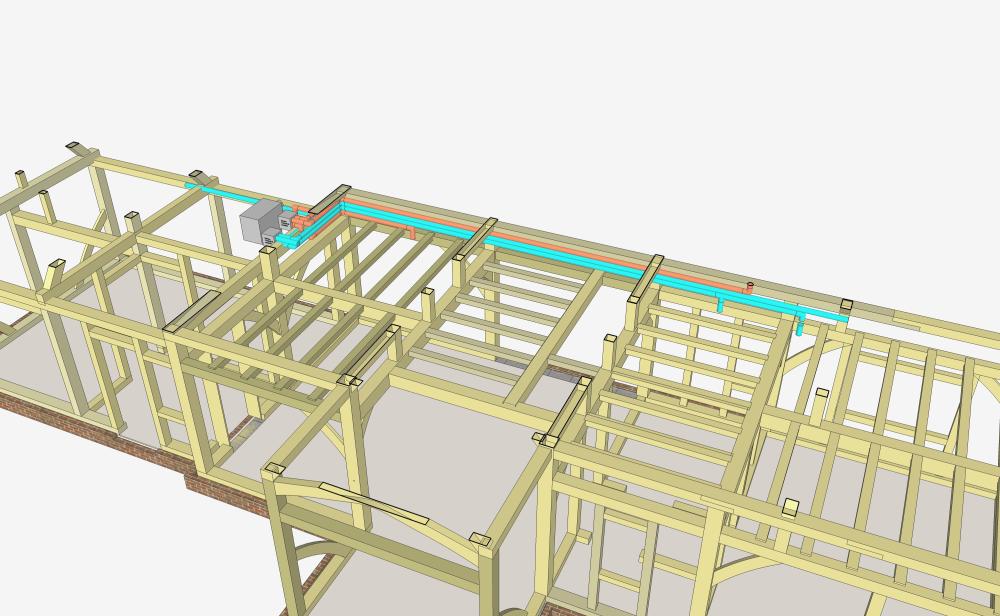
-
DIY design of MVHR acceptable?
GaryChaplin replied to GaryChaplin's topic in Mechanical Ventilation with Heat Recovery (MVHR)
Thanks, I sort of guessed that as immediatly regretted posting the question before reading some of the previous messages! Much to learn, looks like a great resource... -
Hi all, Firstly, hello! This is my first post, so apologies if this has been asked before. I'm part way through a true self-build and I have designed in a MVHR system. I have received a quote for a company install, but I'm simply not prepared to pay the ridiculous costs for essentially running pipes into every room. There seems to be much talk about commisioning and flow rates etc? Can anyone point me in the direction of some guidance so I start my research in the correct place? I have to use 90mm pipes and intend to have 3 extracts and 4 supplies. It's an intentionally small passivehaus inspired build, so hopefully should not be too complex. Thanks, Gary.



