


JamesPa
-
Posts
1899 -
Joined
-
Last visited
-
Days Won
2
Everything posted by JamesPa
-
Agreed A couple of the ashp brochures show an ashp at the front of the house, albeit a very 'modern Germanic/scandi' style house. Looks great ihmo. It could become a status symbol proudly displayed for all to see.
-
However much you want to wriggle and twist this, it comes down to training and standards whether or it's MCS or otherwise, which goes back to my point about not relaxing the standards to permit easier access. Yeah, you're always going to get variations but as I've said the standards and training need to be enhanced to provide better quality outcomes for all of us. Really? According to whom? I haven't suggested middle aged plumbers are incapable. Perhaps too subtly I've suggested that they should be asked whether they want to or not. Gas Safe did and only about 32% I think said they intended/wanted to train in heatpumps. Locally I know quite a few in their 50s who have good established businesses who just want to retire and are currently kept from retiring because they're still so busy. As it happens I have some personal direct experience here too. A few years ago while building my house, I got my quote for a heatpump. My response to the price was to half fall off my chair and complain about the price. However, I then looked into it and decided to embark on the training myself in order to design and install the system myself. So I found out what I needed to do and became Gas Safe Registered as the first step. I've followed this up with low temperature heating system design and a few other things. I happen to be in my 50s now and I've established a part time business with this recently too. My view is that if I want to affect change within a system I need to know how the system works from the inside, and be on the inside. This does give me a particular insight into the current training regimes and standards and I can categorically state that your assertion that existing plumbers and electricians are somehow excluded is wrong. Like I said, a friend of mine in his 60s has just got the tickets as it's just about signing up for the training and completing the tests. Probably the most problematic part of getting into the industry right now is caused by dogma of existing plumbers/heating engineers as they tend to be reluctant to employ trainees doing their managed learning programme and so they can't complete their practical portfolio. So many trainees give up before starting or drop out of the training specifically for this reason. When I embarked on my training I was insensed that I couldn't just go and do heatpump certification without going through Gas Safe or OFTEC training first. However, I've now realised this has provided me with invaluable experience working with a wide range of heating systems that will serve me well in the heatpump world. It wasn't what I wanted but I'm now very much better than I would have otherwise been. But there is something about the training that existing and highly experienced plumbers/heating engineers will not have recieved. That is in how low temperature heatpump systems need to be approached differently. This has got to be taken into account. Therefore they will all need further training and not just be let loose on these systems. I agree with a lot of what you say and, as I say, Im not against training or against appropriate standards (you did make an apparently negative comment about middle aged plumbers though) . What I am against is anything which unnecessarily stifles innovation and prevents healthy competition, which appears to be the current situation because of the PD rules and (to a lesser extent) the BUS rules. To avoid stifling innovation and promote healthy competition standards should apply, in my view, only where they are strictly necessary, mainly in the area of safety or where there is a clear public interest, and to the minimum extent necessary for consumer protection where this is not covered elsewhere, but not more. I acknowledge current plumbers and electricians don't currently have all the design skills (albeit that they do have most of the other skills required), but they can learn these or partner with those who do have the design skills if they wish to. I also acknowledge that many wont want to (but 32% is a good start) . Currently there is little motivation because the regulation effectively excludes them from the market unless they take on the full MCS overhead, which involves a lot beyond the design/technical skills from my reading of the standards, and also constrains their designs. That's the problem I, and others on this forum, have expressed. Well if change is on its way, MCS is not the whole world and the market is going to be liberalised then thats all good. Unless PD rules change though, manufacturers warranties don't solve the problem, so to me that's fundamental. Gas and oli boilers can be installed without planning consent and the permitted development rules for them (which concern the flues only) do not delve deeply into the technical issues, why should they for ASHPs? Because of your background (which you outlined above) I am quite prepared to believe that you personally would innovate within the MCS rules, bend them, interpret them with invention etc to do a good job, so it may well be that your personal perception is that the PD rules and the strictures associated with MCS is not stifling innovation and competition. But that's not the current norm, at least around where I live, and others on the forum evidently agree.
-
Yes, but there is choice Interview, ask questions, test their arguments, check their reviews, seek recommendations. Its not perfect but its also not bad. And almost never choose the cheapest! There has been the odd bad experience, no 'test' is perfect, but on the whole this seems to work. Im not sure why you think (or appear to think) that MCS is an absolute guarantee though. I thought this because you seem to be resisting change or competition or opening the business up to regular plumbers or electricians (not just anybody, these guys are members of trade bodies and have to work to standards). People generally do that as a protectionist measure. I apologise if I have misunderstood your motives, Im now a little confused what they are. Not necessarily. If they are well thought through using a wider 'toolbox' of ideas they need be no more risky. No reputable plumber would take on something that they weren't happy with. But I grant that today there is no motivation, because the low hanging fruit and government grant is there. And at no point have I argued to cut corners. I did say low cost, I did say nuanced. But I never argued not fit for purpose. There are solutions to the system engineering challenges other than the ones currently on offer. I thought that you were arguing against expanding the rate of heat pump deployment on the grounds that its not environmentally friendly because the decarbonisisation of the grid wont keep up. Apologies if I misunderstood you. As to the last comment, perhaps not, but, since its necessary, that shouldn't stop us trying to get close; currently we seem to have no plan to get anywhere near. Well now Im truly confused. You seemed to be arguing that you knew about the HP installation industry, but as you dont then I am wondering what you think is the problem with opening up the business more.
-
Well how convenient. You can argue grid capacity wont expand so there is no need to fit heat pumps fast so introducing more players isn't necessary. Keeps the shop closed and preserves the high price low volume status quo, but wrecks the planet. Sorry your argument is one which leads to doing absolutely nothing at all, as others have pointed out, and has no evidential basis.
-
- banks, building societies, hotels, phone services -all services done by people. I would add plumbers, electricians and builders also, where competition is accepted and brings both diversity, quality and innovation. I apologise, I thought you were arguing for the current situation where MCS is the only route to installations under PD. I live in a world where there are chancers, good people, and people in between in all walks of life. As a customer I have to find ways to distinguish between them eg recommendations, reviews, interviewing them. Why are HPs so different? Me and others on this forum please note (the suggestions werent primarily mine) but ... not at all do I choose not to see all the problems, but what gives one group of people a monopoly over this and why on earth do you so readily dismiss existing plumbers and electricians? Anyone else doing a HP install, whether or not under MCS rules, will also want to keep call backs to a minimum so whats the issue here? 1.4m gas boilers are retrofitted each year. Where is the lack of manpower please? Are you sure that you aren't trying to create a protected niche for yourself and ensure that there is little or no competition. Are you afraid that these 'shite' installers will take your business. Not for long if they are 'shite', so whats the real risk if what you do is so good (which I am sure it is). Finally Im not arguing for low labour rates , but I am arguing for more nuanced installs and innovation and a rapid increase in capacity. Currently these are all suppressed.
-
OK fair enough but note 'when reasonably practical' and the subsequent terminology where it is emphasised that this is permitted only when there is no reasonable solution that meets the 100% criterion, and for very short periods of the year. That doesn't allow, so far as I can see, 'Another alternative is to instal mini and hybrid heatpumps running in parallel with ff boilers providing the majority heat demand but being topped up by ff where absolutely necessary. This would be a transitional phase' The final sentence rules out the possibility that full heat pump is not reasonably practical (I think) and the fact that 'mini' is used suggests that this is intended to be a part installation (lie putting in a single A2A to do say, half, of the house. So I would say MCS does not permit what I think is being suggested (but I may have misunderstood the suggestion) unless there is no other reasonable solution.
-
This is very interesting, Do you have it set up so the HP tops it up whenever it needs it and stops heating the house, what flow temp are your running the HP at, and whats the size of the 'heat pump coil' (or whatever transfers energy from the HP to the thermal store). You seem to be pretty unique in using a TS with a HP. Its installed by an MCS contractor of course (just joking, but do say if it was). Was it just a regulat TS off the shelf or something special. Basically, whats the setup?
-
Really? Please evidence that its 'fundamentally' untrue. Computers, cars, mobile phones, all better, more innovative and offering more variety because of competition. As are many services - banks, building societies, hotels, phone services. Not perfect but better than they were as a closed shop. Also plumbers, builders, electricians. All offer a variety of price points from very high to very low, and the reputable ones don't 'cut corners' (but they may do things efficiently or innovatively). Are you seriously arguing for a closed shop in Heat pumps? I fully accept that some standards are necessary (although I have no idea at all why the standards need to be more onerous than for boilers, which can kill you), but over-regulation stifles innovation and closed shops block new entrants. Is the technology really so difficult that the good good plumbers and electricians are incapable of understanding it, I think not! Don't you think these people value their own reputations and their livelihoods, so why are they going to do poor job, and dont you think that a good many of them would, justifiably, find the inferences some are making on this forum quite offensive. I should stress that I'm not, and never have been, a plumber nor and electrician, and Ive had a good few run-ins with both trades. But I also see very good ones who, it seems, some individuals on this forum are basically dismissing as wholly incapable. Where do you propose to get the resource to do 1.4M retrofits per year, soon?
-
Thats interesting, any chance of a diagram. Is it intended that it will still work with ASHP? Personally I am not so keen on a large store of mains pressure hot water but had the impression that getting a thermal store to work with an ASHP to heat DHW real time was going to be tricky. James
-
That is encouraging and the first time I had heard of this being an option in a quote. The industry mantra, as I have experienced it, is 'you need a big coil for recovery time and to stop short cycling'. Obviously GE dont use pre-plumbed cylinders in their installations so dont have the motivation others have to find a reason to recommend cylinder replacement. You did indeed and thanks for reminding us. My worry about this one is that Im not sure it entirely solves the short cycling problem. But I grant it might, and of course the seriousness of the short cycling problem is dependent on several parameters, some of which are field-adjustable. The pipework required for all three solutions is very similar so if one didn't work you could convert to the other. Obviously that's not a satisfactory way for a third party installer, they need a solution which works.
-
Thats one I hadn't thought of and that's system engineering. There are multiple solutions to the problems encountered in retrofits, but the current HP installation methodology seems to confine us to a few. The 'right' one is one which works technically, works for the customer and works financially.
-
Absolutely not. I said that the MCS installers who quoted were unable to rationalise their design/installation proposal and explain it. Every good plumber or good electrician I have met can rationalise their design choices (I have also met a load of poor ones who cant, I tend to avoid them). I think many good plumbers and good electricians would find the implication of what you are saying, which seems to imply that 'middle aged' (your words) plumbers and electricians are incapable of dealing with heat pumps, quite offensive. Basically you appear, prima facie, to be writing them off and Im not sure why. Agreed. But that doesn't mean that design and installation couldn't be spllt. They are different skills, one primarily intellectual and one primary practical. Of course each needs to know about the other, have done the other, and from time to time do the other. Anyway it should be a choice for customers and/or the industry, not a function of regulation. Is the current MCS-led industry actually growing those skills, or is it in fact employing rookie plumbers to do the easiest possible plug it together job according to a set of rigid rules which protect their backsides. I would suggest that, at least in part, the latter is happening (based on my personal experience and what others here say). Well I wouldn't disagree its at least in part socio-cultural, and neither would I disagree that our education system should recognise practical trades as much, or more, than academia. I wouldn't disagree with funding training either. But the first of these things take decades to change, even if there is consistent political will, which there isn't, and we don't have decades. In many ways I wish I lived in Germany, where practical skills and education of the trades is respected, but I dont, I live in the UK, so its the UK issue Im interested in. Like it or not, we need to work with the human material and the culture we have got whilst injecting better 'from the bottom'. The problem is, that's going to get you 10%. That doesn't make it bad but, in the mean time, we are retrofitting 1.4M gas boilers per year which will be with us for another 10-20 years. Also, once people spend money on this optimisation, they will be even less reluctant to make the real change necessary. Finally the only reason to do this at all is if we cant do what we really need to do ie 1.4M retrofits per year. I fear you are suggesting we cant. Not a bad idea, but currently not possible under permitted development, because permitted development requires MCS, and MCS requires that the system meets 100% of the heating demand. That was the reasoning behind one of the proposed regulatory revisions. I fear that some of your responses are based on the assumption I, and others on this forum, are rabid free marketeer, anti-practical-skill Tories (sorry to raise that, but you did first) and thus you are assuming that the motives are aligned to this political position. I cant speak for others, but I personally couldn't be further from this. My motive, in this case, it to find a way to deliver 1.4M retrofits a year at a price people can afford, starting in a handful of years time not in the time it will take to change the whole culture of the UK. So far as I can see the current situation is nowhere near to 'cutting it'.
-
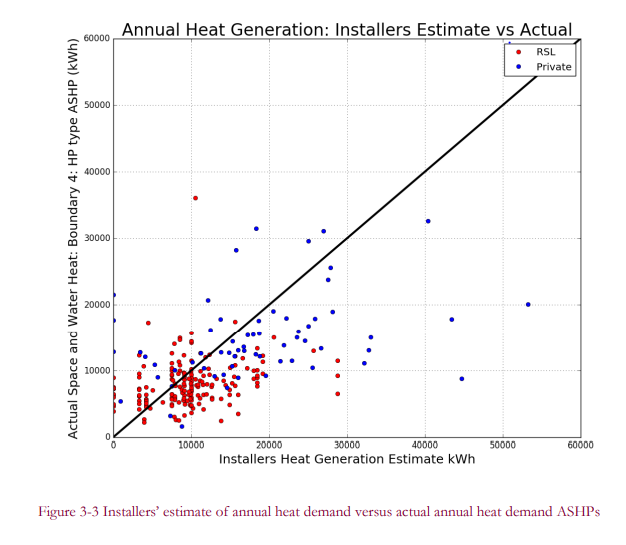
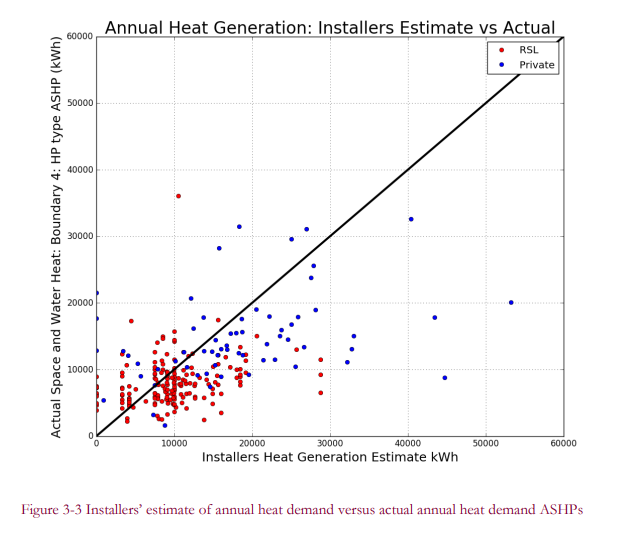
Over on the thread 'Rethinking the mindset for mass retrofit - a provocative idea' we have ended up discussing, and I would say largely (but of course not universally) agreeing on, regulatory changes that are necessary if we are to achieve the mass roll out of heat pumps that is necessary to achieve our climate change goals. That discussion continues, but I thought a bit of a brainstorm of engineering ideas might be useful as well, given that we have quite a few tradesmen/engineers/former engineers here. The essential background is that today we install about 1.6M gas boilers each year of which 1.4M are retrofits. Each gas boiler installed is an opportunity lost. In 2022 we installed about 60,000 heat pumps. The UK is 20th on the European league table of heat pumps per person. Currently heat pump retrofits cost about 10-15K (or even 20K) after BUS grant, this is clearly not going to achieve mass rollout when a gas boiler replacement is 4-5K. A part of the reason is that the replacement of a gas or oil boiler with a heat pump not infrequently comes with replacement of much of the rest of the heating system. These include DHW tank Cold feed to DHW tank (upgrade 15mm->22mm Feeds from boiler to DHW tank (upgrade 22mm->28mm Emitters Primary feeds from boiler to the emitters (upgrade 22mm->28mm) Secondary feeds to individual emitters Uupgrade microbore -> 15mm?) Miscellaneous things like mag filters etc things that are anyway counterproductive like room thermostats (other than any in the HP controller itself), timers etc and we add – buffer tanks This all adds cost and disruption which are frequently out of proportion to the benefit perceived by the customer. In many (not all) cases they are not necessary. Sometimes they are done unnecessarily because the whole-house sizing is over engineered, so we need to add this to the list of things for which we need an better engineering solution In this thread Id like to suggest a discussion of system engineering amendments for: whole house sizing (particularly to avoid over-sizing), and the DHW tank. The first because it has so many knock on effects, the second because its often the biggest single identifiable change other than the HP itself, and quite likely the one causing most disruption. Im throwing in ideas here, which seem reasonable from an engineering perspective. I don't claim to be an expert (because I'm not), so I may have missed something fundamental. I do, however, claim to be capable of understanding logical arguments put by experts if they make them. 1. Whole house sizing This is fundamental. Get it too low and the customer is cold, get it too high and the system performance is compromised, you may need an otherwise unnecessary buffer tank which is likely to compromise performance, the DHW and primary feeds may need upgrading unnecessarily, and it costs more. This is what we achieve using the current method (https://assets.publishing.service.gov.uk/government/uploads/system/uploads/attachment_data/file/606834/Report_on_compliance_with_MCS_installation_standards_v32.pdf), ie quite frequently a 2 fold oversizing or worse, less frequently undersizing. Its pretty poor. Not surprising really, much of the fabric on which surveyors base their estimates is not visible, so they have to make assumptions which are unlikely to be accurate (particularly if they don't listen to the customer when he tells them how the house construction has evolved!) So why dont we do the whole house sizing by simply measuring demand, or at least use demand as a sense check? At its simplest its really, really, really simple to take annual gas (or oil) consumption and from that work out the load at any chosen design temperature, and thus the required peak output. Obviously a few questions are required to determine how the customer uses the house, but at its root its real world data thats easily obtained and measures the right thing. Now there are more sophisticated methods than this crude calculation, using smart meter readings (only applicable for gas of course) or making a specific measurement with sensors and calibrated heat sources, but I would suspect that the simple method, supported by a few questions that the householder has to answer, may well be good enough, and almost certainly better than we currently manage. For my house this calculation comes out about 8.5kW, against a measured peak of 7.5kW at design OAT. Meanwhile surveyors (two of them) got to 16kW (because they ignored fabric upgrades that I told them about and double counted room to room losses) and if I use MCS assumptions but put in the fabric upgrades, I get to 10.5kW. I reiterate - get this right (which currently, based on the evidence above, we dont) and lots of other problems disappear 2. DHW tank (and associated feeds/components) There appear to be three principal reasons to replace this namely a) because ASHPs running at say 55 need a larger coil to get to say 48-50 without short cycling and with a reasonable recovery time b) because the installer 'decides' that the householder will ‘need’ a larger tank if its heated to a lower temperature c) because it makes the plumbing simpler if you use a ‘pre plumbed tank’ provided by the system supplier I suspect (c) is often the real reason and, if it results in a net cost saving is justifiable. However I haven’t seen evidence that it does. So lets concentrate on the engineering reasons. The householder should have a say in (b). The installer should give advice, but ultimately it’s the householder’s decision. There are at least two solutions to (a). The first is what Mixergy do with their Heat Pump kit. Essentially its to add a PHE in series with the coil and use a pump to pump the DHW through the PHE, thus increasing the effective size of the flow water -> DHW water heat exchanger. Some downsides, but overall perfectly reasonable. The second is to run the HP at 55 as normal for DHW heating, (or consider 60), heat the water to say 40-45 on the HP and then use the immersion (or better still a willis heater) to go the last mile. Yes it will add to running cost a bit, about £120 per year based on the estimate I did. At £120 per year most people would take this option instead of suffering the disruption and cost of swapping out the DHW tank and associated parts, because the business case for doing so sucks. Upgrading the CW feed to the DHW tank is only necessary if the customer needs (and wishes to pay for) a larger flow, otherwise it isn’t. So it can be offered as an upgrade to the system not a ‘must do’ Upgrading the feeds from boiler to DHW tank (22mm-28mm) is usually unnecessary so far as I can see. 22mm feeds are capable of 6kW, 8 at a push, at DT=5. That’s plenty for most (an immersion is 3kW and many get by on that). The only other problem is if your HP wont modulate down far enough. However if the whole house sizing is correct in the first place, and it’s a half decent HP, that’s unlikely to be the case unless you have a very large/very leaky house (in which case, sorry, you are going to have to pay the premium). Comments please There are still other elements to discuss, but if we try to cram too much into one thread we wont get anywhere. And for the avoidance of doubt it is clear that some of this requires more nuanced system engineering which is not going to happen given the fact that demand today exceeds supply. That latter problem is the subject of the original thread (or at least where its ended up. And please bear in mind that the requirement is 1.4M retrofits per year at a price people can afford.
-
Absolutely, provided that the current wording 'used for cooling' not 'capable of cooling' is retained as the qualification for PD. The fact is that almost all ASHPs are capable of cooling and if someone suggested tightening PD ruses to say 'capable' instead of 'used' we would be in the do-dos. 1.4M retrofits per year at prices people can afford, that's the requirement. The proposals this thread seems to have settled on seem, prima facie, to go a long way to making that at least possible, but of course wont be sufficient on their own, we also need some engineering and workforce actions (some of which have been touched on above. If anyone (particularly anyone with affiliations to MCS) has another solution/roadmap to this goal please lets hear it!
-
Well Im pleased to hear that you aim to do the minimum necessary. Obvisously you didnt quote; presumably you arent in my area. Yes I did ask them why it was being proposed; they couldn't give a rational answer and refused to listen to alternatives (because, I fear, that it didn't suit them). I also challenged their estimate of load and the calculations that they had done with the facts, but they weren't interested. I understand why they werent interested, there is plenty of low hanging fruit out there so they dont need to bother. No, No, No. I'm proposing a more flexible engineering approach to the design of the retrofit, rather than the current rigid approach which MCS mandates, so that, where components can be retained and work avoided, they are, and we can get towards more affordable solutions. Im also proposing we expand the installation market big time using the only resource we have available and remove from planning law restrictions which have absolutely no place in planning law. The competition, remember, is an £K4-5 retrofit of a gas boiler which does not require government subsidy! I wont respond individually to the other comments because I don't think it will help a lot, but .... Please explain your road map to 1.4 M retrofits per year at prices people can afford (cost is, whether we like it or not, always part of the spec). That's the requirement, whats the solution? Its easy to criticise, much less easy to propose solutions. I emphasise once again that the ideas are not my proposal, I have merely collated and rationalised what has been discussed above.
-
Neither I nor anyone else is arguing for badly installed ashps, just ones which are adequately installed but not necessarily absolutely perfect. Engineering is about making trade offs to achieve an overall goal. If I understand you correctly what you want to do is delay ASHP roll out and expect the electricity industry to invest before there is demand. The latter aint going to happen, we live in a capitalist society. In the mean time we are replacing 1.4M gas boilers per year, each of which will last 10, perhaps 20 years. So we have lost 10-20 years worth of opportunity to mitigate climate change. How does that make sense and what is your alternative proposal please? Its all to easy to argue against anything, what is the solution that you are arguing for.
-
Yes but grid capacity will expand as the demand grows, most likely with wind, which is the cheapest way to generate electricity these days. Your argument results inevitably in total stagnation, we cant put in heat pumps because green electricity isn't there, and of course we cant build more green electricity generation because we don't have the demand. We need to let the grid designers do their thing, and the plumbing industry needs to do its thing (both towards the same high level goal) otherwise we get absolutely nowhere. They will never be completely in sync but that's no argument at all for doing nothing. Of course for some, getting absolutely nowhere, is the objective.
-
Well actually no it wouldn't be a climate disaster, but your installation methodology is not whats being suggested anyway. Whats being suggested is 1.4M installations with weather compensation at a sensible flow temp but not necessarily the optimum, so rarely would the unit actually be operating at 60C. But even if it were (which it wouldn't be) COP of eg Mitsubishi at 60C at 7C (a typical OAT in the UK) is 2.4. The current emission figures (kGCO2e/kWh) are as follows: Electricity: 0.191 Gas: 0.181 Electricity has been reducing year on year as the grid greens up. So at a COP of 2.4 the emissions reduce by over 50%. However as I say nobody is proposing installing at 60C without weather compensation. What is your alternative proposal please to retrofit 1.4M gas units per year with clean technology, starting soon because climate change wont wait for us.
-
OK, having largely flushed out the regulatory side (albeit with one person above who wants to preserve the stranglehold), lets get back to the technical side. Having read what people have written Im more than ever thinking that there are opportunities to reduce the design complexity/design uncertainty. Lets start with the whole-house sizing. Its fundamental. Get it too low and the customer is cold, get it much too high and the system performance is compromised, you need a buffer tank, the DHW feeds may need upgrading unnecessarily and it costs more. This is what we achieve using the current method (https://assets.publishing.service.gov.uk/government/uploads/system/uploads/attachment_data/file/606834/Report_on_compliance_with_MCS_installation_standards_v32.pdf), quite frequently a 2 fold oversizing or worse, and sometimes undersizing. Its pretty poor. Not surprising really, much of the fabric on which surveyors base their estimates is not visible, so they have to make assumptions which are unlikely to be accurate (particularly if they don't listen to the customer when he tells them how the house construction has evolved.) So why dont we do it by simply measuring demand, or at least using demand as a sense check? At its simplest its really, really, really simple to take annual gas (or oil) consumption and from that work out the load at any chosen design temperature. For my house this calculation comes out about 8.5kW, against a measured peak of 7.5kW at design OAT. Meanwhile surveyors (two of them) got to 16kW (because they ignored fabric upgrades that I told them about and double counted room to room losses) and if I use MCS assumptions but put in the fabric upgrades, I get to 10.5kW. Now there are more sophisticated methods than this crude calculation, using smart meter readings (only applicable for gas of course) or making a specific measurement with sensors and calibrated heat sources, but I would suspect that the simple method, supported by a few questions that the householder has to answer, may well be good enough, and certainly better than we currently manage. Before anyone comments, I know that this is only one part of the design, and I know we may still have to survey for the emitter sizing, but its pretty fundamental to get this one right as its the foundation for everything else. Comments?
-
I should start by saying that these arent my suggestions, they come from the forum. I merely collated them. Of course it does. Contractor A wont subcontract work to contractor B who he doesn't know. Many reports on this forum and my own experience. perfectly usable = equipment which has several years of life left and technically could be configured, at a reasonable cost, to work in the new system. As I say others on this forum have reported their own experiences and I draw from those. For my own, I have received 10 quotes for installations, all wanted to swap out the DHW cylinder, most wanted to swap out the CW feeds to the DHW cylinder, several wanted to swap out the primaries to the DHW cylinder and several also wanted to swap out the main heating primaries. All want to swap out several miscellaneous components. None of these are necessary (in my case), but they are convenient to the installer because it means that they can use a pre-packaged pre plumbed cylinder and dont have to work out any out of the box solutions or consider water pressures etc. Oh and did I mention that most of them wanted to install a unit which is 70% ovrsize to cover their backsides. And please feel free to go on about problems, but please remember customers have a choice to pay 5K for a gas replacement and cant afford 15-20K. So in the real world the solutions currently proposed dont cut it for mass rollout. If it means that my local, perfectly competent, plumber and electrician can do the job then it would improve the supply of resource. And improving the supply of resource will drive competition which eventually drives up standards. Please don't equate regulation and standards They're not excluded from the market, they just need to go and get the relevant training and pay the money to get the right tickets. Why they aren't doing so is more the question. Almost all of them need to be trained as low temperature heating systems require a fundamental change of mentality and this is not a technical question. But also it's very difficult to install a heatpump as a one man band due to size and weight of a heatpump. For example, a Vaillant aroTherm 5kW heatpump has a net weight of 85-90kg. This is not something you can carry and lift into place on your own so you need at least one more person. Costs then escalate. Sorry but if the weight of the device is the principal reason then Im sure every one band band plumber has a mate (everyone Ive ever met does. This is spurious. I accept they need some additional knowledge, but it wont be the first time in their career that they have had to learn a new technology. I dont know, probably because they are happy the the heat pump market is irrelevant to their current mainstream business. And Government paid for setting up MCS but then spun it off, whereas the other schemes dont have that advantage Thats not the premise of the thread, but it is a view that is widely held on the thread and appears to have evidence to support it. That is not to say there arent good MCS companies, Im sure there are, but they seem to be in the minority and targeting a particular class of business (basically 20K rip it all out start again with high sales and overhead costs. Fine for that market, not for the 1.4M we need to achieve). Except that planning consent is required if the customer wants to install other than under MCS. If MCS is so good, whats the roadmap to getting many/most retrofit installs down to 5K without a grant and doing 1.4M per year? Thats what needs to happen. If you have one please advise. Currently it looks awfully like (and others have confirmed) that the installation market is happy to continue with low volume high margin not the 5K/pop needed to get this really going.
-
Assuming that this NL, thats 3dB more (less stringent) than the UK PD standard. Also the UK figure applies to heating only, for cooling (which is never PD in the UK) LPAs often apply a standard which is more stringent still - 10dB below ambient, which can mean that ~30dB is required in quieter neighbourhoods. I doubt the installation you have illustrated complies with even the weaker Dutch standard!
-
You dont happen to know what the Dutch rules are on location etc. Do you need permission each time a heat pump is installed or can they be installed (in some circumstances) without permission (as they can here, but the circumstances are very limited).
-
Agreed, and I was only pointing out that whoever is right it doesn't affect the basic thust of the thread, to avoid (hopefully) getting distracted.
-
Interesting (and in a different context important) though this debate is none of it is an argument against retaining the current wording that ASHPs installed under PD must be used for heating only, for which there is a sound argument set out above. Unless of course you are advocating that no installation of ASHPs should be allowed under PD, which so far nobody has done on this forum. A reminder of what we are looking at in order to 'bank' some progress in the discussion so far:
-
MCS rules, MIS 3005-I paragraph 1.4 (and doubtless a similar paragraph in MIS 3005-D), to be precise I cant find anything in the BUS regulations which says that the installed HP must be incapable of cooling, which regulation is this please? If they do say that then I agree it needs to change. but nobody has, and the current regulations completely exclude the only workforce we have that is capable of scaling up to the volume we need and interested in the size of job this needs to become in order to reach mass roll out (I mean local plumbers and electricians). Currently the market is dominated by special purpose fly by night companies set up to harvest the grant who have no interest in anything other than the cream of the jobs and have the luxury of choosing. For local plumbers 5K retrofits is their bread and butter. See also all the reasons others have given above why the MCS stranglehold. Agreed, but define 'properly'. Currently most retrofit installations involve throwing out lots of perfectly usable equipment, often unnecessarily, to fit an oversized heatpump. That accounts for a significant part of the cost and disruption (the rest is just excess margin). There is insufficient competition in the industry for anyone to take on the lesser jobs. There is no earthly way mass roll out is going to be achieved at 15K a pop, because retrofit of replacement gas boilers costs 4-5K a pop. The job needs to be stripped back to what's strictly necessary, but currently nobody has the incentive to do this. See discussion earlier in the thread. This would only work if regulation is also relaxed so that the customer can then compete the actual installation and it does not have to be done 'to MCS standards' (which require all sort of things that aren't necessary, create a closed shop and stifle innmovation). Current regulation prohibits this and the changes above would fix this up. The objective is not to reduce standards rather to make the regulation fit for purpose and allow more innovation in the marketplace. I do think there is value in separating design and build though, just as architects and builders are separate. But this cannot happen until the market is freed. Note also my comment that 'we also need technical and workforce changes'. This could well be part of these and indeed several have discussed it above (albeit that there are arguments both ways) Yes and no. I return to the fact that we have local plumbers and electricians who today do 1.4 gas boiler retrofits each year but are excluded from the market. So we need to enable them to become included (and sufficiently trained), hence the proposed regulatory changes. Note that I say above: Unfortunately climate change wont wait for us. 1.4M gas boilers retrofitted per year is 1.4M lost opportunities for the next 20 years.
