Smallholder
-
Posts
55 -
Joined
-
Last visited
Everything posted by Smallholder
-
 Thanks very much for the input. The idea of having several different formats sounds like a winner, I'll adopt that for sure. In terms of the written part, we need to submit a document covering all aspects of the project (at the point of contacting the DRP to book an appointment), so I'd assume each panel member will have a copy of this in front of them when we are presenting. It's hard to trim it down too much as it needs to be so detailed, but we can do our best. Right now I'm erring on the side of presenting on site. It's hard to get an accurate idea of the land from viewing photos in an office somewhere. We have a barn on site that we can use to get inside and use a projector etc. I'll post on here with some info about how the presentation goes, and what their response is.
 -
Hi folks, We have spent the last 2 years or so working on a sustainable build design for a home in Somerset, and we are going to apply for planning permission under paragraph 80 (previously paragraph 79, then paragraph 55 before that) We are now very close to booking the meeting with a Design Review Panel (we will be using Design West www.designreviewwest.org ) I have only talked to one other person who has been through this process, and I would love to hear from others. Specifically right now we are trying to decide whether to bring the DRP panel to our site, or whether it's in our best interests to present to them in their offices. I'm not expecting anyone else to make this decision for me, just to offer info on how they made the decision, and how they felt about that having been through the process. Many thanks in advance. ----------------------------------------------------------- I already added another post with some info about what we are attempting to do, but here is a brief copy & paste summary: The fundamental plan is to try and build: A 4 bed detached home Concrete-free foundations Using load-bearing straw bale construction technique To achieve an overall carbon negative construction Off-grid A large PV array Several large lithium batteries for storage Bore hole for water WETs system to process grey/black water Achieving passive house certification
-
Attempting a straw bale, off-grid passive house in Somerset
Smallholder replied to Smallholder's topic in Introduce Yourself
Delbot that's great news! Congratulations. I bet's it's been quite a journey. At the stage we are at right now (applying for planning imminently) we're not yet thinking too hard about foundations, but my initial thought was that we'd go the gabion route. It feels strong, and the kind of construction we could do ourselves. I have chatted a few times to Matt at Wellspring Architecture (he worked under Barbara Jones for several years, and seems to be a UK authority on straw bale construction?), who I think we'll work with in some capacity if we get planning. I figured we'd have this discussion with him if and when we get approval. I'd be very interested to meet up with you and learn a bit more about your project, if you're happy to do so? Also Castle Cary is only a few miles from us, and I'd be keen to see what they have done there. In terms of our project, we have the building design fully finished now, and a landscape architect is working on their bit. We have a concept design for the WETs system that will 'process' our black and grey waste. The next step is to pull all this work together, and present to the Design Review Panel, which we're ideally hoping to do in roughly 4 weeks. Then see what they come back with. We'd have loved to opt for a simpler planning application process, but our farm is in open countryside, and getting planning here is far from straightforward. The very best of luck with your build. -
Real world passive house heating demand figures?
Smallholder replied to Smallholder's topic in Boffin's Corner
Do you know what COP you're getting from the heat pump? The only figures I've got to go on for PH is the max 15kWh/m2 for heating. But I don't know what internal temperature that's based on. So assuming a COP of 3, it could be around 5kWh/m2 Not yet sure what's realistic in terms of average COP -
Hybrid Off Grid Energy Feasibility
Smallholder replied to Curtis's topic in General Alternative Energy Issues
I wonder if this would have resulted in significant shading? They would need a lot more surface area to spread out the panels to prevent shading at this angle.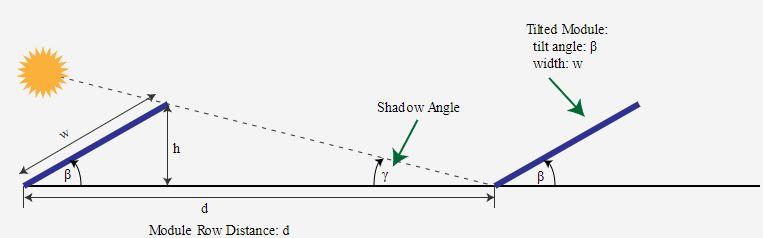
-
Real world passive house heating demand figures?
Smallholder replied to Smallholder's topic in Boffin's Corner
That's really useful, many thanks indeed -
Real world passive house heating demand figures?
Smallholder replied to Smallholder's topic in Boffin's Corner
Thanks very much, that's a good starting point. I guess if you're in Scotland, then I might use a bit less down here in Somerset. -
Hi, As per the title, does anyone have any real life data, about how much heating energy is needed per m2 in a passive house? I realise there will be variation between one property and another, even within the scope of PH spec houses. But I could really do with a starting point. If it makes any difference, I am in Somerset. Many thanks in advance.
-
Attempting a straw bale, off-grid passive house in Somerset
Smallholder replied to Smallholder's topic in Introduce Yourself
True, the national grid is getting greener, but is still less than 50% clean. If you are grid connected, then you're right, it's an easy way to get clean-ish energy without a large upfront cost. But we are not grid connected, so the cheapest option is the £20k plus of getting grid connected, and even then the energy isn't yet all that clean. There are two separate factors here, which are money and carbon. Sometimes they push in the same direction, and sometimes they conflict. -
Attempting a straw bale, off-grid passive house in Somerset
Smallholder replied to Smallholder's topic in Introduce Yourself
My understanding is that it's easier to achieve PH when using the bales as the structure, as in this case they are far more compacted and therefore more air tight. There are examples in the UK of load bearing PH, and timber framed PH with straw bale walls. The builder of the latter said it would have been easier with load bearing technique. https://passivehouseplus.ie/magazine/new-build/norfolk-straw-bale-cottage-aims-for-passive I get it, people spend a lot on kitchens & bathrooms, but that doesn't necessarily mean they'd be happy with spending the same money again for an additional (optional) part of the project. I'm keen to have renewables, and storage anyway, so that for me is an inescapable cost. Then when given the choice to spend £20k or more to also get a grid connection, or to maybe spend half that to get more generation or storage, I'd prefer the latter. But I also make the decision with my eyes open. Maybe it means we'll have to be careful with electrical consumption on occasion during the winter. I accept that. -
Attempting a straw bale, off-grid passive house in Somerset
Smallholder replied to Smallholder's topic in Introduce Yourself
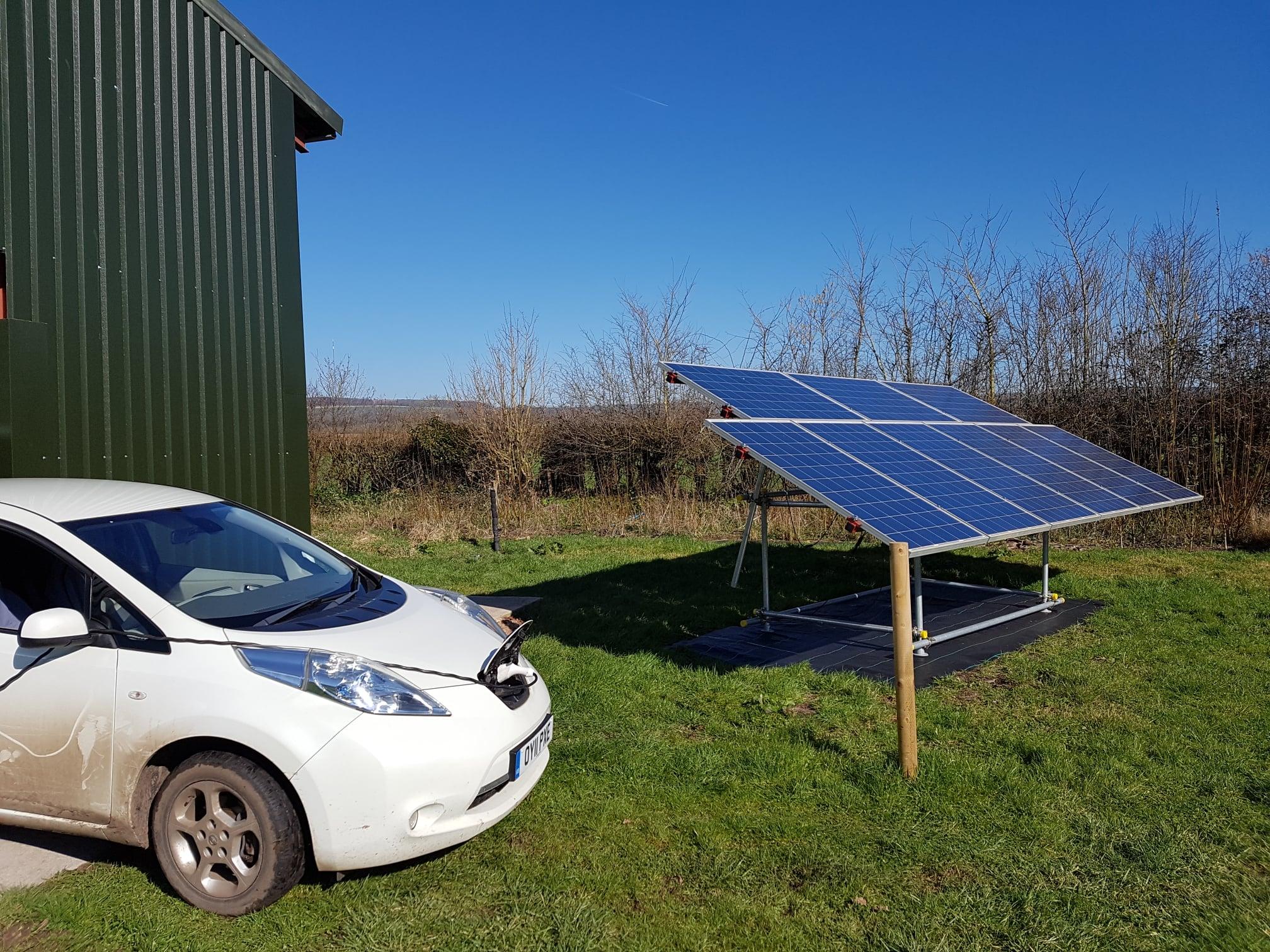
When I built the solar setup for the barn, I had a good look at battery options and ended up going with Pylontech US3000 batteries. These I got for under a grand each (48v, 3.5kWh capacity and 90% D.O.D), and they can be daisy chained up to a max of 8 units, without any need for additional hardware. I initially got one battery, then added a second about 6 months later. There was a lot I had to learn to create this fairly small and simple set up. One example, was that each battery has a max current that it can take in terms of charging/discahrging. So if you are looking to take a relatively high load out through an inverter, you may need more batteries so that the load you're taking can be split across these batteries. See image attached.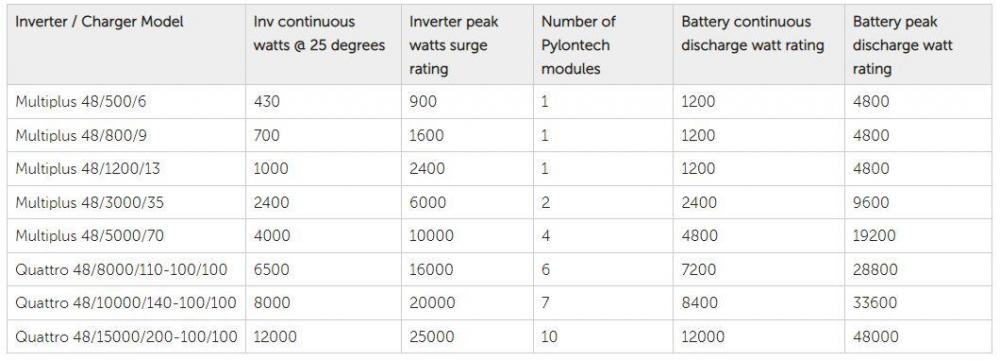
- 62 replies
-
- 1
-

-
- straw bale
- off-grid
- (and 8 more)
-
Attempting a straw bale, off-grid passive house in Somerset
Smallholder replied to Smallholder's topic in Introduce Yourself
The rough online quotation tool (Western Power website) gives me an estimate of £21,575.50 -
Attempting a straw bale, off-grid passive house in Somerset
Smallholder replied to Smallholder's topic in Introduce Yourself
This chap actually wrote the software himself. I've said he ought to put it online for anyone to use, as I've not seen anything this comprehensive online before, or not for free anyway. I did look at the PV*SOL, but it doesn't seem to allow for input of battery storage (assumes you are on-grid?) -
Attempting a straw bale, off-grid passive house in Somerset
Smallholder replied to Smallholder's topic in Introduce Yourself
Modern lithium batteries are 90% to 100% DOD, depth of discharge So you can certainly use a lot more than 35% -
Attempting a straw bale, off-grid passive house in Somerset
Smallholder replied to Smallholder's topic in Introduce Yourself
We don't have a grid connection, and I believe the cost of running all that copper to the site would be prohibitive. I like the idea of being off-grid, and would rather spend money on off-grid generation and storage rather than to the power company to install a grid connection. It would be better to be on-grid, as you said. Exporting power, and making the national grid a bit greener. But at what financial cost? I'm aware we'll be wasting a lot of energy in the summer, and that it's far from ideal. -
Attempting a straw bale, off-grid passive house in Somerset
Smallholder replied to Smallholder's topic in Introduce Yourself
I've been working with a very knowledgeable chap locally, who has created modelling software to help with this. Using downloaded solar intensity data, hour by hour over the course of a whole year, we are able to calculate how much the array should produce every hour. We then compared this back to a local solar array of 4kw, plugging in the specs of this array to make sure it is accurate, which it was. Then we add battery storage (I'm thinking I'll start with 28kWh, it's modular so we can add more if needed. About £850 per 3.5kWh unit) information, and the software gives us an hour by hour battery capacity. When it reaches 100%, further solar generation is ignored, until the battery capacity dips below 100%. This then shows the instances over the course of a year, when the batteries run down to zero. This modelling includes a small wind turbine, that helps as it runs at night and slightly more during the winter. It sounds counter intuitive, but it may well be environmentally wise to run a small diesel generator for those few occasions each year, rather than investing in more and more PV and batteries. These, of course have a carbon footprint like everything else. We already have an EV, which we charge at home, but also at the farm where I have already set up a small (2.25kW) solar array with small (7kWh) battery storage. We've modelled home electrical consumption based on best guesses. In winter, if possible I plan to use a biomass boiler for DHW and underfloor, which will take load off the electrical system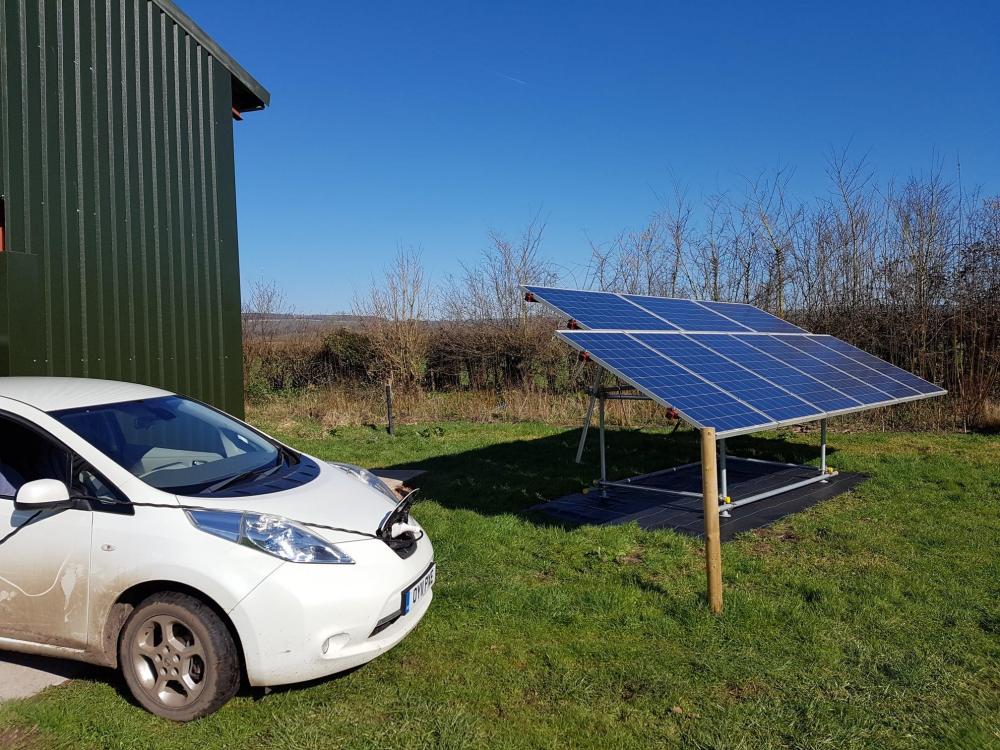
-
Attempting a straw bale, off-grid passive house in Somerset
Smallholder replied to Smallholder's topic in Introduce Yourself
Maybe you're right, I'm not aware how restrictive Passive House standards are in terms of which appliances we are allowed to install. But if it's as simple as buying stuff that's top end in terms of efficiency, then I'm happy with that. Obviously doors, windows and the MVHR system will need to meet PH spec, but from what I've seen so far, that's a zero issue. Worst case scenario, we could install the appliances we want, after certification? As for air tightness, there are at least a few PH spec strawbale houses in the UK, so it's certainly possible. We will likely partner with Wellspring Architecture (a strawbale building specialist) for the building stage, and they have been involved in building to PH standard in the past. -
Attempting a straw bale, off-grid passive house in Somerset
Smallholder replied to Smallholder's topic in Introduce Yourself
There are about a thousand straw bale buildings in the UK now, with the first having been completed just 27 years ago in 1994. In France they are building a thousand new straw bale buildings a year. There are 200 year old straw bale homes in the US, still inhabited today. So it's not really a new technique. Buildings in the UK vary from small structures, right up to the 17,000 sqft Sworders fine-art auctioneers building in Essex. The largest pre-fab straw building in the UK is 30,000 sqft. I'm not saying it won't be a challenge, or that we won't make mistakes. I'm certain both will be the case. -
Attempting a straw bale, off-grid passive house in Somerset
Smallholder replied to Smallholder's topic in Introduce Yourself
This sounds like a very wise move. We'll be sure to phrase things carefully, comitting to build using passive house techniques rather than specifically to achieve certification.- 62 replies
-
- 1
-
-
- straw bale
- off-grid
- (and 8 more)
-
Attempting a straw bale, off-grid passive house in Somerset
Smallholder replied to Smallholder's topic in Introduce Yourself
There are a few straw bale certified passive houses in the UK, and we're in touch with Wellspring Architecture Ltd who seem to be the leading UK authority on building with straw bales. They have done PH builds before, and if we get pp, they'll be working with us to meet this spec during the build. I'm not going to be dogmatic about it though. If the cons start to outweigh the pros, then I'm willing to forfeit certification. I'm not sure how limiting the PH approved electrical device thing will be. But we're obviously planning on MVHR, and high efficiency appliances. -
Attempting a straw bale, off-grid passive house in Somerset
Smallholder replied to Smallholder's topic in Introduce Yourself
This is certainly food for thought. It's not an issue I've heard much about before, but you've probably had more experience than me! -
Attempting a straw bale, off-grid passive house in Somerset
Smallholder replied to Smallholder's topic in Introduce Yourself
I'm not quite clear on how this might be a complication? We're looking at an array of at least 54 PV panels (20kW), which should provide adequate power. Was it the electrical power requirement you had in mind? -
Attempting a straw bale, off-grid passive house in Somerset
Smallholder replied to Smallholder's topic in Introduce Yourself
We have bought small straw bales over the last few years, and have never had problems sourcing them. Though for these, we never had a spec to try and meet. They can be wheat or barley for construction, it makes little difference. What is important is that they are as dry as possible, and are baled at the maximum compression possible. We have built up lots of farming contacts locally over the years, and a neighbour has offered for us to use his straw. This grows 100m from where we hope to site the house. It may be a bit of a faff for him in terms of the exact spec we are looking to achieve with the bales, but even if we paid double the market rate for the finished bales, it would add less than a grand to the build cost. We've not even applied for planning yet, and I'm well aware that the odds are stacked against us. But we'll fight as hard as we can to get it, and have a lot of support locally. Including all the local residents. We can but try.- 62 replies
-
- 2
-
-
- straw bale
- off-grid
- (and 8 more)
-
Attempting a straw bale, off-grid passive house in Somerset
Smallholder replied to Smallholder's topic in Introduce Yourself
As a building technique, it has so much going for it. The list is just so long! Thanks for the green building tip, I'll check it out. -
Attempting a straw bale, off-grid passive house in Somerset
Smallholder replied to Smallholder's topic in Introduce Yourself
As far as I'm aware, there are 2 main bale sizes that we use in the UK. Small bales are about a metre long (by 460mm wide & 365mm high), and big ones are 2.4m long (x1.2m x0.7m). You can build with either, but nearly all residential builds use the smaller ones. Small bales can be moved by hand, give a sensible wall thickness and great U value. Big bales are quicker to build with, and give better insulation. But need a telehandler to move them, and you end up with very thick walls. Small bales seem to be very easy to source, and only cost a couple of quid each. I wonder what problems your friend had finding them? I'm confused