Question
-
Posts
109 -
Joined
-
Last visited
Everything posted by Question
-
I can't remember. It seems that someone (probably me) need to crawl into the attic.
-
It is a ceiling fan. I can't see any ducting in the loft but it is quite far away. the only way is for me to see is to crawl along the loft.
-
Yes that I would suspect that is what happened. It is a ceiling fan. As mentioned above, he tried to save time and not do a EIC or register his work on line. this is what we agreed with the electrician: SUPPLY & INSTALL 1 x EXTRACTOR FAN WITH TIMER SUPPLY & INSTALL 1 x FAN ISOLTOR SUPPLY & INSTALL 1 x WHITE FIXED GRILL & 4” FLEXI DUCT
-
I wouldn't trust the electrician. He tried to save time and hope I wouldn't notice that he hadn't done an EIC. I had to threaten going to the NIC EIC and he provided the right paperwork. I guess with the ceiling fan, he replied on us NOT knowing what to check. this is what we agreed with the electrician: SUPPLY & INSTALL 1 x EXTRACTOR FAN WITH TIMER SUPPLY & INSTALL 1 x FAN ISOLTOR SUPPLY & INSTALL 1 x WHITE FIXED GRILL & 4” FLEXI DUCT
-
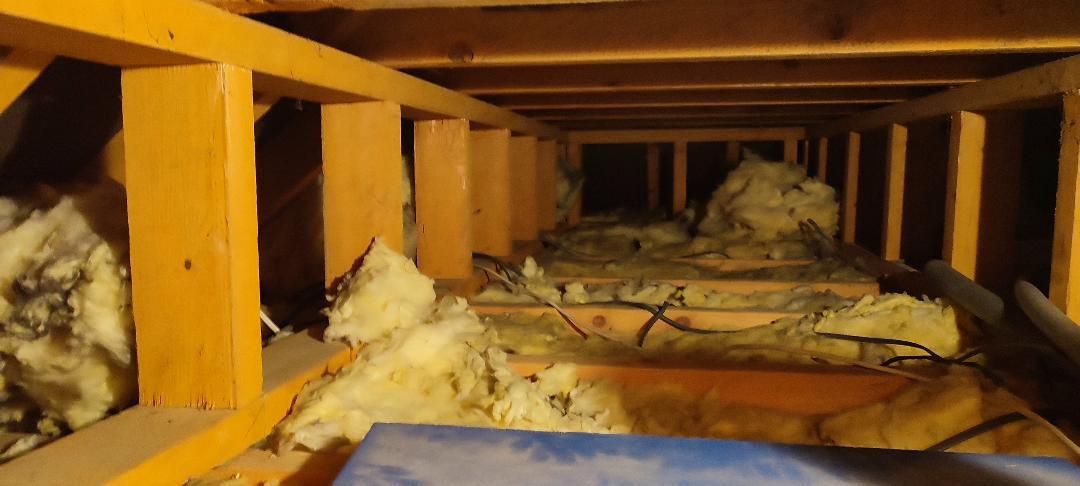
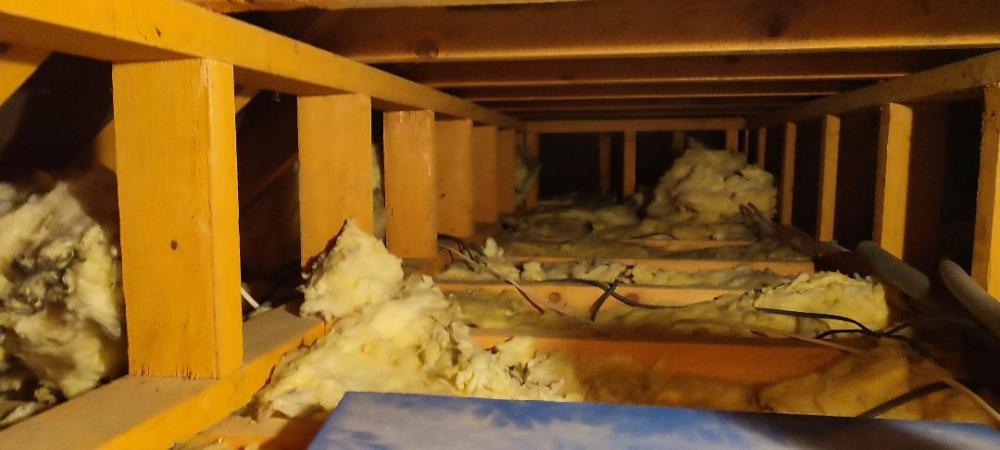
An electrician fitted a fan in an upstairs shower/bath room and there is no grill on the outside wall, and no grill added to the soffits. So I am concerned that the air is being extracted into the attic and could cause mould and perhaps damage the wooden roof structure. The attic has a very small height (39cm height, floor joist to the joist under the flat roof) and from the entrance of the attic in the ceiling below, the fan is about 180cm down horizontally and close to the sloping room on the left. Please see picture. The electrician has gone and been paid, and is certainly not interested. I wouldn't trust him anyway. Grateful for any advice. I don't fancy crawling along the attic to check it.
-
Can one paint a red expansion vessel white?
Question replied to Question's topic in Boilers & Hot Water Tanks
My wife is not happy with how our utility room looks with two expansion vessels one of which is red. We have explored all sorts of ideas like having a wooden surround but it would take up a lot of space, and a cupboard in front of it (which we got but doesn't really work). -
Thanks. Should I cover the pipes first and then foam around them ?
-
I am thinking of using foam to fill gaps around copper pipes in the ceiling and wall. The copper pipes are the main ones from the boiler. Can the foam take the heat? I am thinking of getting: Soudal Genius Gun Gap Filling Expanding Foam 500ml | Toolstation Your advice appreciated.
-
We have an unvented system with two expansion vessels, a larger white one and a smaller red one. We would like to paint the red one white, so it looks better in the room. I understand the vessels are used to manage the water pressure and don't get hot. Would it be OK to paint the red one white? Has anyone painted one of these?
-
Thanks very much. I am getting mixed message from my research. Neutral also seems better for wet environments. I think my shower tray isn't acrylic.
-
I had a shower tray replaced (previous one failed). The fitter has used active 785 sealant and I think OB1 as well (between tray and tiles/wall). Instructions say that I should use neutral slicone and other types of sealants can damage the tray. Should I be worried? (I am so fed up with tradesmen and their shoddy work. This tradesman is one of the better ones).
-
tap flexible connector fitted with a loop
Question replied to Question's topic in Bathrooms, Ensuites & Wetrooms
British Gas Annual cost is around £672, and it covers boiler service, central heating, plumbing, drains and electrics. There are a few exceptions. They have got a lot worse recently (or I didn't know how bad they were), and they used to be a lot cheaper. I have used them for over 20 years. For most of that time, I knew very little about plumbing and electricity. Now I know much more. I am not going to renew the contract. I may find an alternative contractors but will check in Which Magazine first. -
tap flexible connector fitted with a loop
Question replied to Question's topic in Bathrooms, Ensuites & Wetrooms
I'll get British Gas back to do the job properly. Years ago, I have changed an indoor tap and outside one (after repeated BG failures) but have not done any other plumbing. I am not comfortable with doing plumbing myself: if I don't get it right, it will cause lots of damage. However, compression joints and pushfits look very straightforward and I have seen videos and read quite a lot about them (including warning like only use an olive once, don't overtighten a compression joint, etc.). I have to say I am tempted. -
tap flexible connector fitted with a loop
Question replied to Question's topic in Bathrooms, Ensuites & Wetrooms
I had a look on line at a manufacturers blurb and they have done it wrong!!!!! British Gas are such time wasters. Here is the link: manual-hydraquip-installation-guide.pdf (toolstation.com) -
tap flexible connector fitted with a loop
Question replied to Question's topic in Bathrooms, Ensuites & Wetrooms
I can't remember whether there was a flexi before. There certainly wasn't a loop. Why do you say that a flexi is the very last way you would connect to a cistern? -
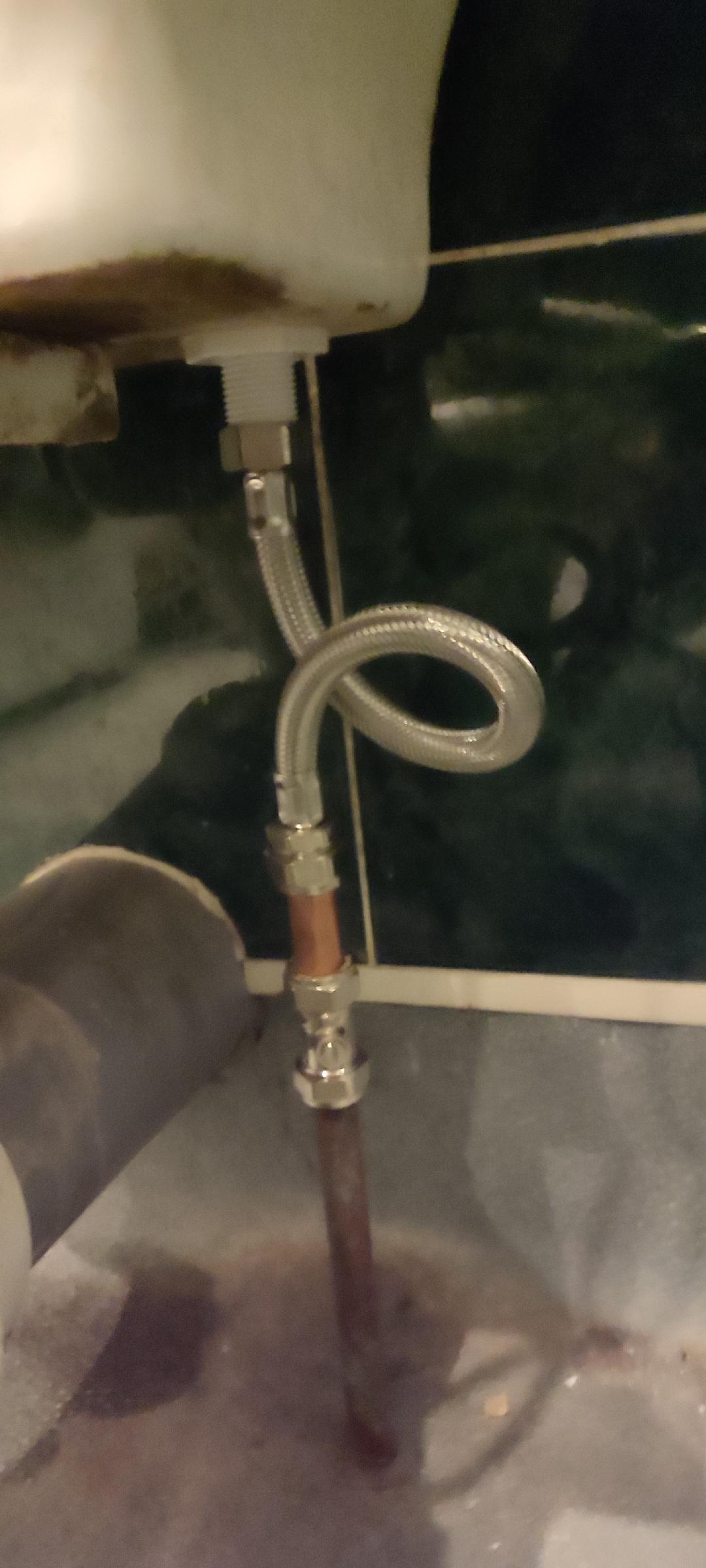
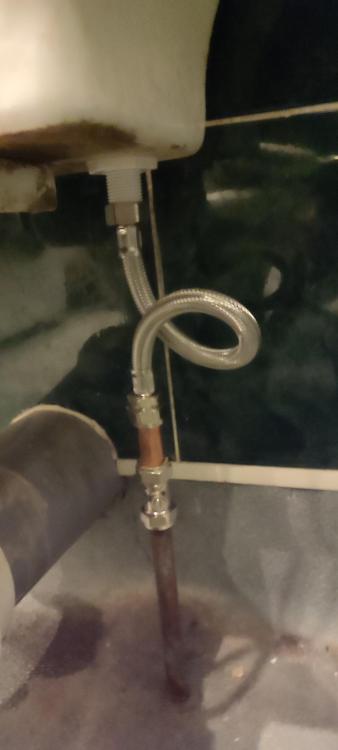
I have a British Gas service contract (work is contracted out to Dyno Rod), and an engineer came to our house to fix a leaking cistern. He put a flexible tap connector to the cistern. It was too long, so he put a loop in it. I have read that one shouldn't bend them too much. Should I get British Gas back to change it ?
-
Shower tray cracked around where the trap is
Question replied to Question's topic in Bathrooms, Ensuites & Wetrooms
Our builder is now removing the shower tray !!!! We spoke to him, and he thought it was the best thing. At least, we have a very good builder, unlike the cowboys we have had. -
Shower tray cracked around where the trap is
Question replied to Question's topic in Bathrooms, Ensuites & Wetrooms
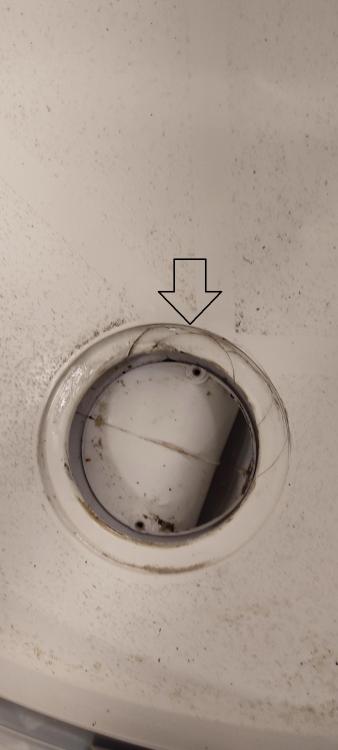
I don't know how it occurred. The bottom of the trap was always off the ground. I took the cap off the top of the trap to help let the water drain away and I may have stood on it. There is a hard plastic ring that goes above the shower tray in the circular part shown in the photo, so i would have thought it was safe. I really don't know it occurred. Perhaps the originally installers screwed things together too tight. Anyway, is there any way to repair, as replacing the shower tray is a major job and expense I would like to avoid ? -
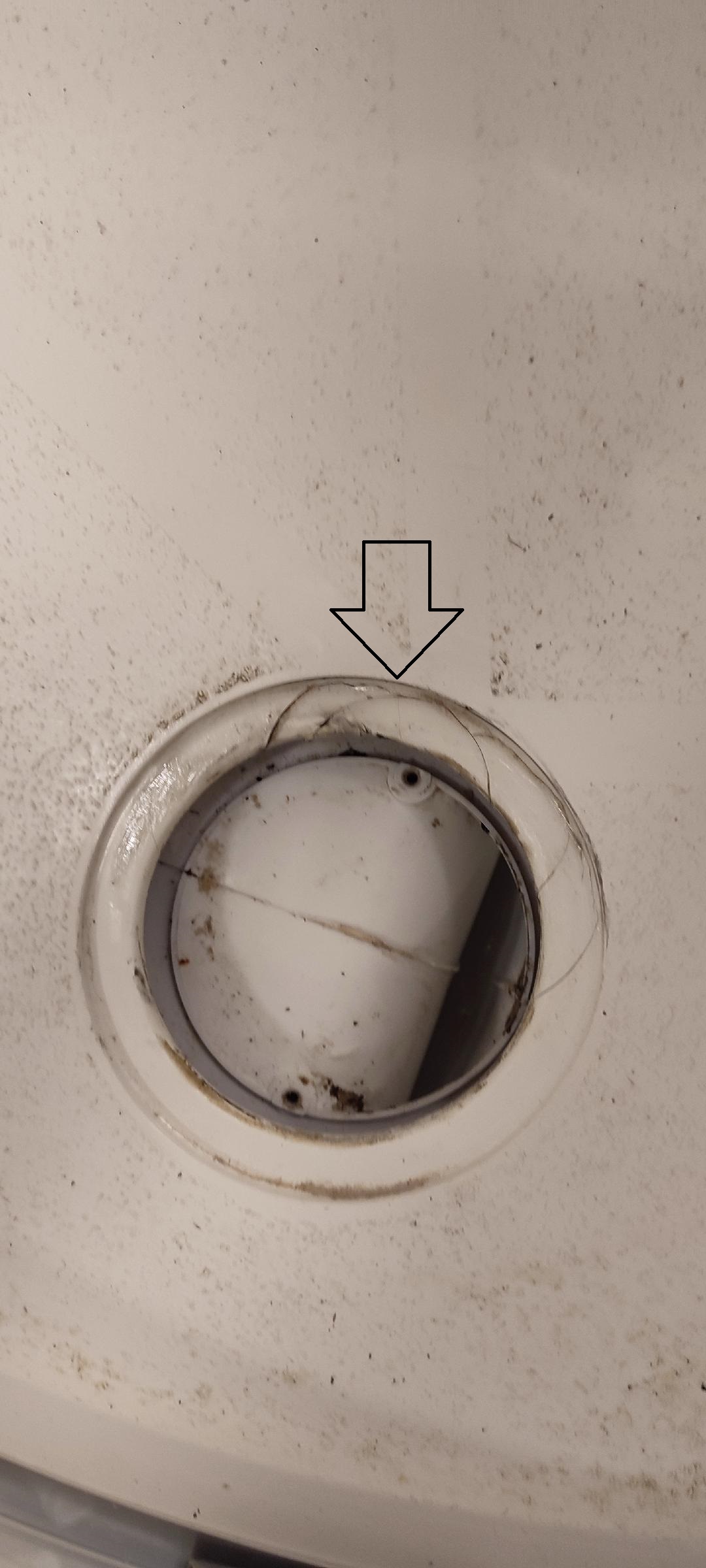
Unfortunately the shower tray is cracked where the trap is. It caused a water leak. Please see photo and the arrow points to the cracks. The top of the trap has been removed, so you can see the cracks. We have a builder trying to sort it out. He has put some OB1 around the cracks and is planning to put some plumbers paste around it. He says that if we step on the trap, it will crack again. The other option is to replace the tray and that would involve removing tiles, putting a new tray in and levelling it, etc. Suddenly the cost will be much greater. The shower tray came from Bathstore and it is "Tread anti-slip offsetquadrant shower tray 1200 X800". Do you have any suggestions?
-
1930s roof - how soon will I need to replace?
Question replied to Question's topic in Roofing, Tiling & Slating
Thanks I love the advice about getting the right structural engineer to give an opinion, and getting evidence. They can look at the chimney stack as well. Thanks @ToughButterCup and everyone else! Tomorrow I'll take some photos in the attic of the inside of the roof, and of some tiles close up. It is a start. I'll post them here. -
1930s roof - how soon will I need to replace?
Question replied to Question's topic in Roofing, Tiling & Slating
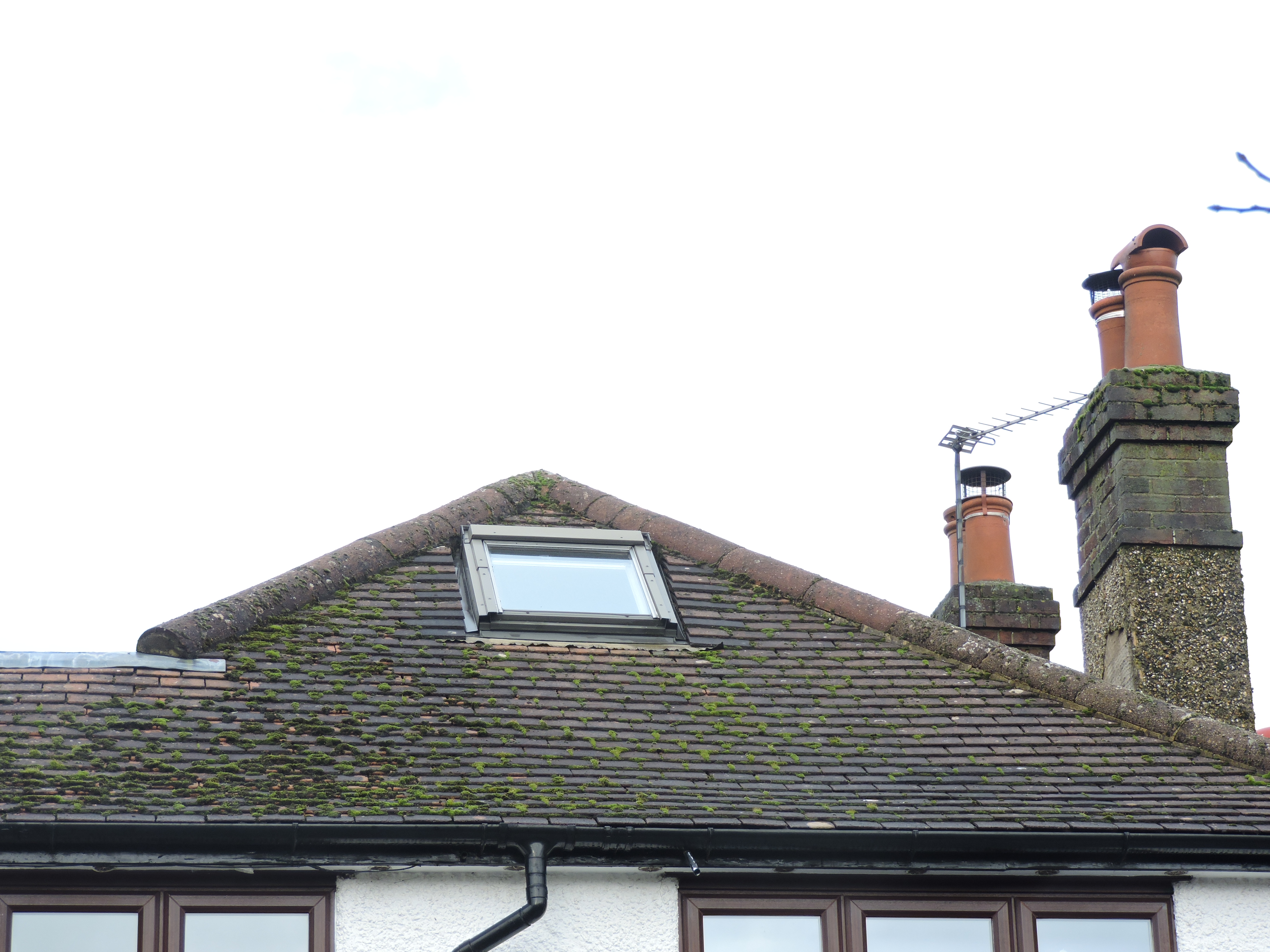
Thanks very much for your reply. Here is a photo.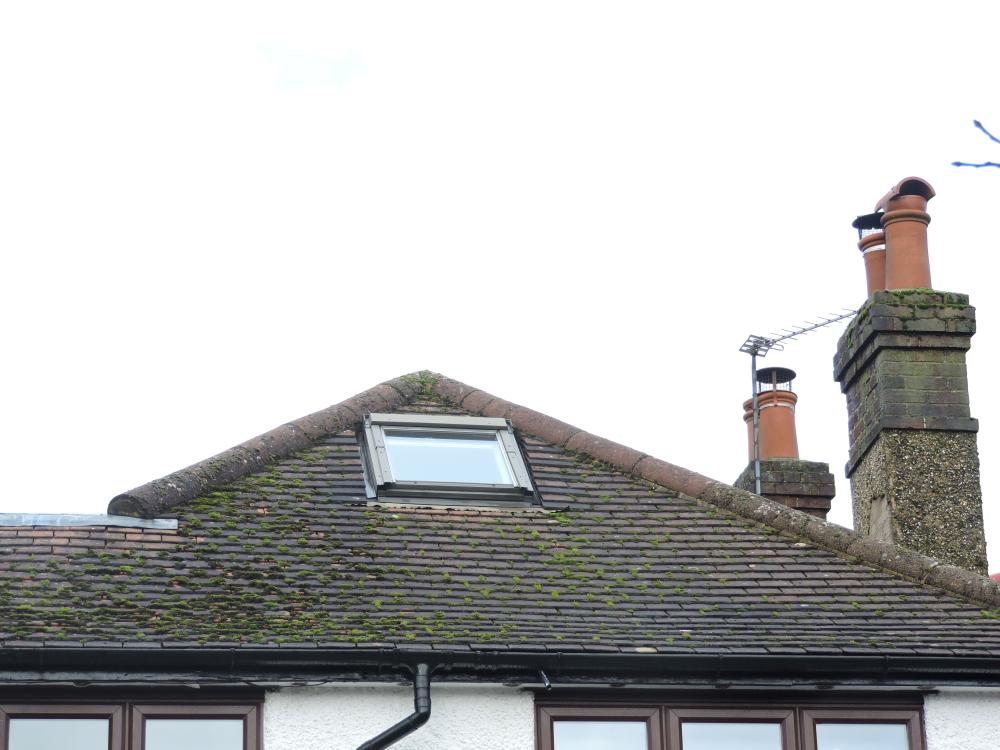
-
I have a 1930s house (with an extension built twenty years ago), and it has the original roof. Can I assume the roof will last another 20 or 30 years, or could it need replacing much sooner? I ask as we may end up living here for the rest of our lives, and if it would be much cheaper to replace the roof now, given inflation, rather than in 5 or 10 years time. (We are trying to plan everything now.) Grateful for any advice.
-
Softened water connected to the heating circuit.
Question replied to Question's topic in Central Heating (Radiators)
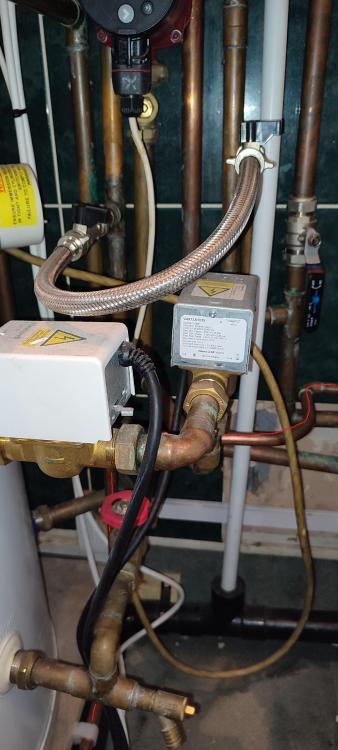
Thanks. I think I may have a problem. The hot water circuit and radiator circuits look as though they are connected to each other and the water of these two circuits will mix, even though there are two motorised valves. (unvented cylinder with a Worcester-Bosch boiler). So, it seems that my system has either hard water or soft water for both circuits. But according to the guidance, Water Softener | Worcester Bosch (worcester-bosch.co.uk) the radiators should have hard water but the heating circuit should have soft water. (I have assumed that the heating circuit is the hot water that follows in the coil that heats the water in the cylinder.). Something I can't achieve with the current set up. I am still learning about heating circuits etc., so I can't be sure absolutely sure I understand the piping in my house. It is awful when one can't trust a plumber, as he had left problems elsewhere. -
cold water softened, hot water still quite hard
Question replied to Question's topic in Boilers & Hot Water Tanks
Thanks for the reply. The softener and the unvented cylinder were installed at the same time. However, your explanation may make sense as the hot water pipes have had years of hard water and would be filled with limescale. -
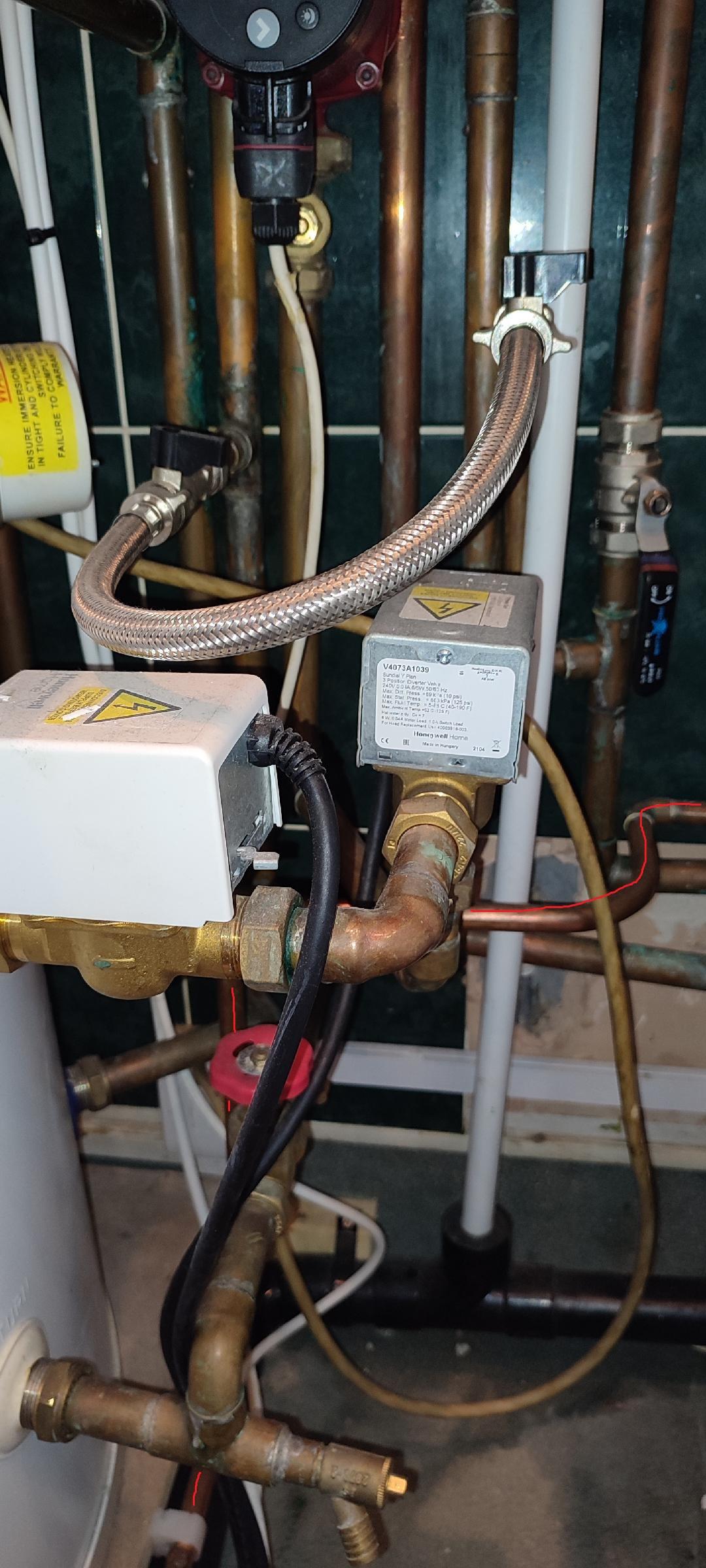
I have a Tapworks water softener installed a few months ago, and I can see that the heating circuit is connected to it. (I have unvented cylinder with a Worcester-Bosch boiler). I have read that the heating circuit should be not connected to softened water, but it is connected. Please see photo showing the connections. There is one only bypass pipe for the kitchen sink (highlighted in red), and the silver flexible tubes are fed via the water softener. Is this OK and is there anything I should do?