maxdavie
-
Posts
58 -
Joined
-
Last visited
Everything posted by maxdavie
-
Plywood sole plate - bonkers or....?
maxdavie replied to maxdavie's topic in New House & Self Build Design
Yh CLS is no doubt cheaper. I need to think about extra cost vs speed/accuracy etc -
Revised timber frame details with stone cill
maxdavie replied to maxdavie's topic in New House & Self Build Design
Ha! Oh no! Which part? Not PDR’s on this - didn’t satisfy exemption rules. -
Plywood sole plate - bonkers or....?
maxdavie replied to maxdavie's topic in New House & Self Build Design
Ahhh brilliant thanks! -
Plywood sole plate - bonkers or....?
maxdavie replied to maxdavie's topic in New House & Self Build Design
It works out at £7-10 per linear meter like this -
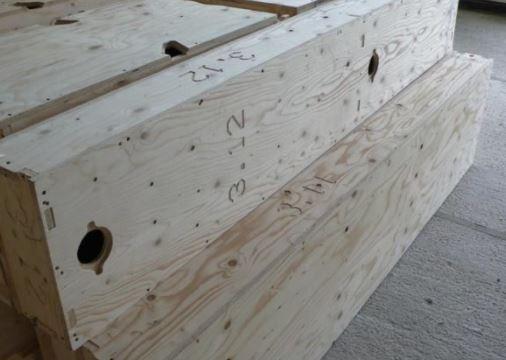
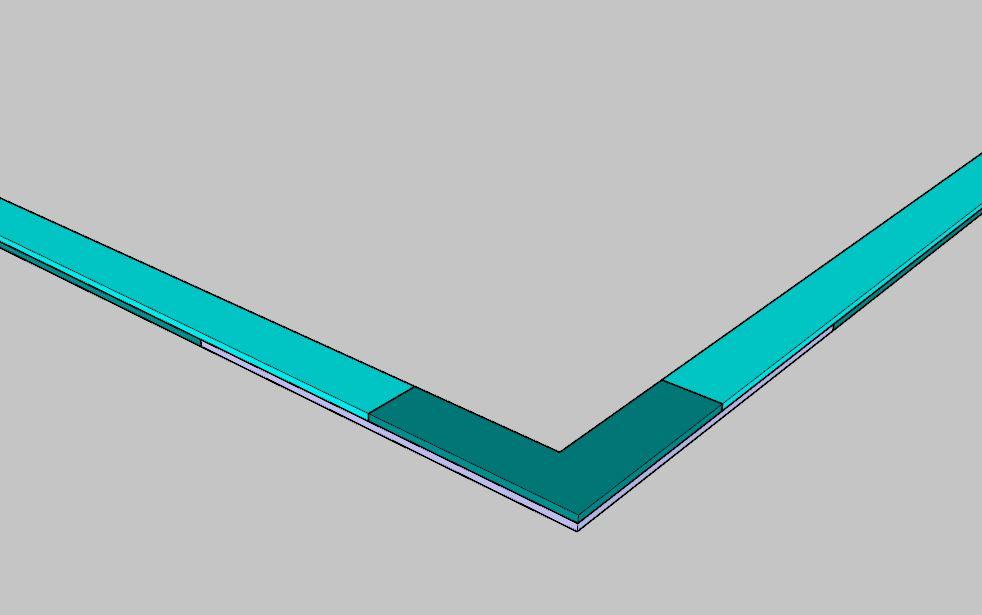
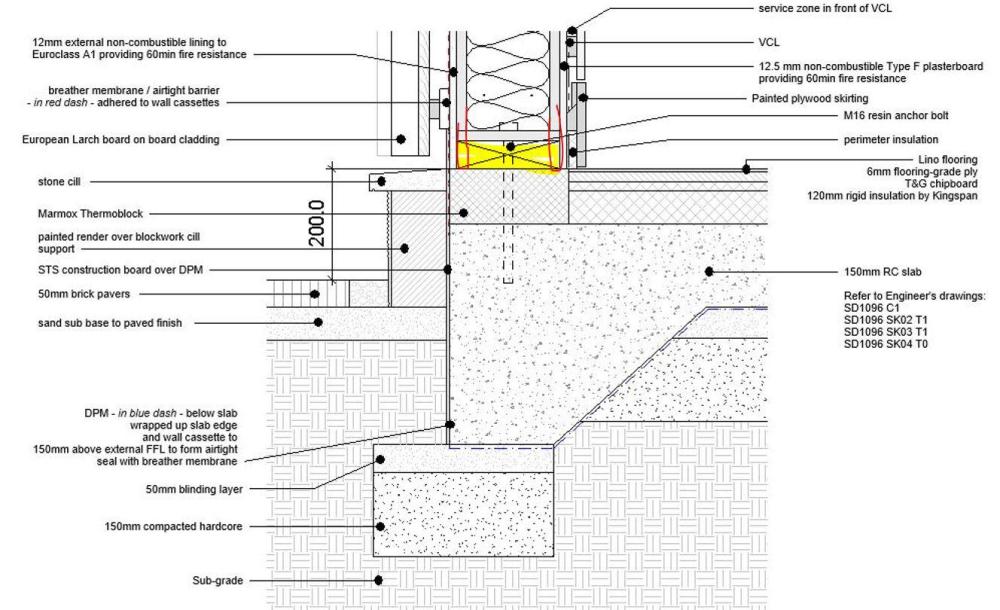
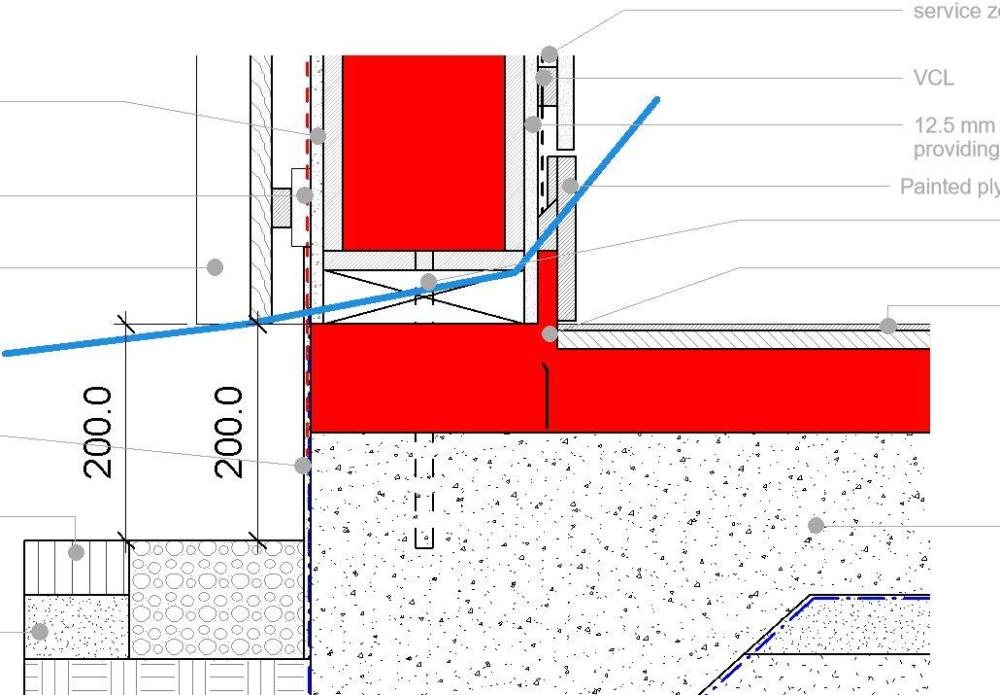
I've been reading through TRADA's guides on sole plates and other guidance, plus previous discussion on this forum. I'm now pretty skeptical about the sole plate being built to the correct dims. All the corrective measures to ensure its level etc also sound very onerous and time consuming. The cnc machine will cut all the parts that make up my wall cassettes with 0 tolerance. 18mm thick WISA Spruce ply itself will have a +/- 1mm across its thickness. Essentially, the tolerance of the sole plate will need to match the tolerance of my cassettes - 0! I'm also going to make a tweak to my system, so the front and rear panels of the cassette extend down to slot over the sole plate (see indicated in red over the detail) - I think SIPS works like this too. Anyway, that just increases the need for the sole plate to be the right dim. So, I'm toying with the idea of a cnc-cut plywood sole plate; double layered, exterior grade (or even marine grade) staggered and glued together. I'll know that right angles are true and dims are mm accurate. After bonding it'll all form one continuous piece. It won't arrive warped. It will still need packing underneath I imagine - maybe structural leveling mortar or whatever the SE's specify. It'll cost more to produce I know that. There's still a lot more research I need to do and I need to get the SE's view. I'll continue to mull it over.... Thought I'd see if anyone had any thoughts. I'm sure this is pretty rogue!
-
Revised timber frame details with stone cill
maxdavie replied to maxdavie's topic in New House & Self Build Design
These are some pretty existential questions about the profession! I know of course first and foremost a building must be built to last - especially in a time of climate crisis. But, I do think looks matter. I think some eco-builds can lack character and look a bit stark. A lot of the time people pull down ugly buildings. So in this sense, attractiveness can contribute to the longevity of a building. My aim - over the course of my career - will be to try and design and deliver attractive buildings that are good for the planet. But, there are bound to be some trade offs where I'll have to weigh up one goal against another. Ha! I'm in gd company then! 1. After Saveasteading pointed out the blockwork would sink, I've introduced a steel bracket that I think we can bolt back into the slab - the block can partially bear onto this. - See revised detail. 2. Maybe if I can reduce the depth of the stone a bit so there is no protruding ledge it will help......need to think this one over 3. The glass installers think an EDPM membrane should work as second line of defence in case of water ingress -
Revised timber frame details with stone cill
maxdavie replied to maxdavie's topic in New House & Self Build Design
There are no wet services in this garden room. Heating is all electric. I have an 18mm service void behind the plasterboard for cables - which I hope will be wide enough. I’ll increase that for future projects for pipe work. -
Revised timber frame details with stone cill
maxdavie replied to maxdavie's topic in New House & Self Build Design
Thanks Charlie! Fingers crossed it all comes together okay on site -
Revised timber frame details with stone cill
maxdavie replied to maxdavie's topic in New House & Self Build Design
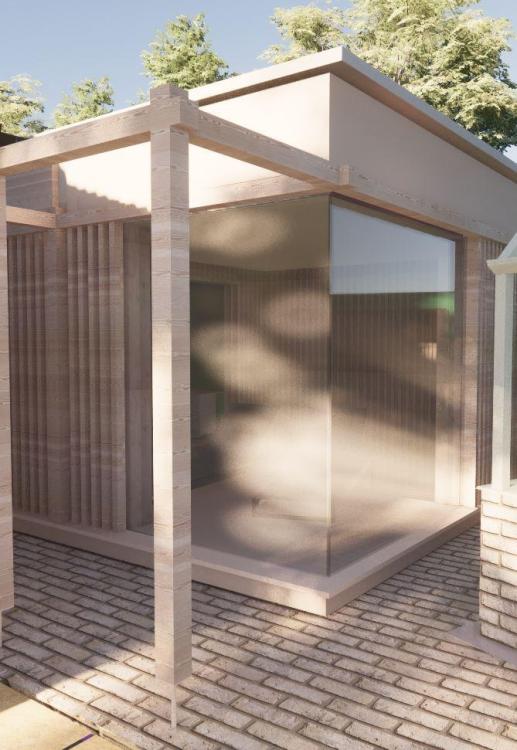
The external timber is all Larch. The large cantilever is achieved with a double joisted beam within the cassette. Engineer’s design. The post only has to hold itself up - it’s part of a trellis (not fully shown in that image). What sort of warranty are you talking about? I haven’t looked into warranties for this, but an LABC New Homes Warranty is on my radar for the next project - which will be a new home. -
I posted a few days ago with a timber frame 'cassette' system sunken below ground. It was met with skepticism (or outright disbelief) and I got lots of useful feedback. So, I changed the detail. I'm now sharing my updated details for the purposes of: 1. comment if there is any 2. sharing for sharing's sake (I'm new to this community so not sure if it's strictly problems-that-need-solutions content only or you're all just a bunch of self-build nerds that enjoy looking at construction details and other's progress. Please do tell me if this is a pointless post...) Anyway here are the updated details and a screenshot from my Enscape environment so you can see the visual intention of the details.
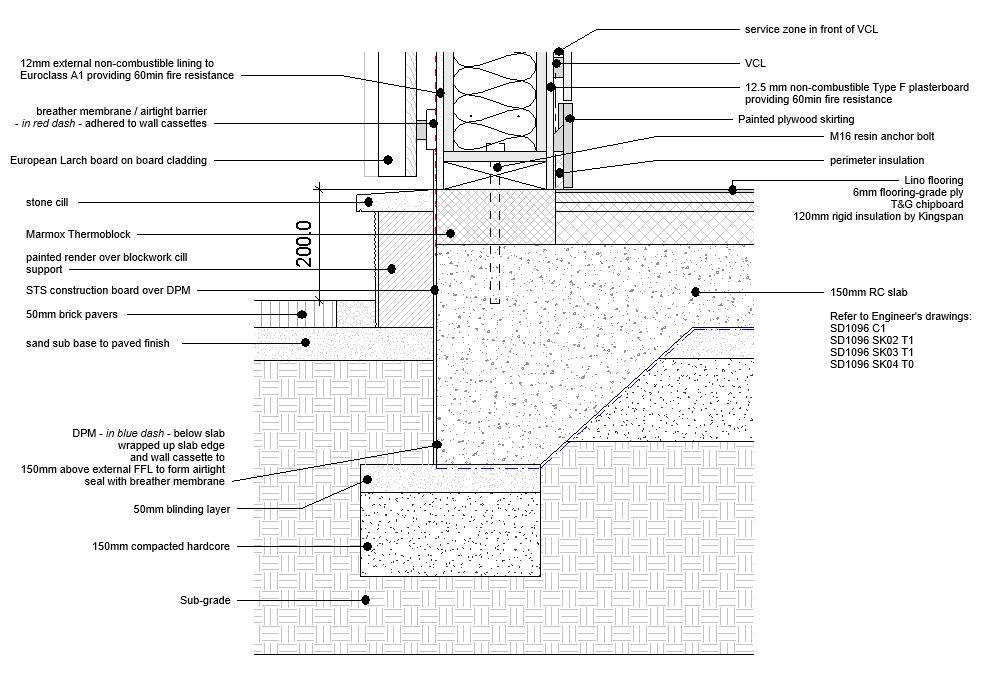
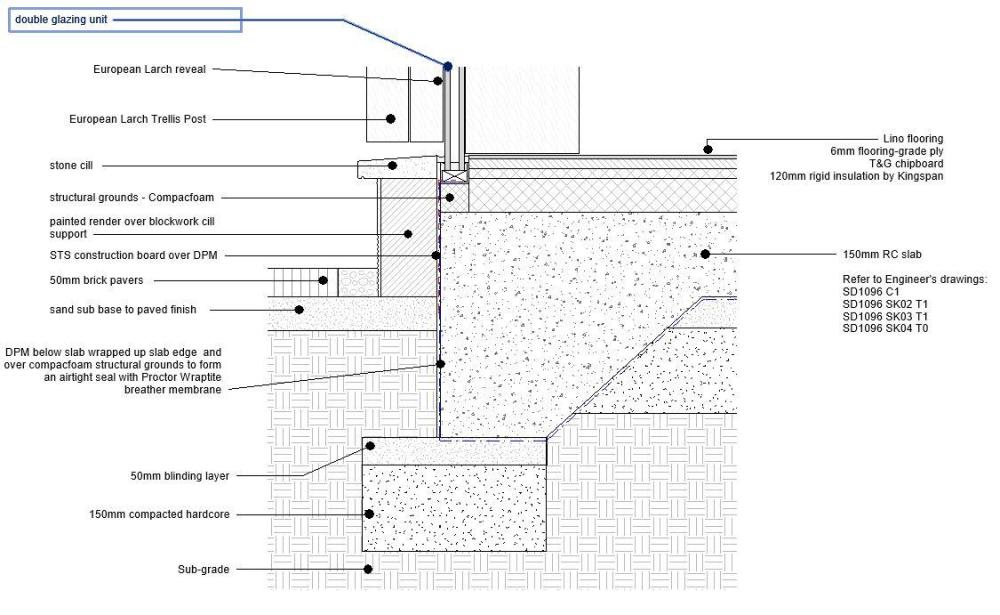
-
I'm not sure my plywood cassettes can bear partially onto the slab is what I mean - ref image below.
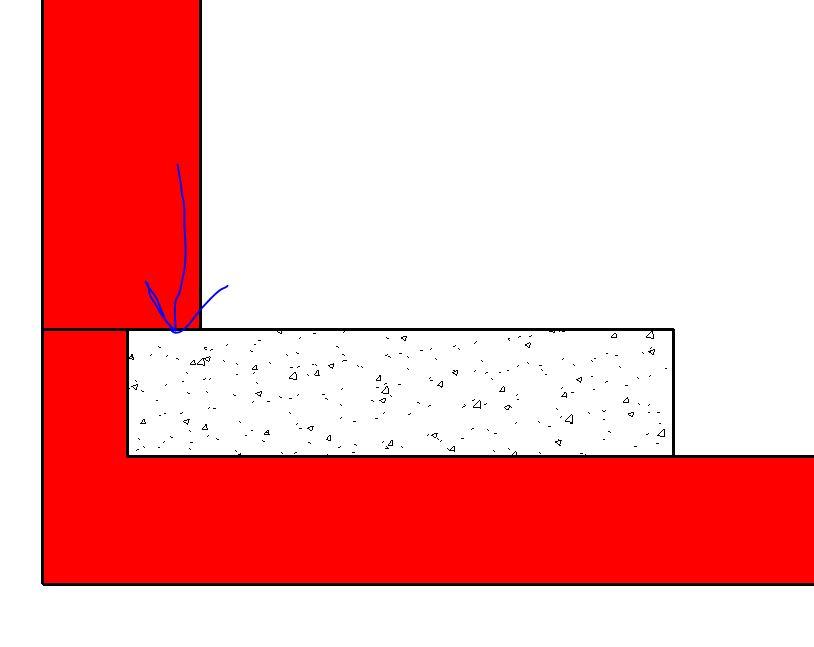
-
Yes - you're right. There's not much of a difference. I abandoned that approach a while ago because my understanding was that doing it like that meant that you had to have inner structural timber studs bearing onto the slab and an outer 'truss' of timber - much like a Larson Truss - to increase the thickness of the whole buildup. But, maybe I jumped to a hasty conclusion - as you say, if they do it like that with SIPS..... I meet with my engineers tomo and can ask
-
Yes - so was I, and that was my original intention. I don't think its going to work with my system, but I think I'll have another check with my engineers - my timber cassette would have to bear mostly onto the EPS which I can't imagine will fly. Still, worth another look as it might be the better way to do as you say. In the meantime, here's my re-designed detail incorporating comments. There is a bit of a thermal bridge there still. I'm not sure how much of an issue that will be, but I've decided to get a quote for some U-value and condensation risk analysis. Thanks again for all input!
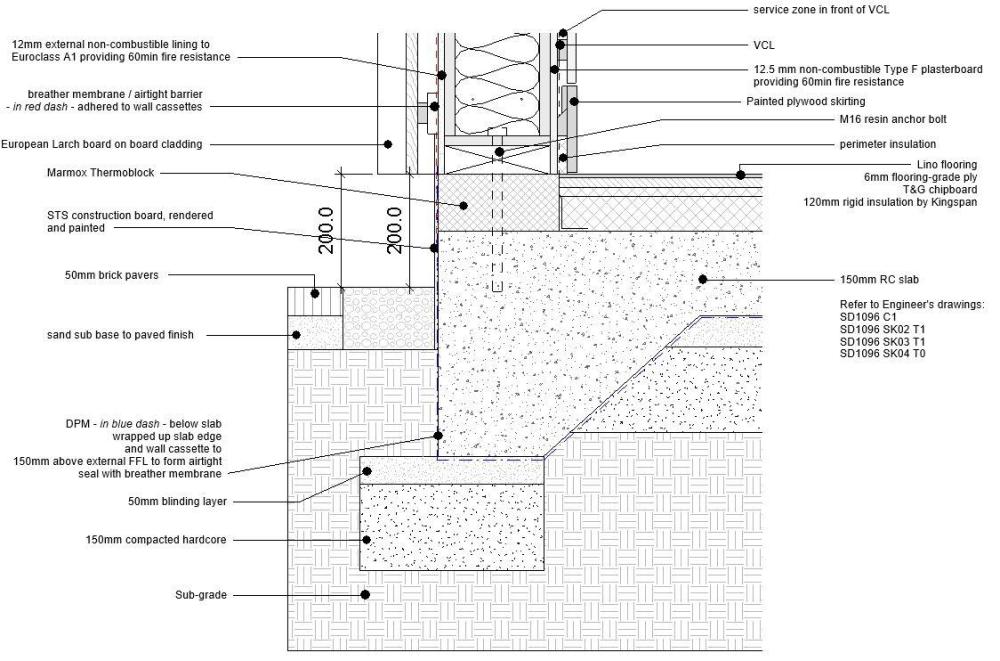
-
Thorfun, OnOff - thankyou! - this is very good to know. I'll have to download and read a copy of the TRADA manual
-
This was my original intention, but it doesn't suit my system. I appreciate this approach works well with other frame types. Here's the detail I adapted - this is from a book of Passivhaus details.
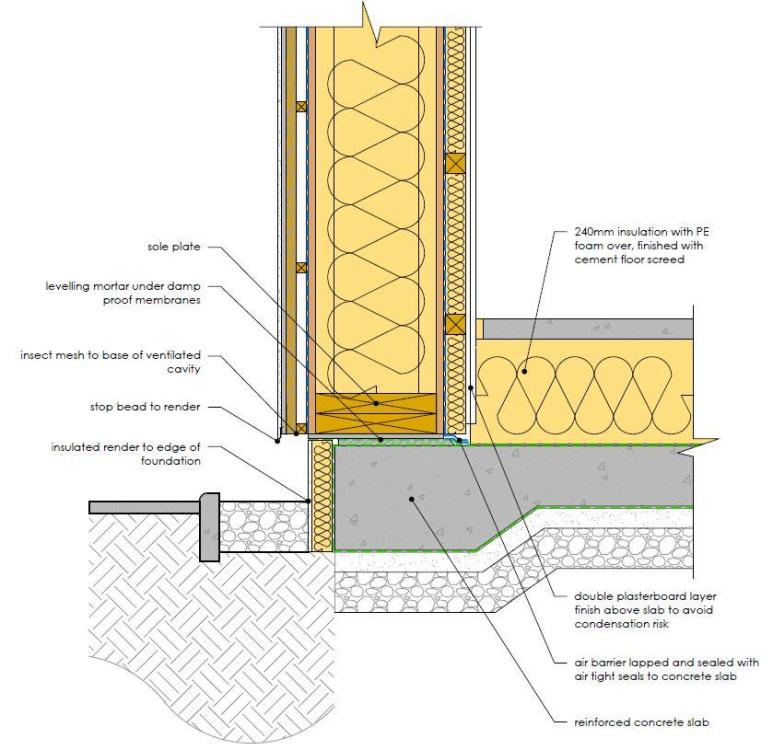
-
Okay. I think I've heard enough. I'm going to have to redesign this little pilot project so that the RC slab and internal FFL can sit above ground level. I don't want to force this if the its just wrong. Thanks all for the advice! Painful to have to return to the drawing board, but seems like its unavoidable.
-
Annoyingly not..... just relying on books, internet, manufacturer's guidelines/advice, common sense and now members of this forum. Ah really? - sounds like U-build's system? - if its lambswool...think I remember them using that. Yes, absolutely agree and this is not my intention. Annoyingly this particular condition calls for something bespoke, so I'm trying to apply all the principles of proven detailing to a new assembly of components. Yes, I was thinking moisture would find its way - forced by vapour pressure - toward the breathable part of the wall. But, as you say, I think I'll have some formal analysis done. I Hadn't thought about this......will need to investigate further - thanks for flagging that.
-
amazing - thanks. See my earlier post - pasted below.
-
I wasn't going to have analysis done on this building - its too small and infrequently used to justify the cost. I will do when it comes to building our home. But, from all the reading I've done, I have to say I think it does work like that. Hygroscopic materials absorb and release moisture from the air therefor lowering the air's vapour content, lowering its relative humidity and it's dew point and minimising the risk of condensation. The combination of the VCL, the breather membrane and the ventilation cavity should ensure its breathable and exits the fabric before it accumulates and causes damage. It you disagree it would be great to know why with an explanation and reference to facts.... Thanks for joining the convo! - it might help to read some of my initial posts for context.
-
Ah gd point - will run this past the engineers
-
Thanks TonyT. Its 6mm flooring ply over an 18mm floated deck.
-
Thanks for the comments everyone - very helpful. But, has also filled me with a deep sense of dread about this sunken timber cassette! (prob a good thing) I think the partial detail hasn't helped the discussion. So, see the full annotated detail below. You can see now that the hatched block to the left of the red board is a french drain (not more concrete). I'm an architect, but quite right Peter, I've not had a great deal of building experience (mostly large projects at pre-planning stages) I haven't carried condensation risk analysis yet, but may use the BuildDesk software to do so. I'm relying on 3 things in this respect : 1. the building isn't in constant use, any build up of condensation when the heating goes on, should have more than enough time to dry out when it goes off. 2. I'm using sheep's wool insulation which is hygroscopic, ie, it will absorb excess moisture and release it when humidity/temperature conditions allow 3. there is a 36mm ventilated cavity behind the rainscreen, the free flowing air should help carry moisture away. Problem I have with raising it up on something (upstand/blockwork etc) is maintaining the insulation thickness. Can't see a way around that. I have to say this decision is now harder to justify in the face of so much doubt! ........I may have to re-think....
-
Thanks Thorfun! - that's exactly what I'm after. And thanks Mr Punter for the comments. Its a difficult one. One of the purposes of this small building is to test a kit-of-parts I've been developing (a bit like the one seen on Grand Designs some years back where they'd assembled big plywood cassettes filled with insulation - see pic). So, I haven't got any flexibility on where the insulation goes and I don't plan on wrapping a continuous layer over the cassettes. If, like you say I raised the frame up on blockwork, I'm not sure how I'd maintain the same thickness of insulation. The building inspector and I thought that if you had a continuous drain around the perimeter of the slab to remove any water before it accumulated and had a DPM and second robust impermeable layer over this then we should be fine. In the future, I can just raise the entire raft up so the timber can sit above ground. But, for this project its not possible. But, you disagree - you don't think that combination of protection will suffice?