BenGillyHills
-
Posts
28 -
Joined
-
Last visited
Everything posted by BenGillyHills
-
Thanks. I agree, don’t want an IC in the house if it can be avoided. If I end up going with option B then the IC will be in the service/boiler room, which has its own external entrance and no access from the main building so I’m not too concerned with it being in there.
-
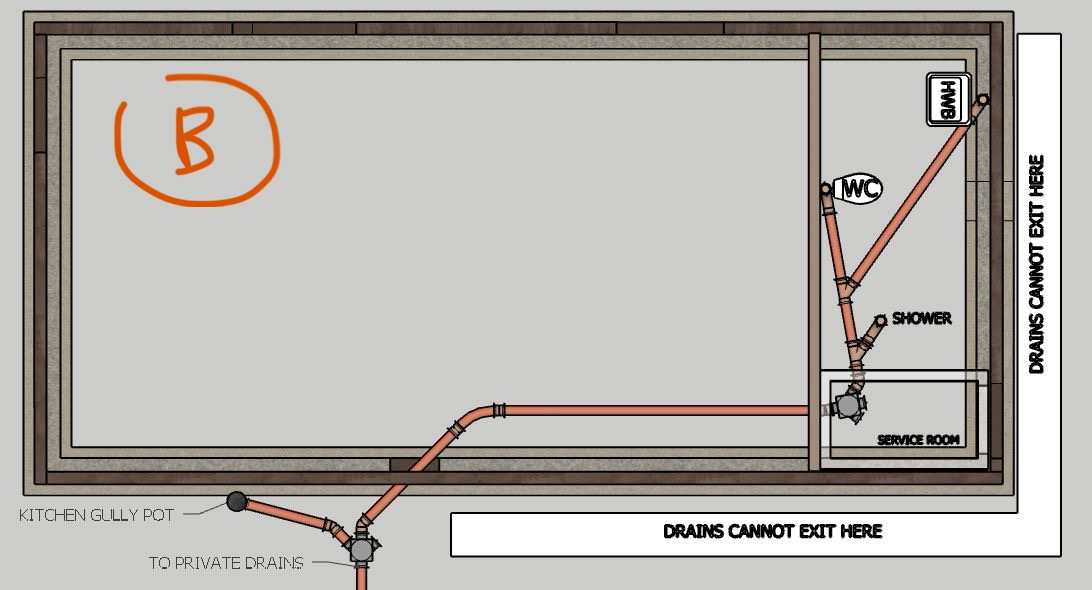
Wish I hadn’t ordered all materials for Plan B this morning 🤦♂️. I can adapt, but do you think Plan B is compliant? @Nickfromwales do you have a preference?
-
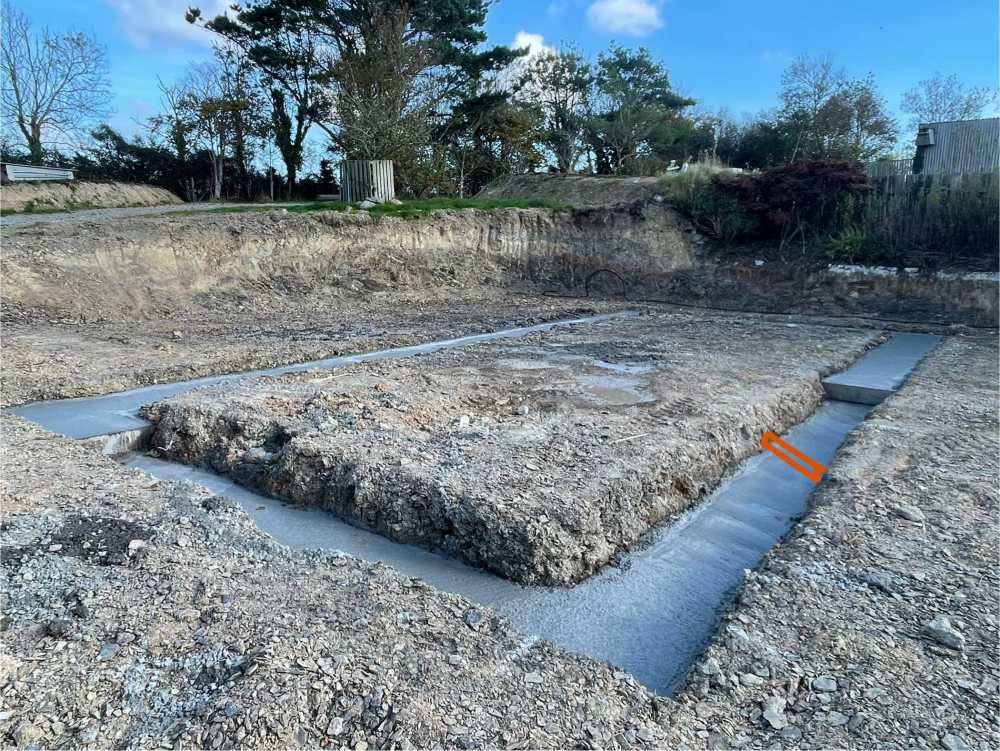
The 600mm (maybe less now I’m looking at it, but plenty!) height difference is in relation to the section of stepped down trenches where the concrete foundation is lower. That’s why I’m so keen to run the pipe to this area. By doing this I will be achieving 150mm ground below DPC and not be bringing the external ground level up with my BCO approved foundation/ground floor make-up.
-
No, I’m going to do that next, but there is plenty of height to play with as where the pipe is exiting the building is around 600mm lower than the underside of where the concrete slab will be. The drains being connected into are also significantly lower as the whole property is sloped in that direction.
-
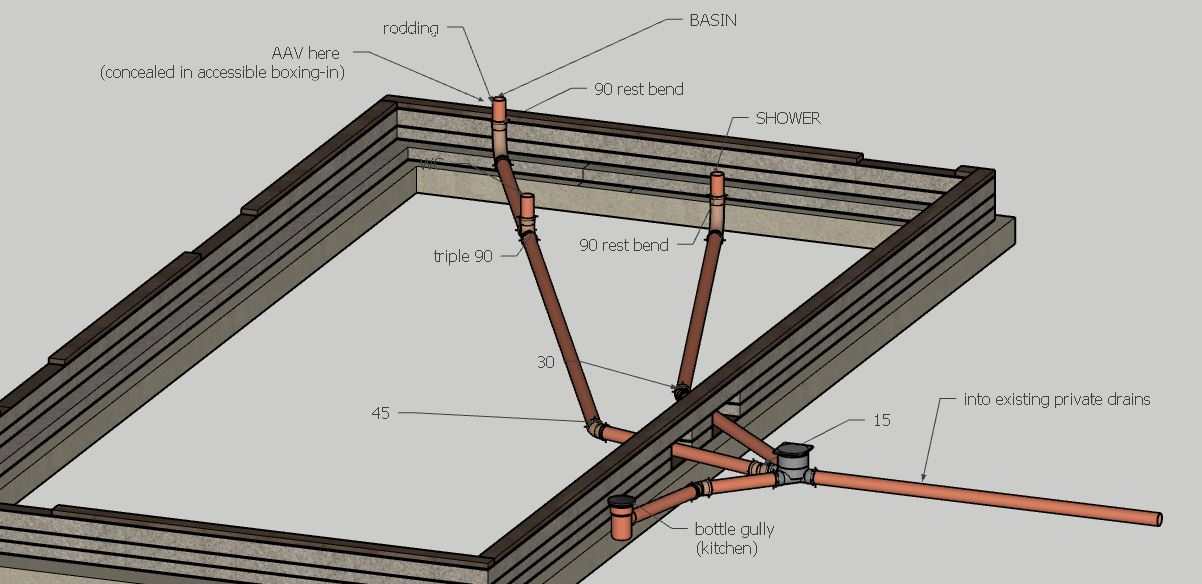
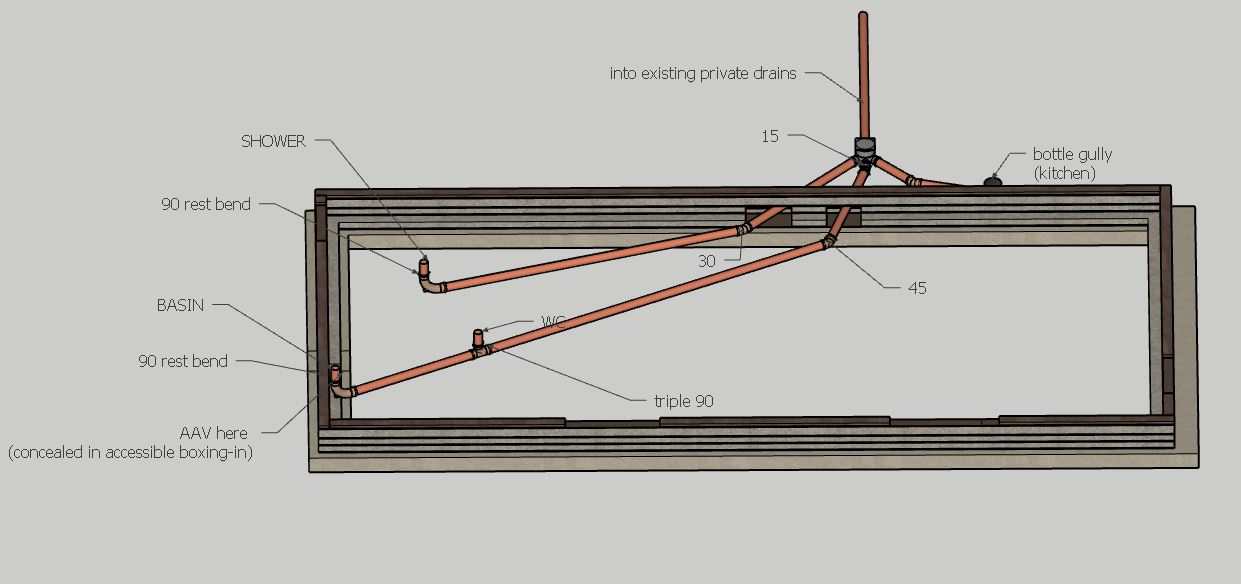
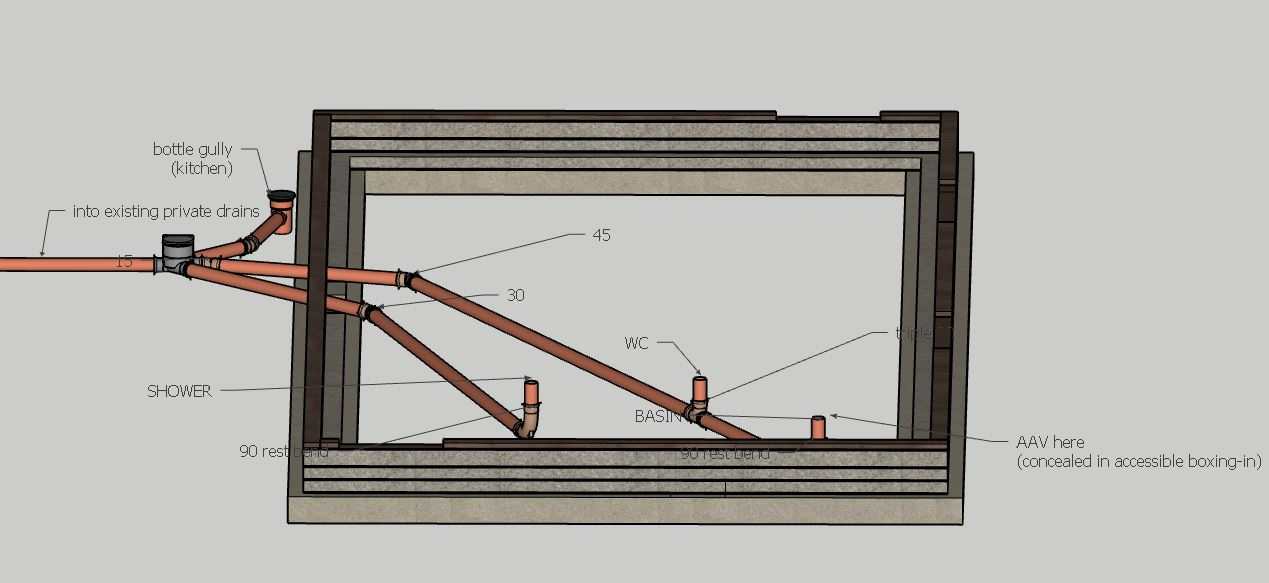
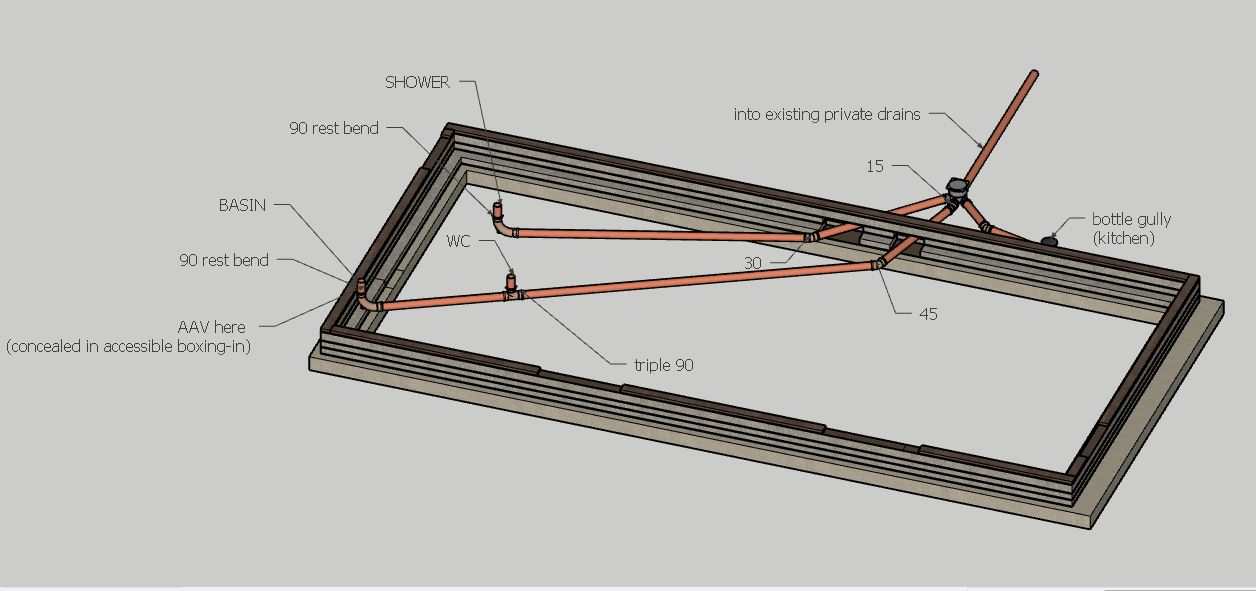
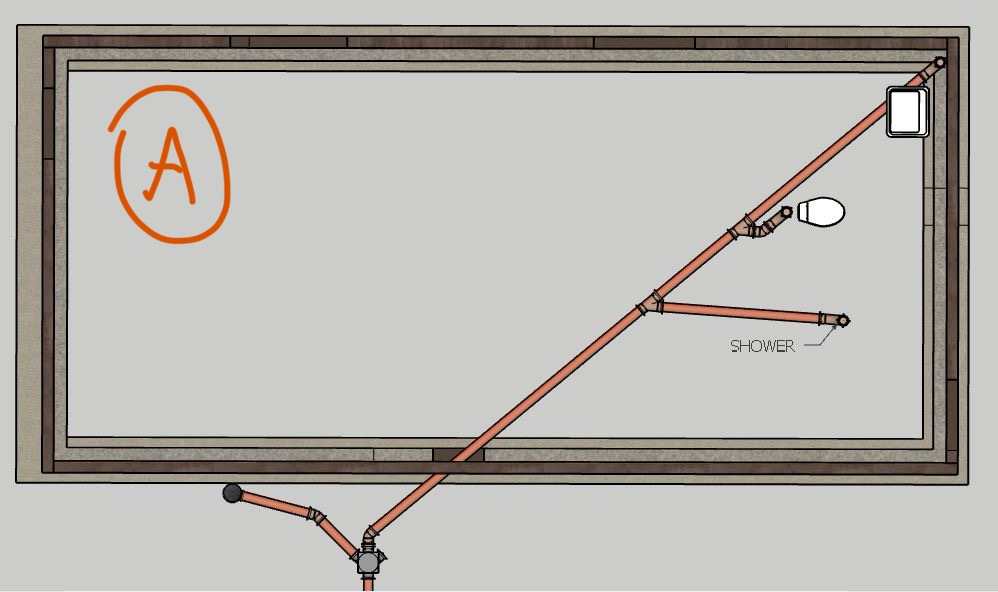
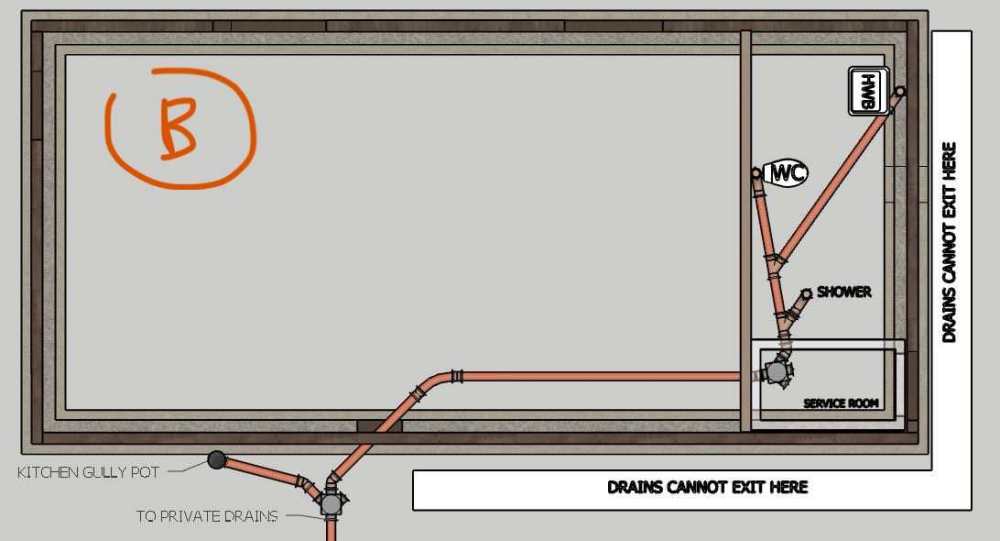
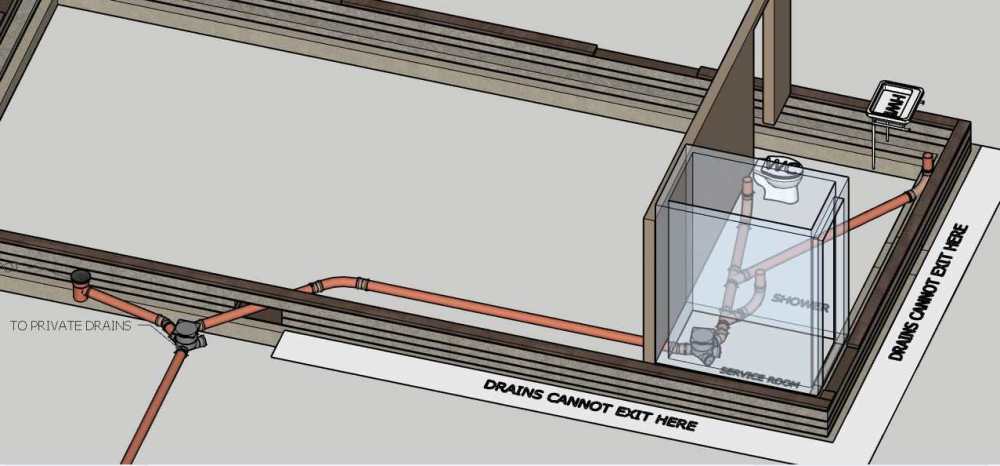
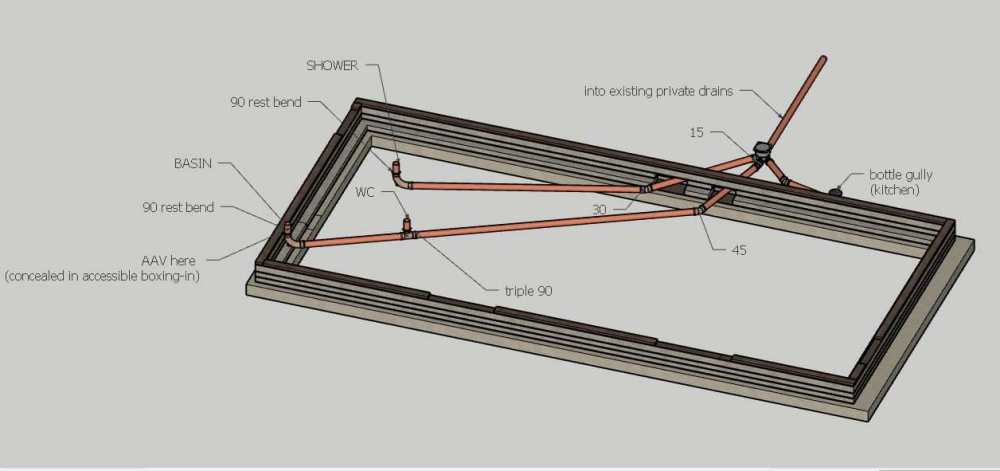
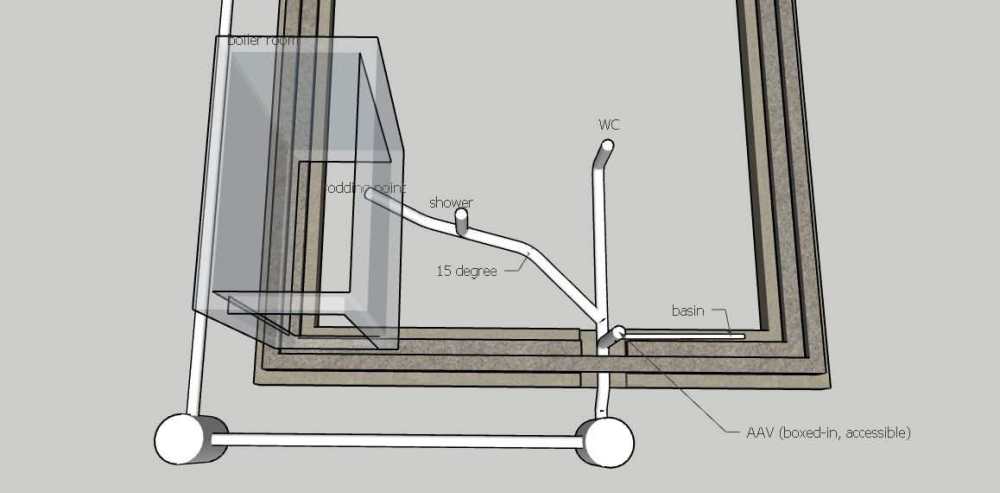
Thanks @Nickfromwales @Oz07, Really appreciate all the knowledge. Before your responses came in, I got cold feet about this layout and came up with what I believe is an improvement. But I’d be keen to know which of the two you think is the better. A - (with the changes you described) or B - (If necessary, I would reluctantly put a chamber inside the building where the long radius 45 is, just before pipe exits the building) On this one there would also be a mini stack in the boxing behind the basin with rodding access screw cap at the top and a vertical Y with AAV. Also another vertical Y with 32mm inlet for basin waste. Boxing would be high-level anyway so could easily accommodate this, but from your comments AAV might not be necessary. WC could also have rodding access on vertical coming out of concrete. (Not sure if that’s allowed or necessary). I’m planning to go ahead and install one of these options next week then invite BCO out. I figure if it’s already in the ground and visible, we can make it work with slight amendments. I’m reluctant to get him out with nothing to show in case he sends the plan in another, more costly direction!
-
Annex drainage under concrete slab
BenGillyHills replied to BenGillyHills's topic in Waste & Sewerage
@Russell griffiths Yes you’re right in what you say. The foundations are too high. Also on the right hand side of the building when looking at plan, the passage is too narrow for inspection chambers. The pipe could in theory exit along the bottom wall closer to the bathroom (under the service room) but when resting on the footing with clearance and a drop, it would be encased in the slab. to keep the pipe under the slab I would probably need x2 more courses of trench blocks (100x300x450) increasing the finished floor height, thresholds and outside ground level by 200mm+. As you say the ground outside will probably come up a bit anyway but an additional 200mm increase inside and out is a significant cost in materials, time and labour. So perhaps my BCO is the only person to make a call on this (he’s away until next week) or perhaps what is detailed in my latest diagram is simply not compliant and a non-starter. -
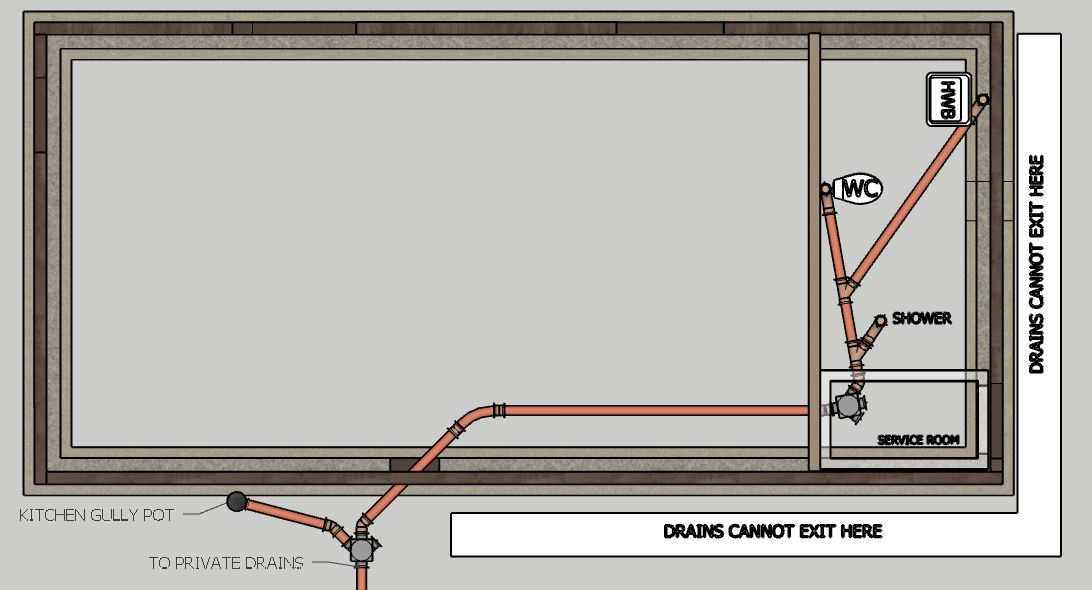
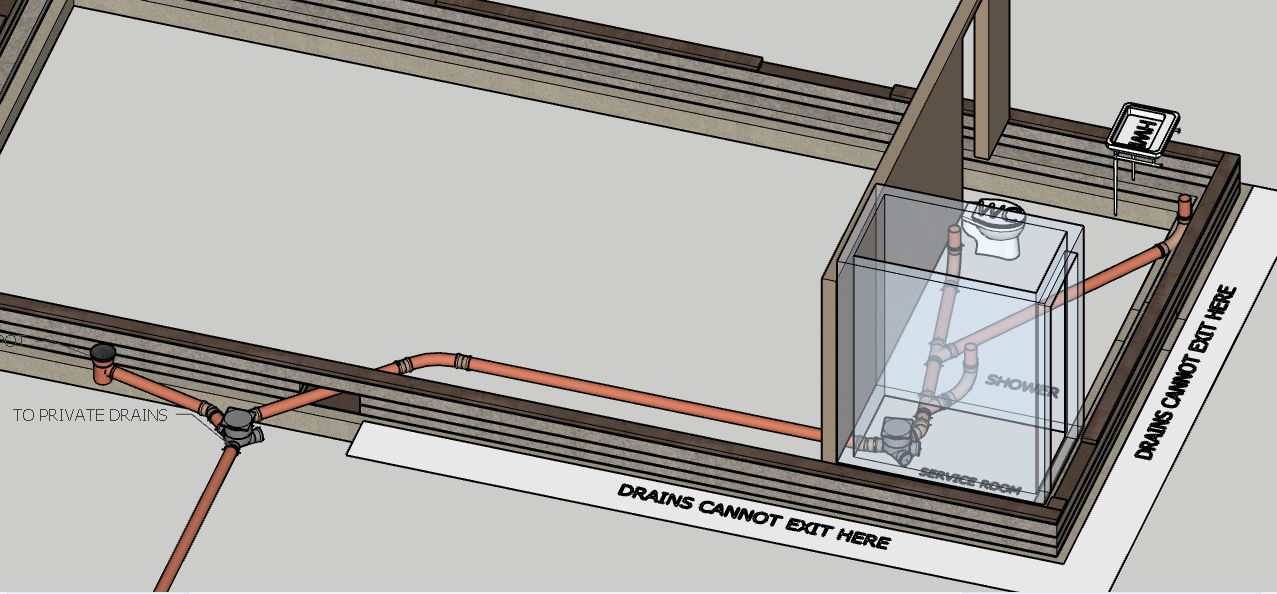
Hi All, I have been discussing previous iterations of this in another section but I’m posting here with a clean slate so that previous discussions do not over-complicate. I’m building an annex close to my house on our farm/smallholding. The drains will connect into existing septic tank. The drains from the bathroom cannot take the shortest route to exit the building due to lack of space outside, so I am having to bring the pipe under the slab to the closest poss exit location. I’ve worked on several iterations of this, learning the conventions as I go. I am hoping someone who is knowledgeable on drainage can tell me if this is acceptable? I’m fairly sure the configuration of HWB and Shower using Y junctions going into the main WC run is ok. Also, the length of pipe running out of the building diagonally is less than 2m. The potential issues I can see are: - The change of direction at the first inspection chamber is more acute than 90°. - The 45° long radius bend just before exiting the building. - Exiting the building diagonally. Given the restrictions of the site does anyone think a sympathetic BCO would accept this? Or better still, tell me this is all fine?
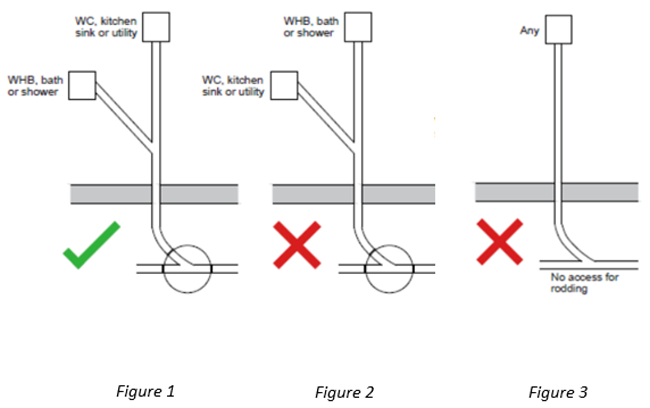
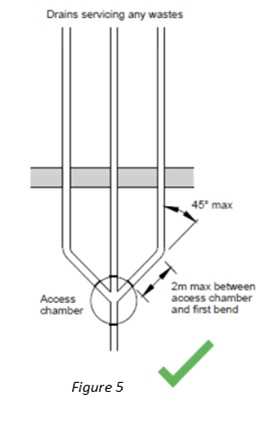
-
I hear you. The foundations are what they are at this point and BCO is happy but the drainage needs work..I’m going to focus on getting the drainage right within the limitations of the site. If it can’t work, it can’t work and a drastic change may be necessary, but at this point I’m going to plug away with amending the layout and trying different ideas until it truly is a lost cause.
-
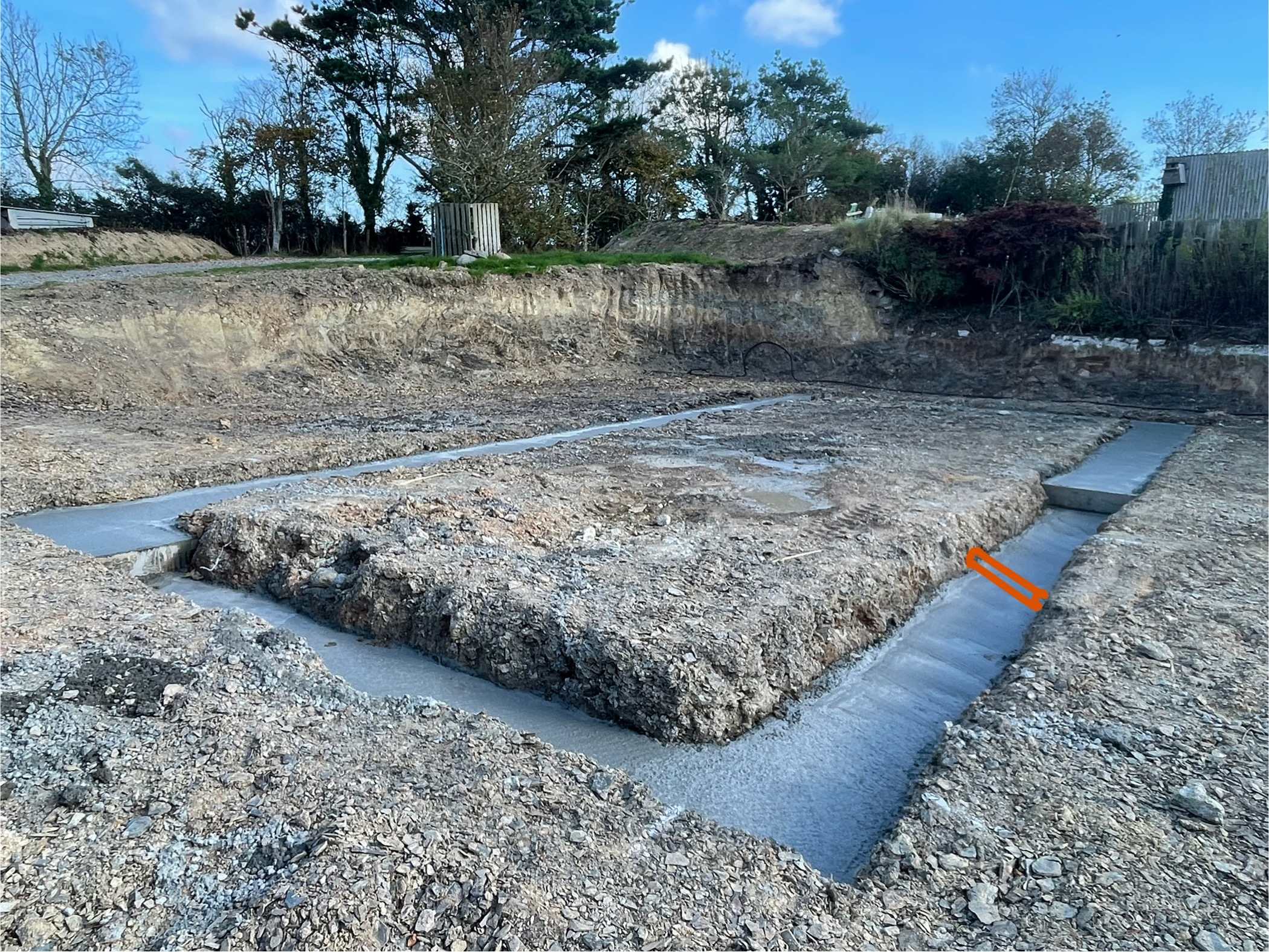
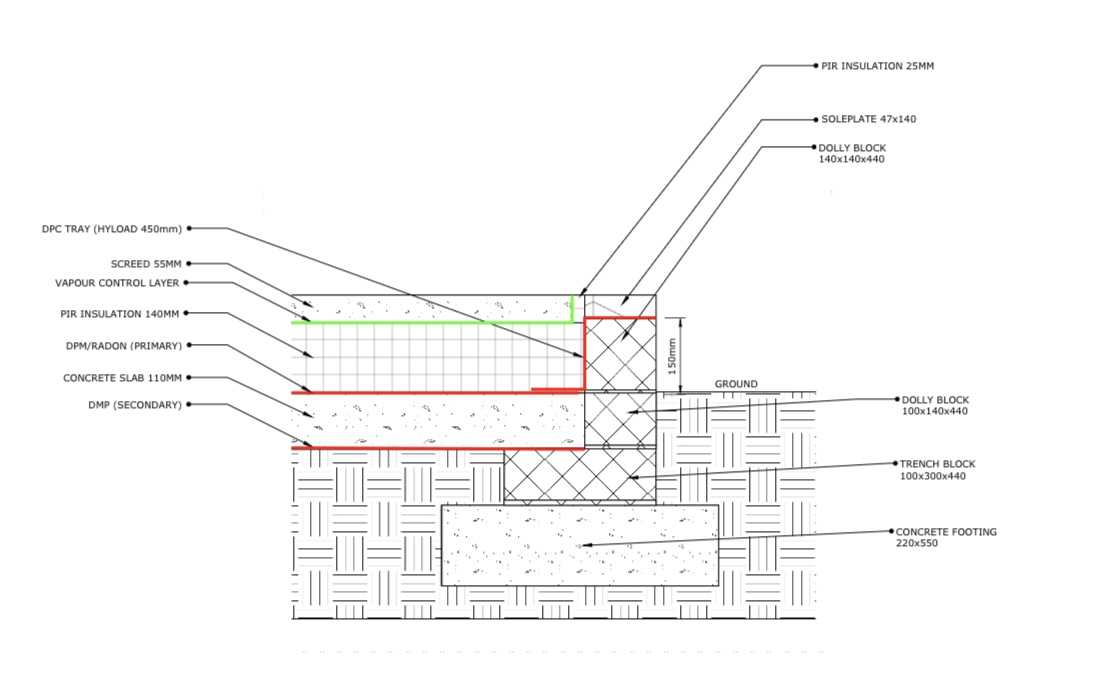
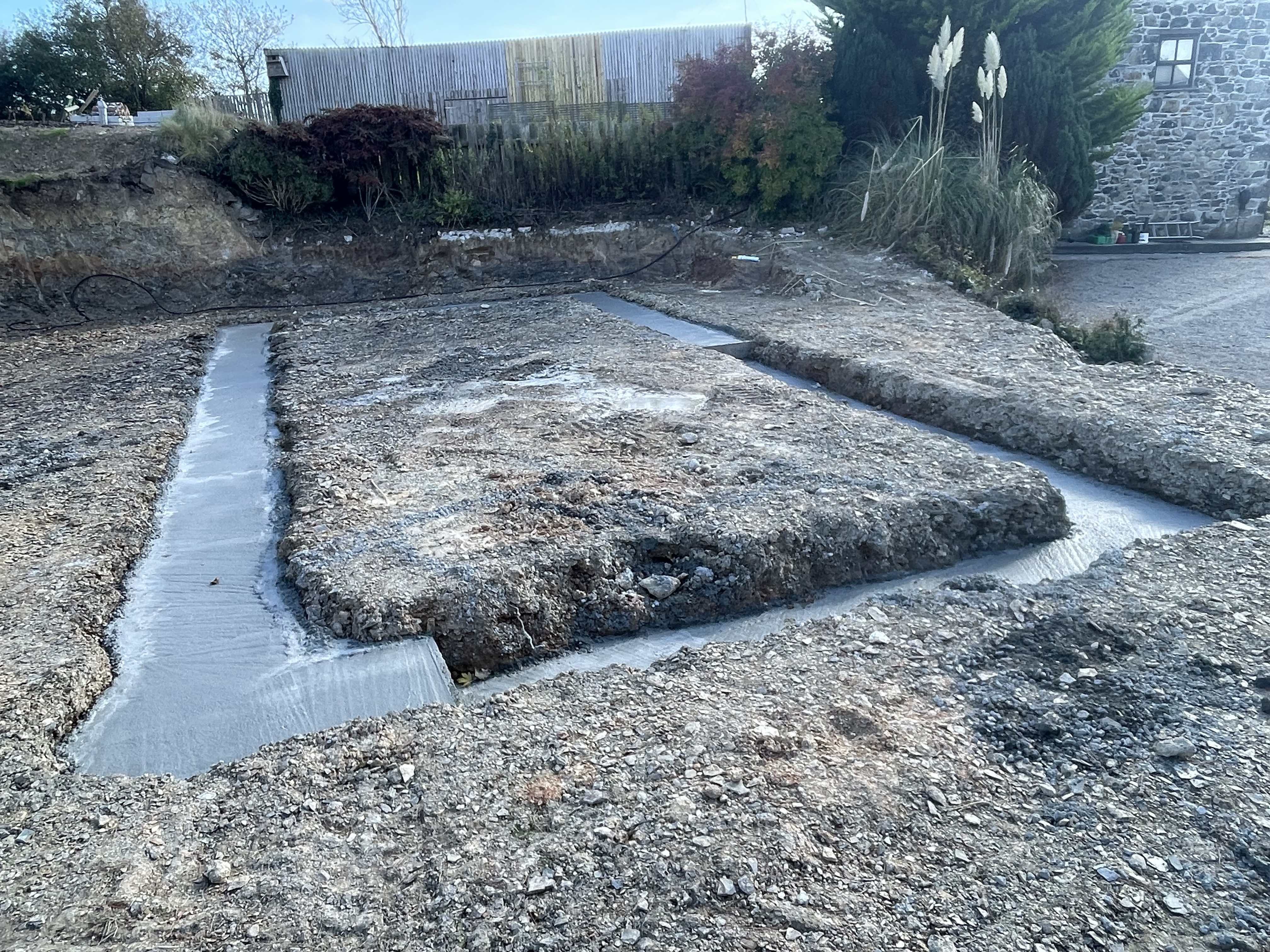
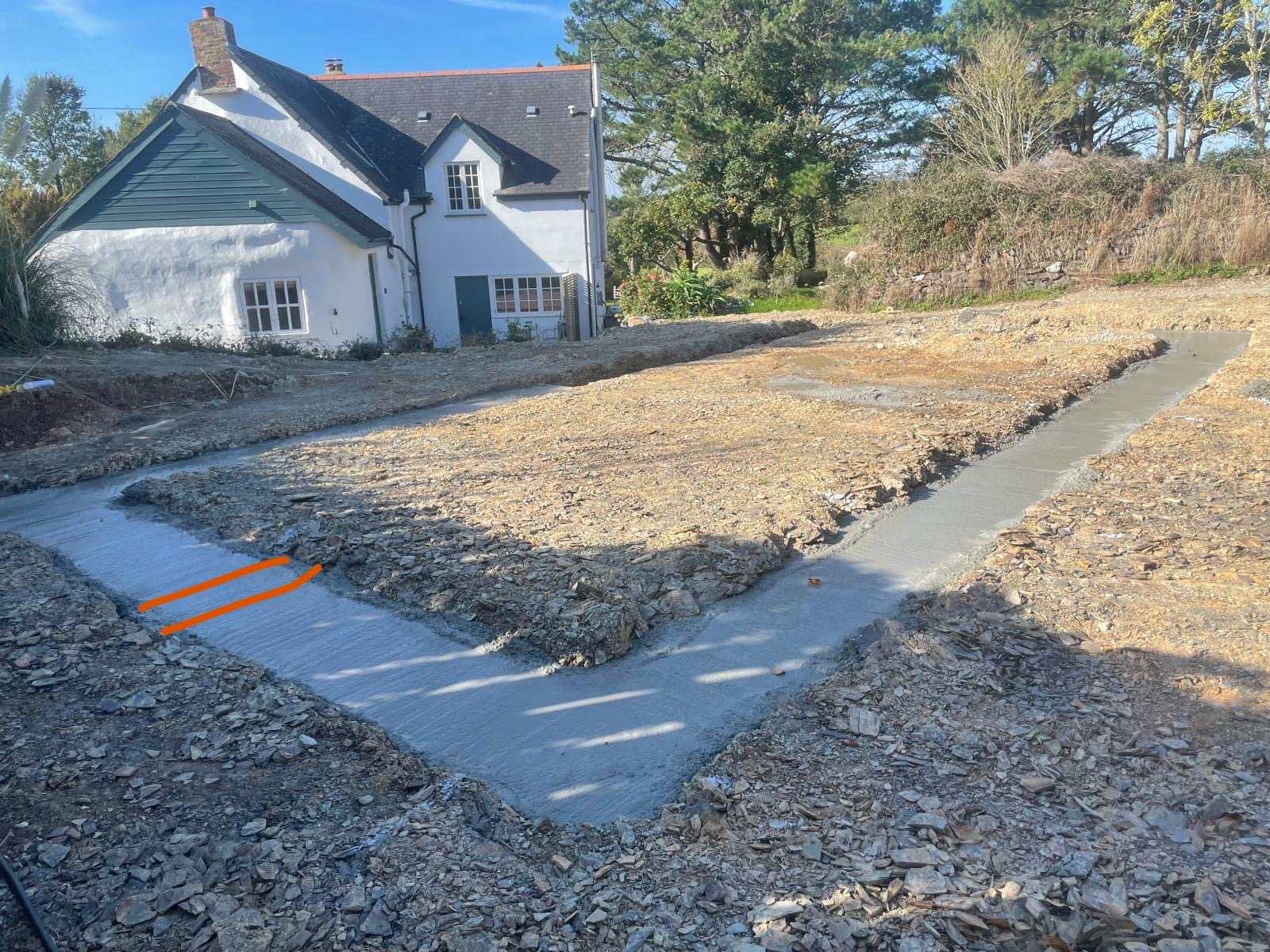
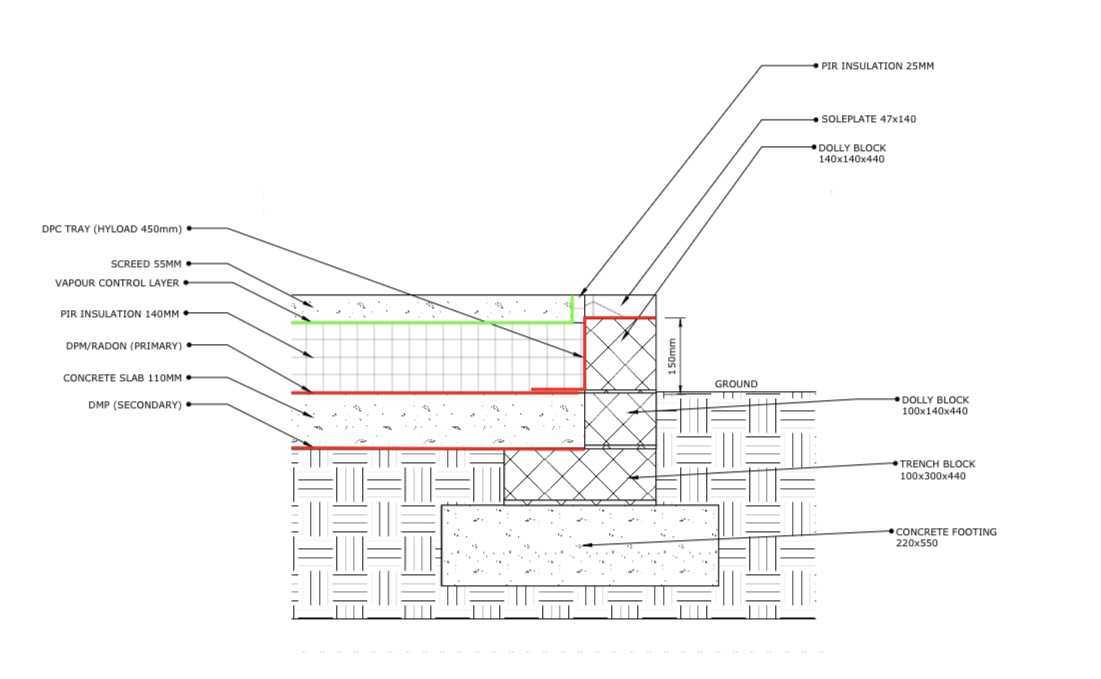
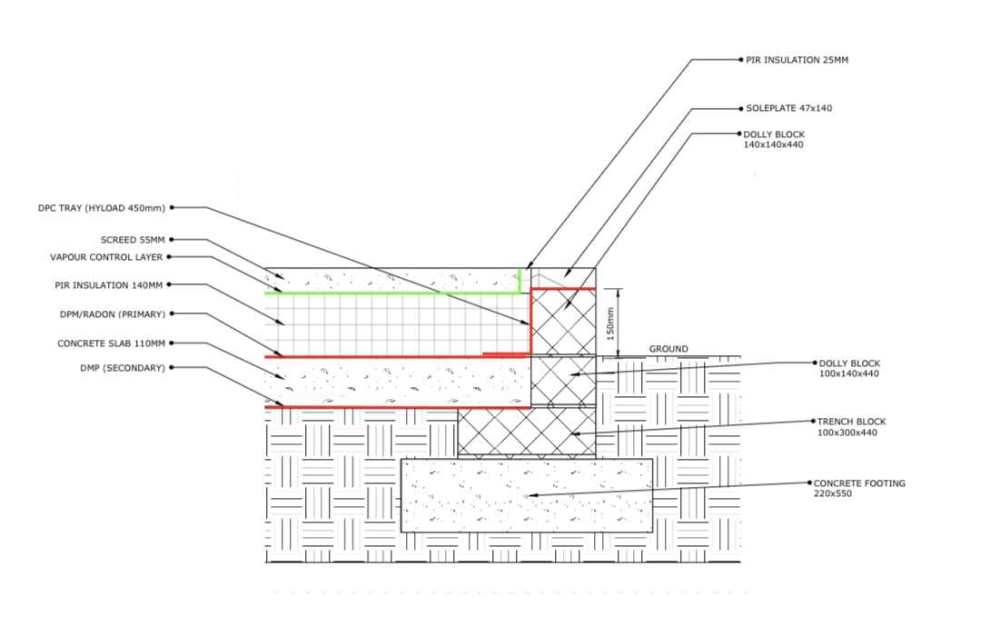
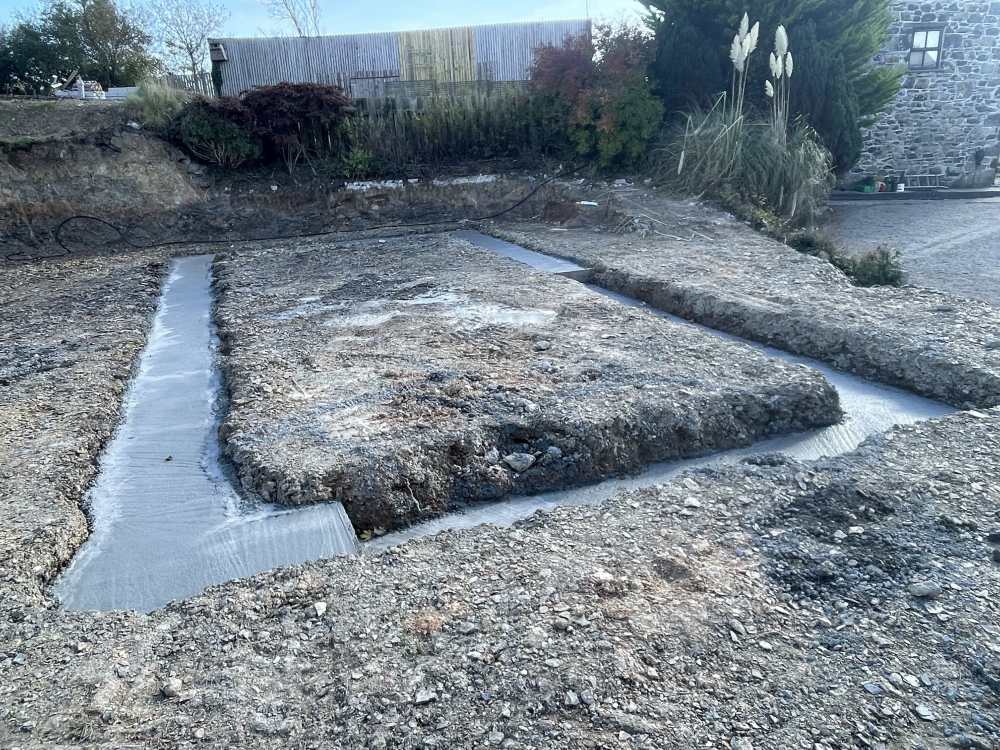
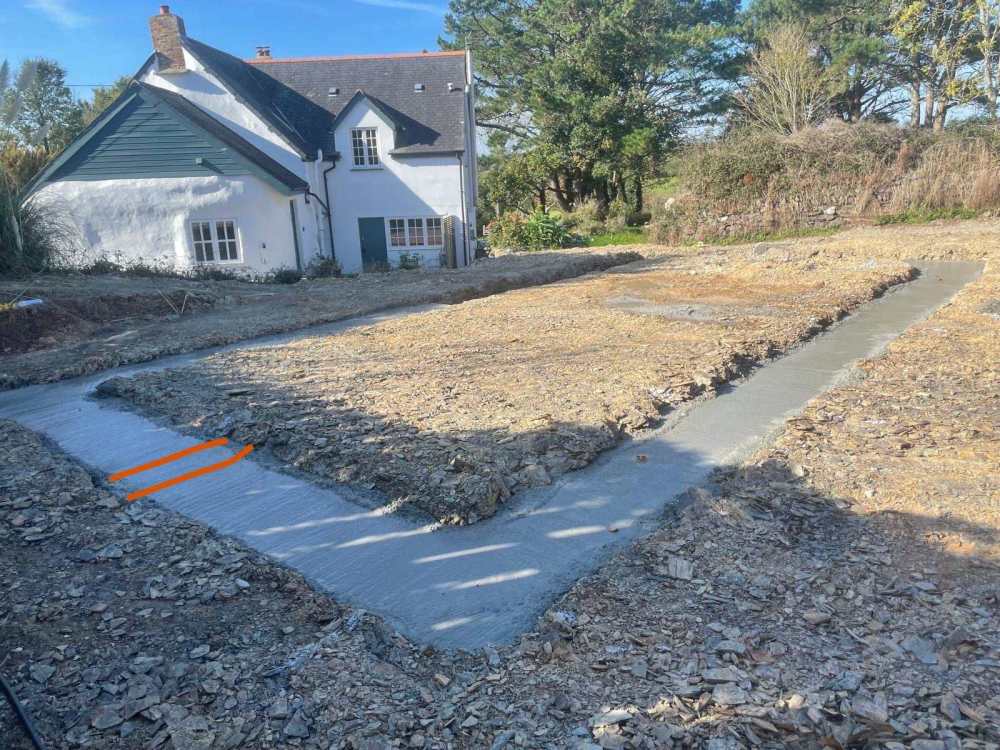
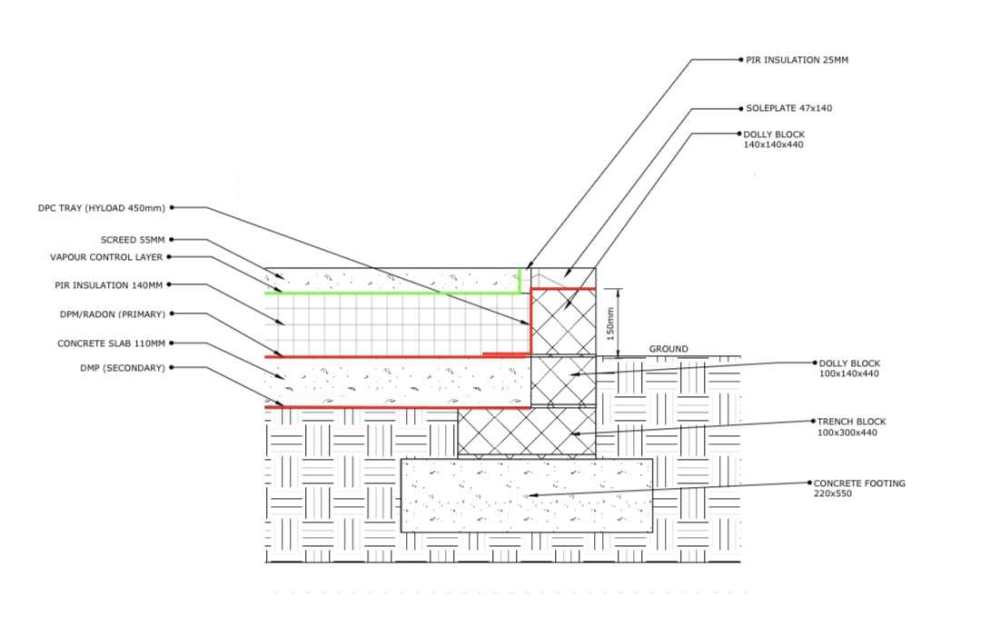
@saveasteading I appreciate all input. I’m really trying to work to best practices but have some limitations. I can’t take the drains out by the shortest route as there is not enough space around the building on the right side. Also, the foundations are stepped down where my diagram shows the pipe exit. So with 3 courses of trench blocks in this area it gives plenty of room for the pipe to pass through with a lintel. This is not the case with the footings at the top and right of diagram which have just one course of trench blocks then dolly blocks as per detail. The rest of the foundations are as per the detail (except concrete is deeper than 220mm in reality). Footing depth is 450mm including mortar between courses as per detail. It’s on slatey rock and BCO was happy with depth. The reason for stepping down the trenches in one area was because there was some made-up ground to get through. Regarding the ground floor detail with x2 DPM’s. This was led by the BCO. I originally had one DPM as well as hard-core and blinding sand but BCO suggested this as a preferred alternative. The secondary DPM is mainly there to help the slab go off consistently I believe. In all honesty though if he’s happy, I’m happy. The building is not going anywhere, it’s a single story cabin. My main focus is to refine the layout of the foul drainage under the slab to be compliant. I think it’s close (I may be wrong), but given the limitations, I am really keen to have other peoples ideas and if anyone has a better way of doing it, I’m keen to hear it. You can see in the picture attached that there is not much room outside the bathroom end of the building. There will also be a retaining wall there reducing space further. You can also see where the stepped foundations allow more room for pipe exit. This is also in direct line of sight with the existing drainage which we will be connecting into.
-
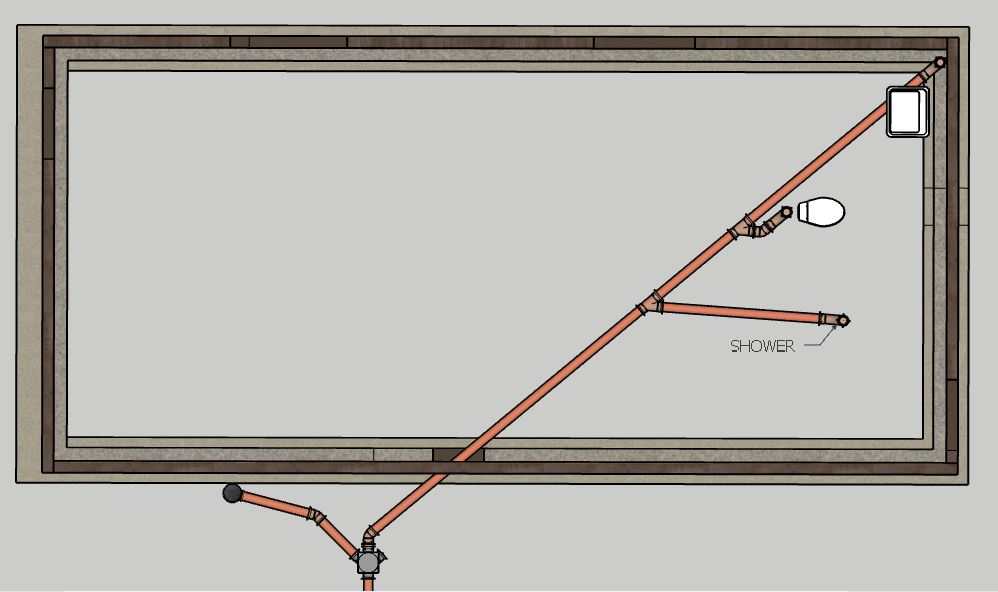
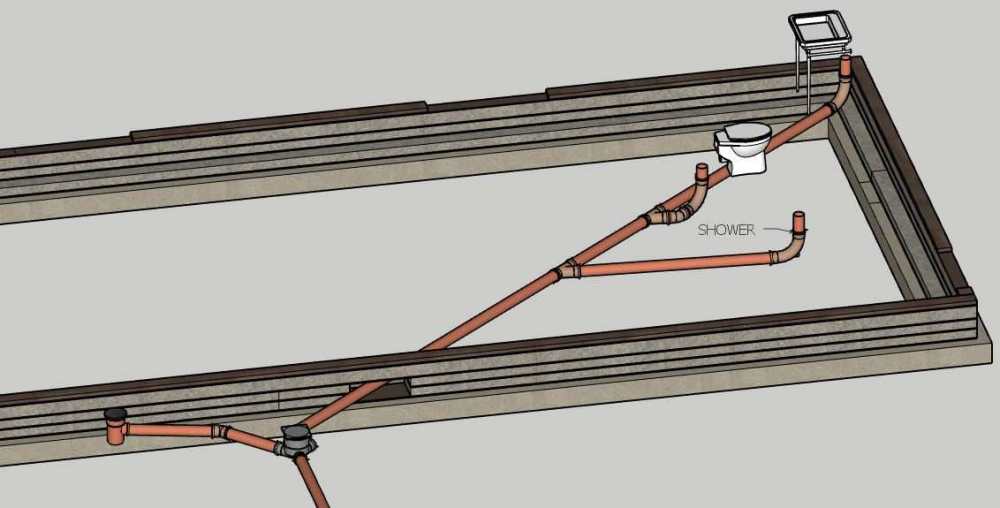
@Oz07I’m feeling pretty happy with this so far. Is the extra 45 coming off the Y on the WC ok? Where do I need to add rodding access?
-
Yes that makes sense. I’ll re-do the model and post back. All advice so far much appreciated.
-
That’s really helpful, thank you. Do you think that the preferable design for the rest of the layout is to bring the shower in to the WC/basin run with another Y underground OR the two separate runs as shown in the most recent diagram?
-
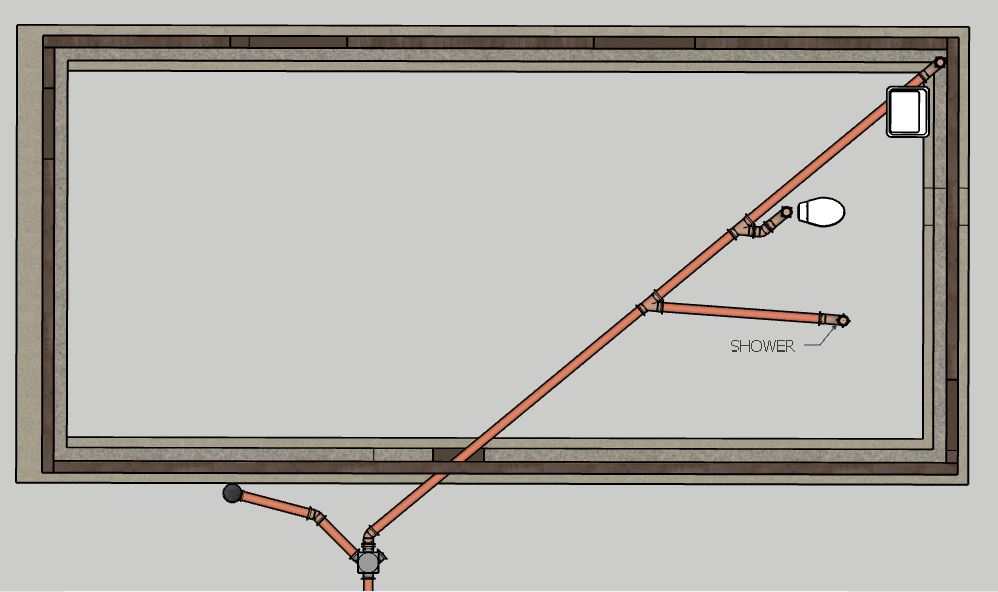
This is very similar to what @Oz07 suggested. I will amend model to work as shown with the shower running into the WC/basin run resulting in one exit point one junction under the slab. Looking back, @Oz07 also suggested a rodding point for the shower which can go 45 up to ground level outside the nearest wall. In hindsight there will probably need to be same sort of external rodding point for the basin/wc run too as the current one on the diagram is above a 90° bend.
-
Thank you, this looks good. would the shower then need rodding point? Also there would be a triple socket/Y fitting at the junction where the two pipes meet.This would be a tricky fit as I believe the angle is 45° the angle would be much less than this. Also, is kind of junction this ok to have under the slab? I like the idea to simplify it and remove a bend.
-
Thanks for your input. The pipe exit openings cannot go any further to the right when looking at the plan view. So the angles just don’t work to allow the bends closer to the chamber. The 30° and 45° bend along with non-perpendicular exit angles are the best I can achieve. Is there a definitive rule to say that those bends under the slab are a no go or just avoided if possible?
-
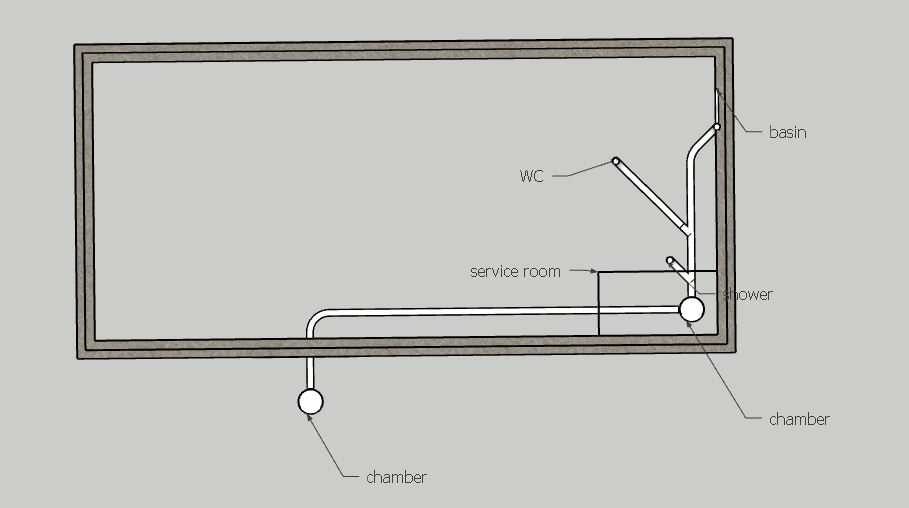
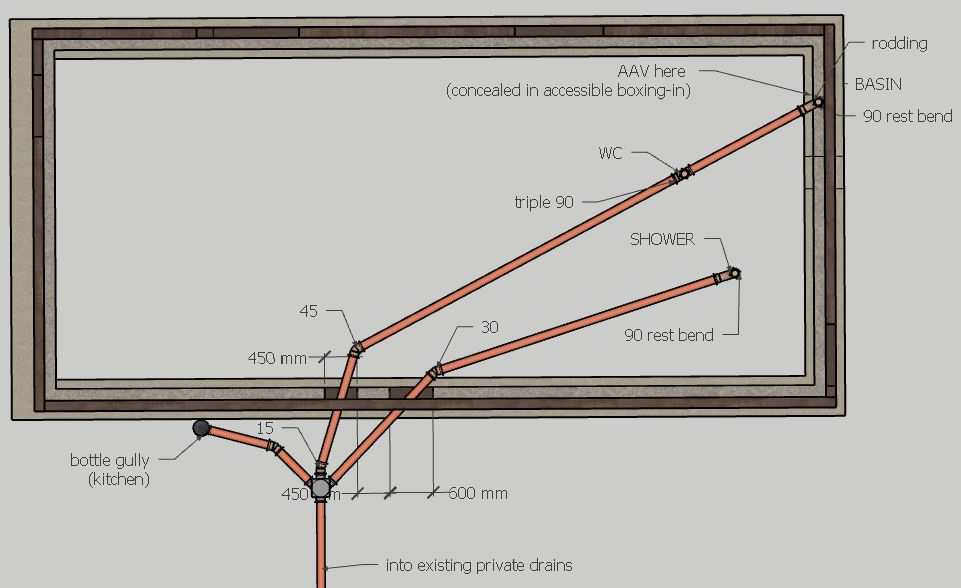
Plan view
-
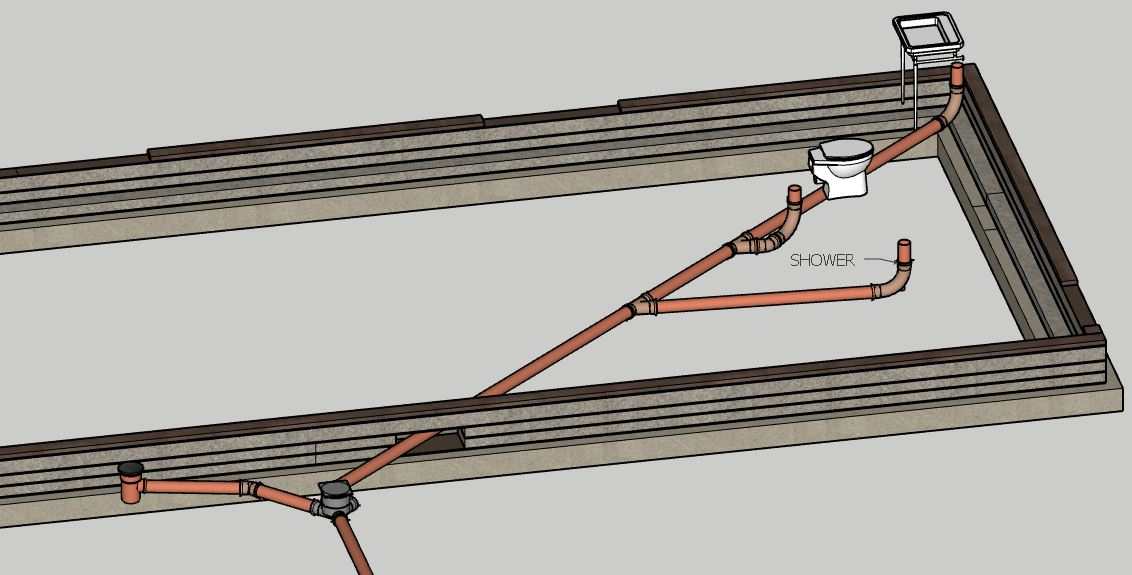
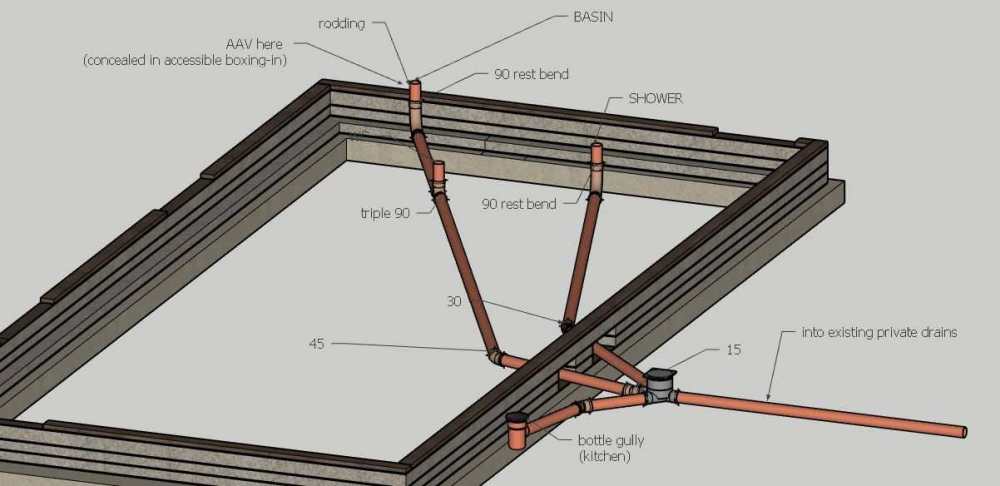
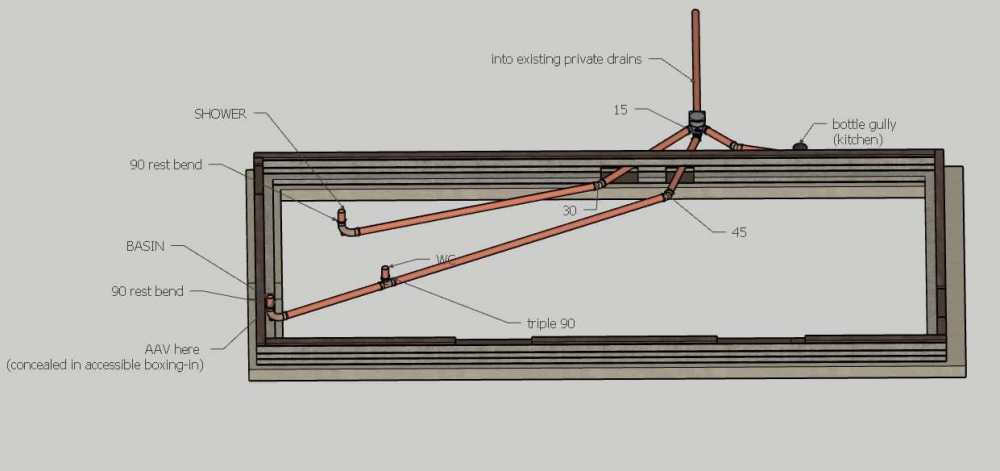
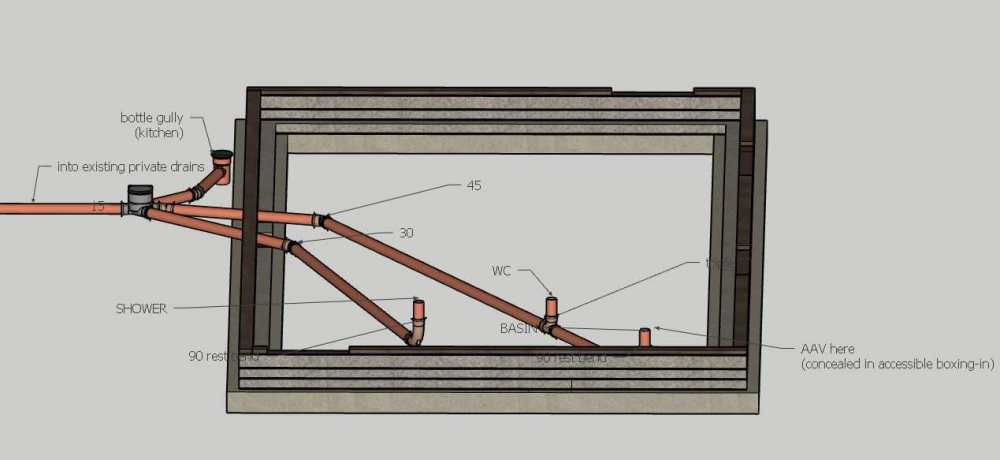
Hi everyone, my original query was getting opinions on the layout of drains going under the slab, from comments it became evident to avoid major changes of direction under the slab, pipe exit should ideally be brought out of the building close to the bathroom and run around the outside of the property. After much thought, rather than change my pipe exit location (and create a number of other problems specific to the site), I have adapted and simplified the design, still taking all pipework across and under the slab, but in a way which I am hoping is good practice and compliant with approved document H. My questions are: 1. Are the joints and bends under slab acceptable? 2. Any problems with having x2 adjacent linteled openings in foundation with 450mm long trench block in between. 3. Overall, is there anything I’ve missed or is this layout acceptable?
-
Exactly 👍
-
That would be one way of doing it. My main concern there would be additional material costs and increased labour (I’m going this well, but on a shoestring!). I’m convinced there’s a simple solution. The whole reason for having to make this unexpected opening in the foundation is because I planned for the exit to be on the other side of the property having not considered the underground drainage runs in relation to the bathroom. I’m now going back to the idea of getting the pipes to the original planned exit (where there is plenty of headroom for pipes) with minimal bends and plenty of access, to be fully compliant.
-
@Clark Kent thanks for your input. I’ve just been reading up on this and agree. When using a lintel, something along the lines of 50mm clearance around the pipe and filled with compressible sealant (expanding foam?)
-
Thanks @marmic, I designed the foundations myself through doing research and the BCO is happy with them. So no SE. As far as builds go, it’s a very straightforward one - single story, one bedroom, rectangular footprint, timber frame annex I suppose it’s down to the BCO whether he is willing to accept the above. I’m on a tight timescale and wanted my next BC visit to be a visual look at the foul drains and block work below DPC. I’m hoping someone can confidently say that doing this would not cause any inherent problems and is good practice in the circumstances (or not as the case may be). A further points to make is that the footings are on very solid ground.
-
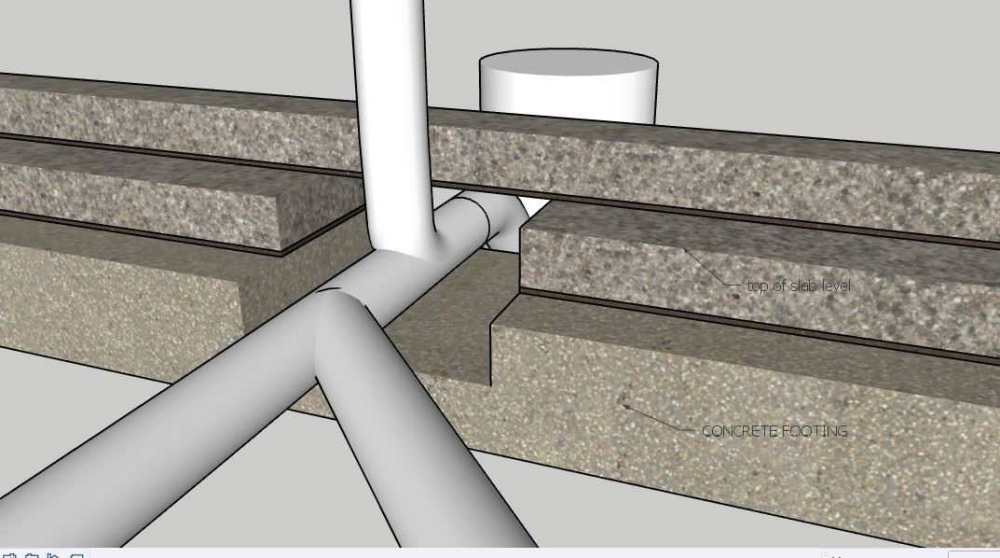
My BC officer is off for a week. He had mentioned that two courses of trench blocks were required to exit a 4 inch pipe which I planned for at the other end of the building. Bit to avoid a long run with bends running under the slab, this plan is trying to make the best of a last-minute change to exit the pipe nearer the bathroom. Otherwise I would have just stepped the trenches down in the section to allow for two courses of trench blocks. I’m trying to come up with a solid plan to present to him when he’s back. The pipe will be fully under the concrete slab so I’m hoping he will not have a problem with it. The reason for the post is to get advice on whether it looks like best practice in this situation or if there’s anything I’m missing.
-
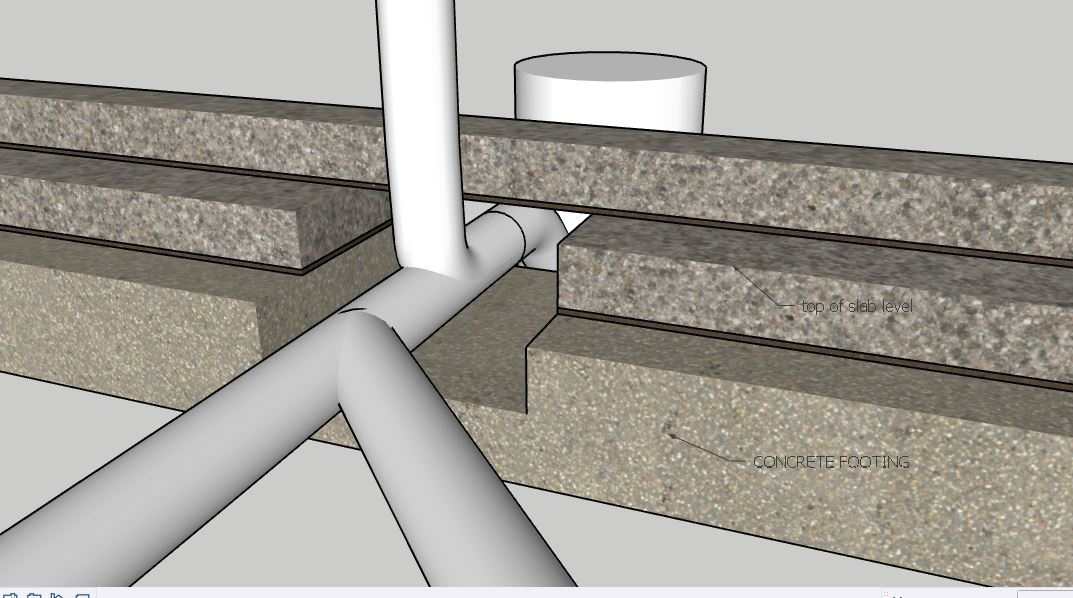
I’m self-building an annex and looking for some advice from those in the know… I had originally intended to exit foul drainage pipes through a section where the foundations are stepped down (and therefore plenty of room with three courses of trench blocks to go through) but hadn’t considered that this section is a long way away from the bathroom. Can I do as the diagram shows and channel through the already-cast concrete footing as well go through the trench block course as shown? I would install a lintel above. Once drains are installed and BC are happy, would I then concrete-in the exit opening? what is best practice for finishing a lintel opening like this? Any advice appreciated. Ben
-
Thanks, I appreciate the thought. I’m going to digest what you said and see if I can improve the layout. I think I need to establish if I’m able to break through my foundation concrete to run pipe the in which case I will make logical exits near the bathroom and run pipe outside the building accordingly. I’ve made a rod for my back by limiting where I can easily exit pipe through foundations.
-
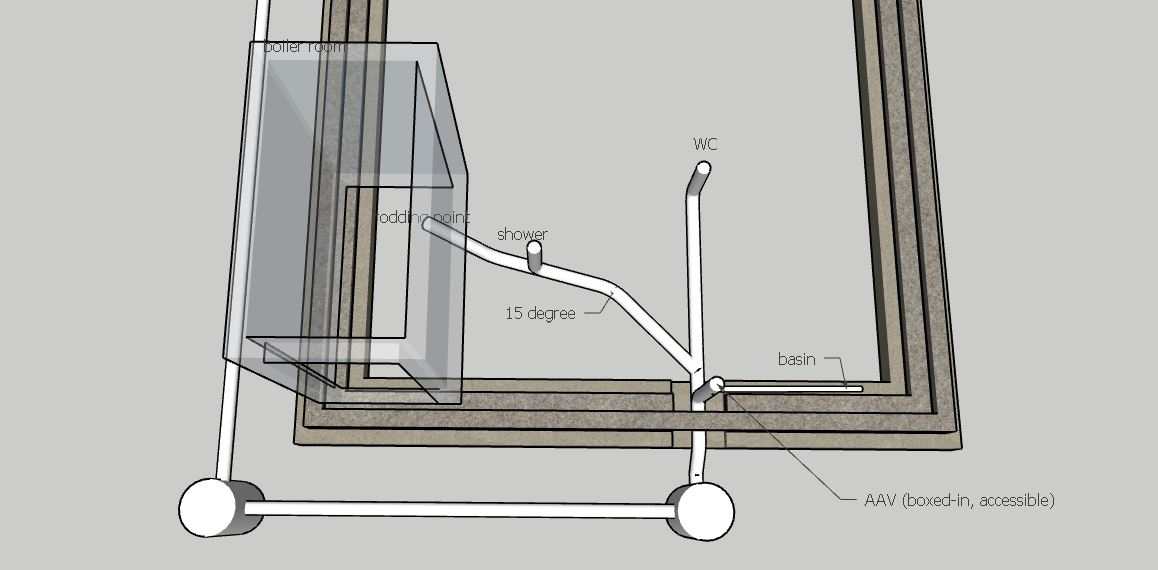
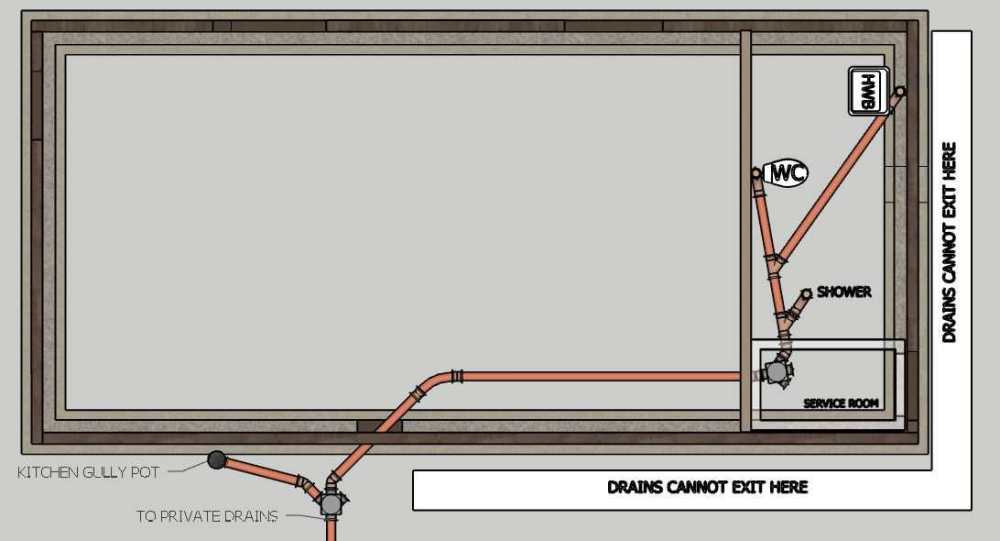
This was the other option I was considering, which includes an inspection chamber within the service room. Although there is a 90° bend before the exit, the access from both inspection chambers is very good so I’m wondering whether this a valid solution.