carson321
-
Posts
12 -
Joined
-
Last visited
carson321's Achievements

Member (3/5)
1
Reputation
-
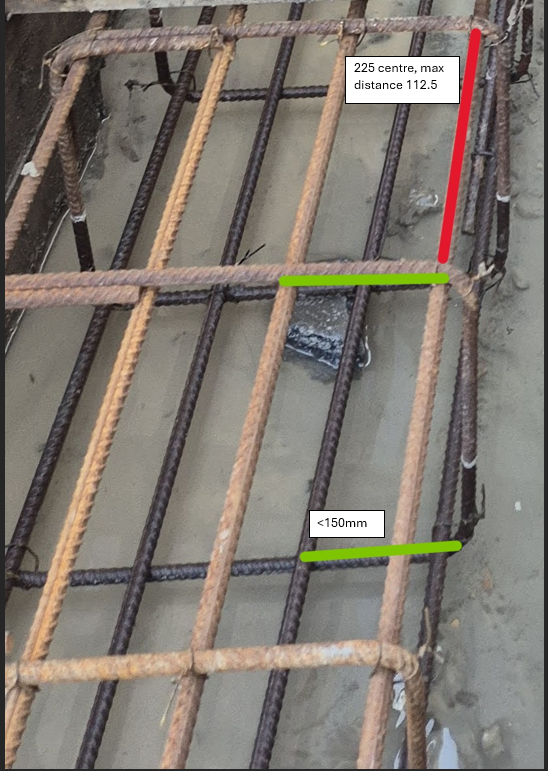
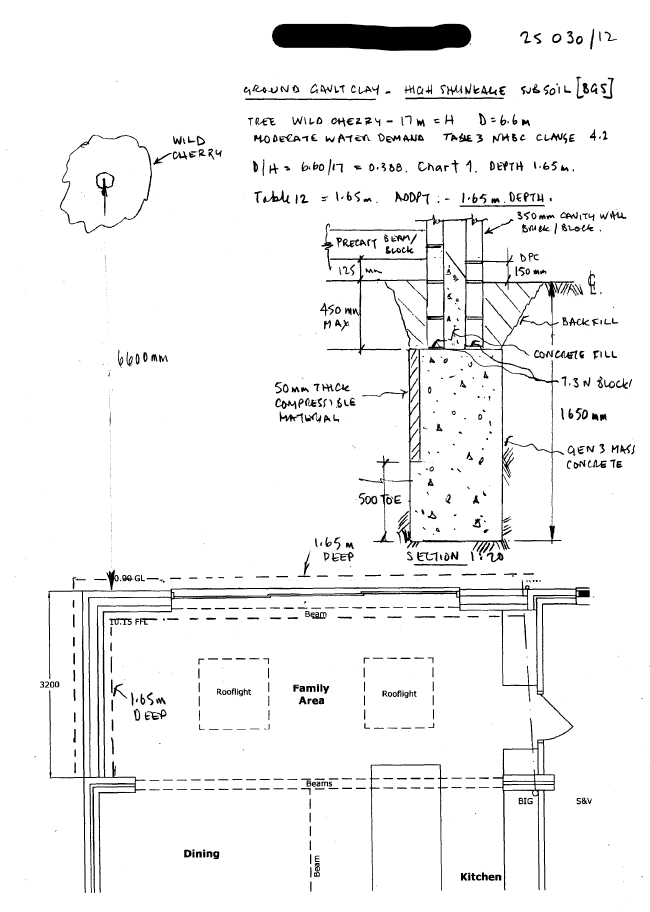
Hi all. I feel like im losing the plot going back and forward with building control over my foundation design. Lot of history to this but right now, I have a screw pile and groundbeam design for my single storey rear extension. Screw piles are in and the rebar in place waiting for the concrete to be poured. BCO has complained about various things first of all thinking that the cage was misplaced, misaligned and all sort of other things. Visit from her supervisor and some setting out by my builder made it clear that this was fine. Now for my current predicament, BCO have said they have consulted with their engineers and received a response stating "It’s not entirely clear from the foundation calculations, but it appears that the groundbeam design is to BS8110. If so they do not have sufficient links in their groundbeam as no bar in tension should be more than 150mm from a vertical leg. (clause 3.4.5.5). Bars in tension should be no more than 155mm apart and no more than 77.5mm from the outside face (clause 3.12.11.2)." Piling engineer response was basically that he believes the spacing is correct but if they wanted extra steel, then stirrups could be placed halfway between the links to reduce the vertical spacing. BCO further response was then " I have spoken to our consulting structural engineers regarding the design and there are fundamental errors with the calculations and the question that our engineers have posed to your piling contractors has been misunderstood. Therefore, we require a design from a competent structural engineer that provide a coherent justification for the foundation design on site." They never raised any issues with the calculations in the first response, and im not really sure how many different ways their comments on the number of links could be interpreted. I have attached the original beam design and a photo of the installed rebar. Any help interpreting this mess or helping me understand if my piling engineer is doing the right thing or not would be greatly appreciated.
.thumb.jpg.d87c97a4aa1547654410dfe1f4d6de2d.jpg)
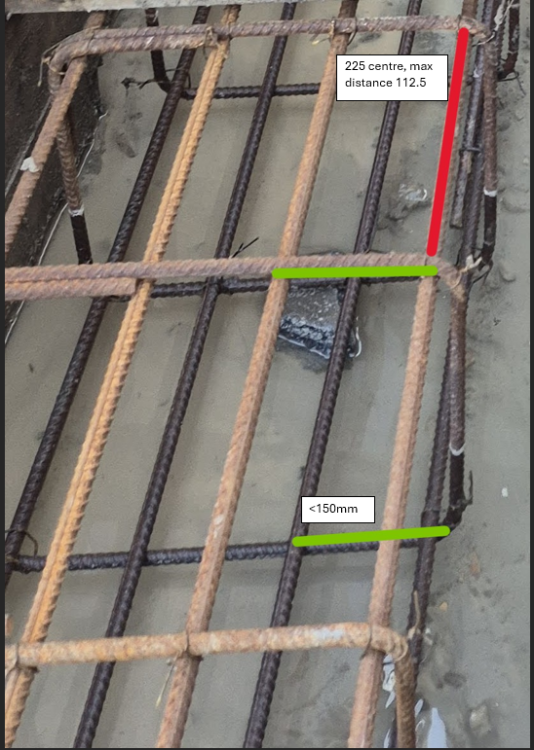
-
I shall take some pictures this evening and come back with some extra info as well. It will be a flat ceiling, not vaulted, and there will be no access to the roof space once the ceilings are boarded
-
Hi, I currently have a single storey wrap around section to my house containing utility and toilet that is part of the original early 80's construction, as shown. It has a double pitched roof over the utility, becoming mono pitched over the WC area. Currently doing some renovation work and have all the ceilings down, this area has no insulation in the roof, which goes some way to explaining why it has always been freezing cold! What is the most practical way to insulate this roof from below, before I put new plasterboard up? I know I can just stuff some mineral wool up there, but how do I maintain ventilation? There were indicators of condensation (damp patches) on the back of the ceiling when I took it down, does that mean I already have poor ventilation and need to look at doing something to the roof construction? If I just stuff 300mm batts up there, I will have to avoid a large area around the edges to ensure I am not just contacting the felt under the tiles. Any advice or pointers greatly appreciated.
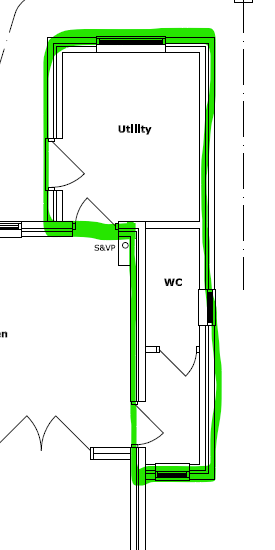
-
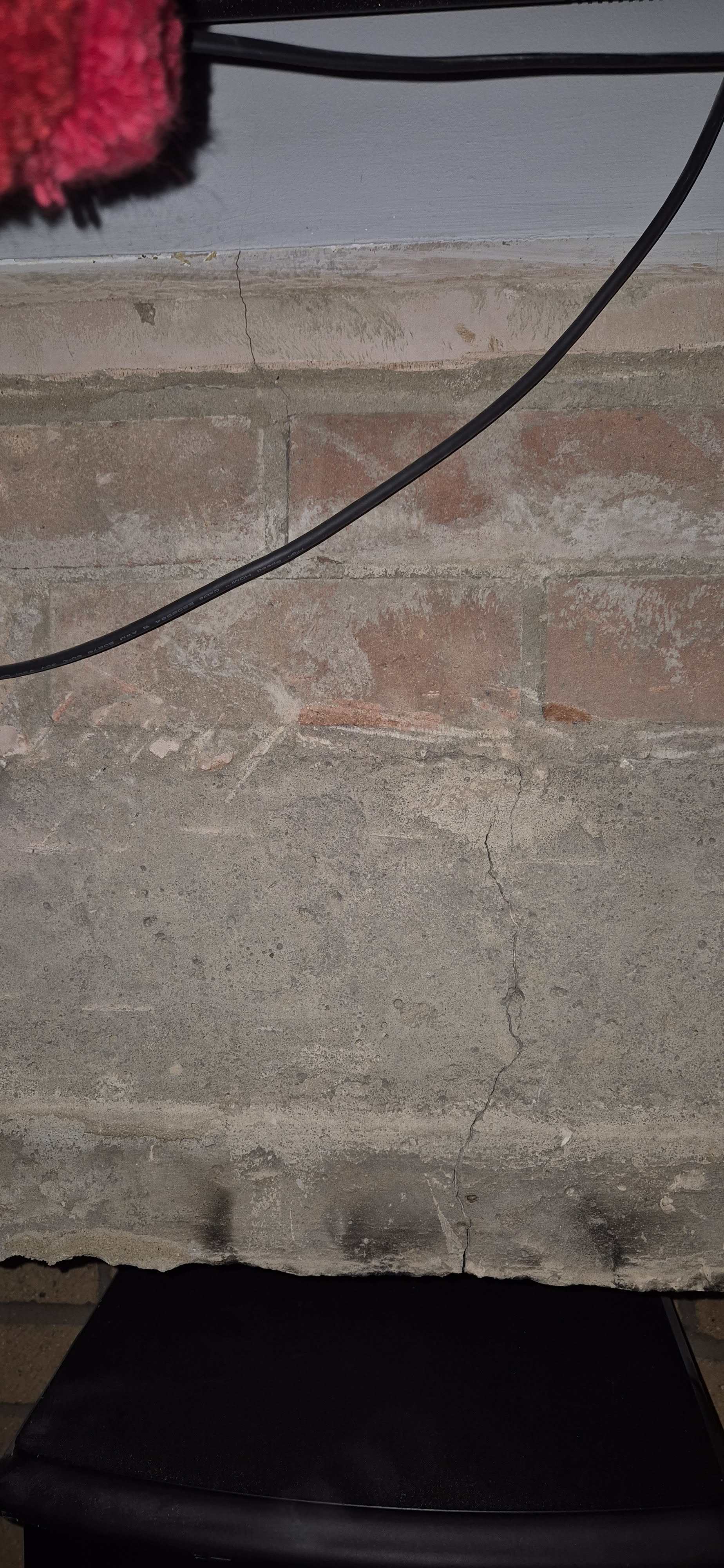
Thanks for the replies, if it changes any of the information supplied so far, the lintel is in the internal blockwork of the cavity wall on the ground floor of 2 storey house. The chimney is built external to the cavity wall. Having looked a little closer, it seems the lintel is part of the smoke chamber, found out that an image search for "preformed flue gathering lintel" brings up results similar to what it is. The crack goes through thickness and along the flue gatherer(?) on the inside, as pictured. (ignore the cardboard draught blocker....) There doesn't appear to be any movement in the brickwork, but there is a crack in the plaster initiating from the edge of the brick to the left and 2 courses above the lintel crack. Should i just rip a channel across it and anchor in some rebar or just leave it?

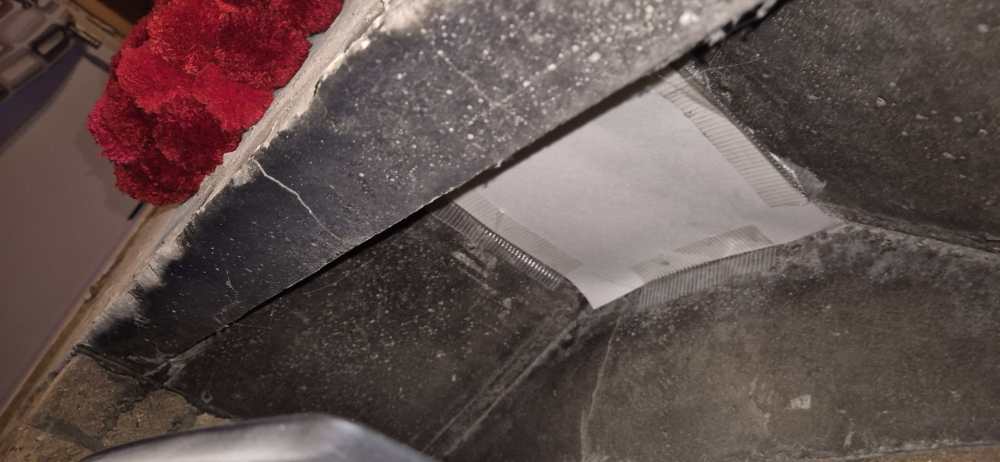
-
Hi All, I have an external brick built chimney on my house. Internally, the fireplace surround was constructed with brickwork built out from the wall. I believe it was originally a gas fire, but when we bought the property the gas had been disconnected and there was just an electric heater "stove" in the fireplace. I want to install an inset, possibly multi fueled stove, and in preparation I have removed the old fireplace surround back to level with the plastered wall. Upon doing so I have discovered the crack in the lintel as pictured. Is this something that I need to be concerned about? Does the lintel need replacing or repairing in some way? What would be my next steps with this? Cheers
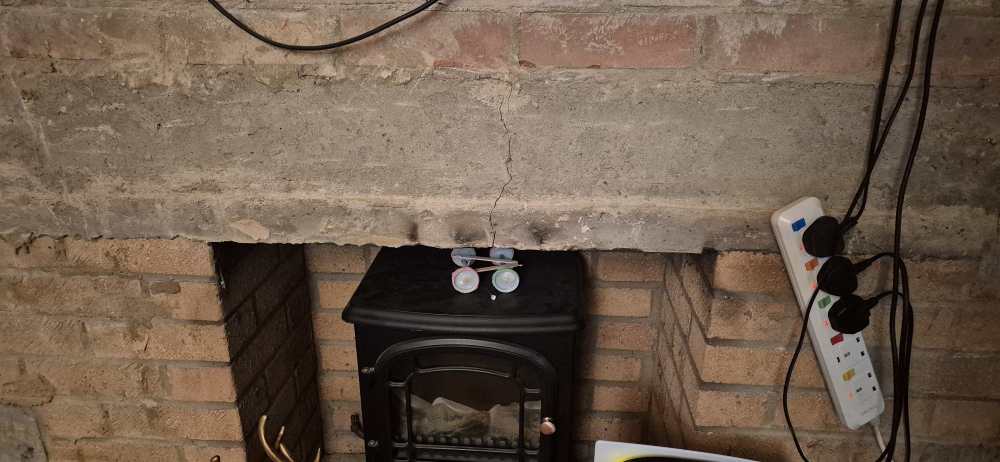
-
Downdraft Extractor Ducting Route
carson321 replied to carson321's topic in Kitchen & Household Appliances
Well BSH group give instructions on how to do it and details maximum ducting runs etc. -
Downdraft Extractor Ducting Route
carson321 replied to carson321's topic in Kitchen & Household Appliances
Im not suggesting that I am going to or think it is a good idea to vent in to the void, was just canvassing for opinions/ info on the subject. These vents are more than capable of extracting through ductwork externally and not just recirculating through the base boards. I was considering just using one in recirculating mode, but now that I know my floor makeup is going to include 200mm insulation, I am considering an external vent as I like the thought of not having an ugly background extractor randomly stuck on one of my walls. -
Yeah, I might be going down the SAP route just for the ease, but I think I have now found the section in the most recent document, 10.7 d, it is just not as explicit as it used to be. Current revision states 'The total area of windows, roof windows, rooflights and doors in extensions should not exceed the sum of the following. i. 25% of the floor area of the extension. ii. The total area of any windows and doors which no longer exist or are no longer exposed due to the extension. Which i assume means i + ii so does account for the removed openings. Thanks guys.
-
Downdraft Extractor Ducting Route
carson321 replied to carson321's topic in Kitchen & Household Appliances
No MVHR, so looking for venting as will negate the need for a background extractor in the kitchen. The floor void will have plenty of its own ventilation per building regs and I don't know if I would need to be bothered about any grease per se, as its just a void with a load of clay soil under it! -
Hi All, we will be having an 'overglazed' extension built, big sliding doors and roof lanterns. Looking at various calculators available for doing the average area weighted u calculations, and comparing against a notional extension, they all make reference to an allowance for the openings that will no longer exist due to being incorporated into the new building. But what I cannot find for myself is exactly where in the Part L document that it states this! Is anyone able to point me to where this bit of information is recorded? It makes a huge difference to the calculation if these openings can be accounted for or not. Also, when working out the new glazed areas, how do you calculate it for a roof lantern, where the glass structure is pyramidal and not just simply flat at the size of the opening? Do I need to work out the area of each pane of glass in the lantern and add it together?
-
I wasn't sure whether to put this here or in the insulation&ventilation forum. I want to have a venting hob with a downdraft extractor installed in my new kitchen island. It is going to be situated over a block and beam floor in our new extension. Should I be directing the duct through the floor makeup above the block and beam (200mm insulation, 65mm screed, about 2.4m horizontal run to external wall) or can i take it directly through the block and beam floor to the void under this? And if I do go in to the void, could I just have it terminated here as it will have passive ventilation installed anyway, or should I direct it the whole way out through the wall? Appreciate any insight on this.
-
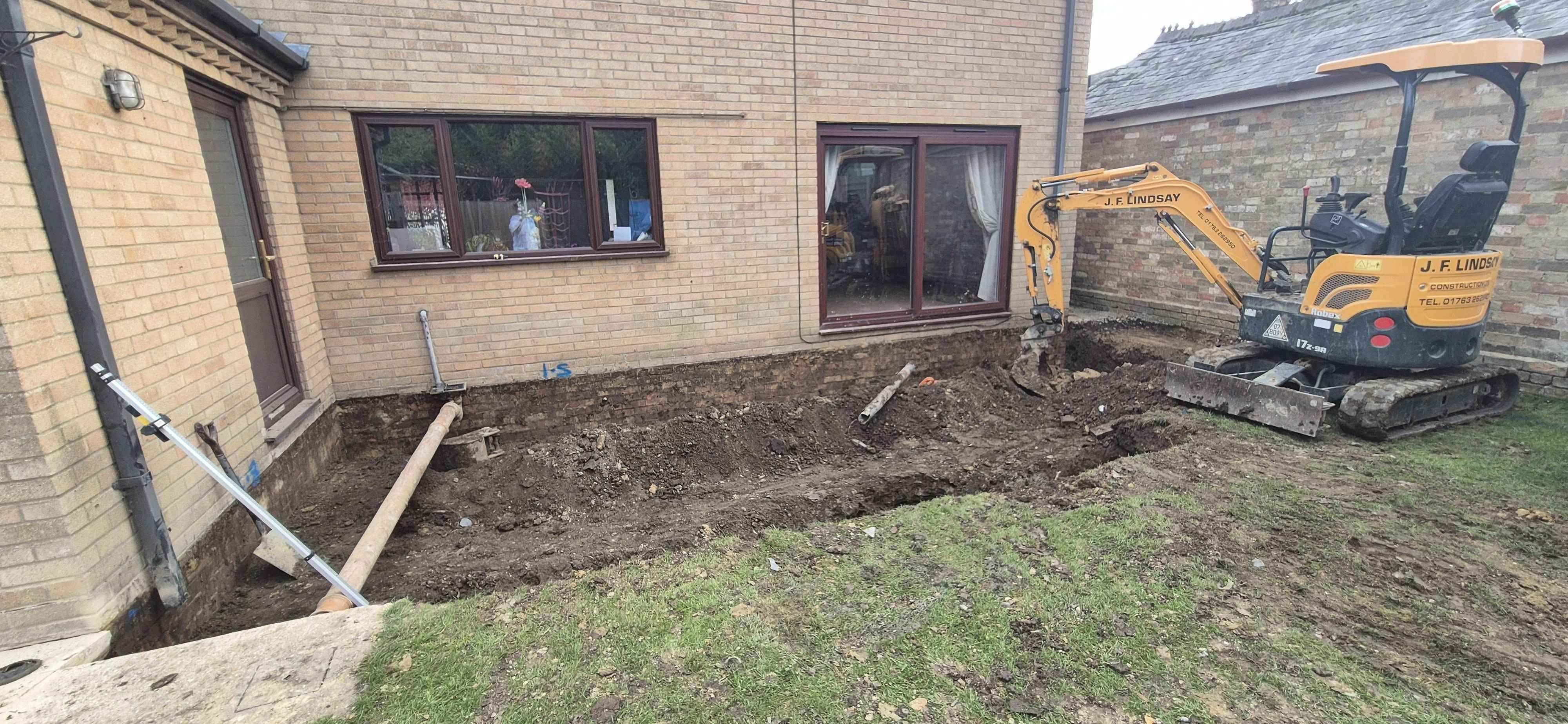
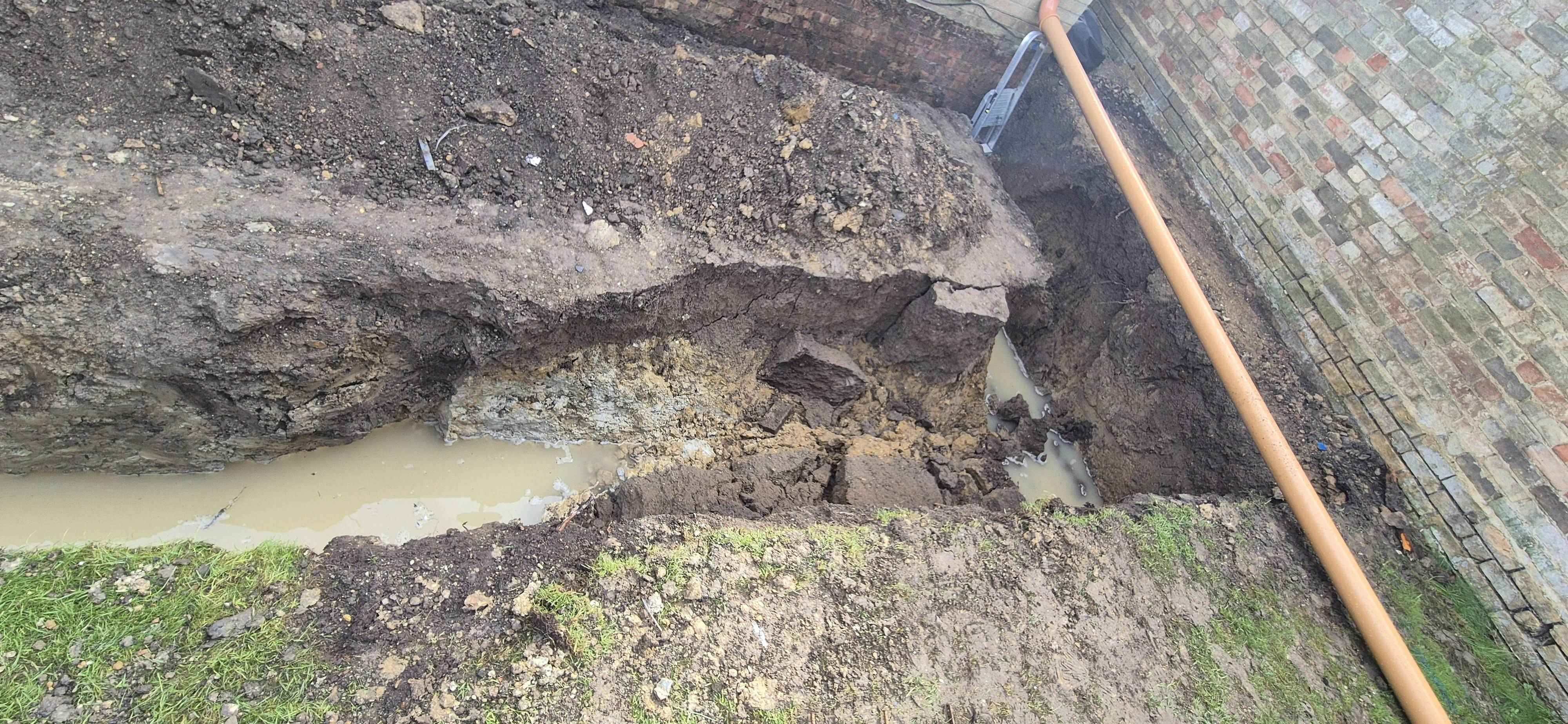
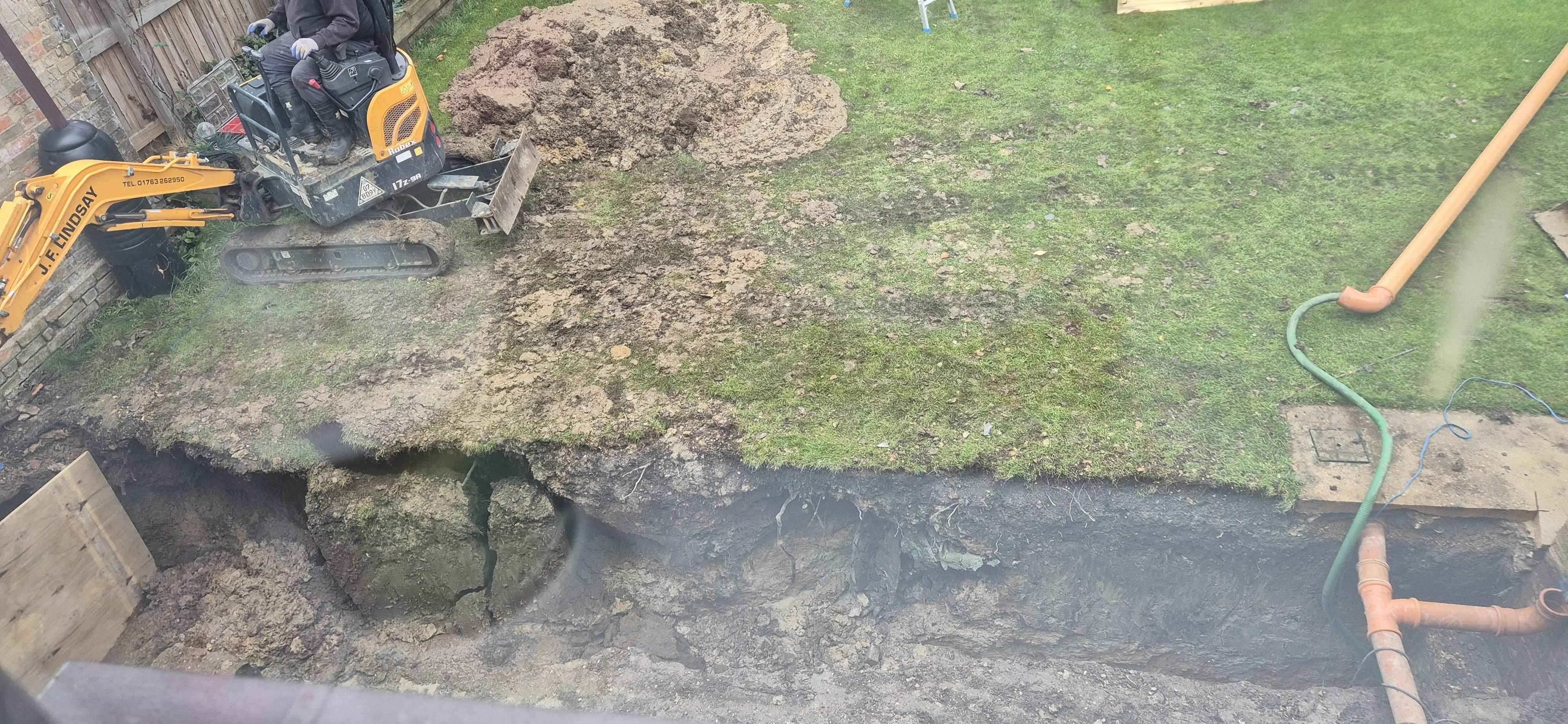
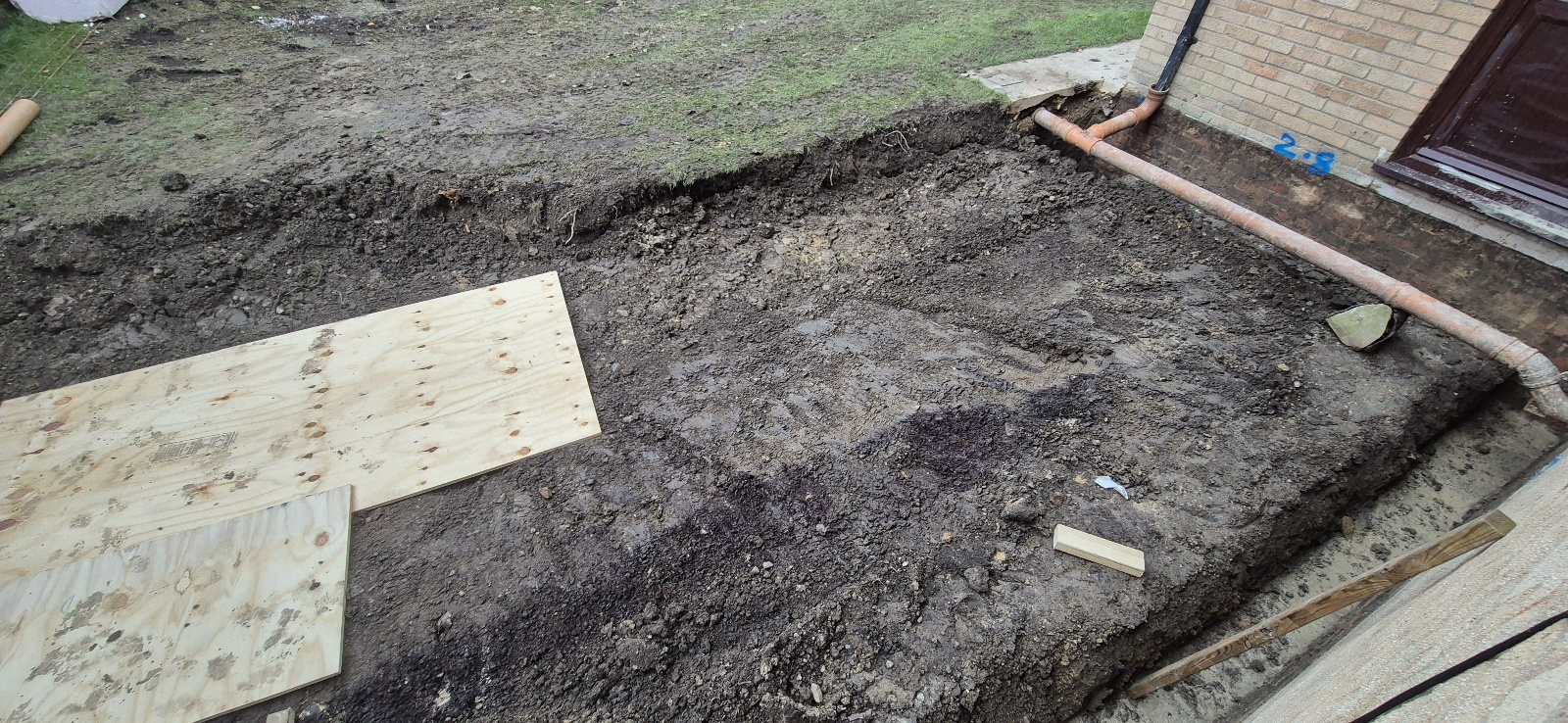
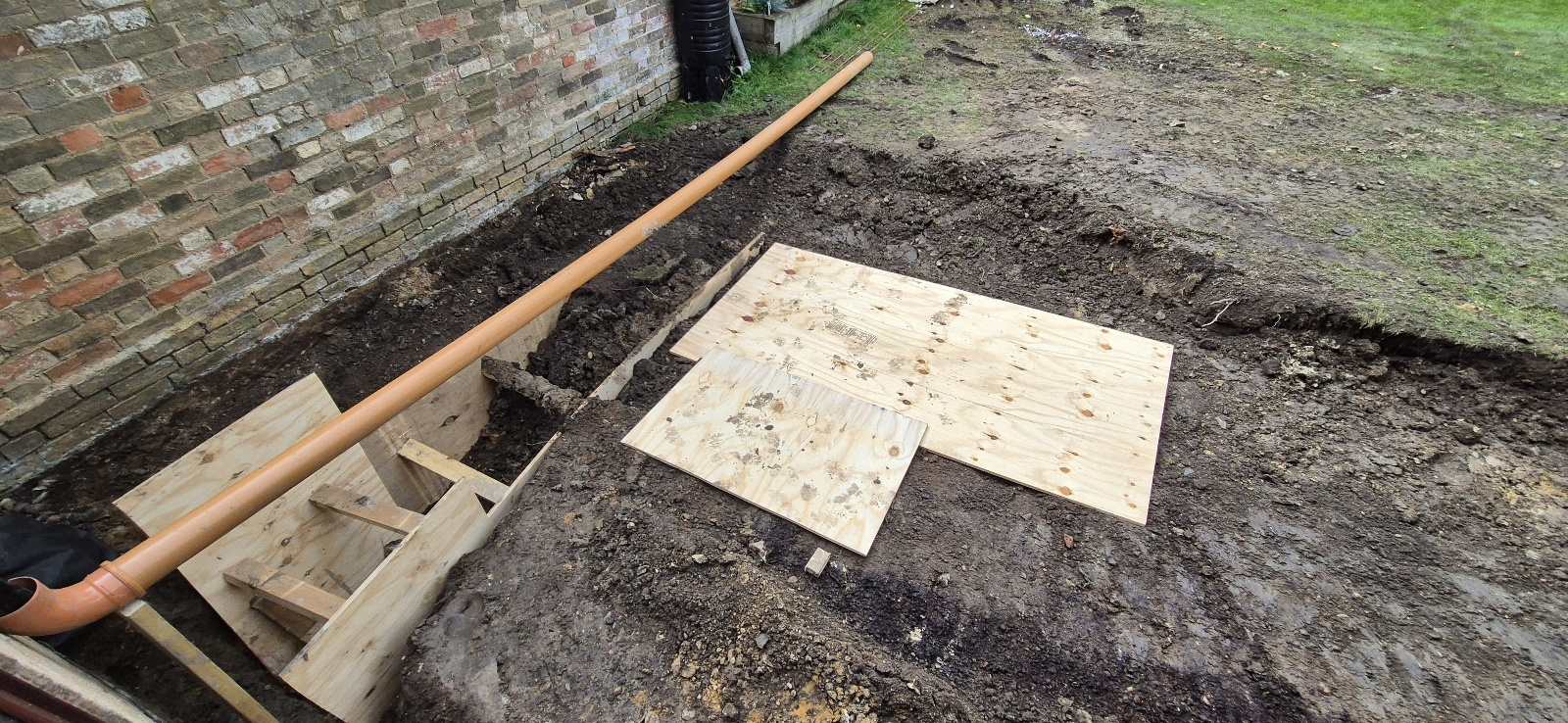
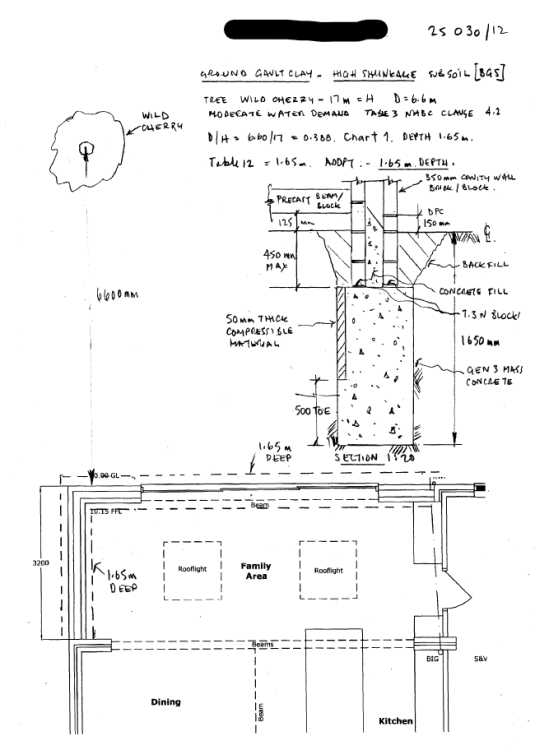
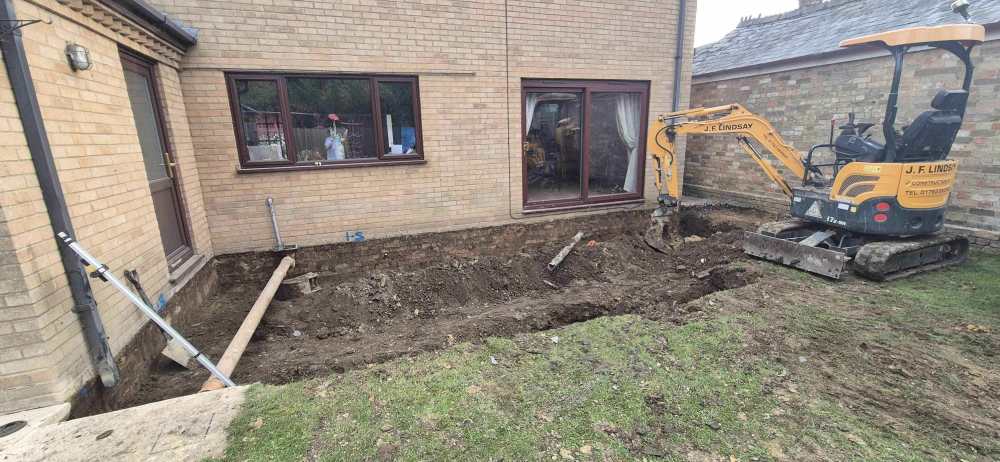
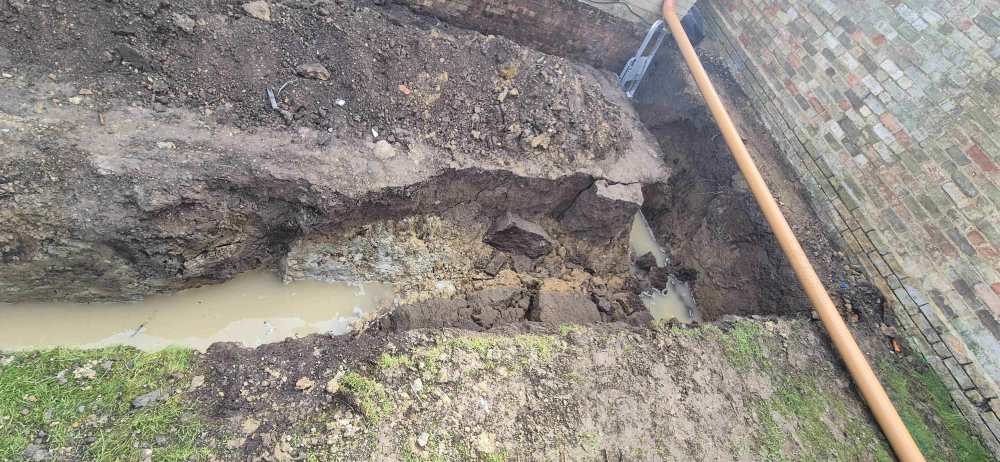
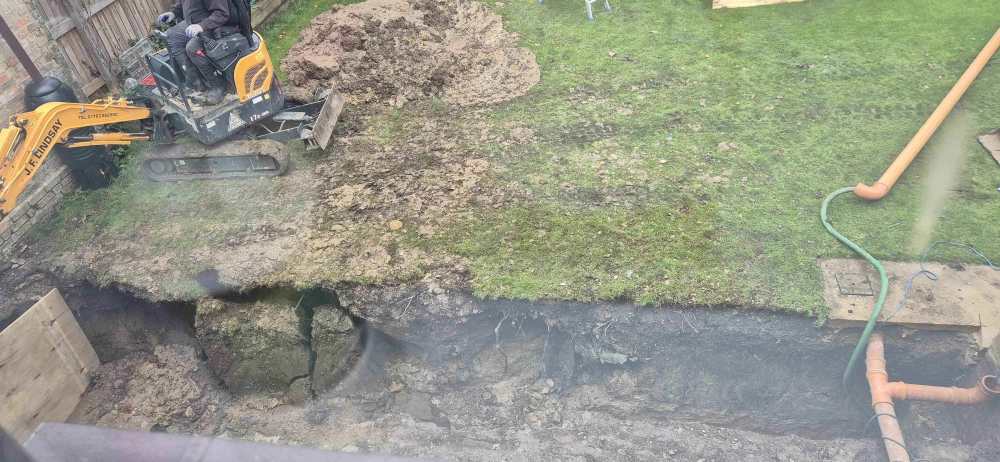
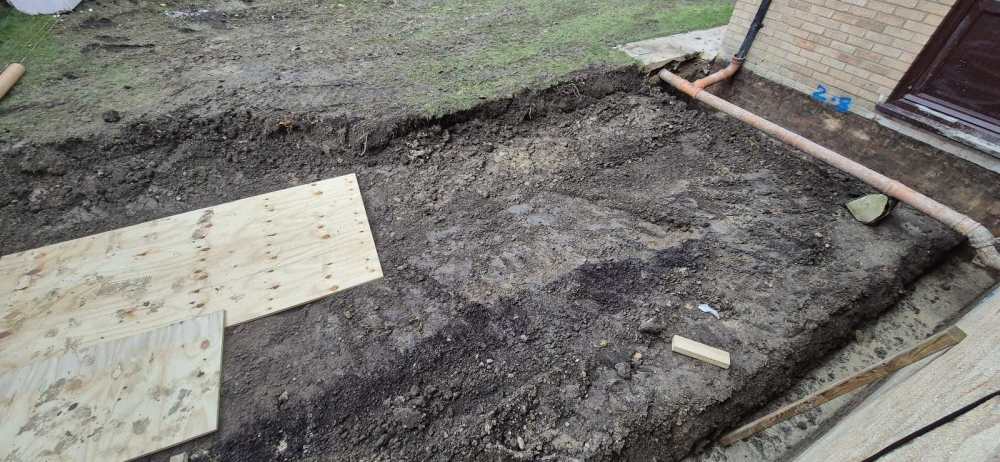
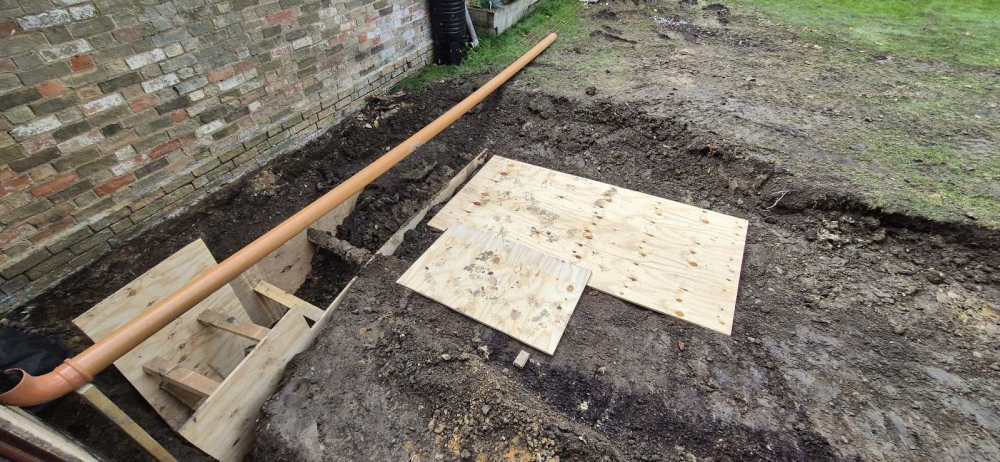
Hi All, I have been reading a lot of information on these forums, all incredibly helpful, but this is my first post. I am just starting the process of building a single storey rear extension (~7.5 x 3m) on my house. Ground type is gault clay and there is a cherry tree about 7m from the foundation location. SE drawings called for 1.65m deep foundation. We began excavation last week and had just finished it all at depth, including oversite, when one small corner within the oversite area collapsed. No biggie, plan was to dig it out and pump out any water ready for BCO inspection. Overnight, significantly more of the trench collapsed. the following day, when clearing the bottom of the trench, it was also noted that along the short side, which is close to a party wall, the ground was beginning to slip closer to the building. This was immediately shored up with ply and the decision was taken to begin backfilling the trenches before any further collapse happened, particularly ahead of the storm that rolled through yesterday. Half of the excavation was perfectly stable, and was going through the clay ground, the areas that were collapsing appeared to be a pit of soil! And no tree roots have been encountered making the whole process rather frustrating. I am at the point now where my SE has recommended we contact some piling companies and look at a piled foundation with a suspended floor. I have had one quote back so far, and they are coming in at over £10k for the piling, with much of the gorundwork to be undertaken by someone else, and then they quoted over 10K for a reinforced concrete slab on top of that, despite the recommendation for a suspended floor. Sorry for the saga, now for the questions! First of, anyone have any suggestions for ways that I could proceed with the original concrete fill foundation plan but mitigate against the collapsing ground conditions? Groundworks guys said that even with shoring or shuttering, they think the amount of wet ground and collapse that was happening before, it would be difficult to keep the trench sides stable and the bottom clear to full depth. Secondly, is the quote for piling I have received so far what I should be expecting or is it a bit OTT? It was for design and installation of 8 SFA piles and cage forming over them, no additional concrete included in that, only what was needed to form the piles themselves. They also stipulated things like I would need to arrange a 1 tonne excavator and operator to be present the whole time they are there and provide a 250mm hardcore compacted base for them to work from among other things. Lastly, if I am going down the route of piled foundations, what do i need to do about the fact that I have already had huge trenches dug and backfilled? This ground isn't exactly compacted and will continue to sink as it does so under it's own weight. Do I need to get in there with a whacker plate and start compacting and refilling the trenches as far as I can? Any help, advice or pointers much appreciated at this point as currently feeling a little lost!
.jpg.0c03e1f93735c1c0b41c1f0b0e591dbb.jpg)