Jess Shannon
-
Posts
10 -
Joined
-
Last visited
Jess Shannon's Achievements

Member (3/5)
5
Reputation
-
Yes we’ll have MVHR. Cooking will be induction or possibly a multi hob with induction and gas. Extractor hood will be re-circulating. We should have plenty of room for a large tank, and only 2 people living there. Stove will have an external direct air intake and TAS safety valve.
-
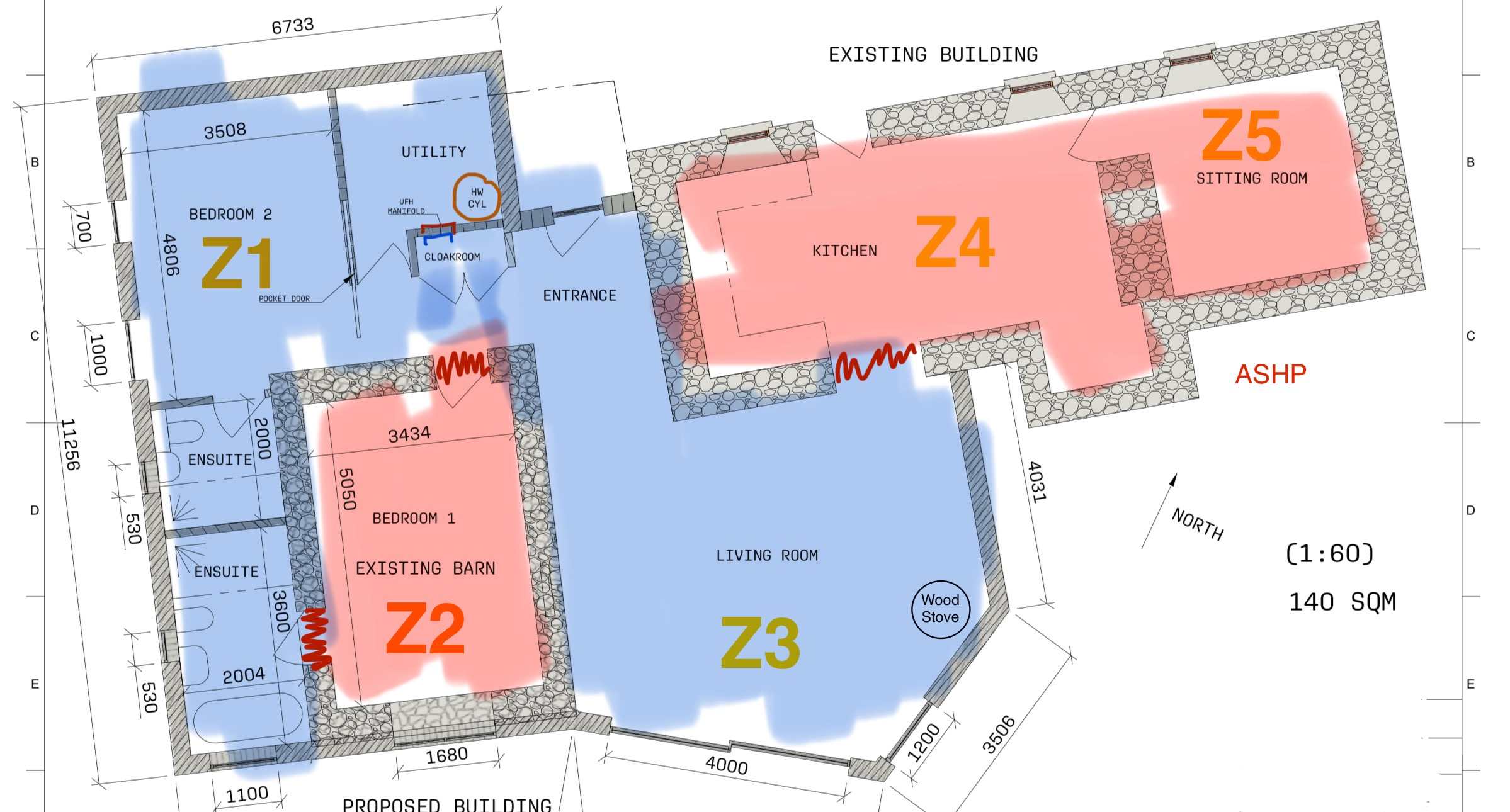
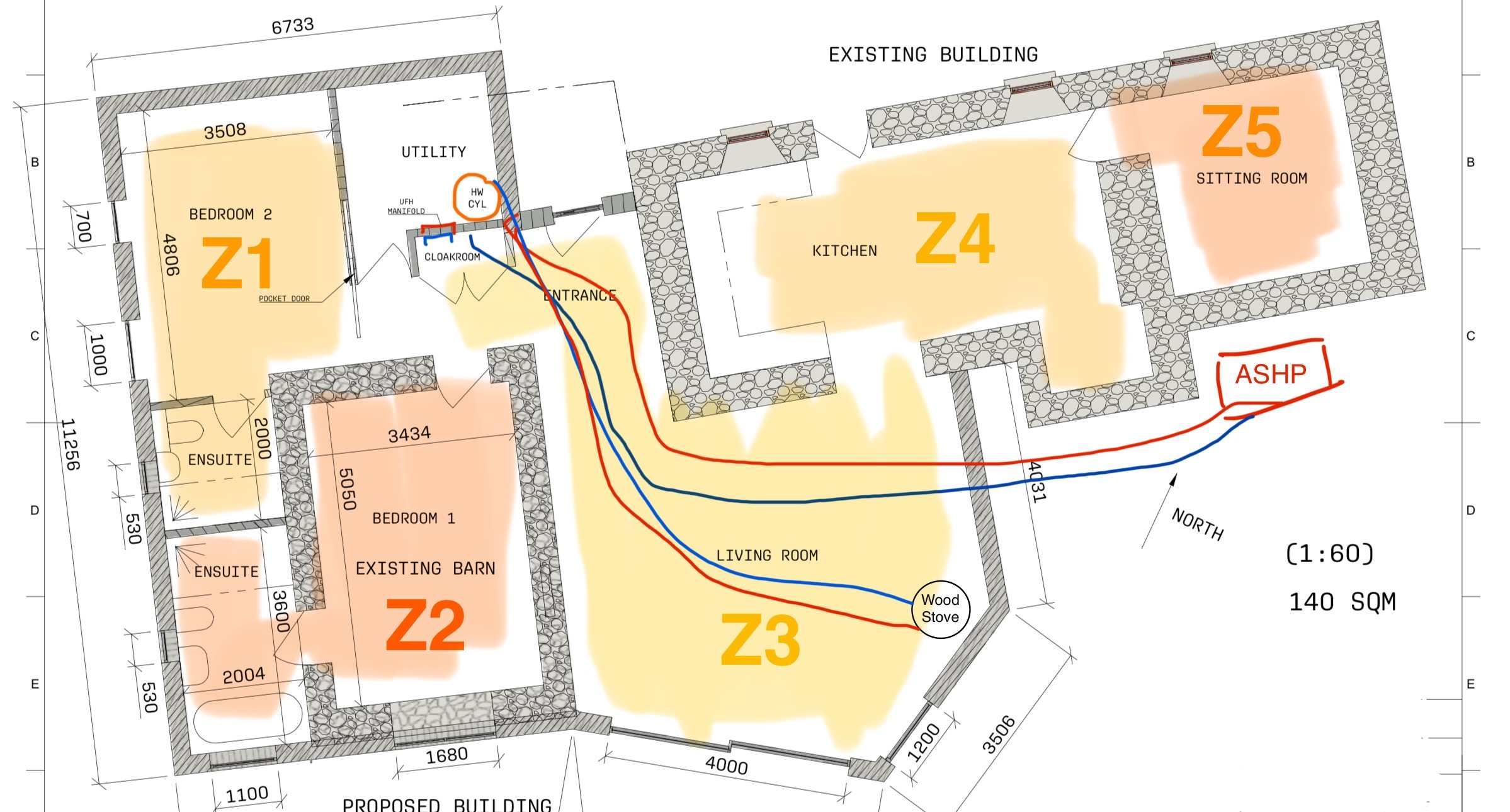
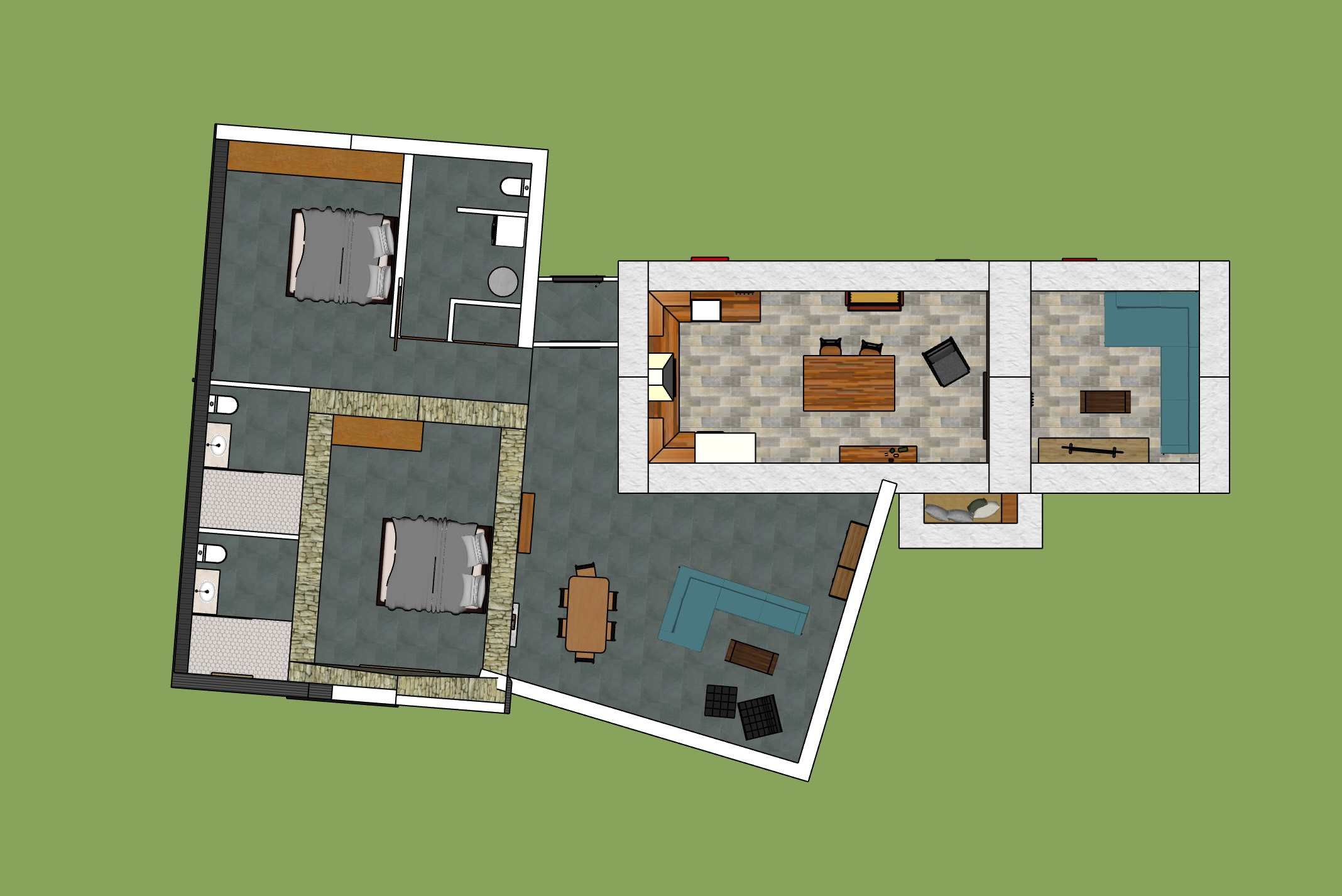
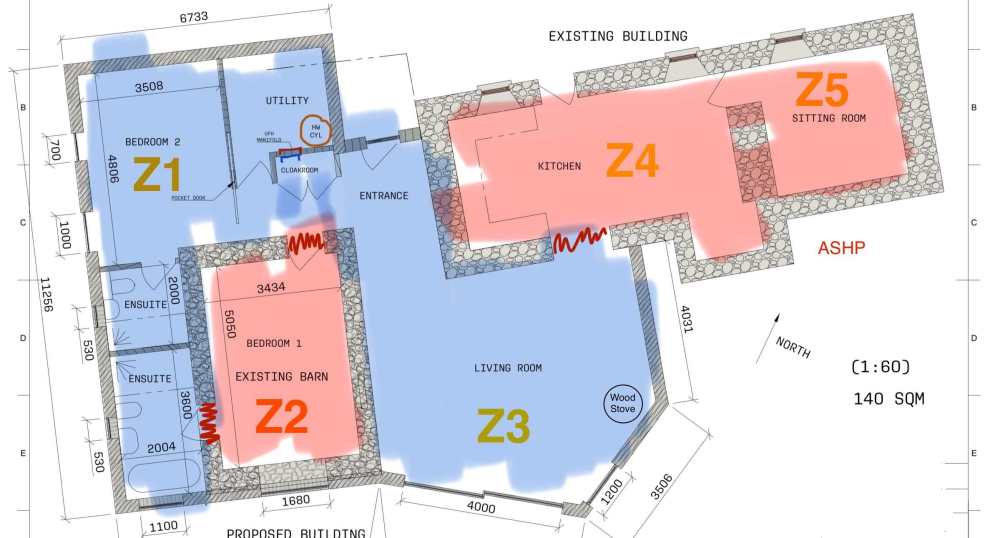
Ah sorry, that is all part of the new slab, shaded here in blue. The old floors that might need to be second phase are in red, and connecting points at the red squiggles
-
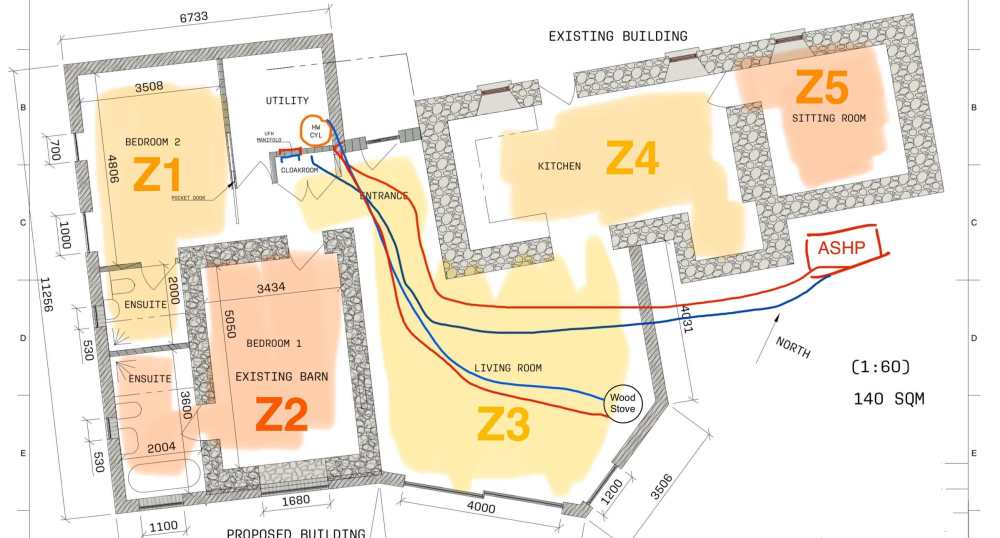
Not sure what you mean. The manifold would be in the utility next to the hot water cylinder, to the right as entering the room, the wall straight ahead will have washer/dryer etc. Don’t know yet, depends on cost/complexity. It would only be for occasional use. So far my plan is to run pipes for it in the slab, and then figure out how we want it after spending a winter in there with just the ashp. The north is facing the road and entrance into a courtyard area on the left. Where it is on the diagram is the most discrete place, could it be shade from direct sunlight with a screen, or should it really be on the north side?
-
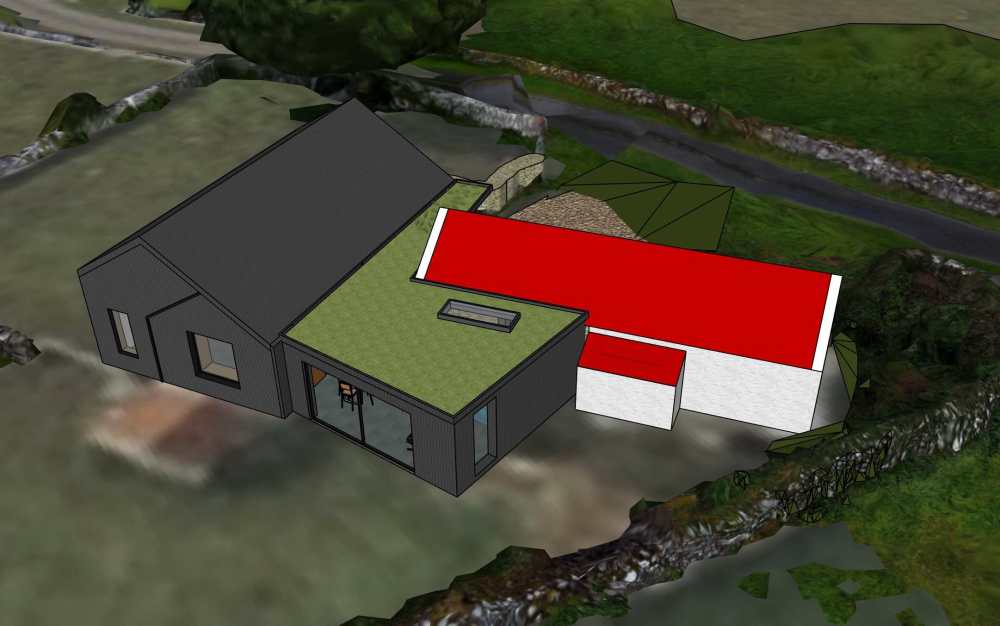
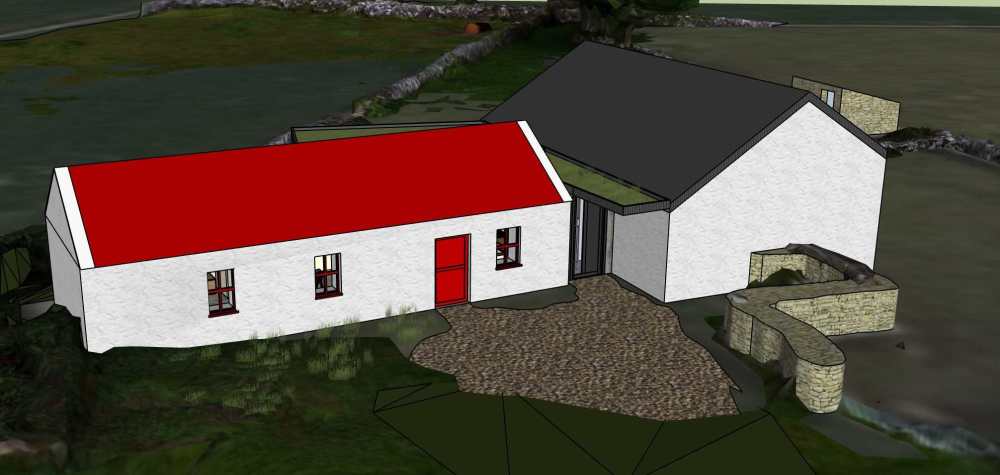
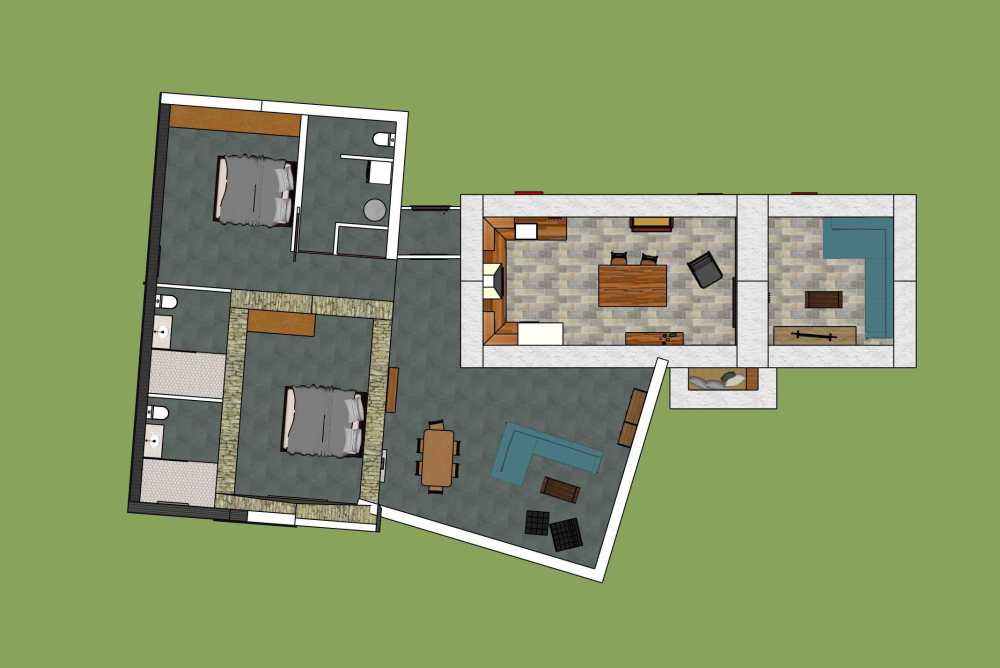
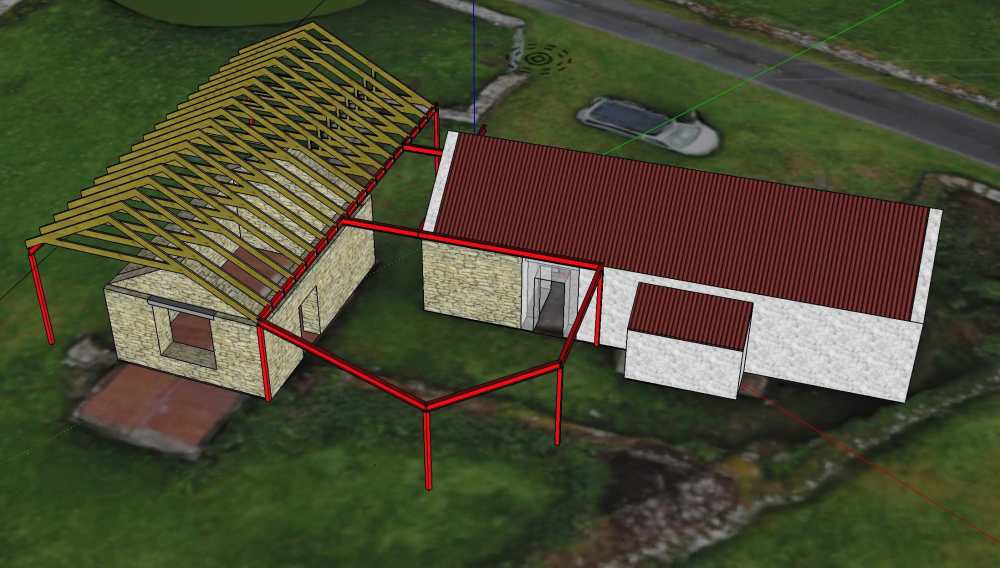
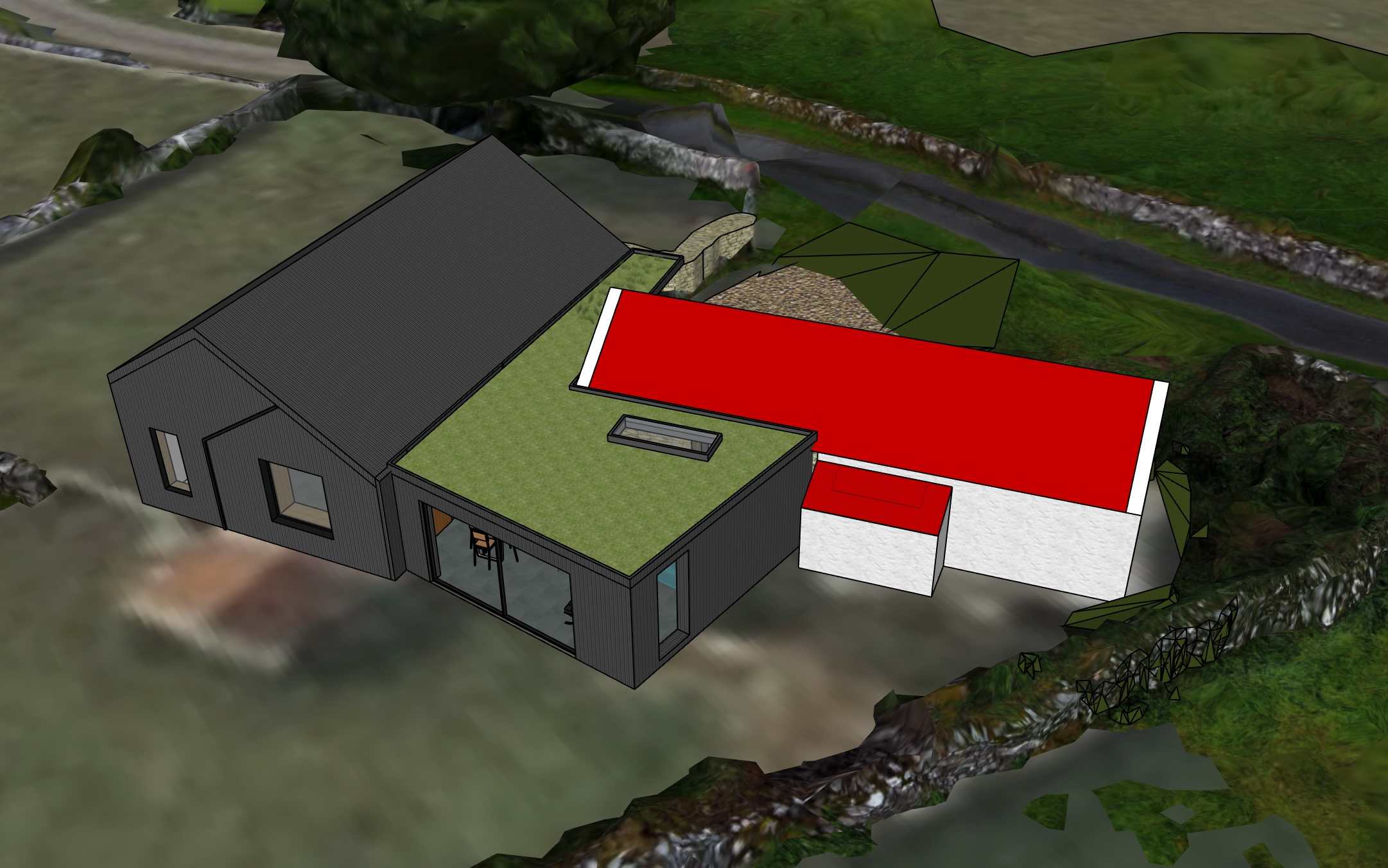
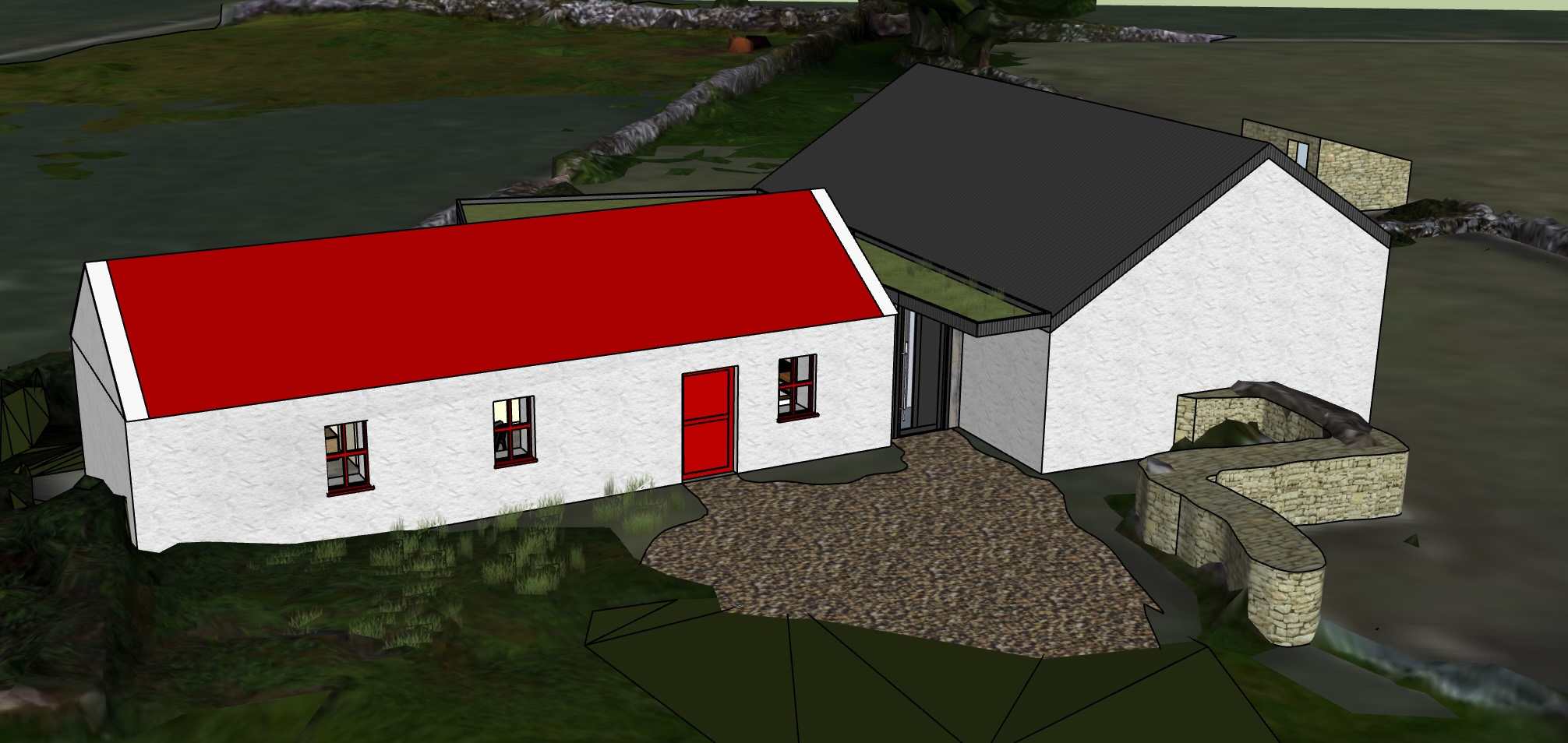
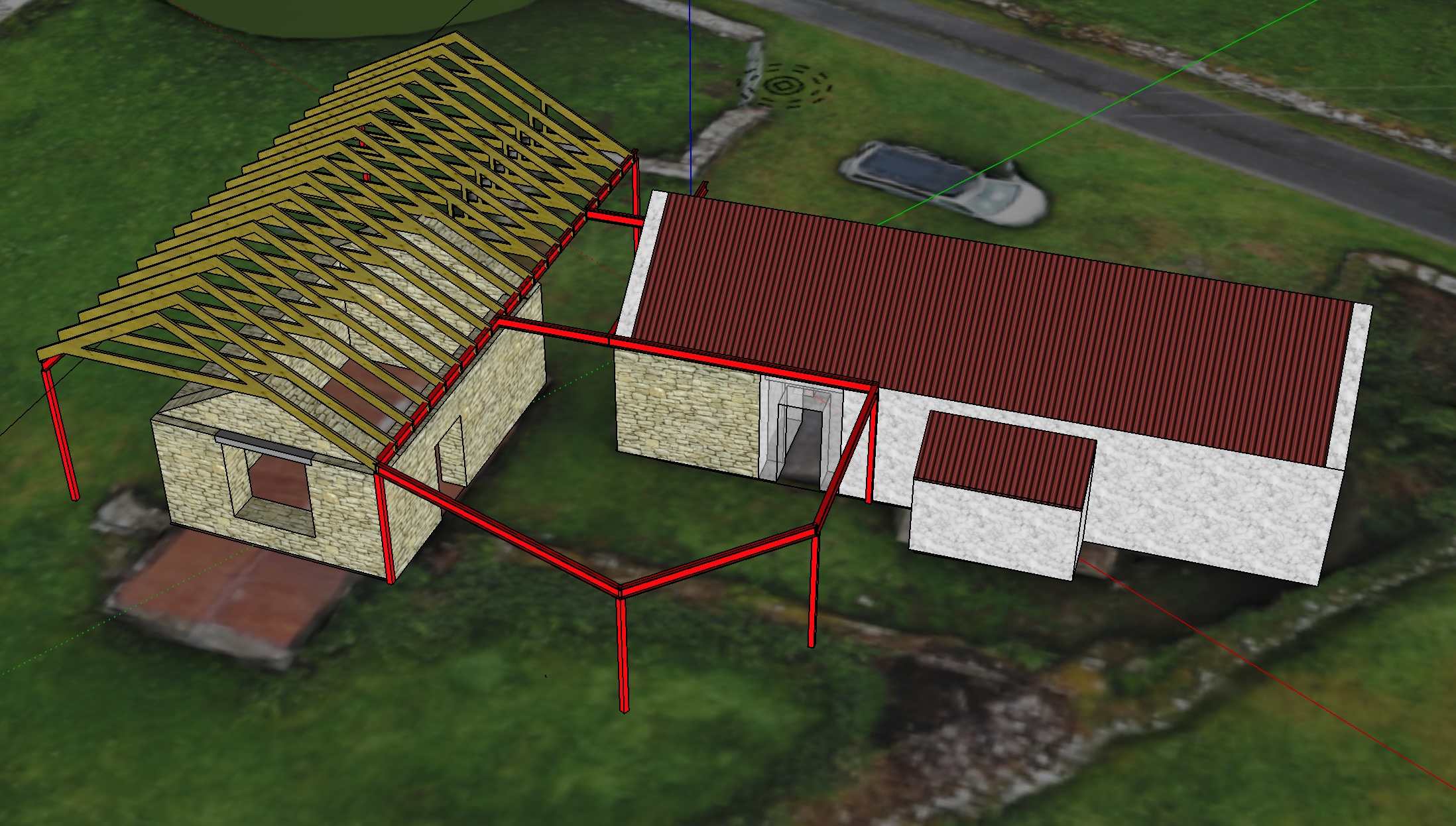
Sorry I forgot to check back on this! Here’s a drawing. We’re renovating an old stone cottage with 50cm thick stone and rubble walls, and a small outbuilding of similar construction. The new extension will wrap around the outbuilding with a larger pitched roof, and a flat roof living room links to the original cottage. The new slab foundation is Bed 2, both ensuites, utility and living room. I planned for the main manifold and hot water cylinder to be in the utility room. The ashp is over the other side though, it’s a corner out of the way that we wouldn’t otherwise use and is away from the bedrooms. I was going to run the pipes to it through the insulation under the slab and insulated through the ground at the last bit. It’s about 12-15m. We want to have a small wood stove in the living room, mostly because it’s nice but possibly as an extra heat source if the ashp struggles at any point. So we’d run pipes through the slab for that. I’ve seen some cylinders that have separate ports for stove boilers, I guess that makes it easier to get lots of heat out of it without over heating the ashp or UFH? Such as for hot running water? I was also thinking that during a power cut (common where we are) we could run the pump from a battery/generator and use the stove to heat everything. The floors in the old cottage and possibly also Bed 1 might have to be poured separately to the rest of it so we don’t undermine the walls. We could put the main en-suite on another zone and run it outside the stone wall so it’s all in the new slab. For the cottage maybe it makes the most sense to have a second manifold in the kitchen? I also wondered if it should be a separate mixer as it would have different thermal characteristics to the new slab. Could that be connected to the return from the ashp or would it take too much heat out before it gets to the main manifold? Thanks for any and all advice! (edit: we’re also putting in MVHR throughout)
-
We're planning a full renovation of an old stone cottage, with a new large extension. We'll have in-slab UFH throughout, and for the extension the concrete slab will be the finished floor. Because of the way the extension wraps around two sides of the cottage, it might be too risky to dig out both sides of the stone walls, even with underpinning. It would be much safer to pour the extension slab and inside floor separately. Would it be possible leave the pipes sticking out of the slab edge at the opening to the cottage, and then attach more pipe with couplers when completing the cottage floor and bury them in concrete. I'm worried that the connection is a failure point, some of the couplers say they are not to be buried. Would it be better to have the whole pipe loop sticking out of the slab, and then lay it down after digging out the old concrete and rubble floor. Then I'd be worried about it getting damaged. The other option I can think of is to dig out a small part of the floor to where the couplers could be hidden in an access hatch under a kitchen cupboard, or maybe slightly up the wall to be connected above ground?
-
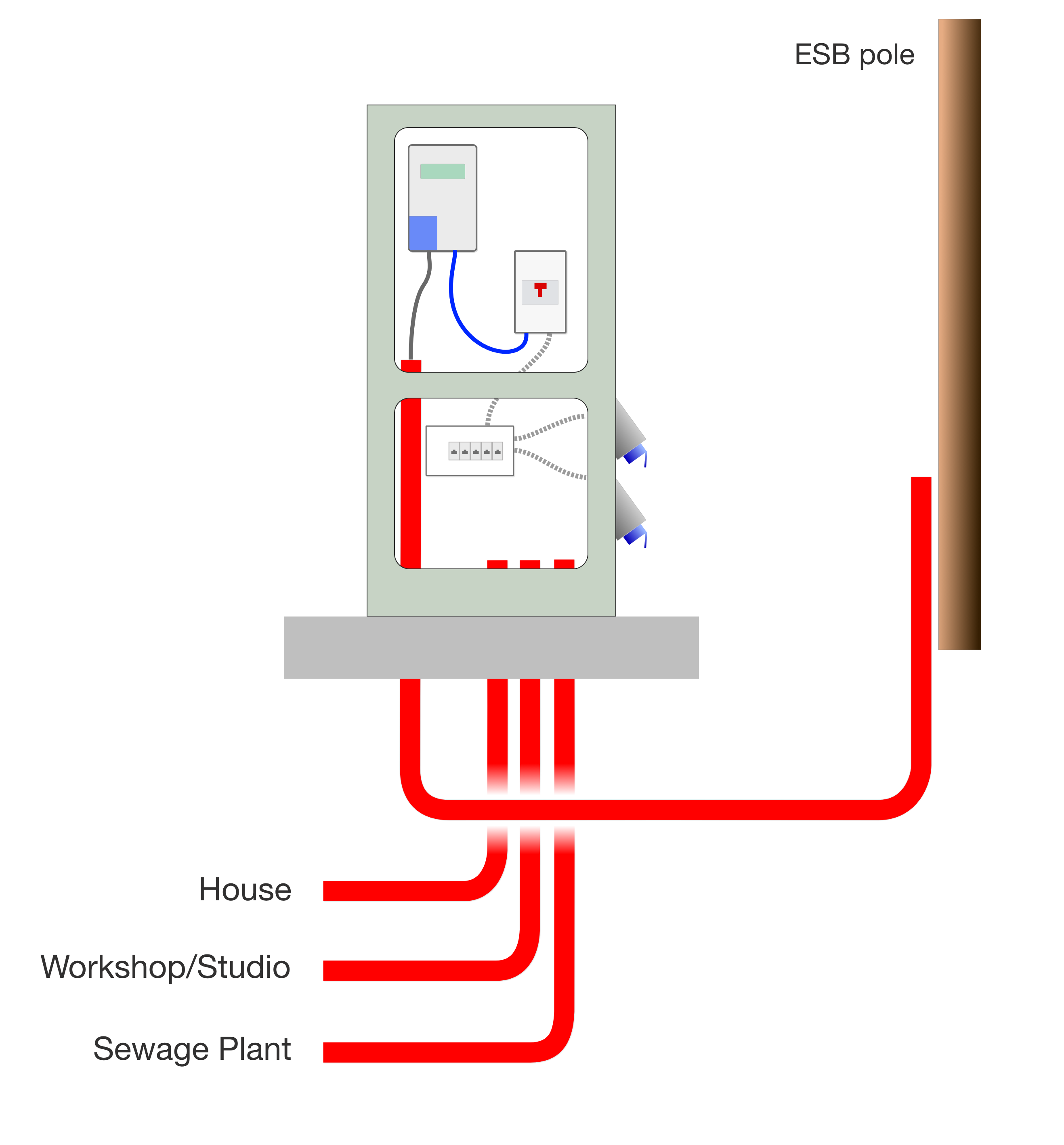
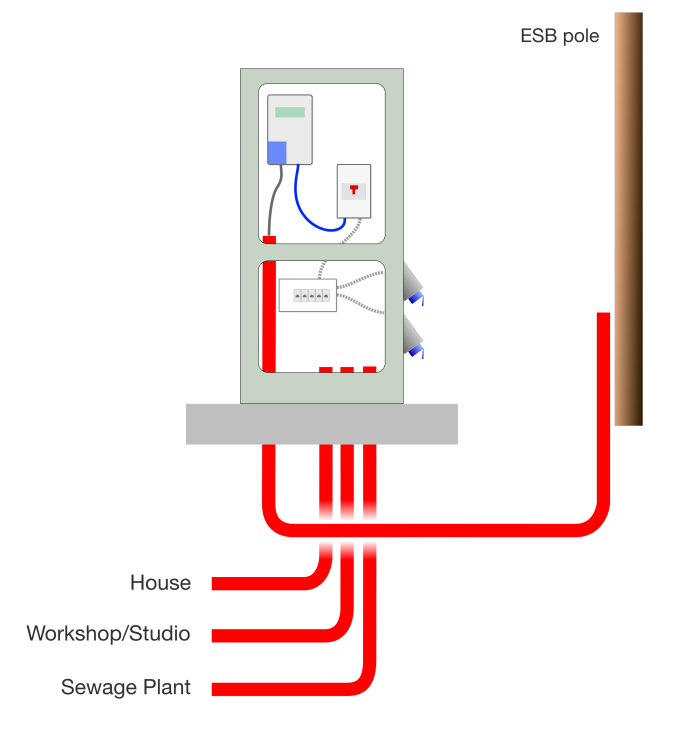
We're planning a big renovation and the electric board have agreed to install the meter in an external pillar box. This one I'm looking at has a separate compartment for our side (datasheet here). We want to have a couple of panel mount outdoor sockets (IEC309) that we can use now, before the house is ready, for a caravan and power tools. We're also getting a sewage treatment plant that has a pump and fan (should draw about 0.6kw peak). Then when the house is built we want to run the power from the box into another CU in the house, about 7 metres away. Then eventually another CU in an outbuilding for a studio/workshop space, a similar distance. We'd need a switch inside the locking cabinet to turn off the outdoor sockets. Do we need to have two separate fused isolators for those two tails going to the house and studio? Or could they share one? If we wanted to add a car charger, would that need a dedicated CU to fit into this box, or could we branch off the tails to a CU in the outbuilding or house for the charger? If we have solar on the roof and want to sell back to the grid does that change this setup? Is there anything we need to plan for when trenching and laying the ducting? Should I plan for 25mm SWA to go in for the tails? We'll be getting a qualified electrician to do this of course. I just want to understand all the implications so we don't make a problem for ourselves down the line. This is actually in Ireland, I know some of the rules may differ, but any advice would be helpful. Thank you!
-
Starting a self build and reno in Ireland
Jess Shannon replied to Jess Shannon's topic in Introduce Yourself
What would be the best option for the exterior do you think? I've seen some spray on lime renders. I'd like to be able to see the contours of the stones. Not sure if it qualifies as soft or hard stone, I'd have to ask the mason. -
Starting a self build and reno in Ireland
Jess Shannon replied to Jess Shannon's topic in Introduce Yourself
I understand! We've gone through so many different designs, trying to preserve as much of the lovely stone work as we can, make the most of the views and light at the rear (facing south) and still get the space we want. It's an awkward site with some tight angles that have limited our options. We're all looking closely at how it appears from the road as approaching. I'm not sure which episode you mean, is it the one in Ballymena with the yellow doors and windows? It's lovely. I wish we could somehow just keep the cottage as is, but it's tiny. Barely 35sqm. We're not set on the external finishes yet, so I think choosing those carefully will help. -
Starting a self build and reno in Ireland
Jess Shannon replied to Jess Shannon's topic in Introduce Yourself
It will hopefully be next spring, once we've got all the planning etc sorted Yes, around 500-600mm I think, they're very wobbly in places. I think it's all limestone. Well we've started a YouTube channel! Minty and Mortar. So far it's mostly been sorting and clearing out the previous inhabitants things, and uncovering some interesting Irish rural history. -
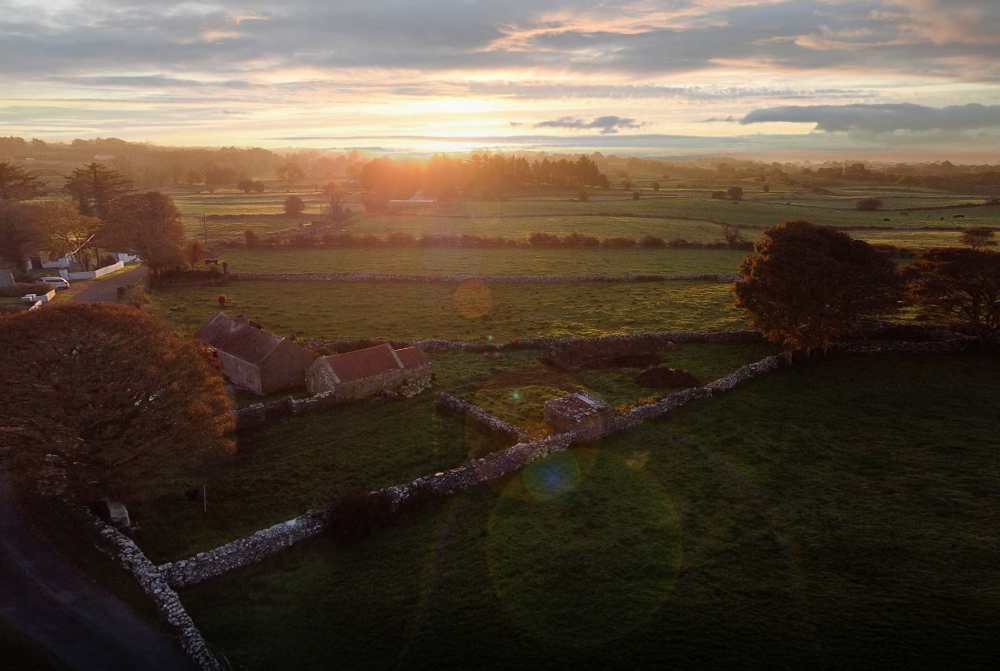
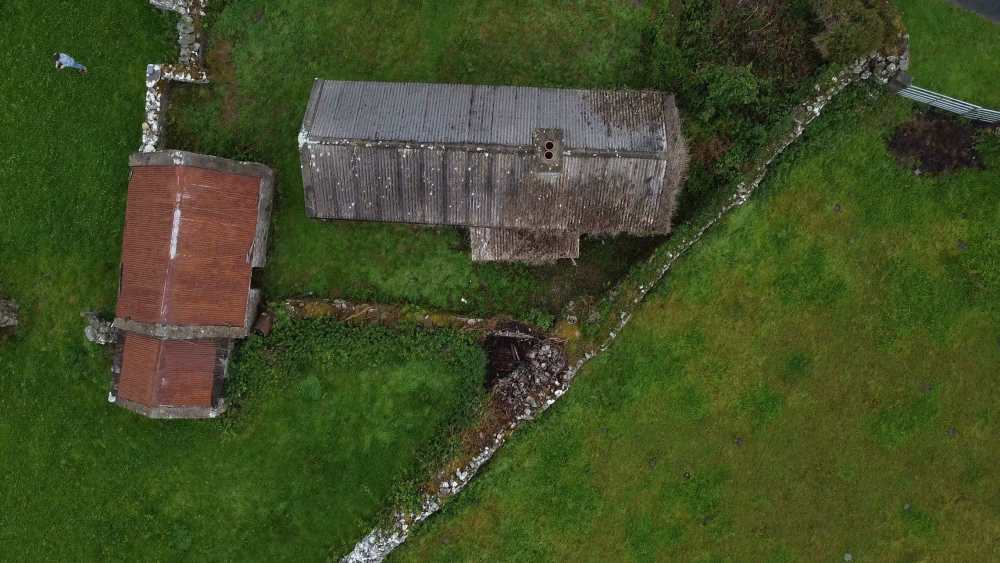
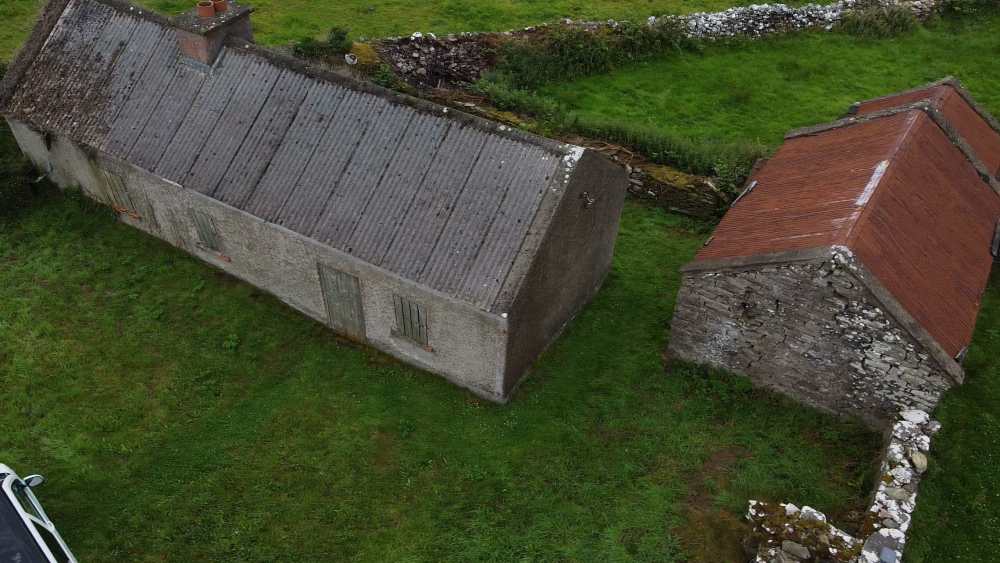
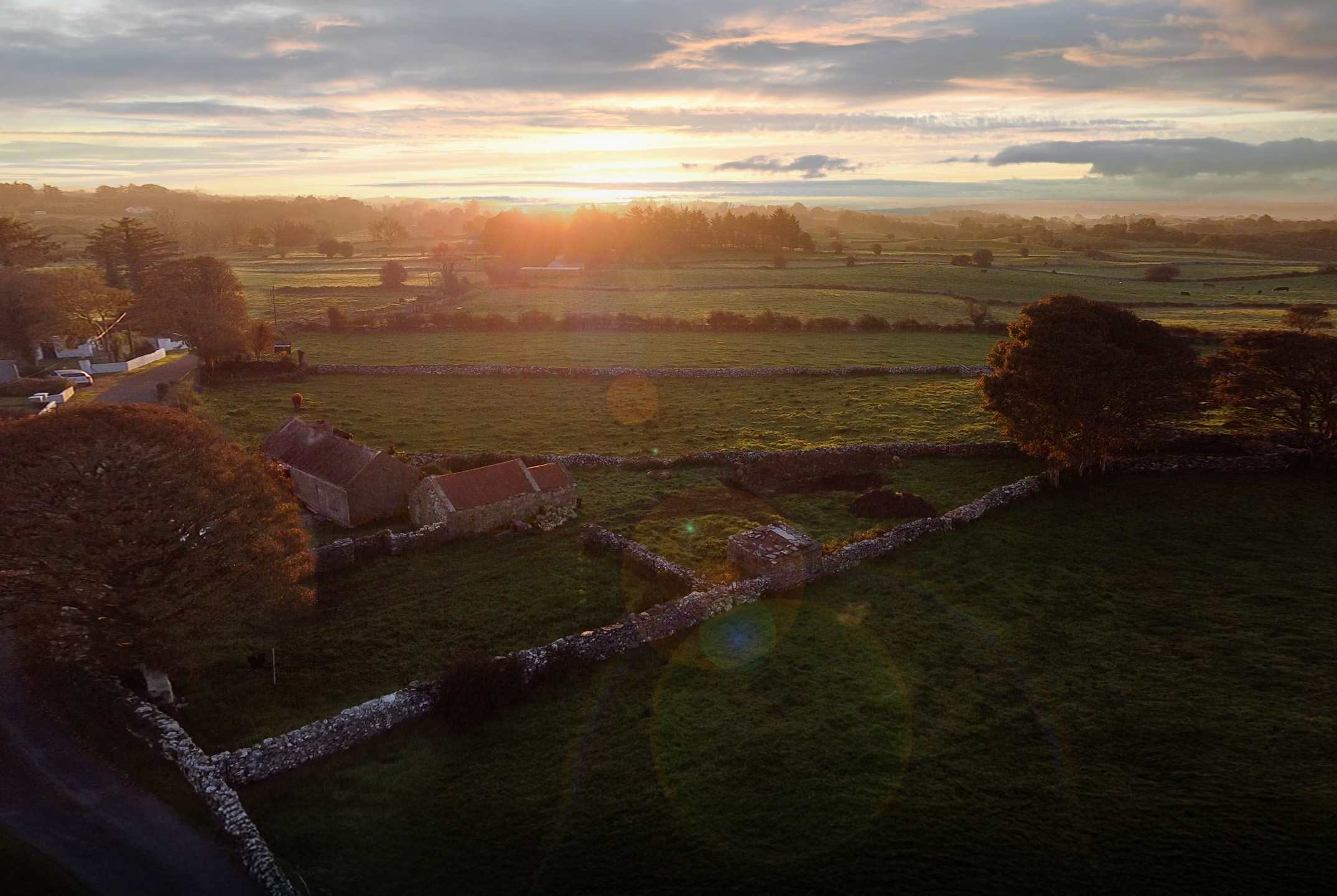
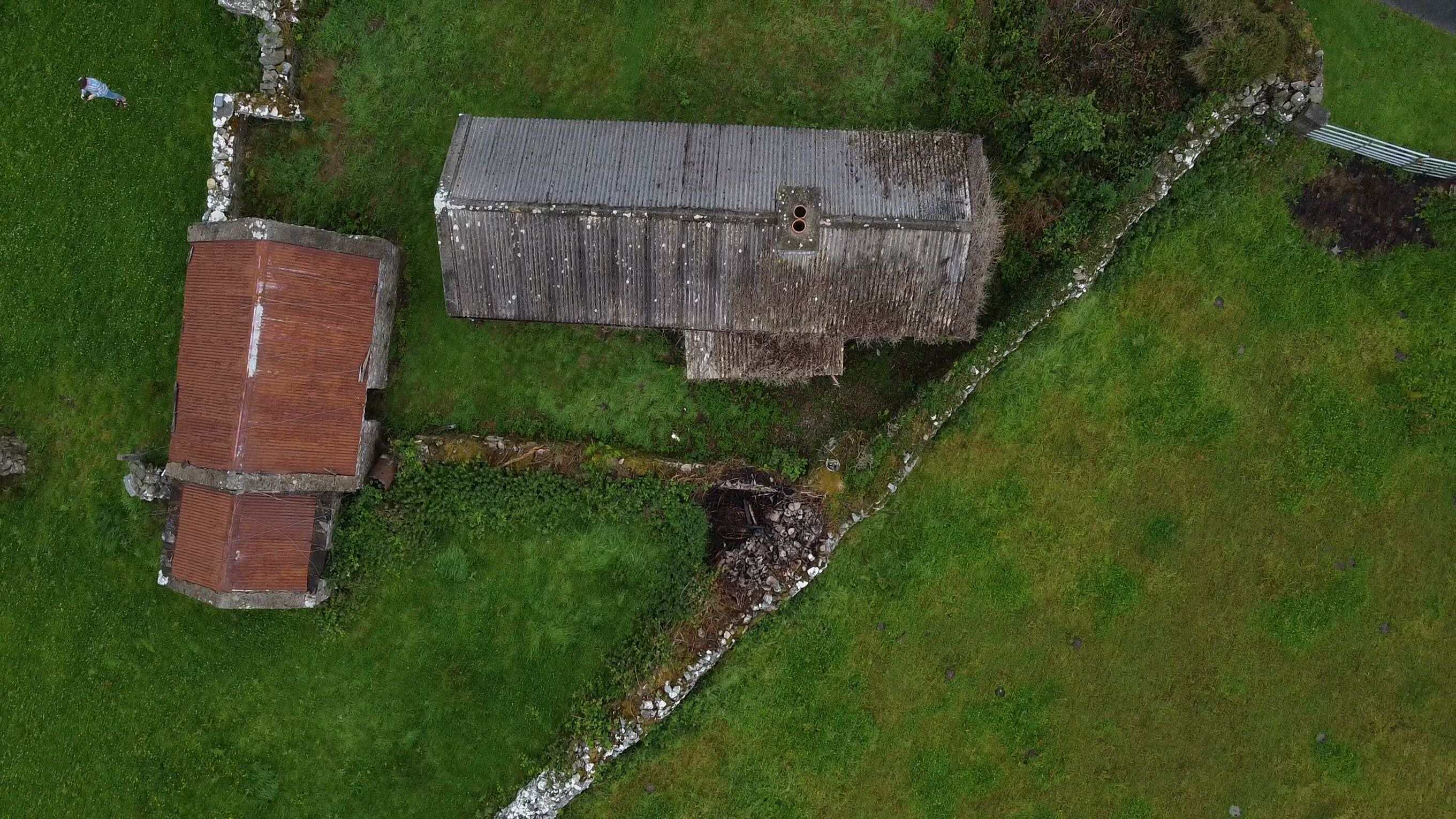
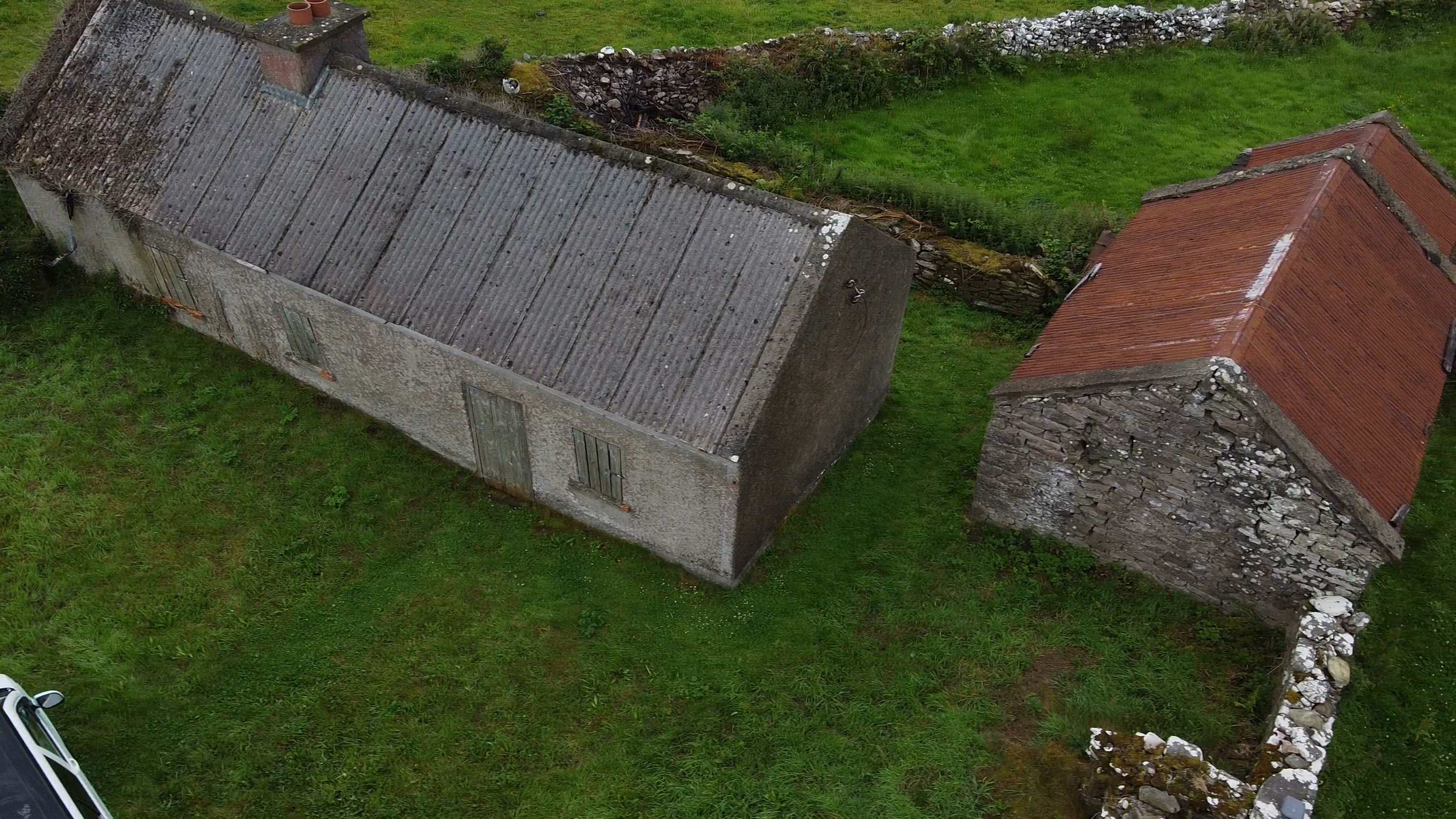
Hello! My partner and I are just starting out on our project after buying a derelict cottage in Ireland. I hope it's ok to post questions about it here, I know the laws/codes can be quite different in Ireland, but there's not many resources like this forum. We're total novices at building, but want to do as much as we can ourselves and to learn while doing it. We've had a little input from architects and a builder who will hopefully be working with us. Obviously we'll be getting an engineer involved eventually. Our starting point is a mostly untouched vernacular 3 room Irish Cottage. With countless layers of lime plaster on the walls and no plumbing of any kind. Sometime in the 70s the outside was concrete rendered, a limited electrical install was added, and the remains of the old thatched roof was covered over with asbestos cement boards. Close to the house is a small traditional stone shed. The whole area is criss crossed with beautiful dry stone walls. Our current plan is to restore the cottage in an authentic traditional way, with breathable lime plaster. But have a new well insulated roof, door, and windows. Then link it to the barn with a flat roof extension. The stone barn will be fully enveloped in a new building which extends out the other side to create a spare bedroom and ensuite bathrooms. Here's a few photos. I'm sure I'll have lots of specific questions as we go!