abernabei
-
Posts
40 -
Joined
-
Last visited
Everything posted by abernabei
-
Sagging cavity wall insulation: what to do?
abernabei replied to abernabei's topic in Heat Insulation
The company that is proposing mineral wool handed over a BBA certificate for its wool products and said they considered EPS beads but found mineral wool to be superior when it comes to failure rates. They said the reason why other installers use EPS beads is it takes half the time to install so they can do more jobs in the same amount of time. -
Sagging cavity wall insulation: what to do?
abernabei replied to abernabei's topic in Heat Insulation
thanks everyone. We have verified the concrete slabs in the ceiling separate the insulation of each floor, so at least vertically we are separated from the neighbours. Horizontal separation TBC. We got a quote from a company to remove current insulation and blow new mineral wool for 3500£ under CIGA. They say mineral wool is still their preference over EPS beads. The product is Provincial Seals CWI18 White Wool insulation. -
Sagging cavity wall insulation: what to do?
abernabei replied to abernabei's topic in Heat Insulation
ouch. I wonder how they can remove and install new one without affecting neighbouring flats, which are likely part of the same cavity and will not want to do the same works (they are renting). -
Sagging cavity wall insulation: what to do?
abernabei replied to abernabei's topic in Heat Insulation
We haven't moved into the property yet so it's difficult to say. After we removed the wallpaper a few of the first floor walls (i.e. those which are not insulated) were partially covered in black mould. Not all of the uninsulated ones though. The wall that had the most was next to the bathroom (not sharing wall surface with the bathroom, but next to it along the same side), and there was evidence of a previous bathroom leak, which I guess must have caused that. That first floor wall is actually still insulated, we believe. The first floor walls which are definitely not insulated (anymore) did not have signs of black mould, but it is also true that they were originally not covered in wallpaper, so it's hard to know whether that black mould was a consequence of the insulation, or the bathroom leak, or the wallpaper plus the wardrobes standing in front of it, or all of that together. There was only little mould growth on the exterior walls on ground floor, which are the walls where the insulation has now squeezed into, except in the kitchen area...there's so much black mould behind the kitchen units it's unbelievable. In other words, it's difficult to say whether the insulation is/was causing damp why is that, out of interest? Can they not remove it with some kind of hoover through external holes and from the currently exposed window sills? They have easy access to the cavity. -
Sagging cavity wall insulation: what to do?
abernabei replied to abernabei's topic in Heat Insulation
thanks, will keep that in mind. It will be interesting to see how they can remove and replace insulation without affecting the neighbouring (adjacent) flats above and next to us. I am not sure there's any separation in the cavities between the flats. -
Sagging cavity wall insulation: what to do?
abernabei replied to abernabei's topic in Heat Insulation
thanks Mark. What kind of insulation should I aim for? -
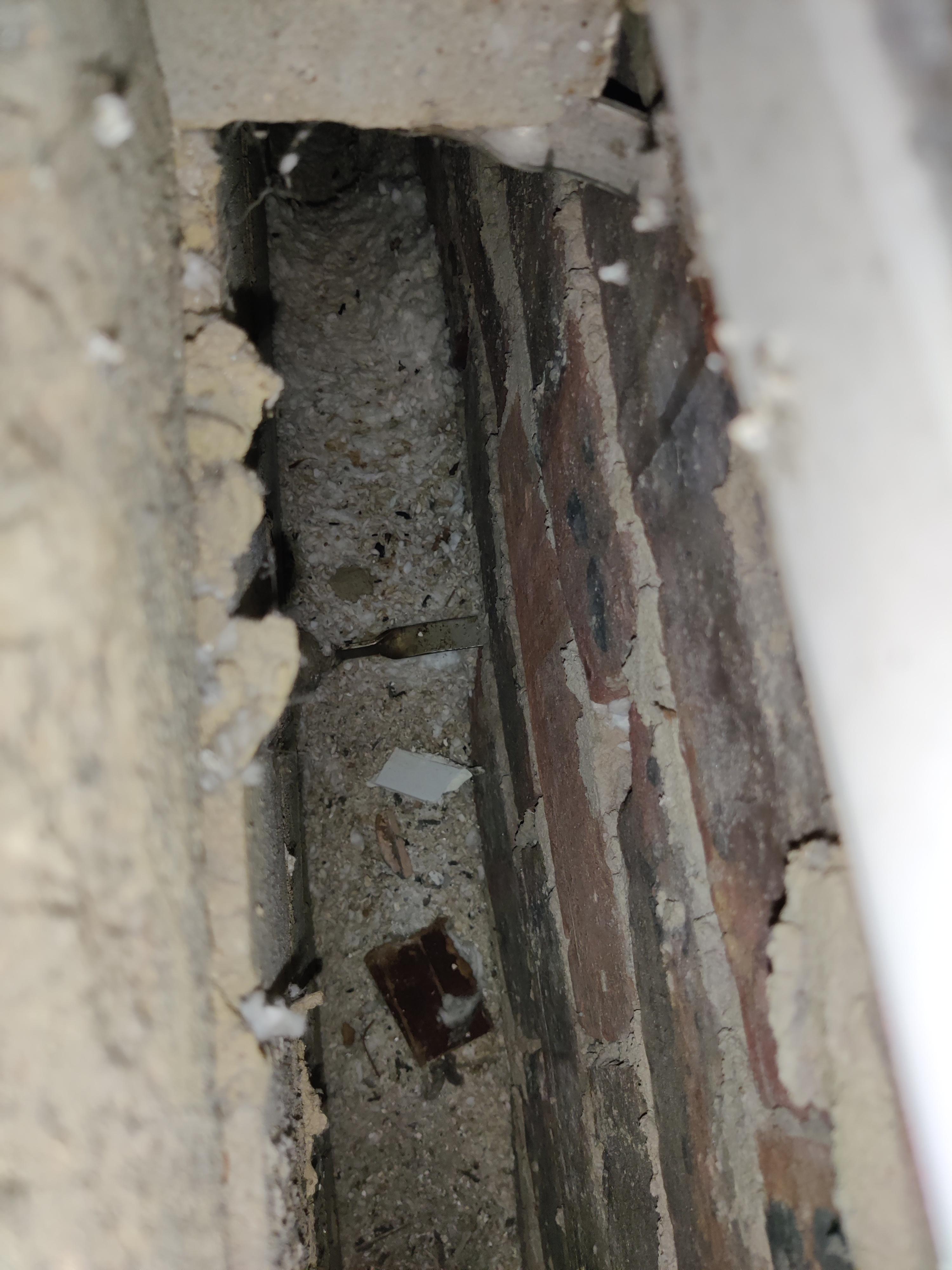
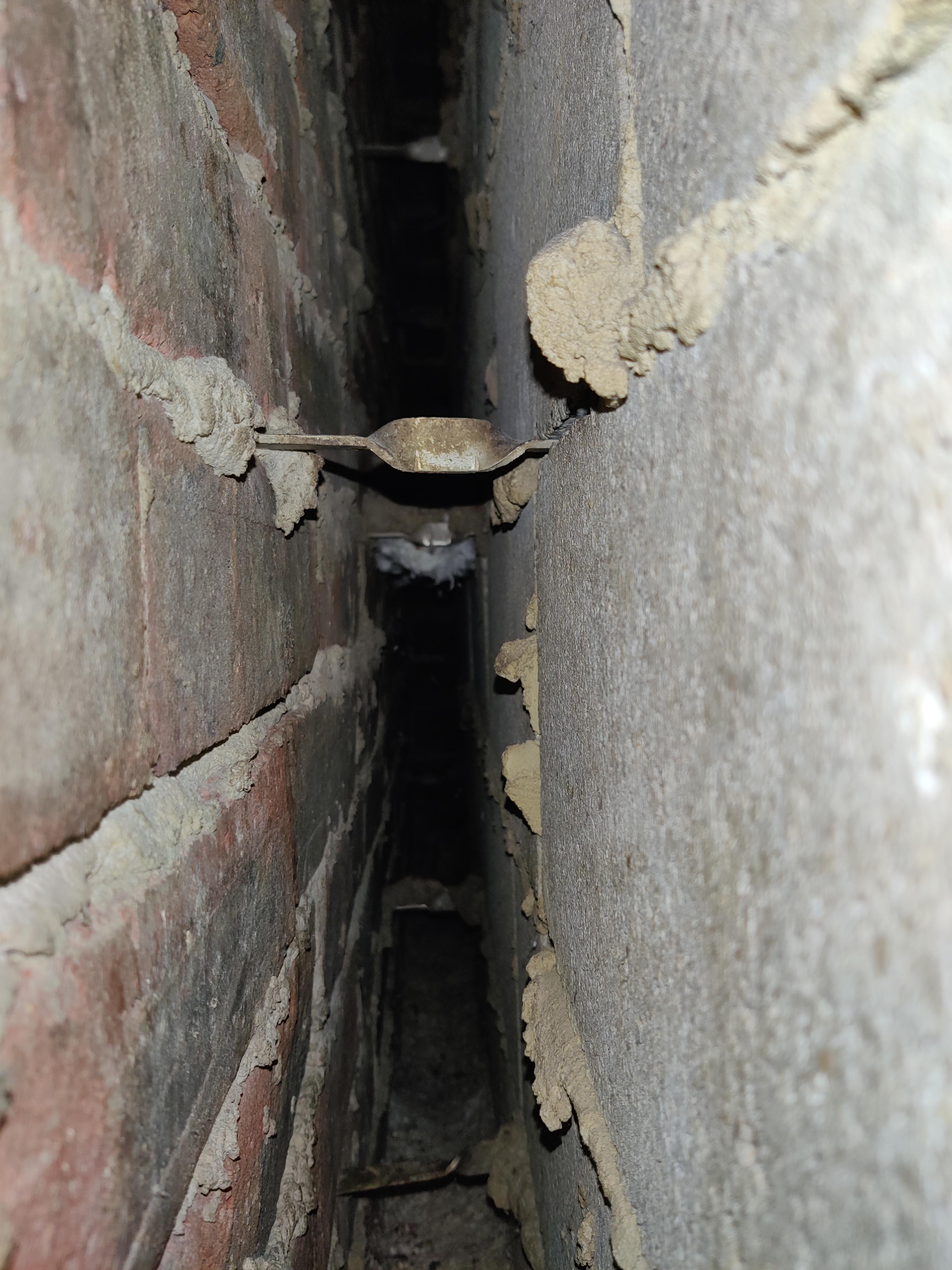
Hi everyone. we're in the middle of refurbishing a mid-60s ex-council maisonette. The property has insulated cavity wall, with a cotton-like material which I guess is mineral wool. We bought K118 insulated plasterboard (50mm phenolic board + 12.5mm plasterboard) to increase insulation and also to hide radiator pipes. However, after removing the window sills we have realised the cavity insulation has sagged in at least one of the walls (it hasn't in other likely-less-exposed-to-rain walls), leaving most of the first floor wall uninsulated. My first thought was to call someone in to top the cavity insulation up and resume our plan. However, after doing a bit of research it turns out there are a few schools of thought out there: - those who think cavity wall insulation without external wall insulation causes damp and should be removed, not topped up - those who think you should remove the old insulation and install new one Do you have any advice? What should we do? I have attached a pic of the view from one of the window sills on first floor, and another one of the section of the wall next to the window, which shows that section of the wall is now uninsulated.
-
thanks, I'll keep that in mind...is that something we could add-on without too much disruption after works are complete and we have moved in? Or does it require creating ducting in all rooms, lots of dust etc? Oh, that's very useful to know. It's my gut instinct, too...even though the U value won't be great with 1/2cm of insulation, it might still at least feel a lot better than without any, considering heating patterns etc any tip on that? I am already planning on building a DIY thermal camera to find cold spots.
-
This is actually very interesting insight as there seems to be consensus that slim UFH boards on top of uninsulated boards will lead to a lot of heat loss and waste of money. Were your bills acceptable even with the retrofit slim UFH? Yeah, I am aware of the calculator, thanks for pointing it out though I am mostly interested in advice on solutions, as I don't have a U-value target I am aiming for, there are pros and cons for all choices of U-value. That is true. I suppose my question is more about trying to understand how bad things will be if we put little or no insulation. Ventilation strategy...none, at the moment any good primer?
-
Low carbon retrofit project in ex-council maisonette
abernabei replied to abernabei's topic in Heat Insulation
any other advice? -
anyone?
-
Hi everyone, we're looking at insulating the floor of our ground floor maisonette. As discussed at UFH isn't really an option for our property unfortunately, so we're looking at whether we can improve anything before installing new flooring and radiators. Ceiling height is already low-ish (235, might drop to 230cm if we have to go for a second ceiling). Does anyone have advice on low profile insulation boards that might fit our use case? I was thinking of going for 20mm XPS boards, or maybe Aerogel? then possibly adhesive and tiles? Or would laminate work better given the low floor insulation? We're also looking at infrared ceiling panels as a heating option for the ground floor, does anyone have any opinion on those? As far as walls are concerned, the current walls are 10cm concrete block, 10cm insulation (white cotton-like material, mineral wool?), then decorative bricks. The plan there is to install Kingspan K118 insulated plasterboard internally, 37.5mm (25mm 0.019W/mK plus plasterboard). Is that a sensible plan? or should we consider a different product or a thicker option?
-
Low carbon retrofit project in ex-council maisonette
abernabei replied to abernabei's topic in Heat Insulation
It's not too bad on first floor, is it? 10cm insulated cavity and additional K118, it should go below 0.19 U-value as far as Kingspan's technical team advised over the phone (unless I am misremembering), assuming the cavity insulation is mineral wool. Not a passivhaus. sure thanks for confirming...disappointing but we'll deal with it. Any advice on floor insulation that might work for this property, given the restrictions? I have also been wondering, is there any chance this property (maisonette, mid 60s) has DPM? Could it be they built it with the assumption the bitumen adhesive of the tiles would work as vapour barrier? (if that's the case, we'd have to replace the asbestos-containing bitumen with something else). We are insulating internally with insulated plasterboard, K118. No plan for airtightness 😅 Happy to look into cost effective measures I found this article which seems to kind of hint at the fact that 25mm XPS insulation *might* be enough to have a reasonable heat loss with UFH? https://www.homebuilding.co.uk/advice/retrofit-underfloor-heating The "Conclusion" section of https://underfloorheating1.co.uk/blog/article/do-i-need-to-insulate-with-a-retrofit-system also hints at the fact that 25mm XPS insulation *might* be enough to make UFH not a complete waste of money? -
Low carbon retrofit project in ex-council maisonette
abernabei replied to abernabei's topic in Heat Insulation
that's actually a very good point you bring...part of the reason why we were installing K118 is to be able to hide the radiator pipes, which are currently everywhere and cannot be hidden without chasing the softblock. So the assumption is radiators will still be on exterior walls, however there's 10cm insulated cavity and 25mm K118 + plasterboard, so that should be good enough? All radiators are currently under the windows -
Hi there, we have recently bought a ground-floor maisonette. The property was built mid-60s. The floor is concrete, as far as we can tell it's got about 5-6cm of screen, then it's currently got bitumen adhesive (asbestos-containing), tiles (asbestos-containing), and laminate on top of that. Walls are 10cm cavity walls (internal softblock, external bricks) filled with some white cotton-like material that I guess is some kind of mineral wool. On top of that there's dot-and-dabbed plasterboard. We've been looking into modernising the property. We're thinking of installing Kingspan K118 to exterior walls, 37.5mm. For the ground floor, we really wanted to get UFH however I am not sure what options we have: ceiling height is currently 235, which is already not a lot, so installing 10-15cm of insulation plus all the rest of the flooring on top of it isn't really an option. Removing the screed would give us those 5-6 additional cm, but I have no idea if we can go below that, given it's not a freehold and it's not an independent house. Even removing the screed, that would probably not be enough space to give it the level of insulation everyone on this forums advises to go for. I had a look at the very informative posts on this forum and it seems like solutions like Total-16 or any other retrofit hydronic would just lead to a massive downward thermal loss. What options do we have? Is there any way we can get UFH and keep reasonable ceiling height? If we keep radiators, what would your advice be regarding floor insulation? Would it make sense to have a 5cm insulation layer? I suppose that might help, given the T delta with radiators is not as wide as with UFH. For the first floor we're looking at buying radiators with 2.5x recommended BTUs, in preparation for the ASHP.