osprey
-
Posts
64 -
Joined
-
Last visited
Everything posted by osprey
-
My preferred aluclad supplier for glazing for an extension I am having built will do supply/delivery only. So I am looking for an installer, plus any advice! The sliding doors are 3m x 2.3, so heavy, and expensive. There would be one window needing installation as well. Location is in Dorset, South coast. Any suggestions welcomed!
-
Thanks for replies. I like idea of being able to see a clear cavity when being built, with no fear of batts slumping, outgassing, not being joined properly etc. What worried me was the unfamiliarity of builders with the idea. And, of course, the familiar 'you need a clear gap'.
-
Just checking: I have an extension being built soon, and I over-rode the architect's initial plan for rendered block-block wall, with 100mm cavity (half filled with insulation boards/batts) and 50mm insulating plasterboard inside. I requested 150mm cavity with full-fill EPS bonded beads injected after construction. Reasons being, lack of control of batt insulation, dislike of thick insulation inside, more likely to avoid cold bridges etc. Also because existing house has 50mm bonded bead injected, so familiarity with that product. Am I mad, or is this a reasonable approach? I think I may have some doubting builders.....
-
No problems at all! If I could have found the grey beads I would have used them, but had to make do with the ordinary white ones. I did put a thin layer of rockwoll lot insulation of top, prevent them blowing about, but probably not needed.
-
Interesting. Any idea why it didn't work out?
-
By the way: are we just talking about traditional UFH (buried in thick screed)? Retrofit overlay UFH suppliers claim they are more 'radiator-like' in that they respond quicker, and can handle higher temperatures (high 20c's?) depending on floor covering.
-
@Johnmo Doubling the size of the rads would be problematic: they would start to dominate the room! They were probably sized for the house with no insulation, and CWI has allowed me to keep warm with flow temperature of 50-55c this winter (and we had a few cold days) but 40c would be pushing it.. 15mm pipe feeds to all (off larger distribution pipes).
-
@Johnmo Interesting. I know the more the better with insulation, but I understood 100mm pir was enough for retrofit. The new block and beam floor will have whatever insulation is required for Part L, I guess: would it still be worse? Yes, gas boiler, that will be replaced anyway. Thanks for constructive comments.
-
I am driving myself crazy going around in circles with this, so am appealing for opinions. I can't settle on a heating scheme for my house/extension. I want to future proof it if possible, but do not want a cold house, obviously. Current house is 1926 build, 50mm cavity, outside rendered, two story detached. Suspended wooden floors. Floor plan is 'L' shaped, 10m on long sides. I am planning a 5m × 5m extension, to make the footprint square, which will create a 10m x 5m kitchen/utility/dining area. The 5 x 5m extension will be 150mm cavity eps beads, floor block&beam. The house has had its 50mm cavities filled with blown eps beads, and the old kitchen area will have 50mm IWI added during extension build. It is possible, in the future, to add 50-100mm EWI to the house side walls. The front has bay windows, making EWI impracticable. I have added 100mm pri under one existing room, and plan to do the second. Hall will be done when extension is built. So, question: UFH to extension+kitchen? Whole ground floor? Stick with radiators? Rooms have 2.8m ceilings, so can take 20mm or so build height of retrofit UFH, but have heard various stories (positive and negative) of effectiveness in old houses. Current Lounge has carpet, which I would like to keep. Thanks.
-
I DIY'ed it. I had house cavities done just before, but guys injecting the beads said they 'were not allowed to' inject flues, even if capped off, 'in case somebody wanted to use them in the future'. I was about to have the roof replaced, so I bought a few bags of eps beads (sadly not grey, but an individual cannot buy them for some reason) off ebay, climbed the builders scaffolding, and poured them in. They flowed easily, and it was quite enjoyable!
-
My chimneys had the stacks removed to loft level, and I filled the flues with eps beads. I did not want warm room air being vented into the loft space. The chimney breasts are external (I.e. stick out of the outside wall) and I was surprised at the size of the void that was either side of the flues. I needed more eps beads to fill those.
-
Interesting. I have just had EXACTLY the same problem. The membrane? Roofshield.
-
Thanks, intereting they work, but I am not sure how. The e.g. Spax screws have two different threads. I assume the lower, coarse one bites into the joist first. The screw then goes into the joist until the fine thread reaches the chipboard. The next couple of turns of the coarse thread would be sufficient to pull the board in tight, but the fine thread would be 'travelling' more slowly (taking maybe four turns to travel the same distance). Would it not just rip its way through the chipboard?
-
I have seen that type of screw advertised, but I have not heard if they work. I have seen the theory that a screw with a smooth section above the thread helps in pulling the sheet to the joist firmly. I am not sure how the top thread in that screw works.
-
Hmm, might try that.
-
Thanks.
-
Just looked at that site, very useful. Just a thought, If screws cause the squeak, and you glue t&g sheets together, do you actually NEED screws? Just have a floating floor?
-
Thanks all for replies. When people are saying 'glue' with chipboard, is that for just the t&g? I have read of people gluing the sheets to the joists as well... Those using OSB: I can only find 18mm t&g. Did you use t&g? I would have to add 4mm to the joists I guess. Any DISadbpvantage to using OSB? Chipboard seems to be the 'standard' even for (cheaper) newbuilds. What screws do people use? There are special ones for flooring chipboard, with a smooth part at the top, 'to make boards be pulled to the joists firmly'. Other people say fully threaded. Other suggestions: I don't have access from below. Interesting idea about punching nails down. Will think about it.
-
I want to insulate under a suspended wooden floor of a 1920s house. No alternative but to lift floorboards, which will destroy them. The question I have is: what is the best replacement? Current original floorboards are 22mm thick. Skirting boards are large, and will not be removed. I have done one smaller room and used 22mm chipboard from Wickes, but since have seen lots of reports of squeaking using this board. I have it slightly in one place so far, but dread it in a larger, more frequently used room. So for a robust squeak- free floor, what do I use: OSB, ply, chipboard, new softwood boards, other? Cost needs to reasonable. Room is about 5 x 4m. Floor currently carpeted, and will remain so. Thanks.
-
Over facia vents- what's wrong with this picture?
osprey replied to osprey's topic in Roofing, Tiling & Slating
Yes, it doesn't seem to be doing anything in the way it is mounted. The house is from the 1920s, and not vapour-sealed in the loft. I asked the roofers if facia top vent strips would be a good idea, and he didn't say the membrane would be sufficient, he just included the vents. My thought is that they either should be installed properly (under the membrane, with felt support trays and drip protection) or not at all. -
Over facia vents- what's wrong with this picture?
osprey posted a topic in Roofing, Tiling & Slating
I am having my roof replaced. The ventilation doesn't look right to me..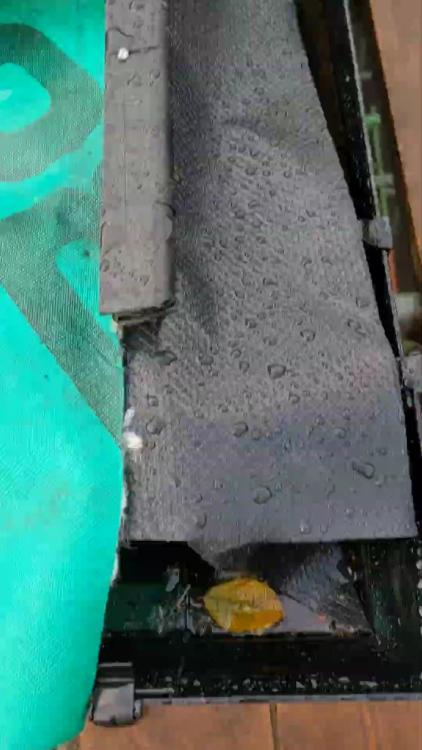
-
I am not doing this myself, but have found its better to fully understand as though I were, before letting a tradesman loose.. I am planning to replace the original roof of my 1920s detached house. Currently clay tiles, close borded beneath and bitumen paper beneath that. Rooo flares at the edge. No vents apart from open cavities. Soffits are LARGE (750mm?)and have been covered with plastic. All hips, no gables. I would like to get good ventilation in the loft, as I am filling the cavities. I would also like to minimise cold bridges at the wall plates. What should I ask the roofer to do, when getting quotes? Current proposals only mention tile vents (along with Dry ridge etc). Should there be strip eave vents, etc? Soffit vents are not an option. Any advice welcomed!
-
Sparrowhawk: Yes I have read the paper (well, skimmed it, to be honest) thanks. Most of it is concerned with walls (verticle surfaces, with a warmth from one side, rather than above, as with the present case), loft/ceilings (warmth from below) and whole house considerations. I do not think there is much of relevance to a 100mm verticle gap, warmth from above, enclosed by breathable membrane below and VCL above. Please correct me if I am wrong!
-
Temp: both approaches use membrane for the support of insulation. Iceverge: I would hope to do better than 5mm gap, but even with that, a static column of air with any warming coming from the top would be a pretty good insulator.
-
Iceverge, yes I have seen that. My suggestion would be as wind-proof as that, using the same membrane approach. Just with PIR instead of the mineral wool. Incidently, wonder if, with 100mm joists, it would be worth letting the membrane go 20mm below the joist (while still stapling as shown) and fill to joist top.. This would allow mineral wool to achieve U value to closer to 100mm PIR.