bontwoody
-
Posts
61 -
Joined
-
Last visited
Everything posted by bontwoody
-
Hi, does anyone know where I can obtain one of these in UK? The postage from US is cripling. It looks such a simple solution to providing a heat dump. Ive seen them used on a youtube video in Canada to good effect. Thanks

-
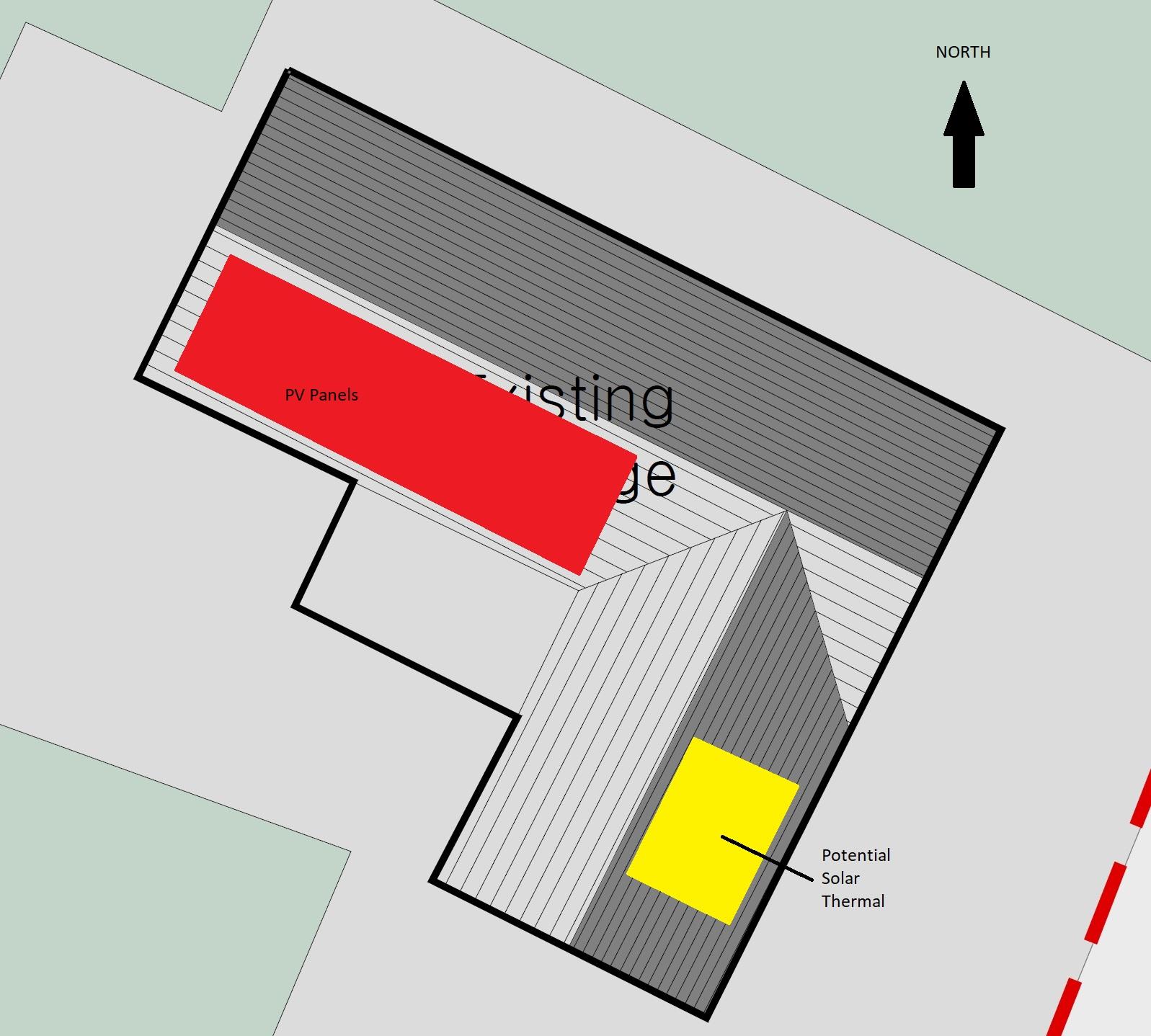
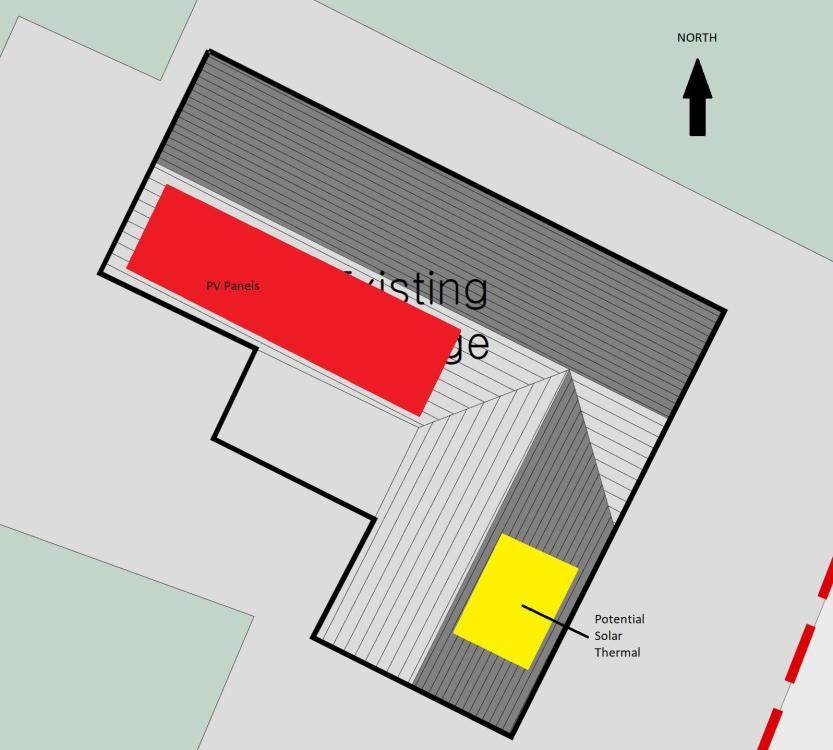
Hi I have purchased a new home and am looking to improve its eco-credentials in the most efficient /cost effective way. My previous home was a well insulated self build 3 bed bungalow with 4 kW of Photo-voltaic (PV) panels, Air Source Heat Pump (ASHP), Thermal store and Under floor heating (UFH), which worked well, but Im starting from a different base and would like to tweak a few things. The new place is a 2 bed bungalow and its original building is stone. However the kitchen and living room are later additions and have cavity walls. It has 3kW of PV on its main roof which benefits from the highest FIT tariff. It has recently had a new mains gas combi-boiler installed. I’ve attached a plan of its orientation. My first job is to sort out its loft insulation, but the walls are more problematic. External insulation is possible, but may have to wait. The floors will probably have to stay as they are. Fortunately the oldest walls are in the bedrooms where I prefer it colder anyway. The property has a chimney in the living room and I intend to put in a small wood burning stove for the winter evenings. My initial thoughts are as follows: I want to keep the FIT payments but would also like some battery storage, from what Ive read, the best way of doing this would be by putting the batteries on the AC side. Ideally Id like to add some more PV, but the best roof space is all used, also I might be limited to 4kW grid linked maximum anyway. The living room does have some available roof space in the SE direction and Im considering adding some solar thermal evacuated tubes there. Its something Ive always wanted because of its increased conversion efficiency compared to PV, although I appreciate its not as flexible as PV and wont be of a lot of use in winter. Id like to eventually use another ASHP or GSHP to heat my DHW via a tank and the space heating directly, probably using oversized radiators. However it doesn’t make financial sense to rip out the new combi-boiler, so Im thinking of how to utilise it in the meantime. Having previously had a thermal store, I appreciate its ease of installation and inherent Legionella protection, but due to the fact that I had to heat a larger body of water to a higher temperature, Im persuaded that an unvented twin coil cylinder will be a better way to go this time with a heat pump, even if I have to instigate a Legionella purge occasionally. For two people I was thinking 150-200 litre size at 50C would be about correct? To make use of the gas combi, I intend to install the cylinder underneath it and preheat the water using the solar thermal panels via the solar coil. Leaving the heat pump coil temporarily unconnected. The warm/hot water from the tank will then feed the cold water inlet of the combi-boiler. I’ve read that most modern combi’s can accommodate this type of top up heating, but in the event mine cannot my fallback position will be to connect the combi to the heat pump coil until I install an ASHP in the future. At some point in the future, I intend to add an extension that will give me additional South-ish facing roof space. Would it be possible to add additional PV panels there that only charge the batteries and are not grid connected. Thereby avoiding issues with the FIT payments and export limitation? So there are my thoughts so far. I would welcome any suggestions as to its feasibility. Cheers in advance
-
Limecrete or Concrete Floor
bontwoody replied to bontwoody's topic in Environmental Materials & Construction Methods
Thanks Roger -
Limecrete or Concrete Floor
bontwoody replied to bontwoody's topic in Environmental Materials & Construction Methods
Well they also included 75mm of polyurethane insulation above the 250mm of foam glass so together that sounds pretty good. I guess there would be no issues in using 50mm of liquid screed instead of 100mm of concrete if you wanted less thermal mass and quicker response times. -
Limecrete or Concrete Floor
bontwoody replied to bontwoody's topic in Environmental Materials & Construction Methods
Doing some further research this morning I found this link, which has a DPM and polished concrete floor above the foamed glass sub-floor. Is it then that the free draining sub-floor is more important than the limecrete slab in preventing damp? https://www.womersleys.co.uk/Guides/Insulated Floors Case Study Aisled Barn.pdf -
Limecrete or Concrete Floor
bontwoody replied to bontwoody's topic in Environmental Materials & Construction Methods
I dont really have the luxury of living with it as we will need to get a better heating system in before the winter. Cost is one issue to consider but also being able to get someone with the right skills quickly. Its a good point regarding the excation depth and I wont know about that until Ive managed to dig a few inspection pits. Out of curiousity what floor covering do you have over the limecrete? Thanks for taking the time to write a comprehensive reply 🙂 -
Limecrete or Concrete Floor
bontwoody replied to bontwoody's topic in Environmental Materials & Construction Methods
Thanks for the reply and it probably is relevent regarding the starting conditions of the walls. When you say discolouration of the render do you mean the internal plaster on the face of the wall insulation? Is the wall insulation stuck to the wall or is there a stud wall and cavity? Thanks -
Limecrete or Concrete Floor
bontwoody replied to bontwoody's topic in Environmental Materials & Construction Methods
I can get it cheaper than that from my rainwater tank 🙂 After much consideration about Legionella cycles, I think I will be going for a pressurised cylinder in my new house rather than a thermal store. But thats another debate 🙂 -
Limecrete or Concrete Floor
bontwoody replied to bontwoody's topic in Environmental Materials & Construction Methods
Thanks for the replies. tonyshouse - I hadnt really considered the high moisture content in the internal air. My intention was (whichever floor I go for) to internally insulate the walls, probably with a timber frame and breathable insulation jayc89 - I havent checked the existing wall condition yet as its hidden behind foiled backed plasterboard, but I was going to address any obvious problems and maybe insert a french drain outside. I doubt Ill be able to get any builders to match that quote somehow 🙂. Good to see the basics were the same back then with the exception of the insulation layer! SteamyTea - its been a while since any differenntial calculus was required of me, so thanks for the summary at the end. 🙂 The last time I was interested in phase change it was with respect to filling my thermal store with paraffin wax, which still sounds like a good idea if I had the balls to try it! -
Hi I’m in the process of renovating a solid stone wall house and am looking to replace the current quarry tile and earth floor with one that includes under floor heating. My dilemma is with respect to do I use a limecrete or concrete slab. Ive been researching views on the web and through suppliers and I must say Im no clearer on the advantage of the limecrete over concrete (other than environmental issues). As I understand things a limecrete floor is recommended in my situation to allow the building to breathe and reduce issues with rising damp caused by a DPM forcing out trapped moisture to the walls. That all initially sounds reasonable but I’ve come across several views/facts that make me doubt this. What is the process by which moisture is forced out to the walls? My personal thoughts are that the movement of moisture in the ground would occur from a high concentration moisture area to a low concentration moisture area and this would continue until all the ground has the same moisture level. It seems to me that the ground beneath a house would likely be less moist that that outside because it doesn’t get rained on. Surely then moisture would move in the opposite direction to that claimed? I suppose once the ground beneath the house had gotten moist and the outside had dried then the direction of movement would then change. There is also the issue that in Wales the subsoil is usually clay which does not allow water movement easily. The advantage of using a limecrete slab and foamed glass base is that the moisture in the ground can permeate up and be released without reaching the walls. This would mean that any covering of the slab would have to be permeable too, such as limestone or clay pavers for example. However on enquiring at Ty-Mawr I got the following answer: “For finishes that affect the breathability of the surface, the main consideration is ensuring the moisture from installing the slab has fully dried. The Glapor will stop any moisture reaching the slab from below so once the slab is dry any floor finish can be used.” Surely if that answer is true, it negates the whole argument of a breathable floor and I might as well just use concrete with a DPM and foam insulation, which would ensure I could use any finish after a shorter wait time and have a better insulation value. Old buildings always had permeable breathable floors. This is patently not true as many had slate floors, a substance so impermeable it was used as a damp proof course. The only way moisture could move through it would be through the mortared joints which would be a very small percentage of the surface area. Did this lead to increased problems in rising damp than say floors covered with clay tiles? If anyone can help explain these apparent contradictions I would be grateful. Especially if there is any reliable research to back up views as opposed to anecdotal accounts. Thanks Woody
-
Hi Im an experienced renovator and self-builder now about to embark on another renovation project (ridiculous at my age really). My previous self-build was an eco-bungalow and I would like to take some of the techniques used in this to convert and old solid stone walled building into a low cost to run, green home. Im going to make my first proper post on a question about Limecrete floors so please help if you feel able. Woody