windsor-tg
-
Posts
58 -
Joined
-
Last visited
Everything posted by windsor-tg
-
What Boiler to prevent short cycling?
windsor-tg replied to windsor-tg's topic in Central Heating (Radiators)
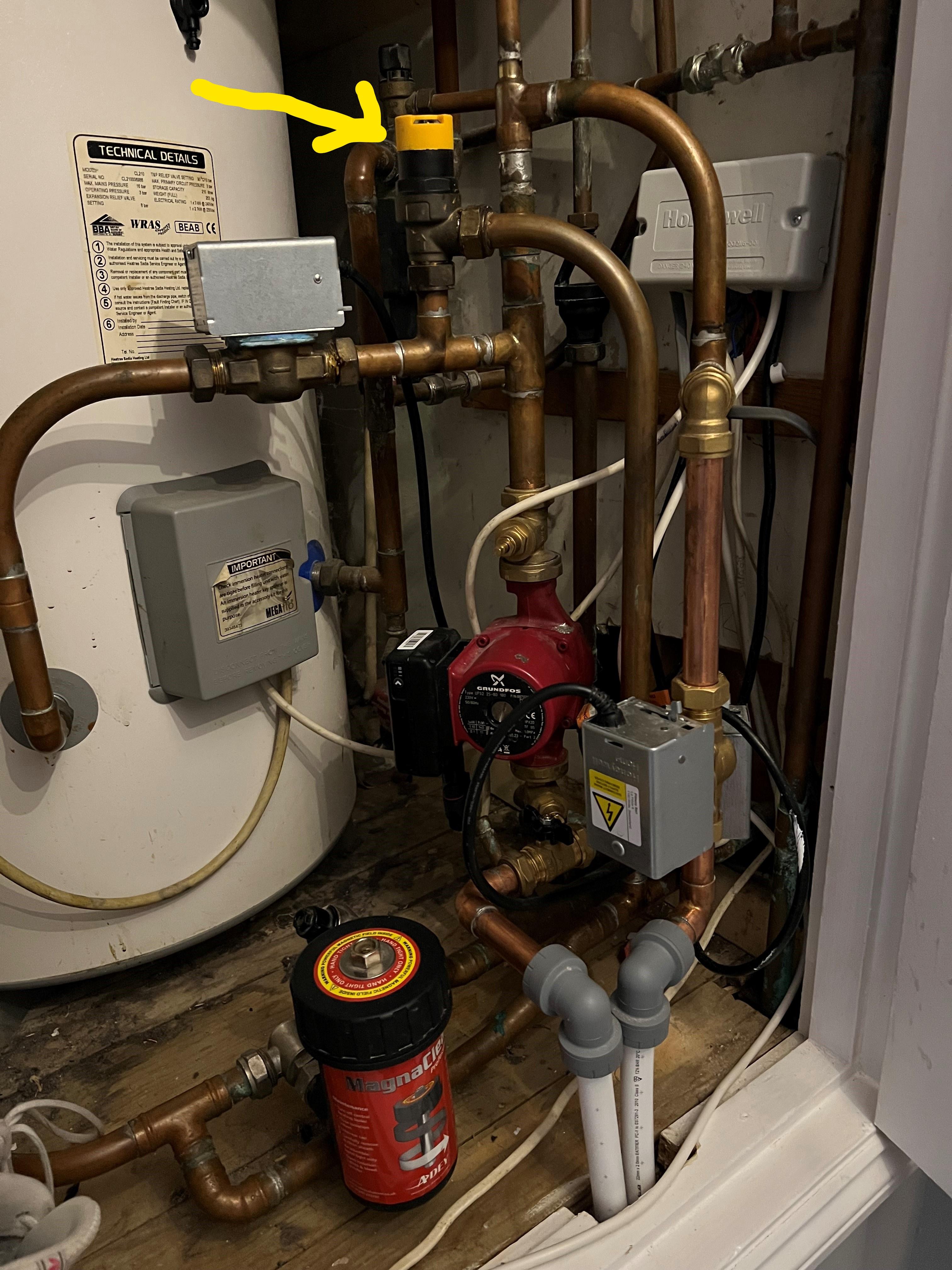
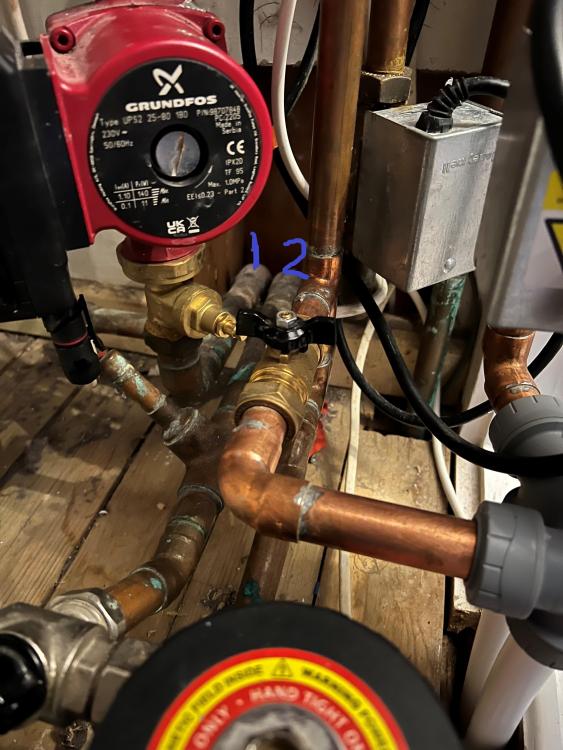
more photos. On the photo 'pipework around pump' - the two pipes labelled '1' & '2' in blue are the 28mm pipes running to & fro from the boiler. The 2 white pipes are the UFH pipes..thumb.jpg.75d8dc698474ee208f3b0a3900f926bb.jpg)
-
What Boiler to prevent short cycling?
windsor-tg replied to windsor-tg's topic in Central Heating (Radiators)
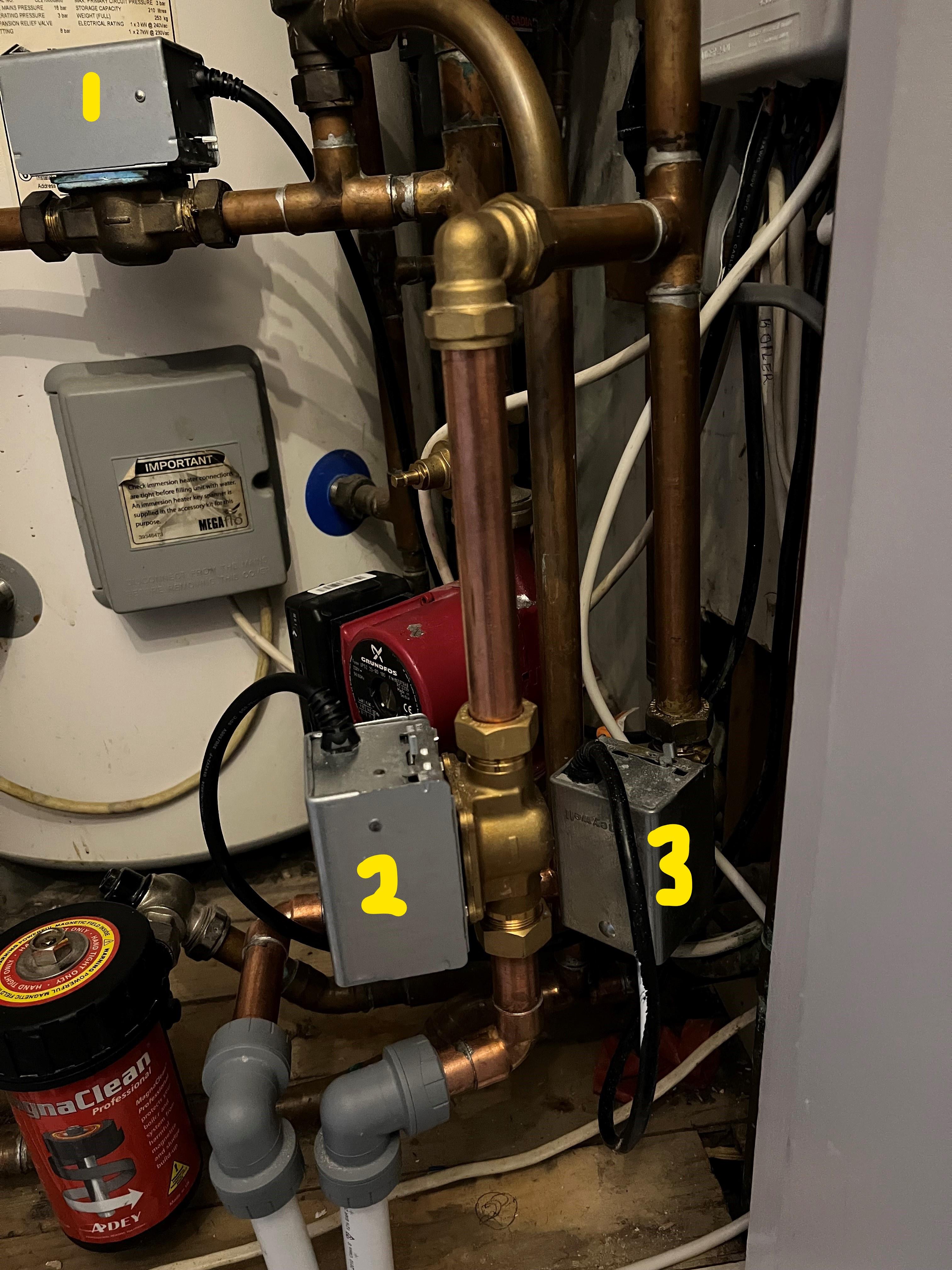
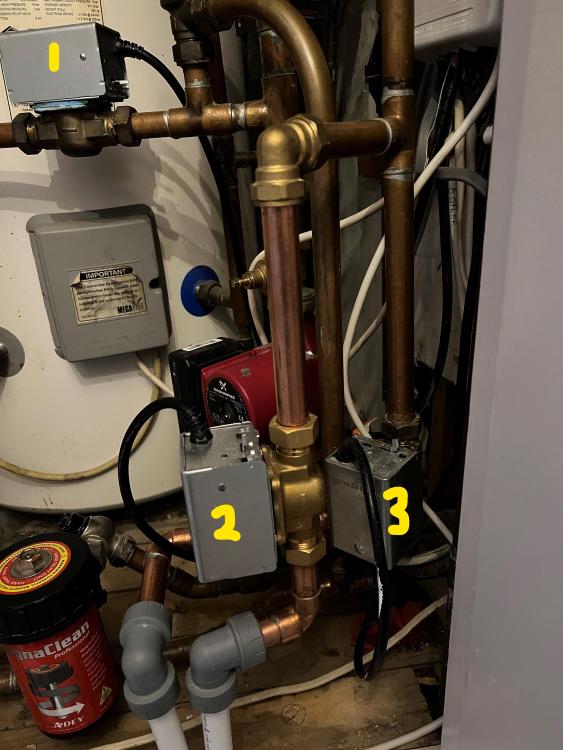
Thanks @JohnMo - regarding the options you have provided: If I were to add a buffer, is this adding a buffer cylinder in the return on the CH circuit? If so, is there any downside to this, and is this likely to be costly? Maybe I am misunderstanding the 2nd option but the issue I have is with the boiler short cycling when I only have the UFH on. I don't see how the radiators come into when I have my central heating turned off? When I only have my UFH on, if I were to have to change all the pipework to have the towel rads connected to the UFH, that would be a major upheaval in the house. All my bathrooms where 3 of the 4 towel rails are located have a tiled flooring and we recently had all the upstairs recarpeted so having to lift up a lot of the carpets will not go down well with the mrs! I cannot see any other way of having the towel rads to be connected to the UFH system (and acting as a buffer) without a major overhaul. For a new boiler, I was being recommended the Vaillant ecotec plus 430 but I am not sure what the minimum load on this boiler is. I have had a look at a PDF from Vaillant and unless I am looking at the wrong place, the min load is possibly 7.2 - 7.5kW (https://www.vaillant.co.uk/downloads/aproducts/ecotec-pure/tech-sheets-3/ecotec-plus-open-vent-boiler-1786922.pdf). Also, I do not know if this boiler has the ability to run weather compensation. Also, I am not totally clear where you say "Get rid of most of your TRV's so the system runs open circuit, but on weather compensation, with a temperature setback overnight" - I do not see how this helps when I am just running the UFH on its own. Why do you not recommend Low Loss Header? If I do replace the boiler, I will certainly have the system power flushed (not sure if that would generally include the UFH plastic pipes). @SimonD - thanks for this. What is the best way to get the flow problem sorted out? When we talk about the flow and blockage, is this referring to the pipework in the UFH system or the central heating system I have had the pipework running between the boiler (in the garage) and the main pump (in the airing cupboard) flushed out. I have attached some photos pof the zone vavles, pipework, Grundfos pump, etc in the airing cupboard. On the picture of the zone valves, they are labelled 1 - HW, 2 - UFH, 3 - CH. I will send more photos on seperate replies as there is a limit on file sizes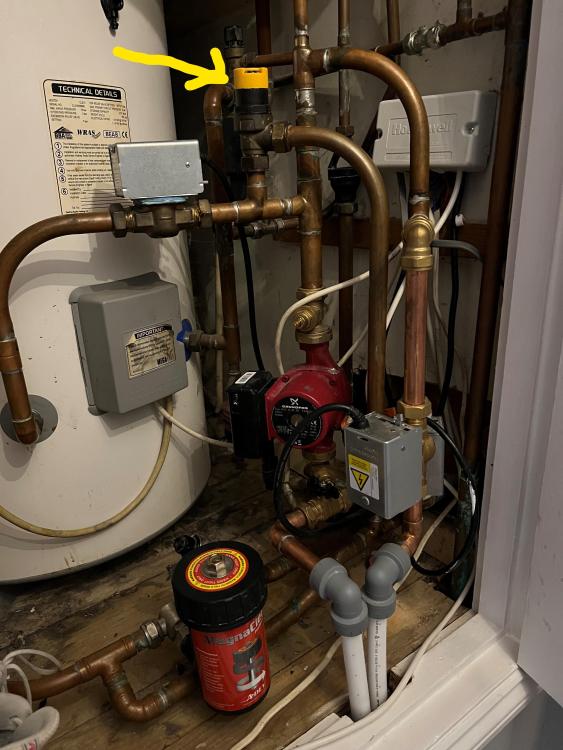
-
What Boiler to prevent short cycling?
windsor-tg replied to windsor-tg's topic in Central Heating (Radiators)
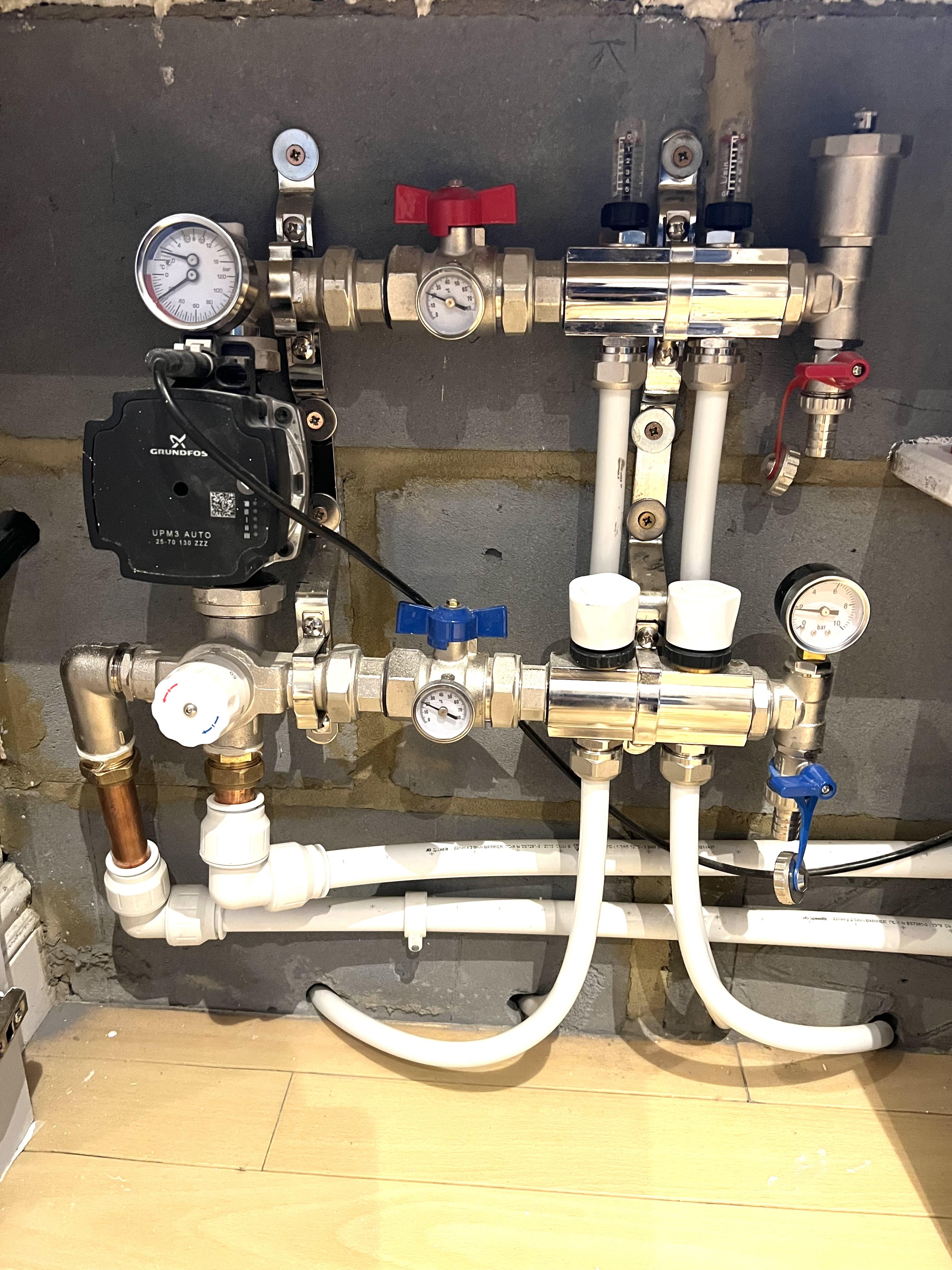
Thanks @JohnMo I have just one room that has UFH (all the rest of the rooms have radiators) so I have just one room thermostat to control the UFH. I believe I have 2 loops on the UFH and 2 actuators. I have attached a photo of my UFH manifold and associated components. None of the 4 towel radiators have TRVs. All the other 17 radiators have TRVs. Based on this, is the only solution is to have a buffer cylinder in the return on the CH circuit?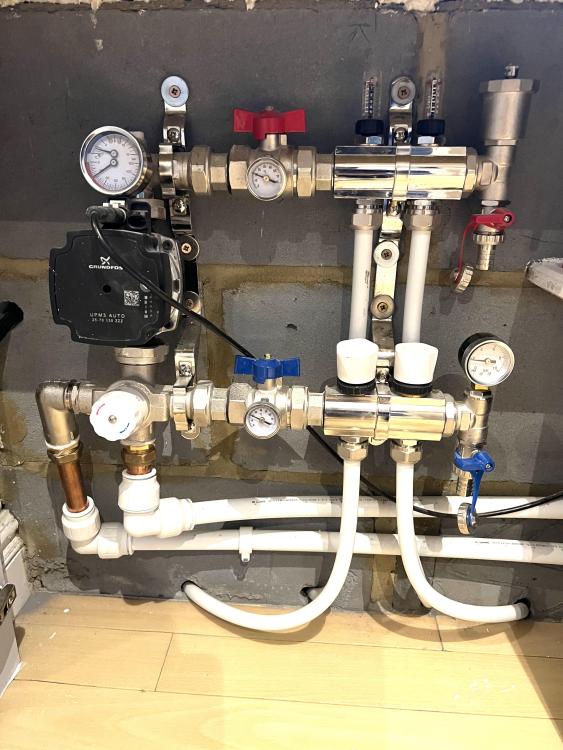
-
I currently have a Vaillant ecoTEC Plus 438 system boiler which is 13 years old. I have been having problems with the boiler which potentially boils down to the heat exchanger so I am now looking to bite the bullet and have a new boiler installed. My set up at home is that I have a 4-bed detached with 21 radiators (includes 4 towel rails), a 6m x 4m orangery/conservatory that was built last year with under-floor heating (UFH), and a Megaflo for storing hot water. Last year, I had all my radiators changed (unfortunately I did not have my system thoroughly flushed) and the main pump upgraded to a Grundfos UPS2 25-80 pump. I control the hot water, central heating, and UFH through the Heatmiser app. The boiler is located in the garage whilst the pump, 3 individual zone valves and megaflo are all located in an airing cupboard on the landing. Quite a few years ago, I was getting an S.53 code on my boiler "the flow-return temperature difference is too great OR Boiler is in waiting period of modulation of block function (or operation block function) due to water shortage". I turned down d.0 of the boiler to 24kW which eliminated the S.53 status. Last winter, I had 2 issues: I found the radiators furthest away from the boiler were hardly heating up. I had an engineer come round who eventaully found the issue - debris in the main pump. After removing this, these radiators heated up perfectly well. when I only had the UFH turned ON, I found the boiler would fire for a minute and then stop. This would be continuous (short firing). The only way I would get round this would be to turn on the central heating so that the UFH would remain on. The same engineer looked into this and believed there was a problem but as he had not installed the UFH, he was not 100% sure where the issue lay. He said there could be a blockage somewhere and/or the heat exchanger could be partially blocked. He suggested a low loss header to resolve the issue since it would elimate the problem of return & flow tempaerates being too great, and therefore the boiler turning off. Since my boiler is 13 years old, I am happy to replace by boiler but I obviously want to avoid spending lots of money but still find I am in the same position where I cannot run my UFH independently. I have had a few heating engineers come over to quote for a new boiler. The majority have recommended the Vaillant EcoTEC Plus 430 (30kW) heat-only boiler, and believe the installation of a heat-loss header is an overkill. They pretty much believe the heat exchanger on my existing boiler is partially blocked. A power flush is highly recommended. Can anyone recommend if the Vaillant EcoTEC Plus 430 will be suitable? I do have a heating engineer in mind who will be returning again next week to carry out a thorough examination of my system. Is there anything I should make sure he looks into? I am assuming I need to get a boiler where it can go below the minimum required for the UFH to work on its own?
-
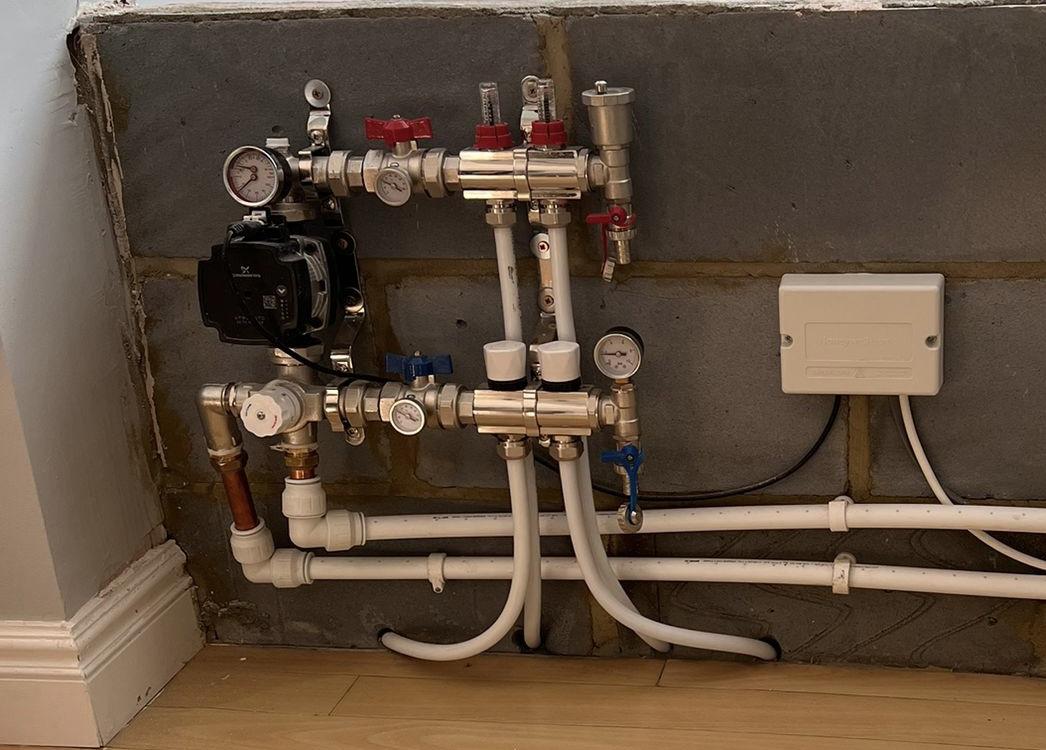
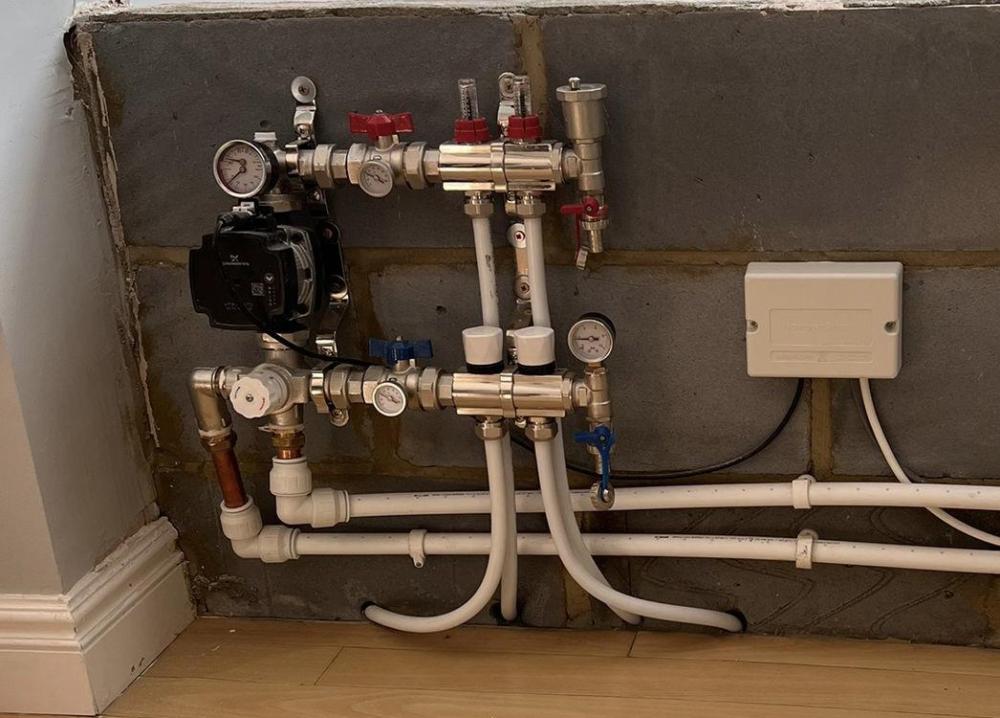
I recently had UFH system installed in a newly constructed orangery. I ran the UFH system today for the first time. The room temperature was 20.5C at the start and I had set the thermostat to reach 22.5C. After 2 hours of the UFH system running, the room stat was showing 21.5C but all the pipes surrounding the manifold were not hot to the touch. The zone valve of the UFH was open. I believe there is something to quite right. No other heating or heating of hot water was running. Any advice would be greatly appreciated. I have attached a photo of the UFH system.
-
I have the Tado smart thermostat (wired thermostat) and extension kit (including internet bridge) installed to run my central heating radiator system and hot water in my house. I am having to an orangery/extension built at the rear of my lounge and the plan will be to run under wet floor UFH in the orangery on a separate zone. The manifold of the UFH heating will have its own pump. I am looking to have the Prowarm 2-port wet UFH installed. Can someone let me know what Tado components I will need and how this should be connected so that I can control the UFH heating totally separately from the radiator central heating system via the Tado app?
-
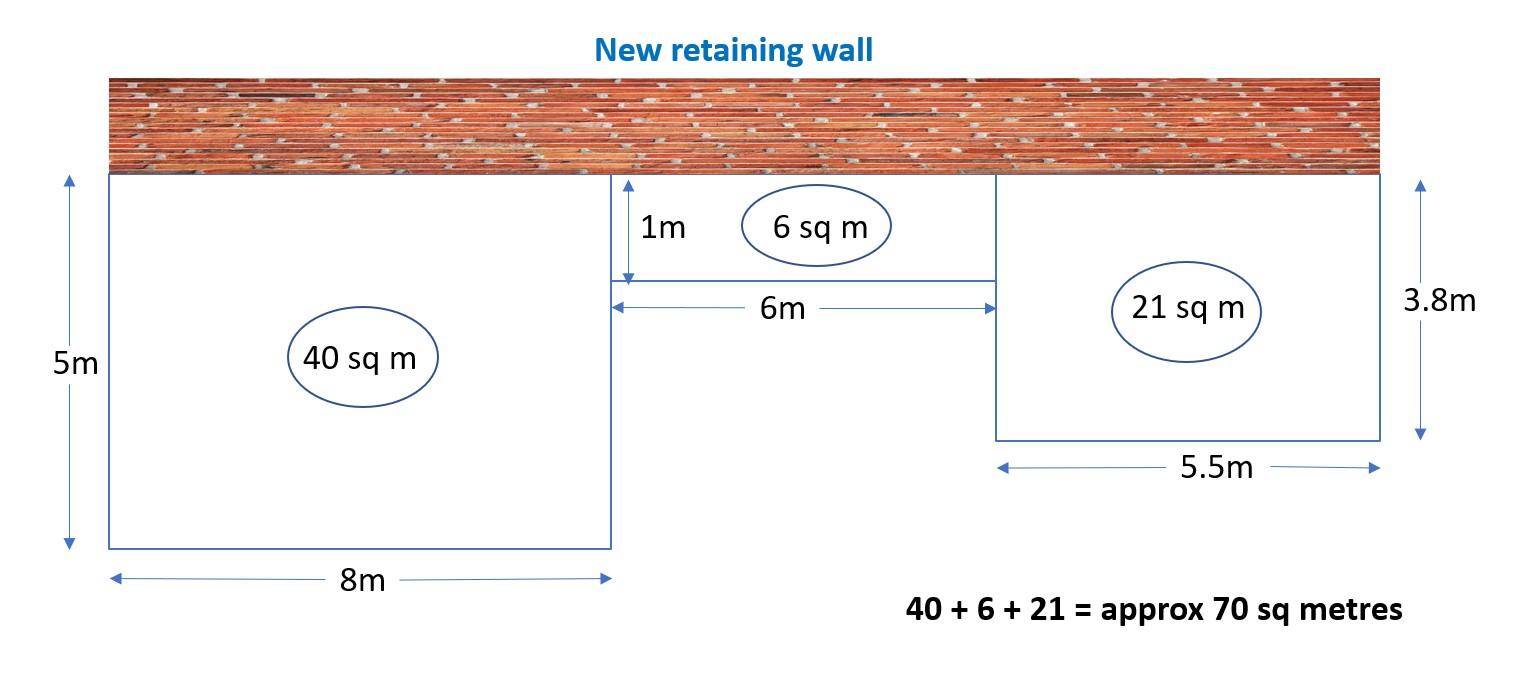
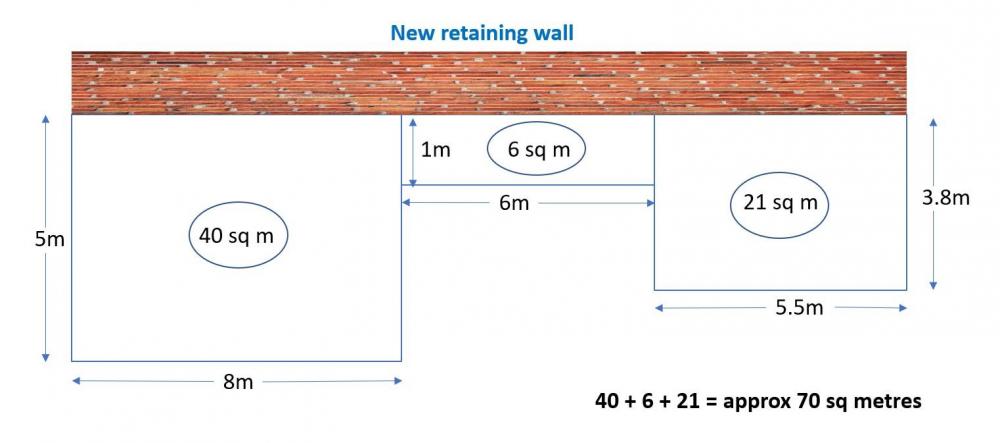
My current patio is block paved (laid about 20 years ago) but I am looking to have a porcelain tiled patio. My house is on clay soil and I have two large oak trees in my neighbouring garden. I find that during the summer, a gap opens up between the paving blocks and also some of the paving blocks sink due to effectively ground movement beneath the paving blocks caused by clay shrinkage. Can anyone advise how the sub-base should be best constructed so that I get minimal movement once the porcelain tiles are laid. I am concerned that if the sub-base is not properly constructed, the porcelain tiles will move/crack over time. The overall size of the patio will be 70 sq metres (I have attached a photo to show the layout of the new patio). I did speak to one structural engineer recently who suggested the following sub-base: remove existing paving blocks/bricks and excavate soil to required depth lay lay approx 3" of compacted sharp sand on top a decent mot type 1 base Include 2 movement joints lay rebar concrete slab (mesh of steel wires/bars), minimum 100mm deep lay DITRA Drain 8mm matting on flexible adhesive (standard S1 or even unmodified will do) Lay porcelain tiles on Ditra Drain using flexible adhesive but adhesive must contain polymers in the mix for proper adhesion of the tiles to the Ditra Drain (standard S1 polymer modified adhesive at normal bed depth - solid bed approx 4mm deep) On back of tiles, should be 'back butter' (thin spreading of adhesive on the back of a tile to ensure it correctly bonds to your tiling substrate. It's required when fixing large format porcelain tiles with a standard non-pourable adhesive and takes mere seconds but ensures a lasting bond! to aid in achieving solid bed) Use epoxy grout between tiles - better weathering and is water impermeable Does what this structural egineer suggest an over-kill? Is there an alternative option?
-
I am looking to replace my existing 16 radiators that are 20+ years old with new ones. I currently have Stelrad radiators fitted. Ca anyone advise what brand of radiators I should go with? Stelrad seem quite pricey. My local plumbers merchant is strongly recommending EcoRad which I have never heard of before. He says majority of radiators are manufactured in Turkey and they are all very much the same quality. His prices for the EcoRad are pretty low and he says I would be much better to go for the EcoRads instead of Stelrads. I don’t know whether he’s just saying that because he gets better profit on the EcoRads than Stelrads. For my lounge, I would like to get a couple of nice looking rads (600H x 700W & 600H x 1000W) that give out plenty of BTUs. Thanks in advance.
.jpg.b1afe20735a705e385afffee1128120f.jpg)