Lemna gibba
-
Posts
35 -
Joined
-
Last visited
Everything posted by Lemna gibba
-
What thin insulation under wet underfloor heating?
Lemna gibba replied to Mattsville's topic in Underfloor Heating
I can't help with this, but am very interested as I think we may be in a similar situation. How did you find out your floor was a raft foundation? -
Thanks for the quick reply. The questions about the floor joists and space to the ground are important. I won't know this until we start to take up the floor and I'm reluctant to do this until we get a bit further with the plans. I can see this is important, as if the joists are shallow then we're not going to have much to play with. I'll look into the the dense rockwool.
-
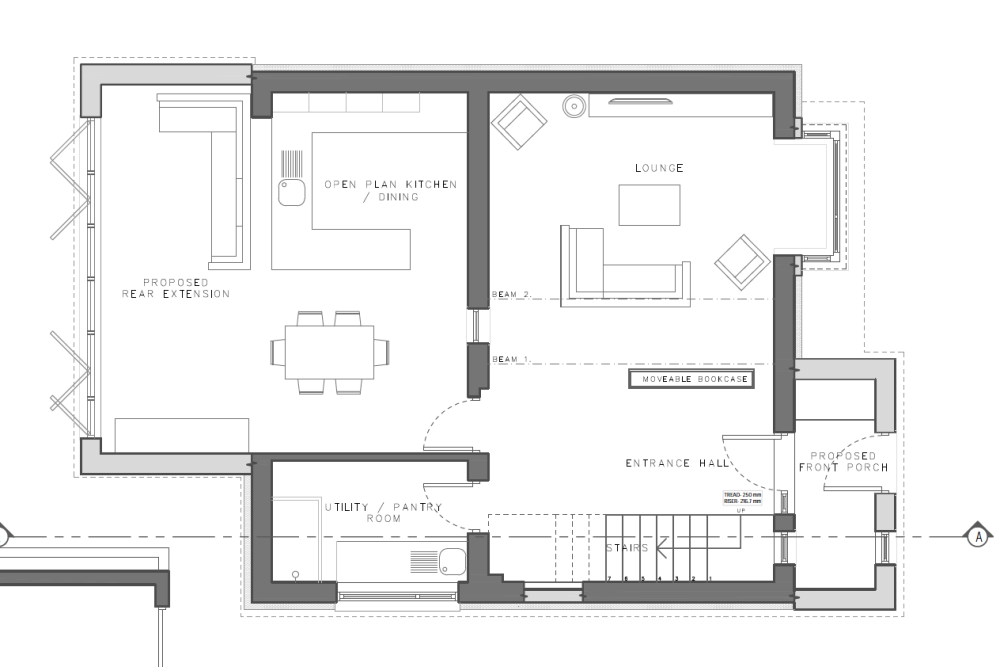
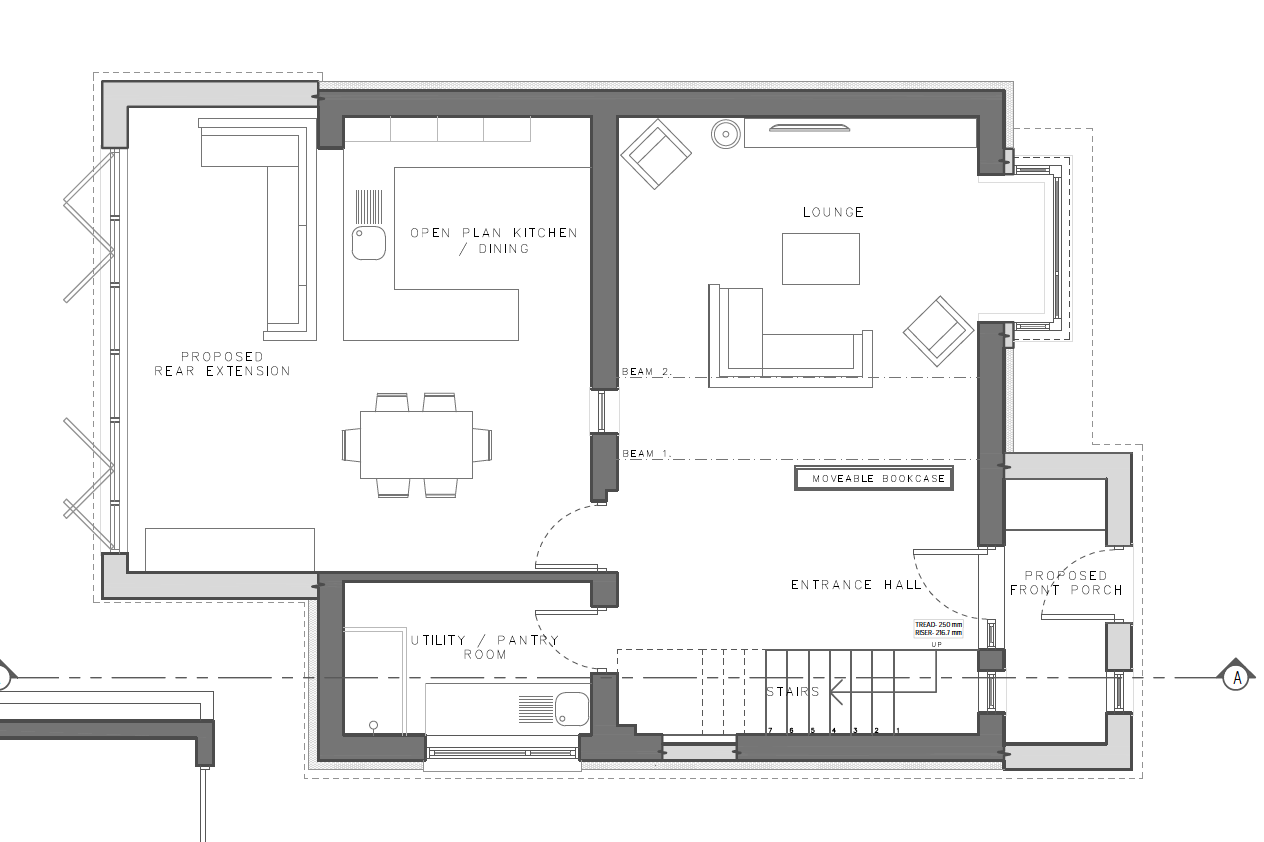
We are planning a significant renovation to our house. Currently, we have a 1930s detached house that was significantly extended in the early 80s. We are removing internal walls to make an open plan living space, replacing a rear conservatory with an extension of similar size, and creating a front porch. On top of this we are going to improve the insulation (EWI throughout, triple glazed windows, and topping up the loft). The idea is to ditch the gas and replace this with a heat pump. The 1980s part (kitchen) has a solid concrete floor. We plan to dig this out and insulate, so that we can run UFH across this together with new rear extension. In these room we'd want a stone floor, so UFH would be great. The 1930s part (labelled lounge and entrance hall) is a suspended timber floor. I think we have three options here. 1 Fill this with concrete, insulate and have a similar UFH system throughout. I'm not keen on this as I would worry about damp rising through the walls. I have no specific reason to be concerned, but have read horror stories. 2 Keep the suspended floor, insulate between joints with kingspan and run floor panels with pre-cut spaces for the UFH pipes. Something like in this link https://www.theunderfloorheatingstore.com/profloor-returns Ideally we wanted to install bamboo flooring in this room. That would be fine from the point of view of the flooring, but I am concerned that with this solution we might end up with a not insubstantial amount of heat going to the space under the house. An alternative here would be to lay stone flooring throughout the ground floor. 3 Just run UFH in the kitchen/rear extension and have radiators in the front of the house. Then we could insulate between rafters and use wood flooring. We're tending to the second option, and possibly with wood like ceramic flooring. I'd appreciate people's opinions. Our architect says that we should just do what we want, but we want the heating to be as efficient as possible.
-
Thank you for the comments. I'll make sure I check the installer's history.
-
Hello, We're planning a pretty major remodel of our house and as part of that would like to include EWI. We should be pretty ok with 100 mm, but no more without extending the roof. I would like to use Kingspan K5 due to the lower U value, and understand that it is both more expensive and more complicated to install. I spoke to a couple of installers who seemed to favour EPS, but I assume that this was for their convenience primarily. One said that Kingspan came with a shorter guarantee, and that they can bow out over time. How commonly is Kingspan used for EWI on older properties (1930s solid brick) and can anyone recommend any installers in the Nottingham/Derby/Leicester area.
-
Loft insulation around a complex roof layout
Lemna gibba replied to Lemna gibba's topic in Heat Insulation
Thanks for the suggestion. I see the importance of raising the deck above the insulation. My main concern is that this will raise the deck height quite substantially. Possible by 25cm (extra 10cm to bring it back to 290 mm, plus 10cm for the extra insulation you suggested beyond this and 5cm for the void). If we did this, then access to the old part under the purloin would be impossible, but this might not be a problem if we can remove much of the old roof. Access between rafters would be easier than under the purloin. The height of the loft would reduce from 1.3m to 1.05m. Due to the angle of the roof this will make the useable bit very narrow. The most important thing we have in there is the inverter for our solar panels, but I worry that access to this would become increasingly problematic. What do you think about doing something similar with rigid board insulation? This would mean that we could reduce the thickness of it. I guess the problem would be that it won't be as breathable as the mineral wool. -
Loft insulation around a complex roof layout
Lemna gibba replied to Lemna gibba's topic in Heat Insulation
I can see the sense in what you're saying, but we really want the loft as storage space. -
I'm not sure whether to put this under roofs or insulation as it concerns both. Our house is a 1930s build with an extension in the 1980s. The original gable roof is above half the house and a 1980s build gable roof that joins this at right angles. Both roofs have a similar construction. Timber rafters are fixed to wall plates which are lengths of timber fixed to the tops of the front and rear walls of the original building and the left and right side walls of the two storey extension. The rafters meet at ridge boards on the apex. The ceiling joists also connect to the wall plates and rafters to create a rigid section. Intermediate support is provided by purlins which are the lengths of timber fixed crossways underneath the rafters and fixed into the gable. Where the new and old roofs meet, the old roof has not been removed and still has the original slates. The original roof has some boarding nailed to the underside of the rafters, but this is in bad condition and about 1cm thick and probably not insulated. Overall, I think the roof is in good condition and was apparently renovated in 2006. There is some paper that degrades if you touch it and a sarking felt? (anyway some kind of modern membrane) that is in good condition. We have never seen any evidence that it leaks. The loft is only 1.3m high. The new part is well insulated by some pretty thick layers of mineral wool. Not sure how much, but it looks pretty thick. In the old part, the insulation consists of mineral wool below tounge and groove boards, but this is badly done. I can see where the boards are cut out there are patches where it is really thin. Also, I can see for a fact that it's not 290 mm ceiling to floor measurement through the roof hatch is less than this. It's pretty clear that the roof boards should be taken up and insulated properly. Where the old roof hasn't been taken down, the insulation is non-existent to badly arranged. I want to think about the best way to insulate this, and who to speak with. I had thought that I would do this myself, but realise that it might need someone with some knowledge of roofing. I don't want to insulate in between the rafters as the roof works. And I don't want to raise the height of the floor by too much, as the utility of the loft as a storage space would go down substantially, but would this would be my preferred path. I assume the most logical thing would be to remove the old roof, open up the space some more, lift up all the boards, clean up and lay insulation down. My questions are. Who would I need to speak to to find out how much of the old roof can just be removed? Then regarding the insulation, what to use. I would favour rigid board if I can get a thinner insulation giving the same effect. My dilema is that we plan to do some major renovations on the house next year and including this in with those would be very useful. Not least because if I do add celotex or something between the joists then the electrician will need access to the ceiling next year anyway. However, it would be good for us to have an EPC before then that doesn't require loft insulation. This leaves me a bit torn between an intermediate fix or something that can be lifted to allow access. I would very much welcome any thoughts on this. We are serious about insulating, and want to do a good job. 1930s part. Access to the new part requires a crawl under the purlin! 1980s part. I think the insulation is fine here. The wires are from the solar panels. Old roof still in place, as far as I can tell the insulation is virtually absent between this, or is just a few cm thick.
.thumb.jpg.3c0642c26a1eb6a41c77e104766badfc.jpg)
.thumb.jpg.8a473fd5260fc887f72a1a5f3f4068d7.jpg)
.thumb.jpg.584e6d5bfb762f9612ab321a6293e5d6.jpg)
.thumb.jpg.4bfb537de1286c1b677e99742e2ee910.jpg)
-
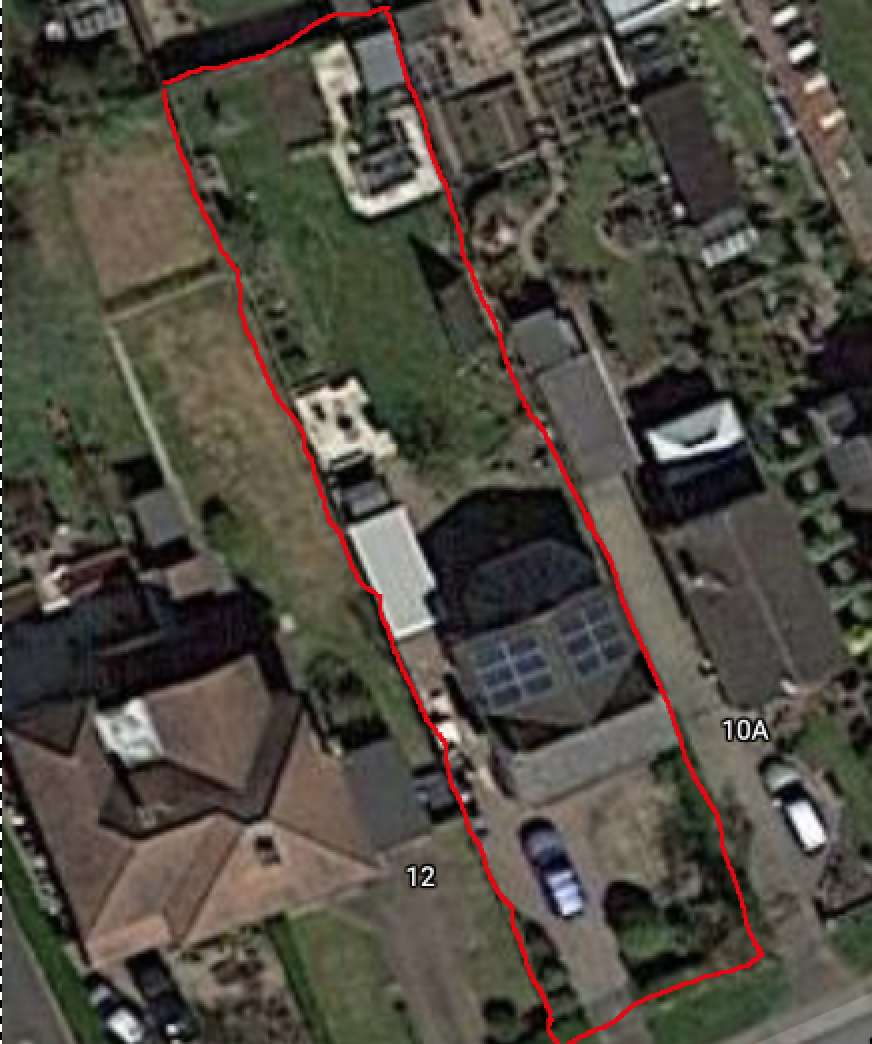
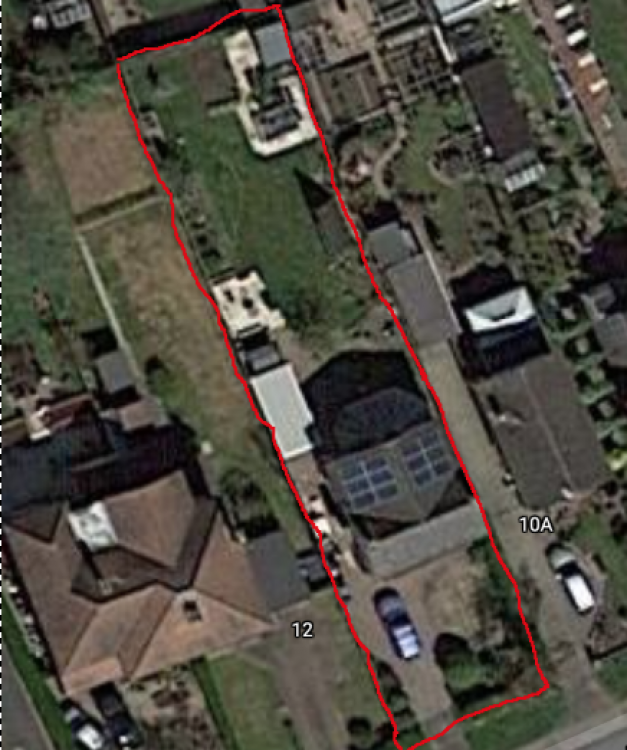
Here is a very quick Google photo. The front faces SSE. The plot is about 11.2m wide. The 1930s part is the front of the house. The 1980s the part with solar panels (this is quite illogical as they should really be on the front of the house). I can sketch out some plans.
-
Hello everyone, I've been reading the forums and keen to start posting. My wife and I are planning a major renovation on our house. Well, it feel major for us. The house was built in the 1930s and given a two story extension in the 1980s with a conservatory built around 2000. We've been here for 7 years. The room arrangement in the original part is illogical by modern standards. We have a front door that opens onto a 1 m2 hall (yes really) that leads into the stairs. The stairs bisect the house giving two small living rooms. We never use the front door, as we have a side door. We plan to e open this space up into a single living area and build a porch onto the front of the house to give a much better entrance. We'll move the stairs to one side of the property. The 1980s extension on the ground floor is pretty good, it has a kitchen diner area and a shower room that we're happy with. We virtually never use the conservatory as it's too hot or too cold. We're planning on knocking the conservatory down and extending the kitchen into the space it occupies. We think this will feel very luxurious. There'll be no significant change in footprint of the house, but the space will be much more useable. Upstairs will need reconfiguration with the stairs moving, but this is just two bedrooms changing. Improving the insulation on the house is a massive priority for us. The 1980s cavity walls are uninsulated (we should have done this ages ago) and the 1930s walls solid brick. The 1930s part has suspended timber floors. We had to do some work on one of the rooms and fitted Kingspan between the joints, but the other room has not had its floor insulated. As far as I'm aware the 1980 concrete is completely insulated. Both external and cavity wall insulation is high on our list. We'd also like to do the floor properly (as in get the concrete dug out and properly insulated). Our windows are old and the glass needs replacing in all of them, so window replacement is a must. Our architect is keen to build the rear extension (in place of the conservatory) and the porch with SIPs, and we like this idea. With loft, wall and floor insulation we hope that we can get our house up to modern standards. If we can afford it, then we'd be keen to look into removing our gas boiler. We realise that this won't save money and will likely cost quite a bit, but if it isn't to horrendous we'd like to get an ASHP and UFH downstairs. This is due to trying to live a lower carbon lifestyle. It might be that this ends up prohibitively expensive. We're quite early into this. We're waiting to hear about planning permission. Then it will be onto getting a structural engineer to tell us what's feasible. I feel like I've got lots of questions, but perhaps just introducing our project is a good place to start.
.jpg.3d8e541c16e681feaf86cbd6476e965d.jpg)
.jpg.07ebe420ee5d0f8ee78abac2c232f10d.jpg)
.jpg.dc15d3a442f59e7f6f5da9ca791726f5.jpg)
.jpg.205ab888c6daf6fbaa7e8f5f1646bc33.jpg)