mjward
-
Posts
78 -
Joined
-
Last visited
Everything posted by mjward
-
MVHR - list of questions/thoughts
mjward replied to mjward's topic in Mechanical Ventilation with Heat Recovery (MVHR)
One thing to add here is that I saw the below in a homebuilding magazine and was surprised that they say the running cost of the ASHP is comparable to a gas boiler. Given the larger equipment cost with ASHP, if the running cost is identical what makes people have a preference for ASHP?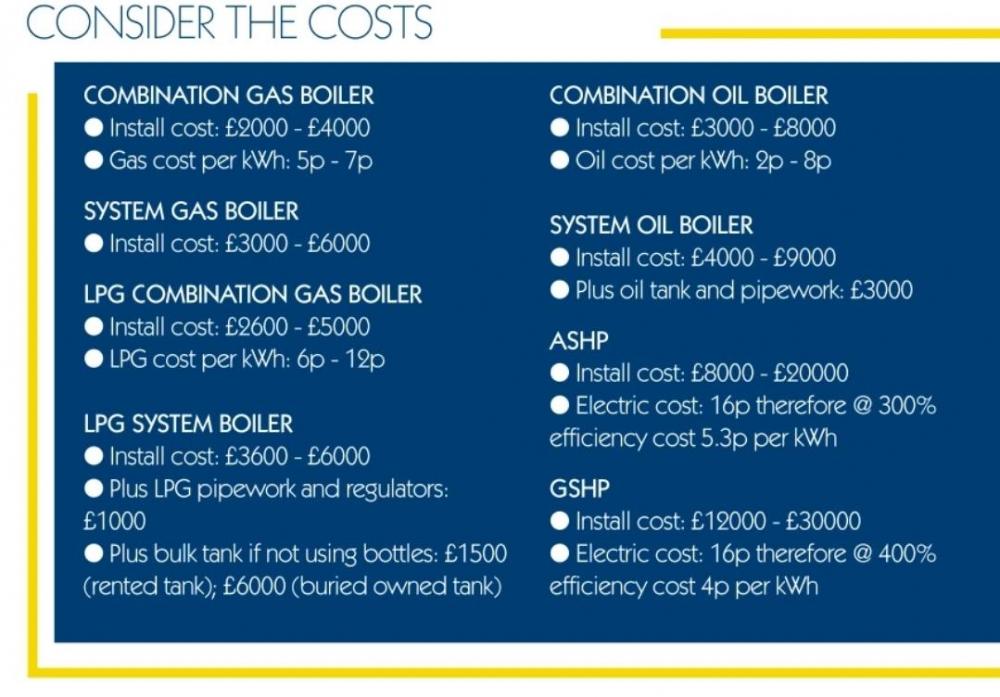
-
ICF - a list of questions/thoughts
mjward replied to mjward's topic in Insulated Concrete Formwork (ICF)
I will be the first to put my hand up to say at this stage I am not a U-value expert but I was under the impression the UK min requirements are significantly higher than 0.15 (off top of my head I think it's double that at 0.3) and that Passive Haus standard for walls is in the 0.1-0.15 range? -
ICF - a list of questions/thoughts
mjward replied to mjward's topic in Insulated Concrete Formwork (ICF)
got it thanks -
MVHR - list of questions/thoughts
mjward replied to mjward's topic in Mechanical Ventilation with Heat Recovery (MVHR)
Got it, very clear. Re the 3 pin, you are absolutely right, in our previous renovation I wasted far too much time (ergo stress) on the "what ifs" and future proofing etc that you need to pinch yourself and remember that extreme scenarios by their very nature don't happen very often and a cheap but effective solution is the winner. Re wood burner, if you can't build your own house with a pinch of extravagance then why bother although my wife has put her foot down on the fireman's pole from the master bedroom to the kitchen -
ICF - a list of questions/thoughts
mjward replied to mjward's topic in Insulated Concrete Formwork (ICF)
Ok, think I get it, batons can take TVs but for high kitchen cabinets and similar weight it would need reaching the core. What is your U-value with that added PIR? -
ICF - a list of questions/thoughts
mjward replied to mjward's topic in Insulated Concrete Formwork (ICF)
Good to hear you went the posi route, only discovered it last week and seems a no brainer for the modern build and all the pipework/ducting it includes. Hear you weight of the blocks, I lifted one up last week (yes just the one ) and it's a completely different kettle of fish to the poly ICF. Thanks for you help, massively appreciated -
MVHR - list of questions/thoughts
mjward replied to mjward's topic in Mechanical Ventilation with Heat Recovery (MVHR)
Got it, current thought process is to wood parquet the entire ground floor which I believe would work well with a wet UFH system, the prices of which seem to have plummeted in recent years. Would I be right to assume one zone but each room independently reaching the manifold? Interesting. When I started this enquiry in the summer I was reading about the problems of insulation + MVHR not being able to adequately cope with 30c heatwaves but sounds like both extremes could be an issue. I was planning to avoid the woodburner in order to nudge closer to PH standards, although I really like the look and heat from them. I wonder if it would make sense for me to fit a heat source like an electric rad in the upstairs hallway or even per bedroom that can be activated only in the extreme scenarios. This is what my initial research had thrown up, i.e. the proximity of some DG to TG with regards to U-values yet the significant disparity in cost. As per above, I'll need to do more research on it. Note overly fussed about the weight aspect as I was under the impression an element of the MVHR is that it encourages you to keep your windows closed? -
MVHR - list of questions/thoughts
mjward replied to mjward's topic in Mechanical Ventilation with Heat Recovery (MVHR)
Got it, with that conviction it sounds like I need to do some serious research with a view to include. Definitely sounds doable. I'm a zero for both electric/plumbing experience but started studying the City & Guilds Electrical installations course at the end of August and hoping mid-2021 I am at a level I can approach most of the electrics (first & second fix) bar leaving the fusebox and mains incoming (as well as sign off) in the hands of a professional. I haven't started yet but I am also planning to take on similar for the plumbing side. -
MVHR - list of questions/thoughts
mjward replied to mjward's topic in Mechanical Ventilation with Heat Recovery (MVHR)
Sounds like we are very much on the same page. Again is your UFH across all of downstairs or just a kitchen setup? Seems like from yours and above the sweet spot is ground floor UFH and bathroom UFH/towel rads and thats your lot (assuming adequate work down on insulation and air flow). In regards to the water temperature, that all make sense and is very useful, particularly the larger DHW tank part, hadn't occurred to me so thank you very much -
MVHR - list of questions/thoughts
mjward replied to mjward's topic in Mechanical Ventilation with Heat Recovery (MVHR)
In your opening line you've just null and voided some of the sales pitch I had fallen for Encouraging to hear and certainly seems the logical choice, cheaper than all-in-one with added benefit of being able to replace one faulty part down the line. 90% is music to my ears. Is this something you learnt from scratch or did you have a pre-existing plumbing/electrical skillset? Would love to be able to have both installed for 12k+commissioning, would make a huge difference. 50c is more than good enough for me so brilliant again, thank you ...on this note, don't suppose you have strong thoughts on the triple vs double glazing argument? I haven't approached this seriously as yet but from my initial research I'm getting a vibe that the thermal efficiencies aren't worth the cost differential. This is most certainly the plan. To be aware of PH standards but I'm not outright targeting PH certification. Going down the ICF route for airtightness, will pay close attention to property orientation for thermal improvements and will be mitigating openings as aesthetically as I can. -
MVHR - list of questions/thoughts
mjward replied to mjward's topic in Mechanical Ventilation with Heat Recovery (MVHR)
Yes precisely, it was the all-in-one beasts I had been learning about but certainly not married to any particular setup at this early stage. With regards to your UFH, is that for the entirety of your ground floor or just kitchen? Will make a note re SAP, at this stage I don't even have a finalized design, just trying to learn as much as I can about the various parts that may influence said design. -
MVHR - list of questions/thoughts
mjward replied to mjward's topic in Mechanical Ventilation with Heat Recovery (MVHR)
I forgot to "follow" my own thread and missed this. Apologies for confusion, it spent most of the show looking at all-in-one systems that had MVHR & ASHP but do appreciate they do different jobs. -
ICF - a list of questions/thoughts
mjward replied to mjward's topic in Insulated Concrete Formwork (ICF)
good tip! 3/3... think the raft needs to be added to my notes that is seriously impressive. From the U-values I saw from Isotex, you can get 0.15 with their 380mm block which is the one that appeals to me. That seems good enough for the UK Do you have a ballpark what your sqm of concrete block came to? Did you build that yourself? The insulation angle I would like is more of an acoustic rather than thermal one so prepared to pay a premium for that, it just depends how much we are talking really. Interesting to hear. I wonder if this is a poly vs woodcrete issue ie the poly doesn't hold it as well whereas perhaps woodcrete would? -
ICF - a list of questions/thoughts
mjward replied to mjward's topic in Insulated Concrete Formwork (ICF)
Does that just apply to the polystyrene ICF or woodcrete too? I've rich in time so I'm hoping to plan as much as possible so can get details like this sorted but as you say, anything I miss or need to change I can core drill after As per the Pm1987 I think you guys are steering me in the right direction. I'm new to a concrete raft so will do some googling but sounds like that pairs well with an ICF build (assuming a suitable ground) Speedy gonzales!! awesome work Roger that, so essentially for the DIYer it's not one to fret about as guidance on it/direction will come from the engineer. How do this now look from a mounting perspective i.e. assuming you dot/dab or baton plasterboard onto the PIR, if you wish to mount a heavy item on a wall do your screws have to be super long? Think I can get comfort at the space loss (as gain on other properties) but as you say, the trade off will be cost vs speed/DIYability Current plan is to join a couple of courses from a short list of ICF manufacturers to see first hand the mechanics of the construction but you're right, nothing beats real world and I should try and visit a build where it's going up live. Re 3k structural warranty 1) ouch 2) thanks for flagging as had no idea. I've seen some people pay 10k to builders to put the ICF blocks together but if that is now a difference of 7k it maybe isn't such a no brainer to DIY it -
ICF - a list of questions/thoughts
mjward replied to mjward's topic in Insulated Concrete Formwork (ICF)
Sounds sensible. I suspect the cost of the extra pours is negligible vs the it going wrong scenario if you build too high Did you baton all walls or just for services? Was wondering about thermal efficiency with the void vs dot and dab. makes sense i.e. pre-plan for the larger intrusions but don't fret if you have to cut anything post Thanks for this. Seems at the higher end of what I've seen but I will take from your pour figures that you are similar to me and would rather take a bit more time if it means getting it right! Was wondering why your blocks looked so much bigger to what I had seen I'm thinking solid internal walls for both ground and first floor (sound/strength angle) so I suspect I either do both via ICF or standard breeze block. Most pictures I've seen have builders using breeze for the internal so guessing a noticeable price difference but given the DIY approach I wonder if for me it will net out to much of a change and thus easier to ICF the lot. Perfect, that clears that up thank you! -
Hello As per my other post with regards to ICF, I've returned from the Self Build show with a few questions I'm hoping the good folk on here will be able to assist with: 1) the marketing pitch I received was that no radiators/UFH are required and that MVHR will keep the house at a pleasant temperature just with the help of the odd towel radiator. In the real world how true is that? My research prior to the show was that its greatly aided by a more noticeable support and my plan was wet UFH in kitchen/bathrooms to be said boost (with no rads in any room). 2) linking on to that, how good are these units are balancing out influencing forces? i.e. if I want UFH in kitchen/bathroom as I like warm tiles underfoot, will that just ensure my house will be too hot or will the system be able to moderate it? and in turn, if its moderating it, am I wasting heat/power in doing so, i.e. best off with just the UFH in kitchen as a sole heat provider. I appreciate it's a length of string type question as depends on house size/thermal load etc. 3) For those that have MVHR installed and no UFH, does the floor ever feel cold in tiled/floorboard rooms? 4) I saw posi-joists for the first time at the show and it looks a no-brainer to be able to route MVHR ducting amongst other things. Is there a better product people have used or any downsides to posi-joists? 5) I was surprised at how many manufacturers were offering just a 5yr warranty. Seems very low given a boiler at a tenth of the cost can get you up to 8-10 years. 6) What issues/problems have people had with this setup and how did you overcome them? 7) Merits of all-in-one vs separate systems? Received ballpark quotes of 25-35k for all-in-one systems (i.e. inc ASHP, cooling & heating) and although appreciate the benefit of "the tech can talk to each other", it seems the components were cheaper than the sum of the parts and give you the added benefit of only replacing one element if it goes kaput. 8 ) How much of an MVHR system can be installed by a DIYer? Was thinking to run the ducting unless more can be done. 9) Question from my wife...what is the water temperature like at the tap i.e. how does an ASHP & MVHR compare to traditional gas boiler for hot tap/bath water? 10) finally...what steered me to MVHR in the first place was the govt decision to ban gas boilers in new builders from 2025. I thought it made sense to future proof if that was the direction the govt is going. However, given it would be impossible for the govt to force every household to change from gas at a later date, and the fact we will have hydrogen boilers in 2025 that are apparently a straight swap for the gas setup, should I be viewing this as a window of opportunity to get the "cheap" gas boiler/traditional setup or as the consensus that an MVHR/ASHP investment is worth it for the utility bill savings alone (assuming a well insulated property). What I can't afford is another Crestron mistake i.e. spend 50k+ on equipment only for sonos/philips hue et al come out and do the same thing for pocket money a few years later. That's all I've got for now, thanks for any and all responses. Much appreciated
-
Hello After making the decision quite early on to go down the ICF route, the Self Build show in Swindon last weekend was my first experience up close. The good thing is, after seeing the various types first hand, reading the 120+ page Durisol online how-to guide, plus several hours of YouTube videos, I've now got the confidence to build myself whereas prior to the show the plan was to get builders to hand over the shell. On to more important things...questions for those that have done this or are looking into it: 1) The woodcrete manufacturers had the "no bracing needed" pitch. However, once you read the guides, it is very much needed around openings, corners and wherever you've cut into the blocks. Fair enough but for those that have gone the woodcrete route (e.g. Isotex/Durisol) was that the only bracing you required in the real world? 2) another woodcrete pitch was that the whole wall is a viable mounting point for cabinets etc, vs polystyrene ICF needing to line up cabinets (or plasterboard batons) to certain points. I can easily see why that is possible for low/floor sitting cabinets, but does that hold true for TVs and wall mounted cabinets? 3) Pipes/services...which of these (if any) need to be cut in pre-pour? I'm guessing due to diameter, waste pipework pre-pour would make life a lot easier, but do you need conduits for the other services or simply cut in post? 4) regardless of ICF product, are people using that same ICF for their foundations or are there cost savings by moving to a pre-formed block etc? 5) for the DIYers... how long did it take you to assemble your ICF blocks ahead of the pour? (be super useful to have idea of no. of people helping + sqm/ft of the floor) 6) at the show I noticed that rebar was only used to help form lintels whereas some of the YouTube videos for the same manufacturers showed them being used for the full course of the build. Is this just a geographic thing, i.e. not needed in UK as this isn't earthquake country or is rebar needed in more places than just the window/door openings? 7) I came across a new "thing" at the show and that was brick slips. I like the idea that this can be stuck directly on the exterior of the woodcrete ICF blocks by a competent DIYer however with all things I'm not familiar I am not wholly comfortable with them at this stage. Does anyone have information/experience with their longevity? Will they remain stuck on that wall for 50+ years? From a cost perspective, any ballpark figures for a full brick + labour external wall onto the woodcrete vs slip per sqm/ft? There are many things you try and save money on when building a house and many things you don't, I'm just trying to ascertain if the slip (DIY and less material cost) is a more efficient route than brick (thick/higher thermal efficiency & stronger/longer lasting) 8 ) again the curse of YouTube... I have noticed on some videos that the builders are adding an additional layer of insulation on the outside of the ICF and then cladding the whole thing. Is that just for those in Alaska or potentially needed in a UK build too? 9) Internal walls...do people continue with the ICF product or switch to breeze block etc? what would sway the decision other than cost? 10) Joists...looks like the wall plate is the best option, the put the joint hangers directly onto that. With the large bolts for the wall plate, are people fitting those pre-pour so that the concrete cures around the bolt or drilling into the concrete afterwards? 11) Sound insulation... read quite a few articles on this but I always think you can't take the product in isolation (i.e. in real world depends on your doors, floors, ceilings etc). However, for those that have ICF, is there a noticeable lack of sound transmission? I would like to design the cinema room to be next to the kitchen (where it is in our current house) but I've been warned that it could be divorce inducing if the sound rattles through the kitchen as much as it does now! Think that's all I've got for now, apologies for the long post but just thought for other users it might be useful to have this and subsequent responses as a reference. Thanks in advance. Martin
-
Hello! New build/adventure ahead... At design stage
mjward replied to mjward's topic in Introduce Yourself
it's bizarre isn't it. I get people naturally erring towards the norm and making safe bets, but I would have thought the main reasons why properties are near/face the road harks back to a time when we didn't have SATNAVs, mobile phones, greater reach of utilities etc etc. It's all moot for me without a plot but the dream scenario is a plot large enough that we can plonk the house at the far end, i.e. as far away from the road as possible. Primarily from a noise perspective but also for security/privacy, I factor that the longer it takes to reach from the road the greater chance the security system will identify an intruder (but also the less visible/attractive it is to chancers as they drive past) -
Hello! New build/adventure ahead... At design stage
mjward replied to mjward's topic in Introduce Yourself
Just came back from the National Self Build Show in Swindon. Was excellent, amazing setup when you consider the environment we are in. Like a kid in a candy shop I'm now the owner of about 100 product brochures but I found seeing "things" first hand made such a massive difference to my thought/design process. For example, I knew we wanted an ICF build but now after seeing the products first hand, I see the significant benefits of woodcrete systems like Isofix. I was also impressed by the various MVHR systems and can see why so much planning for them is required before you lay your first brick. Bizarrely that's where I also noticed metal web joists for the first time and as long as the cost/strength is comparable to traditional joists I think it's a no brainer to include in my (eventual) build given the easy of routing cables/pipework. Now I just need that darn plot! -
I'm a southern softie who has only worked in an office...plan is to retire t'up north and take on some carpentry in the workshop as a hobby and maybe even a source of income. So my guess is I'll need to go double skin, insulation and stove to ensure I last more than 5 mins out there!??♂️?
-
Nowt wrong with thermal undies! ?
-
I think the stove is a phenomenal idea. Would only occur to me to have one in the main house but it would make an awful lot of sense to have in the garage as a genuine heat on demand service.
-
Thanks all, above incredibly useful and triggers a follow up question: Has anyone put heating in their garage? My current view is that I will insulate it as well as the main house but that's it, assuming with air loss around garage door it would be futile/expensive to put rads in there but on the flip side would mean it would make an uncomfortable workshop in the depths of winter. But was thinking the smart fix there is just plug in electric rads when needed.
-
This is music to my ears, a range of £10-30k makes it a very viable addition and probably profitable given estate agents like to add the garage square footage to the overall property dimensions
-
I've seen quite a wide range for a general house self build of £1-3k/m depending on how much you do yourself and quality of finish. Does anyone have an idea of how those numbers look for a garage? Still playing around with various designs but I like the idea of a very large garage cum workshop. For me that would entail a simple 4 wall design plus garage doors/roof so I'm assuming it's much less than the above but no idea how much.