seanious
-
Posts
2 -
Joined
-
Last visited
Everything posted by seanious
-
foundation Dropped floor level for headroom in garden gym – good practice?
seanious replied to seanious's topic in Foundations
Thanks Nick, I did wonder about a flat roof, but was concerned of pooling water but as you suggest, a very slight tilt should be enough giving me enough headroom. One of the reasons I want to go down the brick and block route is so I can hang heavy things (50-60kg) on the wall, since this will also be a workshop. I also didn't consider a pit for the running machine either, that's a really good idea. I do have the opportunity to place the workshop / gym / summerhouse in a different place in the garden which would actually be 2 meters away from the boundary, and from my understanding that means I could have a dual pitched roof meaning I'd have plenty of space for the running machine. All I need to do now is wait a few weeks until I'm home to double check the practicality of moving the planned building. I'll have a look at Sketchup and see what that's like. I don't mind paying for software if it does the job and is easy to use. Thanks again Sean -
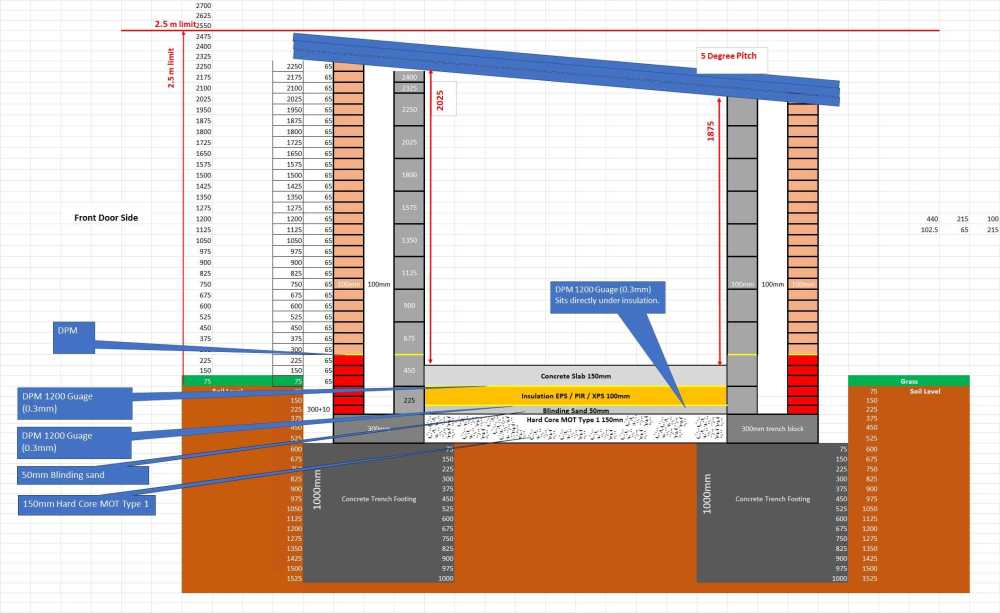
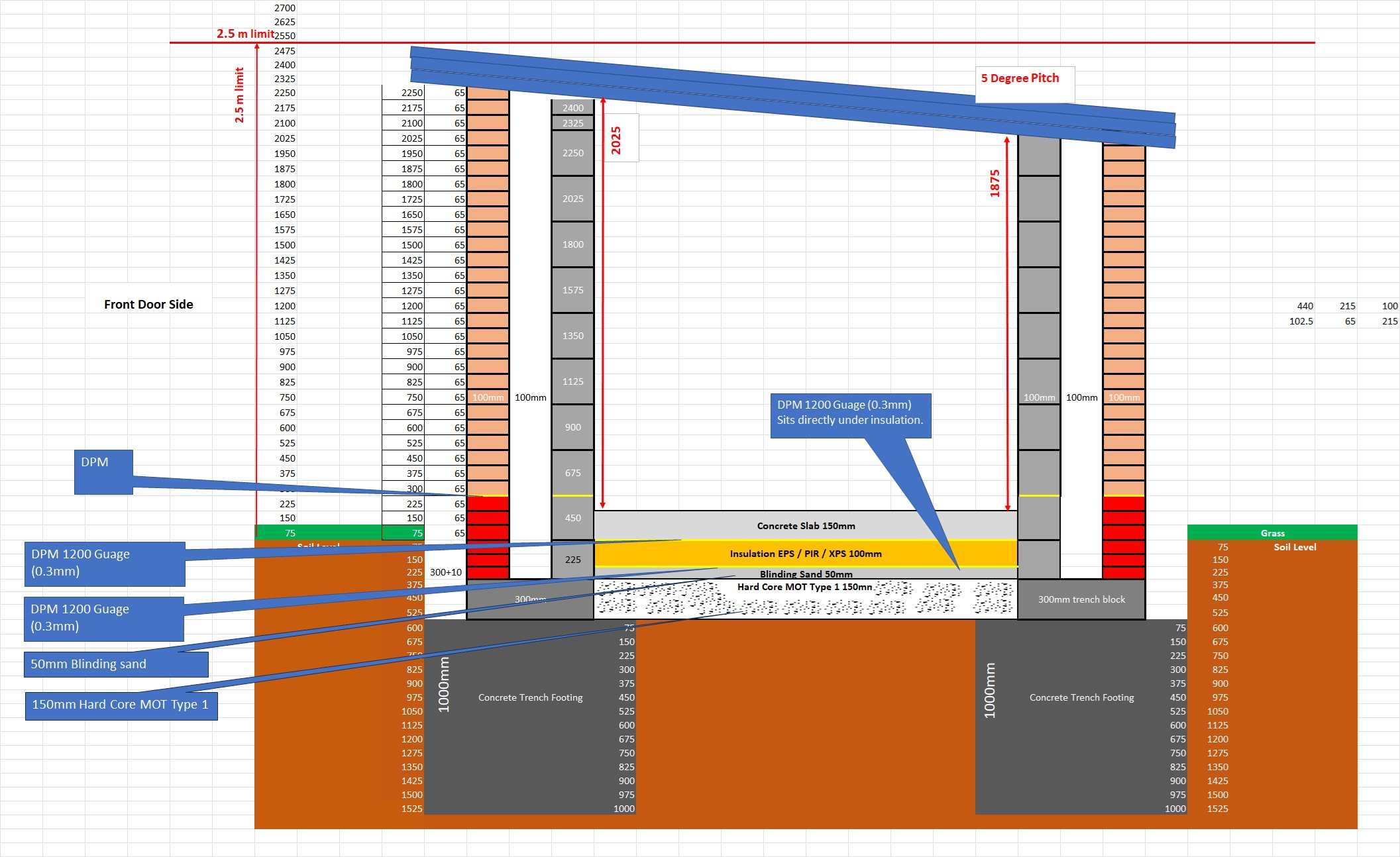
Afternoon all, I’m taking on a project I’ve wanted to do for a very long time, and I’ve finally got the time to tackle it. I’m planning to build a summerhouse / workshop / gym (approximately 4.2 m x 7 m) at the bottom of my garden. The plan is to stay within permitted development, which (from my understanding) limits the overall height to 2.5 m at the highest point. The building will be single storey, constructed on trench foundations, with brick and block walls and a single-pitch (hybrid) roof. I’ve recently realised that once I factor in a treadmill and the deck height being around 300 mm above floor level, I don’t quite have enough internal height to run without banging my head on the ceiling. Ideally, I’d like to position the treadmill at the lowest point of the roof, as I have other plans for the higher end of the space. However, even placing it at the highest point still appears to leave me short on headroom. I’m not entirely confident my calculations are correct — most of my information has come from online resources. My main question is: Is it acceptable / normal practice to lower the finished floor level, as shown in the diagrams above? Doing so would likely mean incorporating one or two internal steps, which I’d prefer to avoid if possible, as I don’t think it would look particularly good. I’ve put together two very basic diagrams in Excel (I’m not sure what other software would be better — suggestions welcome). The first diagram shows my initial attempt, where the floor level is slightly higher than the external ground level. The second shows the same building with the floor dropped. I could potentially go lower if required, but before doing that I’d really appreciate some professional input. I’m particularly concerned about damp, based on some reading I’ve done online. I’ve yet to finalise the roof design, but again from what I’ve read, a hybrid roof seems to offer a bit more internal headroom. For context, I’ve never taken on a project like this before and I’ve never laid a brick — but I’m keen to learn, realistic about my limits, and determined to do things properly. I’m mainly looking for advice on: • Any pitfalls with lowering the floor • Whether this approach is structurally and practically sound • Anything obvious I might be missing at this stage • Whether 1000 mm concrete footings plus 225 mm trench blocks would be sufficient in Lincolnshire The diagrams are basic, but hopefully clear enough to illustrate what I’m trying to achieve. Any advice would be very much appreciated.