jimseng
-
Posts
129 -
Joined
-
Last visited
jimseng's Achievements

Regular Member (4/5)
4
Reputation
-
Earth Neutral bond for hybrid inverter (again)
jimseng replied to jimseng's topic in Photovoltaics (PV)
I paid £2330 for 32kw of batteries. (2 x 16.1k). That seems to be very much in the "lower up front cost" category. 😁 -
Earth Neutral bond for hybrid inverter (again)
jimseng replied to jimseng's topic in Photovoltaics (PV)
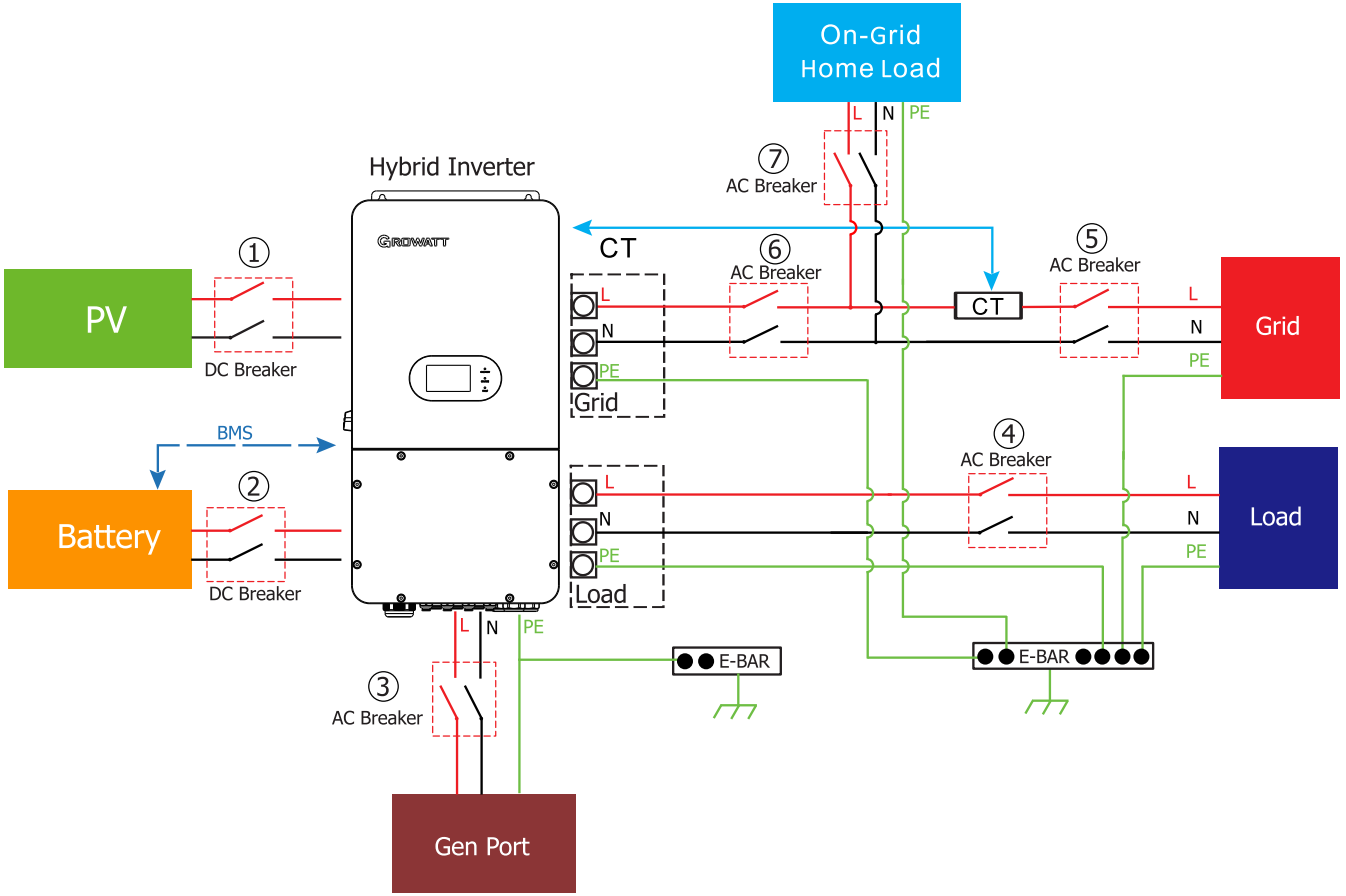
@Beelbeebub A wiring diagram would be most interesting if you can find it, although I am sure I can work it out. -
Earth Neutral bond for hybrid inverter (again)
jimseng replied to jimseng's topic in Photovoltaics (PV)
I am planning on exactly what you describe apart from the kitchen ring main which I will have on the grid consumer unit. I will also have a ring main from the load side for the fridge and freezer and a couple of sockets so I can cross plug the kettle mid power cut. So you have two changeover switches? I was wondering about the potential inverter failure scenario and whether to put in an extra switch and whether it was worth it. -
Earth Neutral bond for hybrid inverter (again)
jimseng replied to jimseng's topic in Photovoltaics (PV)
I see what you did there. Good one! 😂 -
Earth Neutral bond for hybrid inverter (again)
jimseng replied to jimseng's topic in Photovoltaics (PV)
Actually I think it does need human intervention, that is why I am planning it this way. If the grid went down while the immersion, heat pump and cooker were going full tilt it would probably take the inverter out (10kw). That would be annoying. This way I can choose which of the heavier devices I want. The biggest down side to it being manual is that if the oven went out then the soufflé would collapse, but I haven't cooked one in 30 years. -
Earth Neutral bond for hybrid inverter (again)
jimseng replied to jimseng's topic in Photovoltaics (PV)
That is correct, although I am going to have a manual changeover in the event of a long term power cut so I can include the heavier, grid side loads if I need to. I have found that so many installations are retro fitted and the backup load side is ignored and the information is therefore limited for people like me installing into a new build. I guess the costs of rewiring to new DBs is prohibitive. Often there seems to be a couple of sockets to charge mobile phones on the load side. -
Earth Neutral bond for hybrid inverter (again)
jimseng replied to jimseng's topic in Photovoltaics (PV)
Yes. The manual states current so they are all breakers. (100 amp grid, 80, home loads). I guess it is a serving suggestion and to consult local regs. I tend to take things too literally. -
Earth Neutral bond for hybrid inverter (again)
jimseng replied to jimseng's topic in Photovoltaics (PV)
Yes. In fact it pretty much makes the whole thread moot. But why double pole breakers in the second schematic? They aren't going to trip in a power cut. Are they also for manual disconnect? -
Earth Neutral bond for hybrid inverter (again)
jimseng replied to jimseng's topic in Photovoltaics (PV)
I'm not sure what you mean here. I don't see a changeover. There is an internal disconnect in the inverter so the on grid load goes down in the event of a power cut. Have I misunderstood what you are saying? -
Earth Neutral bond for hybrid inverter (again)
jimseng replied to jimseng's topic in Photovoltaics (PV)
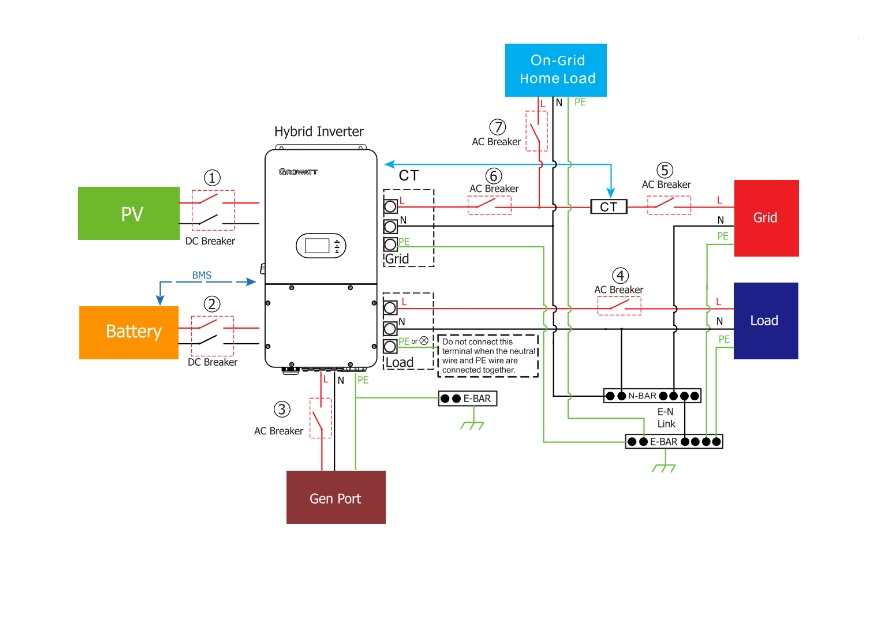
I'll certainly report back if I hear anything. It is perhaps only fair to post the other schematic from the manual which depict double pole MCBs and no link. I thought I was asking an easy question.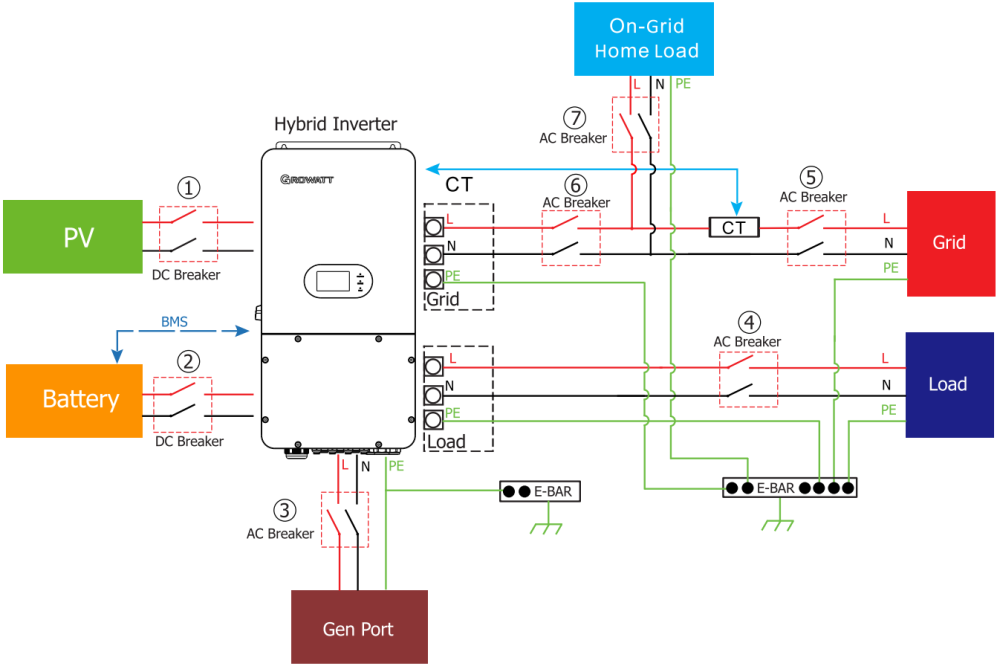
-
Earth Neutral bond for hybrid inverter (again)
jimseng replied to jimseng's topic in Photovoltaics (PV)
I don't have a grid connection yet, but I will have. Maybe not until later in the year. I think the schematic is not really correct. I think the permanent neutral link is for other countries. I was under the impression that the neutrals are common until the grid goes down, at which point the grid is disconnected internally with a double pole relay, hence the need for an earth neutral bond relay, but it is hard getting the information. I have reached out to Growatt, I'll see if they come back to me. -
Earth Neutral bond for hybrid inverter (again)
jimseng replied to jimseng's topic in Photovoltaics (PV)
Even if the link was in the grid somewhere, isn't it electrically the same? The trouble is it probably covers different countries and is a bit generic. I am wondering what UK people think. The Sunsynk manual has the same schematic. -
Earth Neutral bond for hybrid inverter (again)
jimseng replied to jimseng's topic in Photovoltaics (PV)
In the image the load and grid neutrals are permanently tied so even in a power cut there is still continuity to the grid neutral. Surely, unless there is a cable fault, the bond would still remain? -
At the risk or reopening the can of worms and revisiting an old thread I am still wondering about the earth neutral bond relay in the event of a power cut. I have now ordered a Growatt 10k hybrid inverter and according to this diagram (from the Growatt manual) the earth neutral bond is permanent and provided by the DNO at the meter, or wherever it is. (Or at least it seems to be relying on the DNO E/N bond). In the event of a power cut it looks to me like the earth neutral bond still remains in place as the grid and home loads neutrals are connected and therefore the E/N bond is still intact. I suppose here the additional E/N bond relay would be necessary if there was a cable fault between the house and the DNO E/N bond, but doesn't that take place in the meter box? I'll have to have a ground spike anyway given that my grid connection is a way off but once it is in place...what then?
-
How can I roughly calculate UFH output at given flow temps.
jimseng replied to jimseng's topic in Underfloor Heating
@SimonD I realised that, I was responding to @johnmo's question as to why I put that flow rate down. Looking at it, this is the lowest w/m2 demanding room. But it does make me wonder if my FF pipe centres should be 200mm rather than 150mm. That is partly why I started this thread in the first place. -2.5 according the ASHP people, but who knows if that's the truth. @JohnMo You want a notification when I have another stupid response?