fandyman
-
Posts
34 -
Joined
-
Last visited
Everything posted by fandyman
-
Appreciate the input - in this case both the independent expert and FENSA concluded the installation does not meet the standard of reasonable skill and care and is non-compliant with Building Regulations. I understand that in a fully specified project more detail could be agreed upfront, but for a standard domestic installation the expectation is that the installer designs and installs appropriately. The findings here point to installation defects rather than specification issues. Also, if the installation requires the customer to design thermal detailing and specify tolerances to avoid basic defects, it’s probably not being carried out with reasonable skill and care anyway which the reports confirm.
-
Sorry I said "as well" in the sense it was concluding the same as FENSA did which was basically a defective install. Doors are of poor quality (but doors and glazing meeting build regs themselves) as confirmed by independent expert (pricing of the doors was standard though) but yeah the sole reason for the issues observed was the poor installation resulting from lack of reasonable skill and care from the installer.
-
Just to update that S75 independent expert concluded that the installation is defective as well: Installation did NOT meet the standard of reasonable skill and care Doors/windows were installed too tightly due to inaccurate measurements Little or no insulation between frame, cill, and masonry This has created thermal bridging, especially at the bottom of the installation Condensation and mould confirmed under normal living conditions (not lifestyle-related) Standing water in the frame due to lack of proper drainage (no weep holes) Evidence of poor sealing, contributing to water and air ingress The recommendation is full removal and replacement of the doors and side panels.
-
Quick update following the FENSA inspection. An independent inspection has now been carried out, and the installation has been formally assessed as non-compliant with Building Regulations (Part L - thermal performance). The key findings were: The doors/windows were installed with only ~20mm setback from the external brick face, which the assessor states is likely to cause thermal bridging Recommended minimum setback is ~50mm, or use of thermal breaks The frame was not properly centralised in the opening, resulting in insufficient sealing and lack of expanding foam, affecting airtightness Additional issues noted around drainage and water retention within frame Overall conclusion: installation not compliant, with thermal performance concerns validated. At this stage, I’m focusing on understanding the appropriate remediation route based on this, rather than speculating further. I’ll update again once I’ve progressed the next steps on the S75 side.
-
Layout advice on a first-floor side extension
fandyman replied to fandyman's topic in New House & Self Build Design
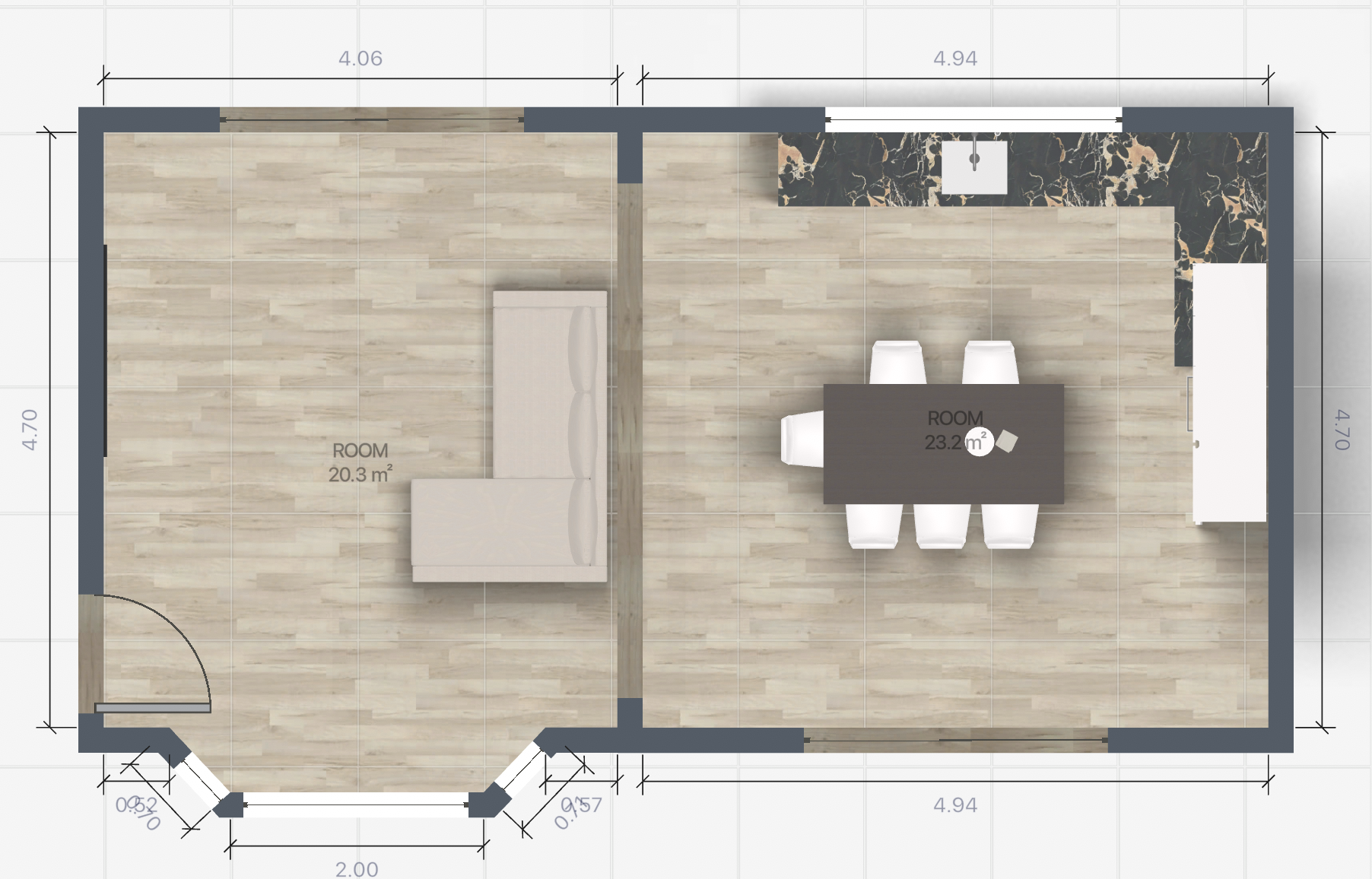
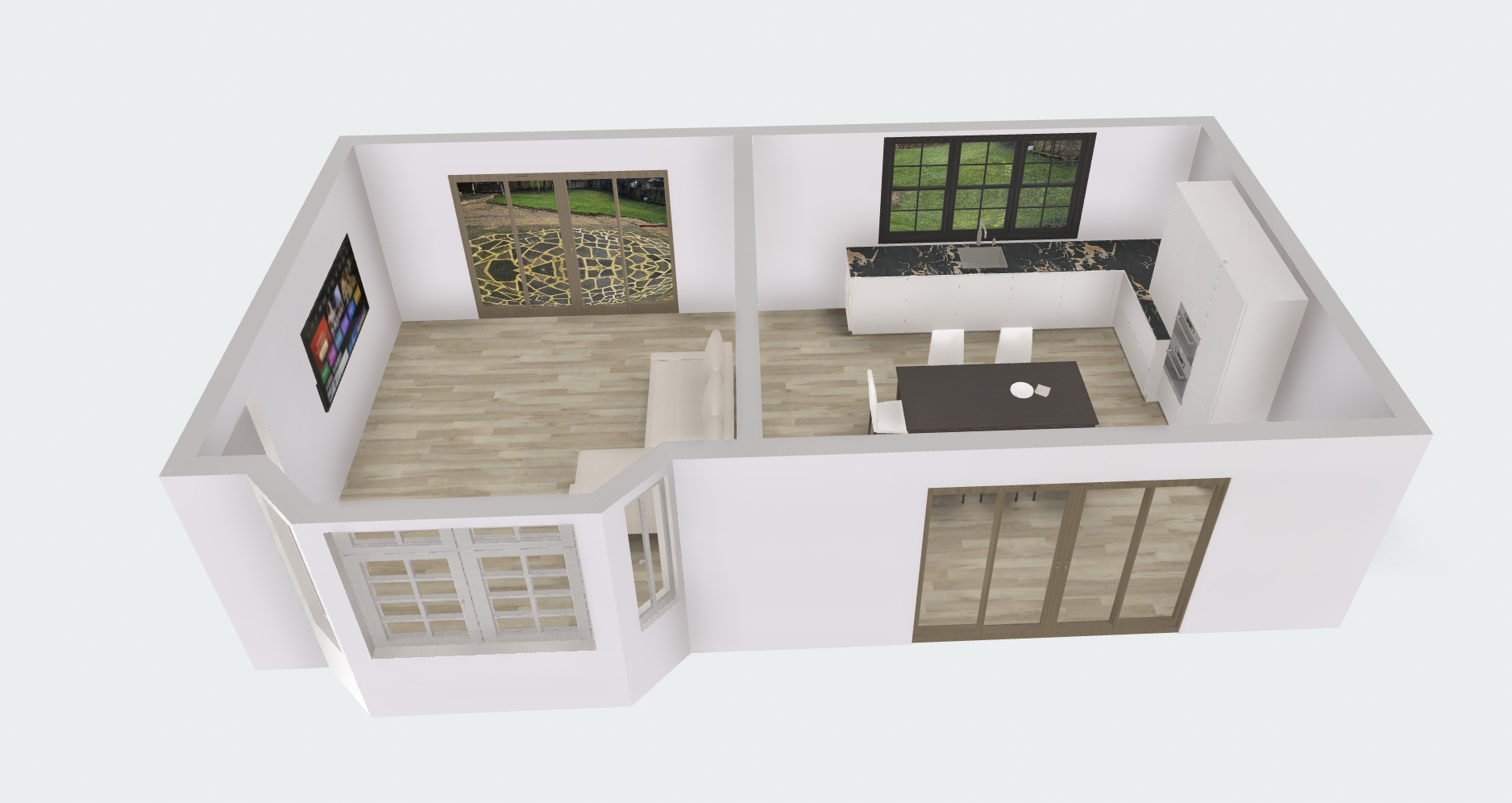
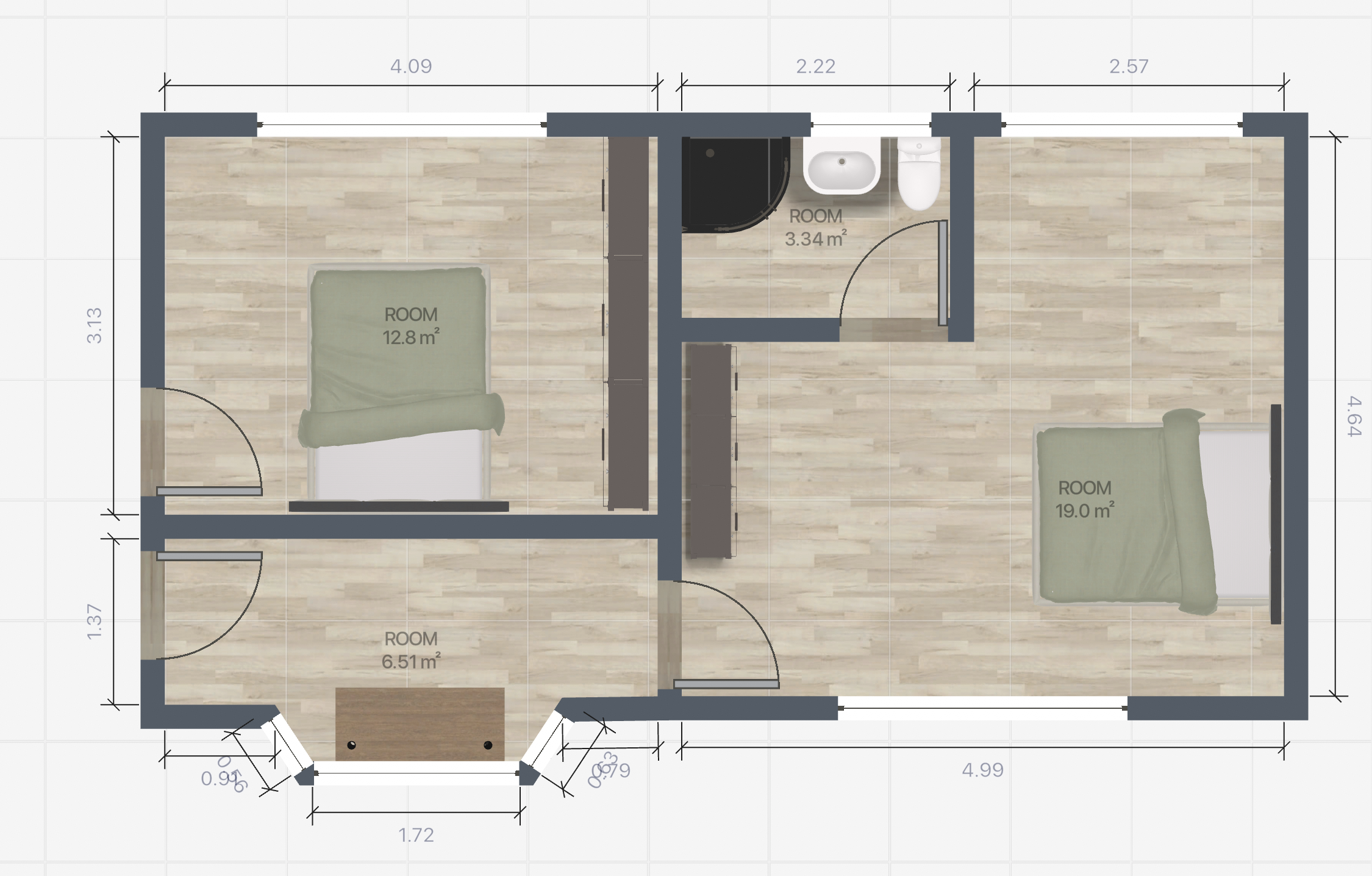
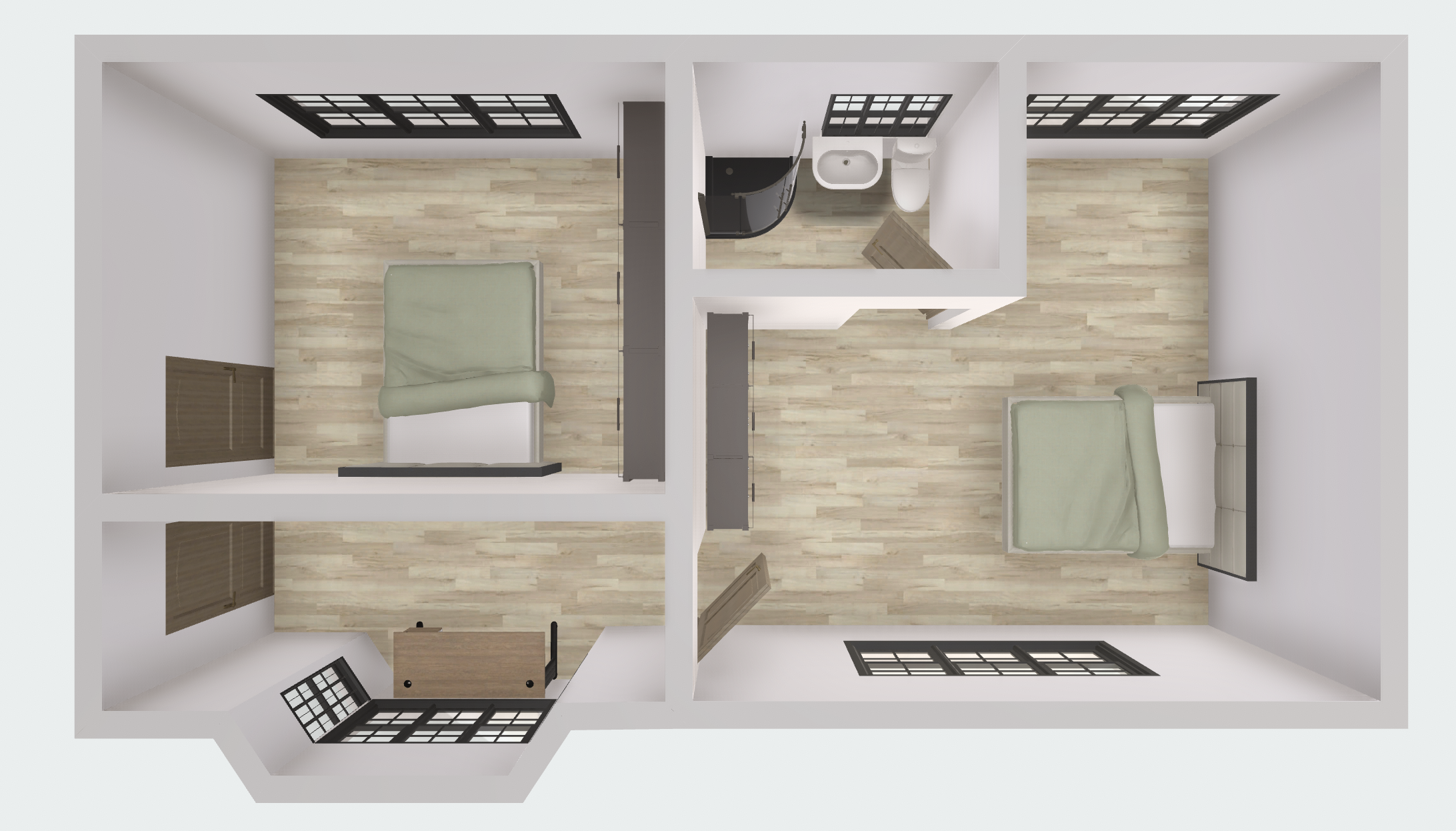
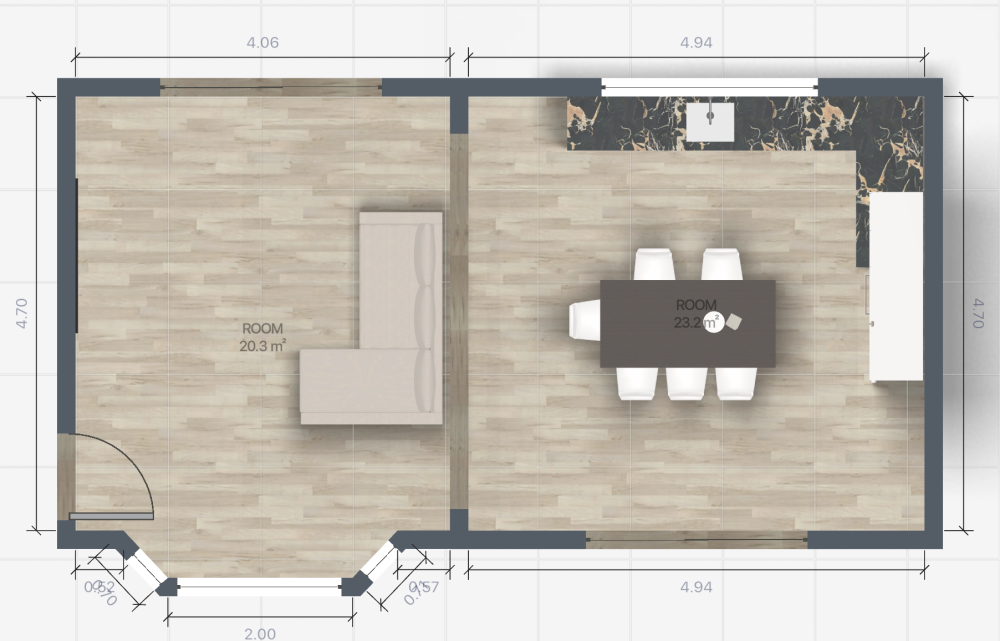
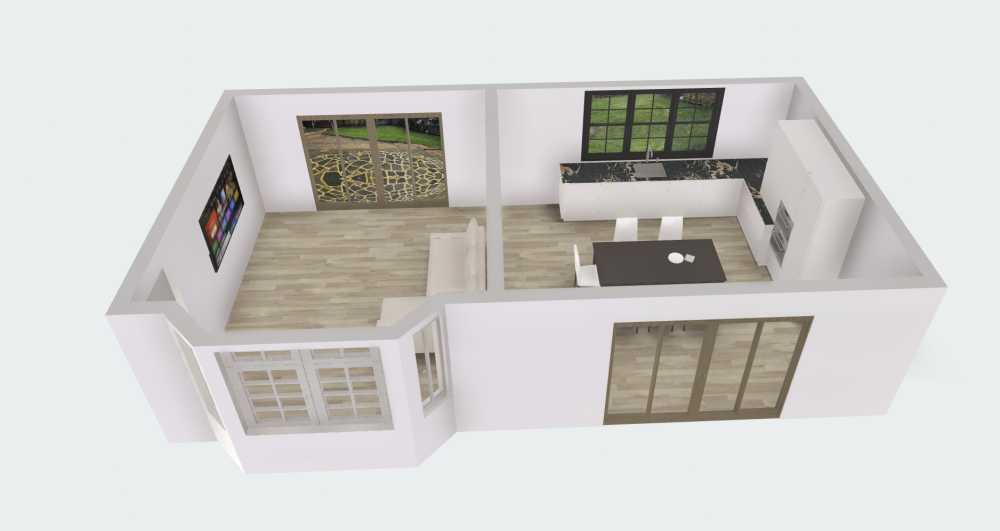
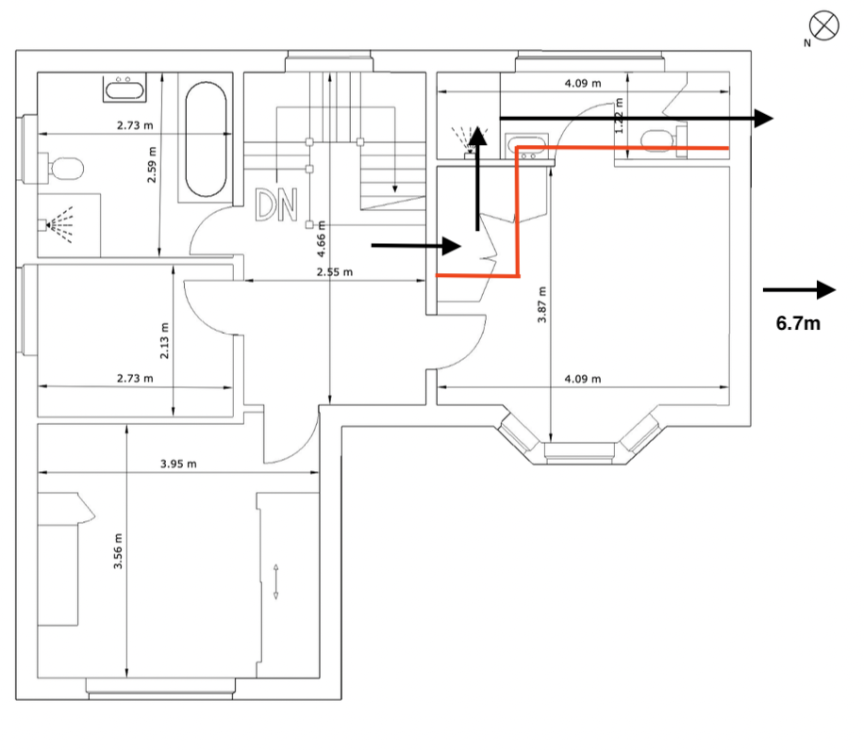
I guess you must have been thinking about a detail like the below @garrymartin: In terms of the en suite @G and J I have actually made it even less intrusive with the above and also downstairs will have a relocated kitchen (new drainage through the front garden connecting to the existing as a new branch inside the existing chamber on the drive) so it should work all fine.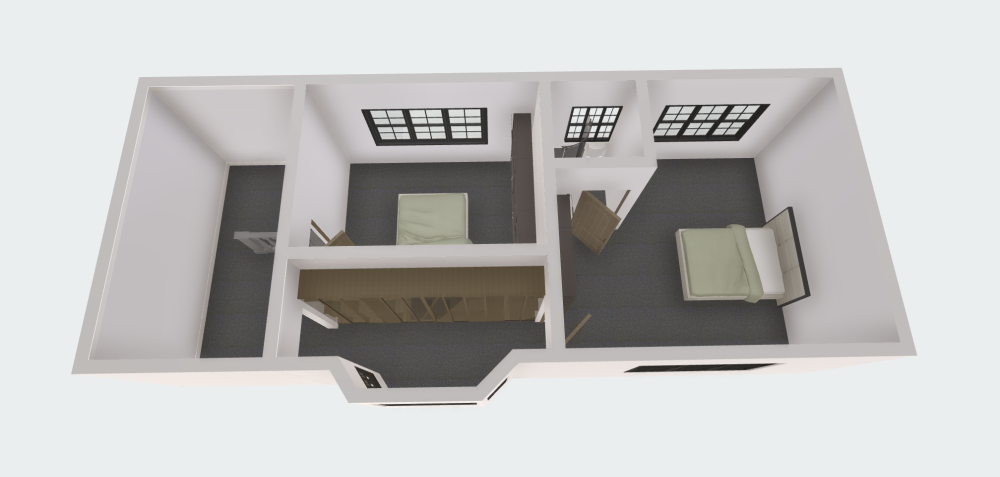
-
Layout advice on a first-floor side extension
fandyman replied to fandyman's topic in New House & Self Build Design
Thanks for all the great ideas - I think this could work. Will now be checking other aspects of it including the lower floor as well. -
Layout advice on a first-floor side extension
fandyman replied to fandyman's topic in New House & Self Build Design
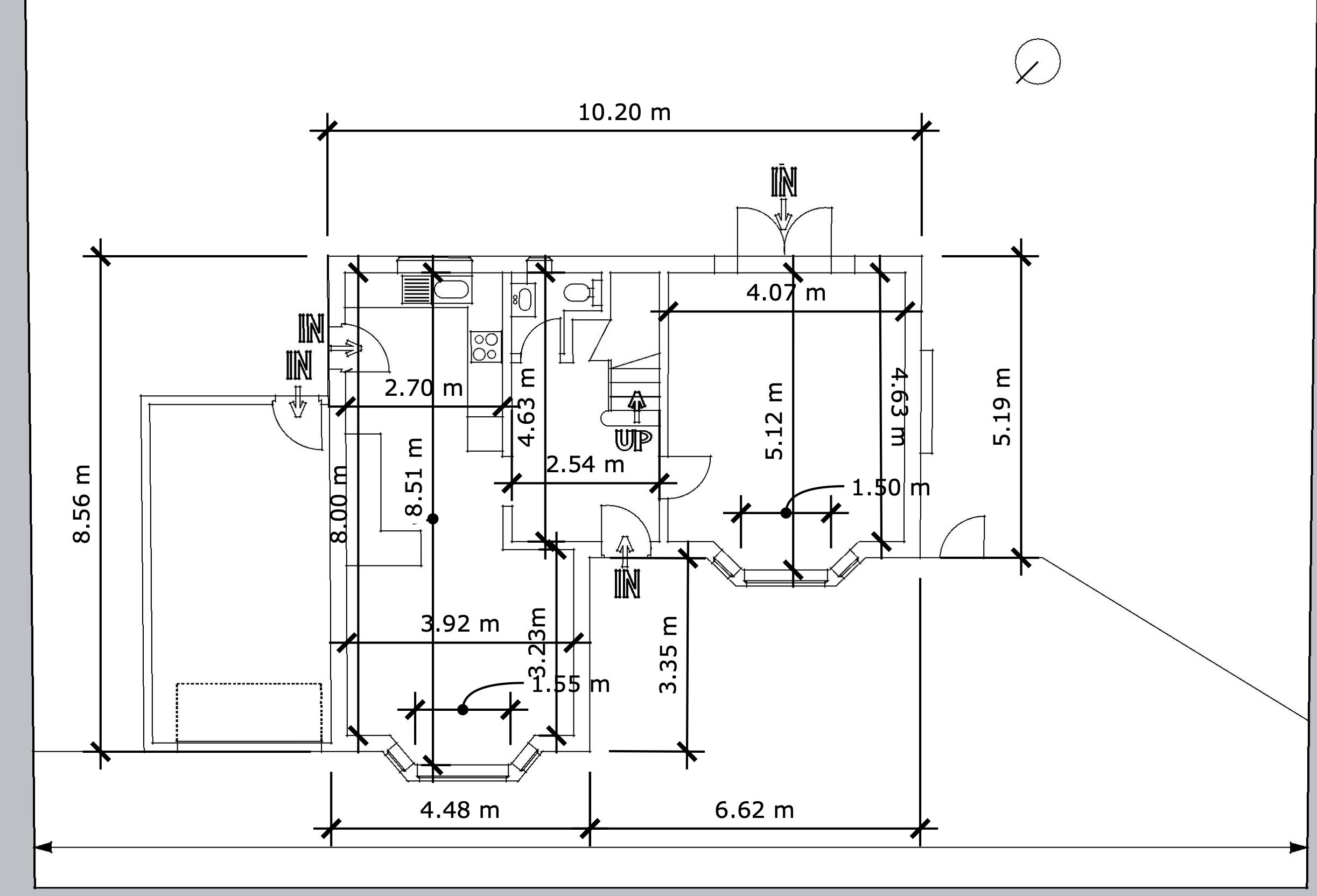
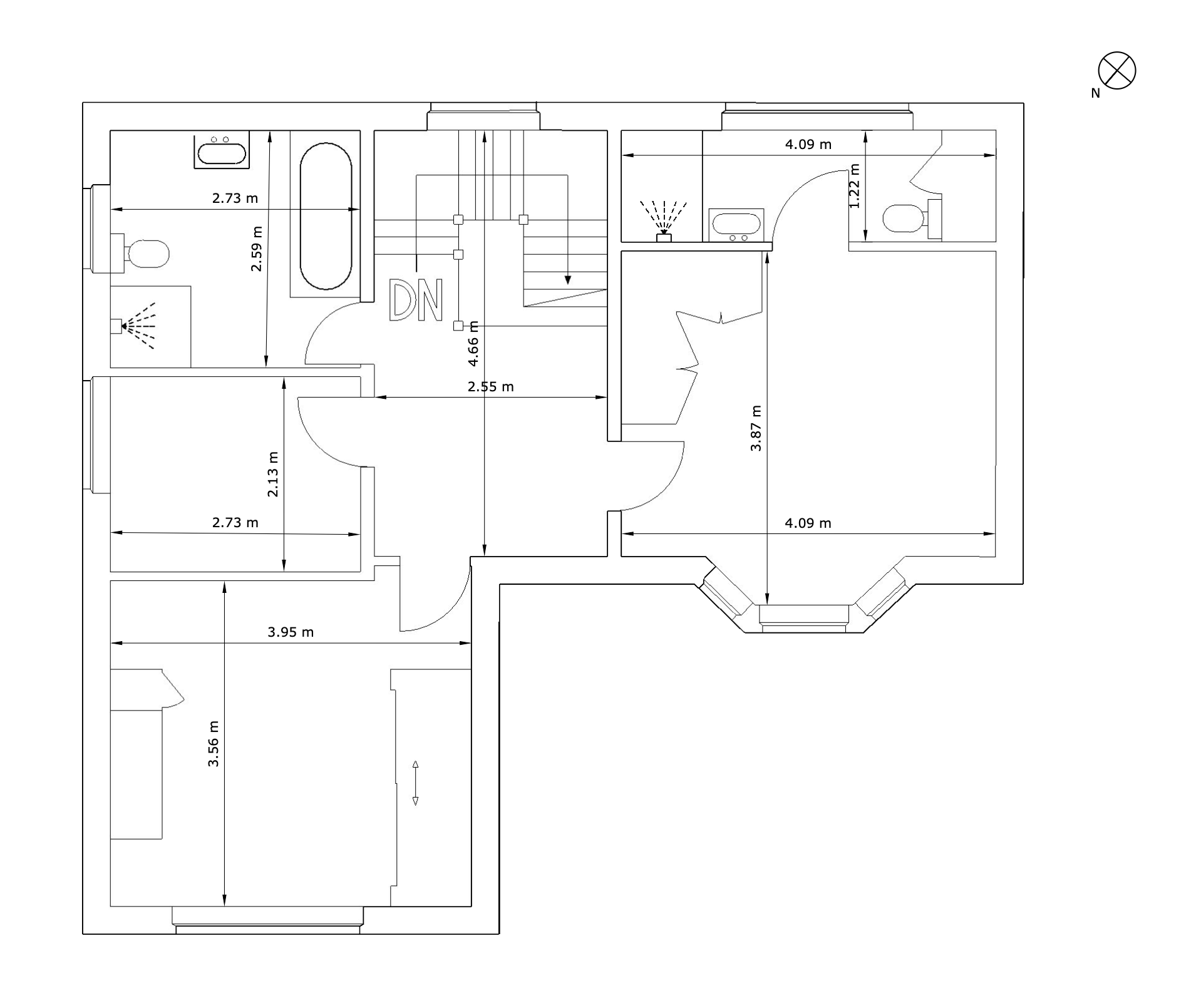
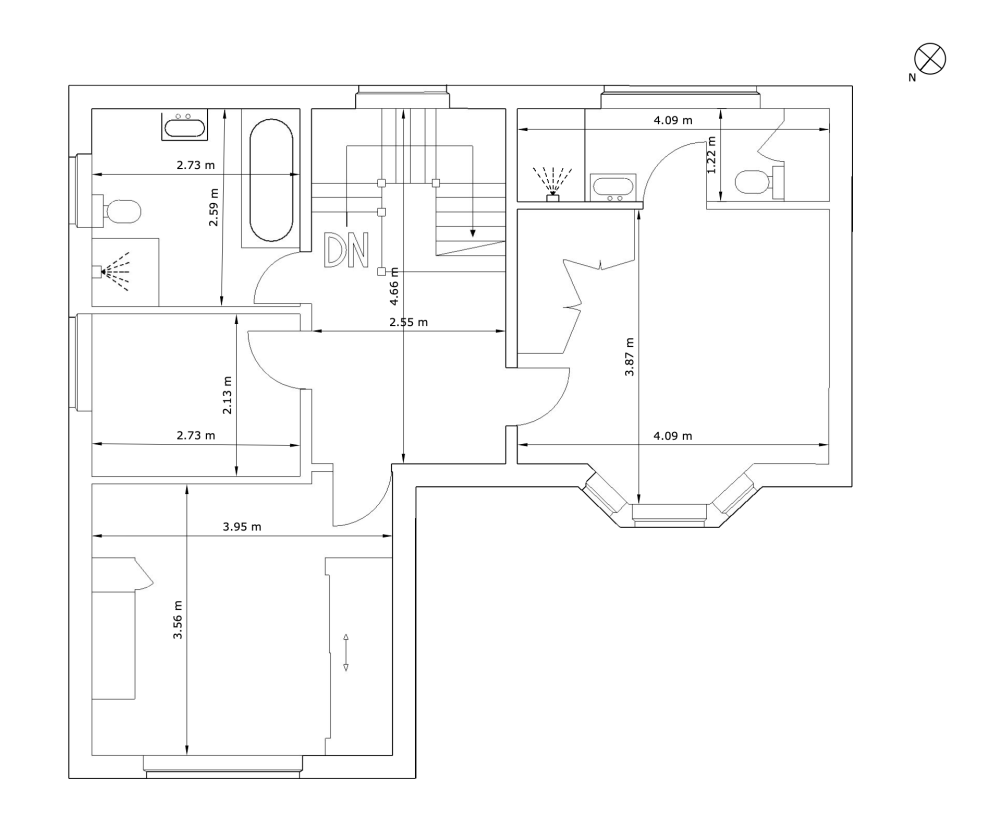
@ConorSee the house floor plan as is currently. @G and J Good point with 'part of the main bedroom' suggestion. I like this approach a lot. All in all, if well executed, do you think it wouldn't kill the value? I know think that as long as the new wide bay hallway serve a purpose eg. drawers/ dressing table/window seat it could make the plan work. WDYT?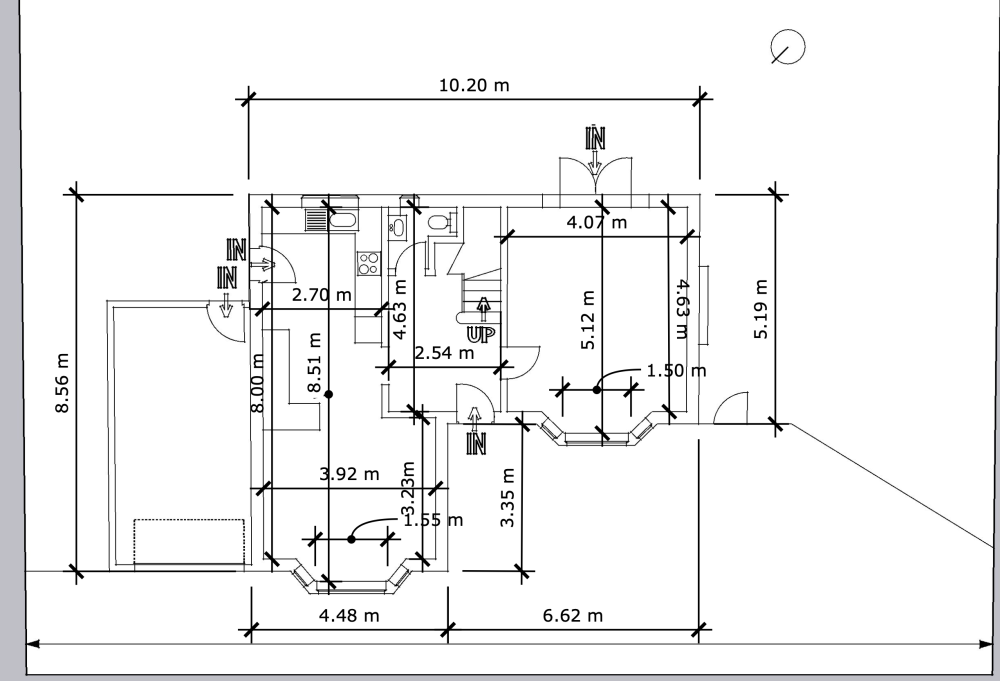
-
Layout advice on a first-floor side extension
fandyman replied to fandyman's topic in New House & Self Build Design
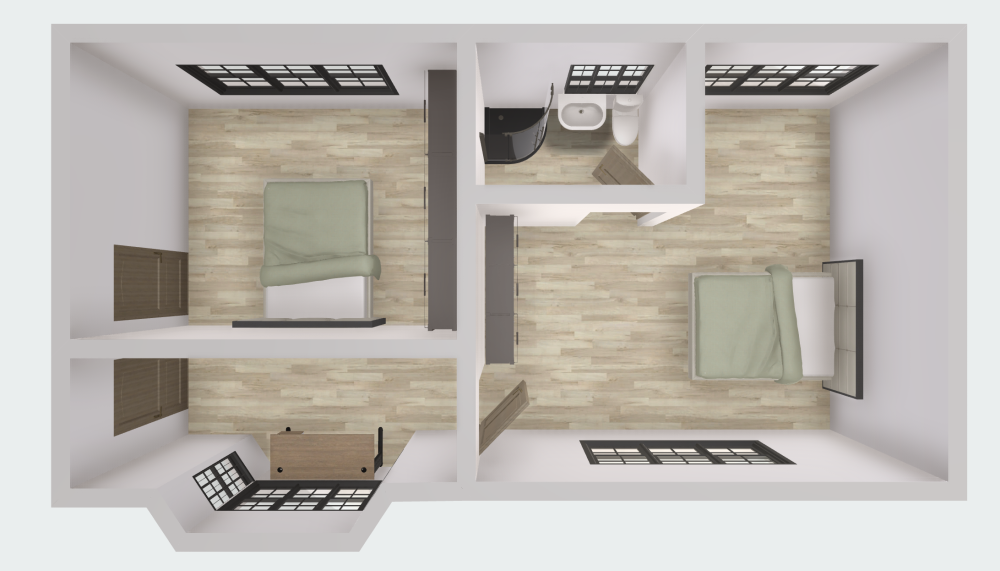
This is what it would look like @G and J I would have to move the ensuite out of that bedroom and create a new one in a new master bedroom Would it be acceptable or look odd?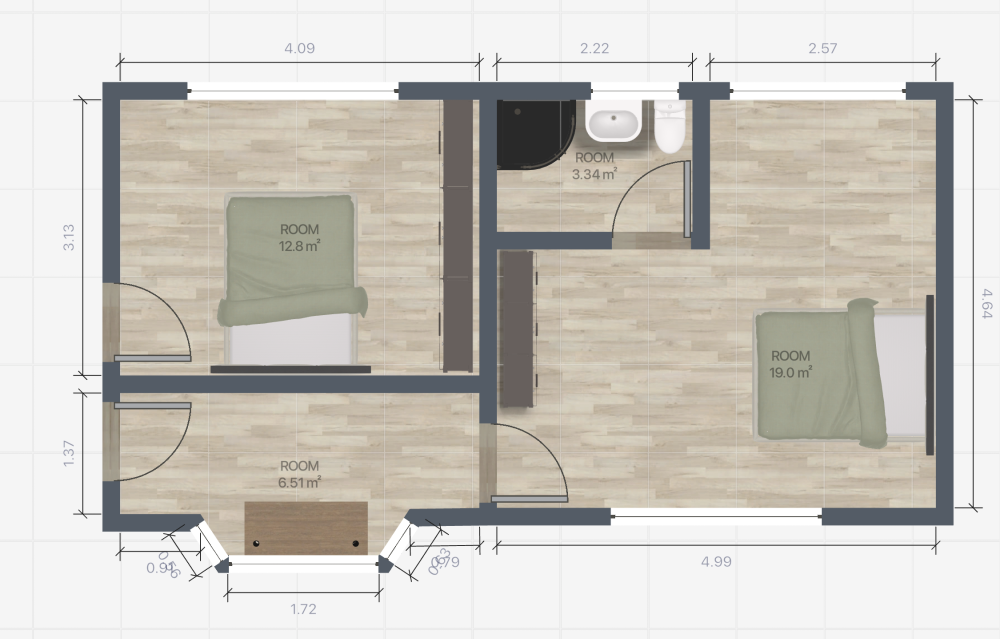
-
Layout advice on a first-floor side extension
fandyman replied to fandyman's topic in New House & Self Build Design
It will be a secondary bedroom and the new room added to the right will become a master bedroom with ensuite. The window in the bathroom is a standard wide non-opaque window. Are you suggesting the bay window may be presented as a functional desk space or bench, desk, reading nook? That might be one option that I have not considered yes. -
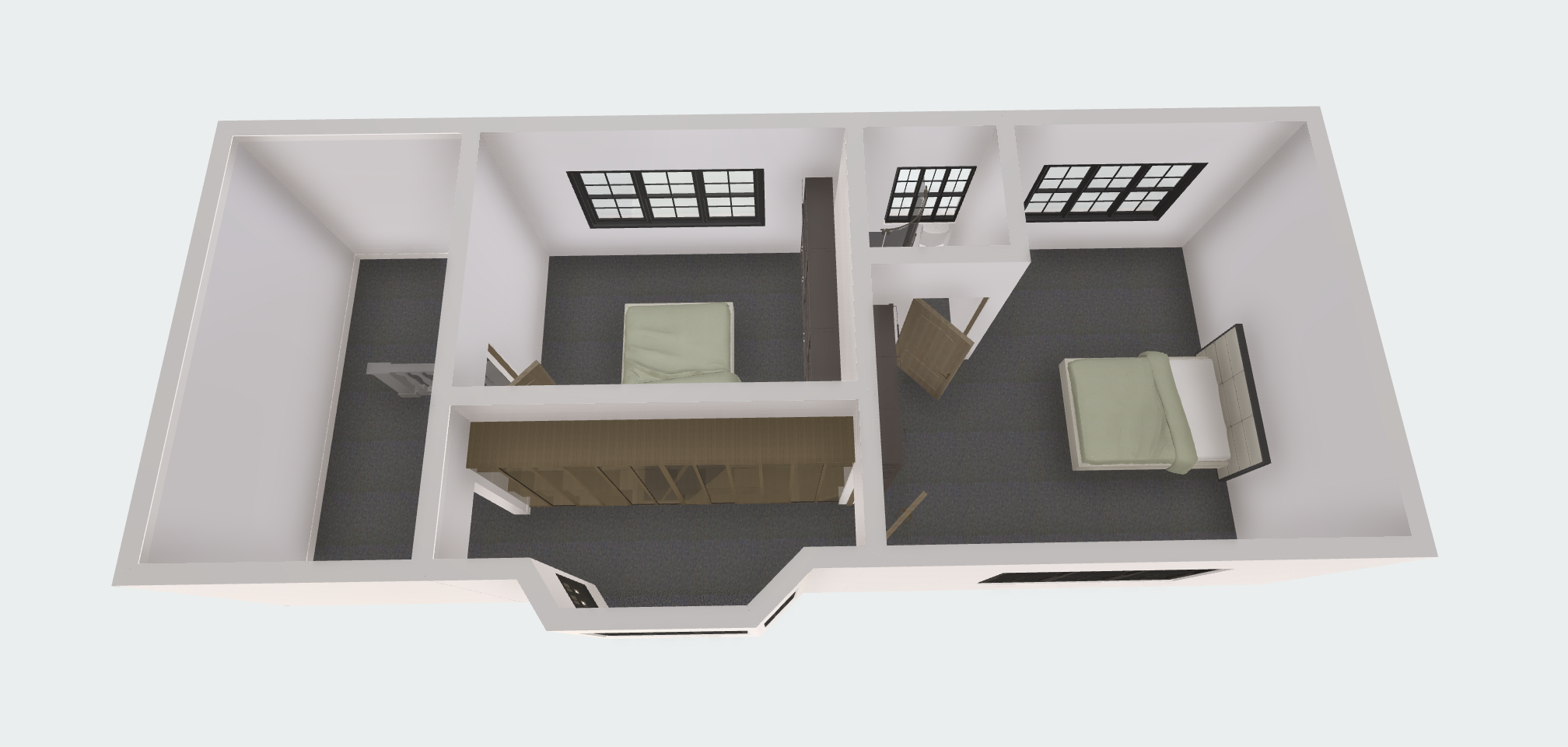
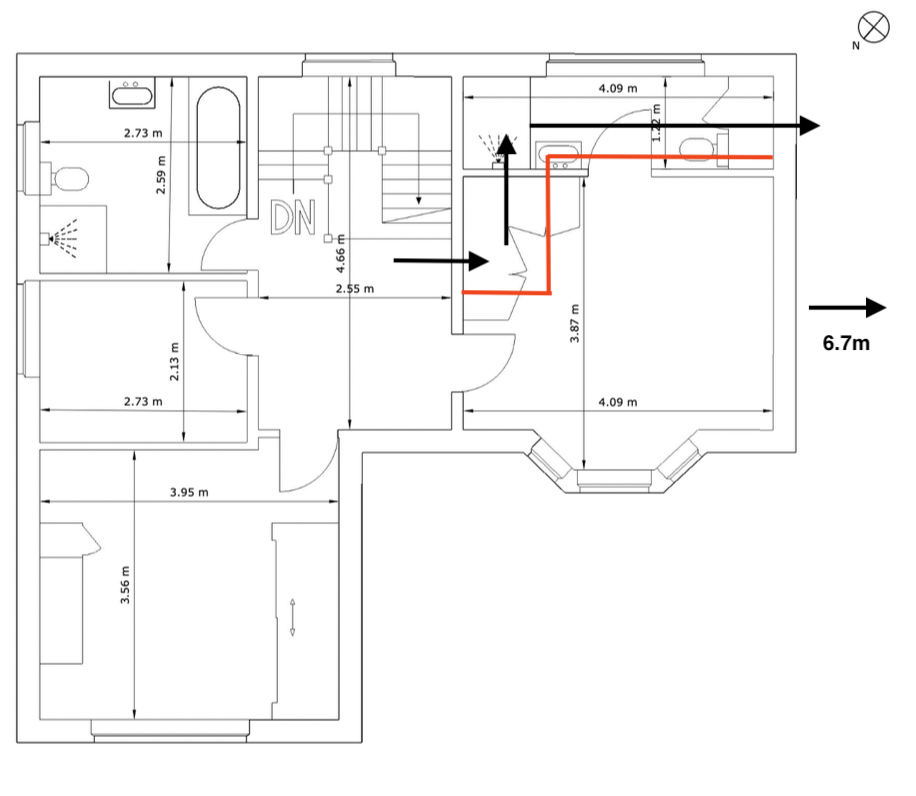
Hi all, looking for opinions on a first-floor side extension layout (UK). I’m considering adding one additional room on the first floor to the side of the house (not rear). I’ve attached the existing first-floor plan with the new hallway marked in red and black. Because of the existing stair position and structure, one option involves forming a short internal corridor that is carved out of the current main bedroom (through existing wardrobe space and en suite), rather than walking directly through the bedroom itself. Important clarification: This would not be a walk-through bedroom The new room would be accessed via a dedicated corridor The corridor would have a full-height window for daylight The sleeping area would remain separated by a door So practically it would be closer to a small internal hallway arrangement, not circulation through the bed space. My questions: Is this type of solution generally considered acceptable in UK extensions if proportioned well? Are there any resale or usability red flags you’d immediately see? Would planners / Building Control typically object to this, assuming room sizes and light are compliant? Happy to hear both professional and homeowner perspectives - especially if you’ve seen similar layouts work (or fail). Thanks in advance.
-
I don’t actually disagree with any of that. Identifying causation rigorously is exactly why I’ve moved away from forum debate and toward independent inspection. At this point we’re well past exchanging hypotheses - the issue is persistent, localised, and observable, and the next step is to establish the mechanism formally rather than speculate further. I also agree that trades too often dismiss customer observations until someone “with letters after their name” repeats the same thing. That’s unfortunate, but it’s precisely why independent assessment exists. Whatever the outcome - whether responsibility ultimately sits with the installation detail or the underlying fabric - understanding what’s actually happening is essential before any proper remediation or replacement can be considered. Thanks for taking the time to set that out, and happy new year to you too.
-
Thanks for taking the time to think this through in detail. Some of the scenarios you describe - frame-to-frame alignment tolerances, bedding of the cill, or concealed gaps masked by sealant - are interesting. However, they all ultimately point back to the same issue: the assembly and detailing of a multi-part door system at the threshold. If any of those conditions exist, they wouldn’t be characteristics of the existing building fabric but of the way the system has been installed and integrated. Small tolerances, hidden voids or misalignment at the base may be common, but they are precisely the kinds of details that affect internal surface temperatures and condensation risk. I also note the suggestion that the glazing units themselves may be allowing air passage around the frame. If that were the case, it would raise a much more fundamental issue with the assembly and sealing of the system rather than with the surrounding structure. Ultimately, the challenge here isn’t identifying ever more hypothetical mechanisms in isolation, but assessing whether the installation, taken as a whole, has resulted in an internal threshold detail that performs acceptably under normal occupied conditions. That’s why I’m seeking an independent assessment rather than relying on conjecture or what might typically be tolerated in practice. I appreciate the input, but at this stage the question isn’t what might possibly explain it, it’s what is actually happening — and whether the installation outcome reflects reasonable care and skill.
-
I think we’re actually closer in position than it might appear - though perhaps drawing different conclusions from it. You’re right that Section 75 isn’t a forum for debating where industry responsibility ought to sit. That’s precisely why I’m not relying on what is customary, typical, or widely tolerated in the trade, but instead on independent assessment of whether the actual outcome of the service supplied meets the standard of reasonable care and skill. Where I part company is the suggestion that persistent condensation and mould are merely “subjectively unacceptable”. These are objectively observable outcomes, not matters of taste, and they are exactly the kinds of issues that reasonable care and skill are meant to prevent - regardless of how common a particular installation detail may be. You’re also right that an expert will examine whether a competent installer should have identified the sub-threshold detail and either mitigated it or flagged it before installation. That question sits at the heart of the dispute, which is why speculation about how often this is overlooked in practice doesn’t really resolve it. I appreciate the confidence expressed about how an expert might conclude. I’m comfortable letting evidence rather than expectation decide that point. If the conclusion is that the underlying fabric alone is responsible, I’ll accept it. If not, responsibility will follow accordingly. Either way, I agree - it will be interesting to see the outcome, and I’m happy to report back once it’s determined.
-
That’s fair - we’re clearly coming at this from different perspectives. Where I disagree is that reasonable care is limited only to what a trade chooses to concern itself with. It’s judged on the service actually provided and the outcome it creates, not on whether the installer considers certain aspects “out of scope”. I’m not expecting encyclopaedic knowledge of building regulations or retrofit design - I’m questioning whether an installation outcome that produces persistent condensation and mould under normal conditions is an acceptable result of the service supplied. You’re right that the credit card provider may apply its own logic - which is precisely why I’m comfortable letting an independent process assess it rather than relying on forum consensus. At that point it becomes an evidence-based decision, not a matter of sympathy either way. I appreciate the discussion - I think we’ve probably taken it as far as it can usefully go here.
-
Reasonable care isn’t limited to what a trade normally chooses to think about - it’s judged on the outcome of the service. If the installation creates a new internal surface that predictably falls below dew point under normal conditions, it’s fair to at least question whether that outcome is acceptable. I didn’t engage a general contractor or an architect, but I also didn’t instruct a detail that would knowingly create condensation and mould. The installer surveyed the opening, specified the product, and executed the threshold detail. Whether that outcome is ultimately deemed acceptable or not is exactly why I’m seeking independent review - not because I expect installers to be “more than a window company”, but because outcomes matter regardless of marketing labels.
-
Not exactly. There was a conservatory attached, but it wasn’t part of the main thermal envelope and wasn’t heated to house temperatures. More importantly, the junction itself wasn’t exposed internally. Before the doors were installed, there was a continuous screed/floor build-up across that threshold area, so no cold internal sill/frame surface existed and there was no condensation or mould there. The change introduced by the installation is a new internal sill/frame junction directly coupled to ground-connected masonry. That exposed surface is now cold enough to condense under normal conditions
-
That’s a fair hypothesis to explore, but there’s an important factual point to clarify. Before the doors were installed, there was a continuous screed and floor build-up running from the living space into the conservatory area. The ground-level brickwork at the opening was not exposed internally, and there was no visible condensation or mould at that junction. As part of the works, the conservatory base was removed and the screed was cut back to just behind the brick line. The installer then positioned the sill/frame forward and created a new internal junction, including a small expanding-foam upstand between the sill/frame stack and the remaining screed/finished floor. That foam is incomplete in places and has visible gaps. So while I don’t rule out the ground-contact masonry contributing to cooling, the key change is that the installation has introduced a new cold internal surface and junction detail that did not previously exist, and that surface is now where condensation and mould are forming. That’s why I’ve been focusing on the threshold detail itself - not because I think the building fabric was perfect before, but because the installation altered how that fabric is thermally coupled to the internal environment. I’m not asserting a single cause; I’m trying to understand whether the way the sill and frame were positioned and detailed has unnecessarily amplified what was previously a non-manifesting condition.
-
I don’t think that follows, and it’s not what I’m asserting. I’m not saying silicone or packers create a thermal bridge in isolation. I’m saying the resulting installation detail has coupled the internal frame directly to cold, ground-connected masonry, producing an internal surface temperature low enough to repeatedly condense and grow mould. That outcome is observable and isn’t in dispute. Replacing the lower course of bricks with Marmox / Compacfoam would certainly be one way of mitigating that - but that doesn’t automatically mean the only way, nor does it mean the installer bears no responsibility for the detail they chose and executed. They surveyed the opening, specified the product, and installed the threshold. I didn’t instruct a brick-to-brick sill or prevent any form of thermal mitigation. Saying “this is how any installer would do it” describes industry normality, not whether the outcome is acceptable when it results in persistent condensation under normal internal conditions. Those two things aren’t the same. I’m not arguing that the installer should redesign the house or retrofit insulation into the floor. I’m questioning whether the threshold detail they implemented has unnecessarily amplified heat loss at that junction, and whether the resulting internal surface conditions are a reasonable outcome of the service provided. That’s why I’ve been careful to frame this as an outcome-based question, not a blanket criticism of standard practice.
-
I don’t disagree that many firms would install it this way - that’s kind of the point. “Common practice” and “acceptable outcome” aren’t always the same thing, particularly when the outcome is a persistent cold internal surface that repeatedly condenses and grows mould under normal conditions. I didn’t alter or newly create the opening - it existed as-is when I purchased the property. The installer surveyed it, specified the door, and executed the threshold detail. I didn’t instruct a brick-to-brick sill or prevent any form of thermal mitigation. I also accept that many installers focus on airtightness, water ingress, and operation rather than thermal junction performance. But the question I’m asking isn’t whether this is unusual - it’s whether the resulting internal surface conditions are an acceptable outcome of reasonable care and skill. To answer your questions: there’s no comparable condensation elsewhere in the house, the room is heated in line with the rest of the property, and RH is typical for an occupied dwelling. That’s why the issue being confined to the sill/frame junction matters. I’m not expecting perfection or passive-house detailing - I’m trying to establish whether this outcome is unavoidable, or whether the threshold detail has unnecessarily coupled the internal frame to cold masonry in a way that could reasonably have been mitigated.
-
I agree that installers are not expected to redesign an entire building, and I’m not suggesting they should. Where I differ is that the interaction between a supplied product and the existing building fabric is part of the installation outcome, particularly where that interaction creates an internal surface that repeatedly drops below dew point under normal conditions. The difficulty with the tyre analogy is that in this case the installer didn’t just “fit tyres to an unknown suspension”. They surveyed the opening, specified the product, chose the threshold detail, and installed it. I didn’t instruct a brick-to-brick threshold or ask for zero clearance beneath the sill - that detail arose from the way the installation was measured and executed. On the thermal imaging point: if the brickwork were thermally bridging up the frame as the primary mechanism, I’d expect a more diffuse vertical gradient extending into the room and along the uprights. What’s actually observed is a consistent cold band at the sill/frame junction with intensified cold signatures at frame junctions, which correlates with where condensation and mould are forming. That pattern points to the threshold/support detail being a significant contributor, not just the general floor construction. I’m not asserting fault by default - I’m trying to establish whether the outcome is an unavoidable consequence of the existing building fabric, or whether the threshold detailing has unnecessarily amplified the cold surface at that junction. That distinction matters, and it’s why I’m seeking independent review rather than relying on analogies or assumptions.
-
Good question - the condensation and mould are localised, not distributed across all frame members. They occur at: the internal sill / lower frame junction, and the lower portions of the vertical frame members where they meet the sill, particularly at the junctions between the main door frame and the side panel frame. They are not present: higher up the verticals, across the mid or upper horizontal members, or elsewhere in the room under the same conditions. Thermal imaging shows a consistent cold band along the internal face of the lower frame/sill junction, with a sharper cold signature at the side-panel–to–main-frame junctions. That correlates exactly with where condensation and mould are forming. That’s why I’ve been focusing on the threshold detail rather than the frame sections generally. If the frame profiles themselves were underperforming thermally, I’d expect condensation higher up the uprights and more uniformly across the frame, which isn’t what’s being observed. On reinforcement: I haven’t opened the frame to confirm, but given the door size I would expect steel reinforcement at corners/uprights, as is typical. That said, the condensation pattern doesn’t suggest a corner-only or reinforcement-only issue - it aligns much more closely with the sill/support interface and local thermal continuity at that junction. I agree that the floor/threshold interface is likely playing a role in cooling the lower frame below dew point; the question I’m trying to resolve is whether the way the sill is supported and detailed has unnecessarily amplified that effect, given the resulting persistent condensation and mould.
-
I don’t think I’m missing that point - I agree that uPVC frames are inherently more insulating due to their chambered design, and I’m not alleging a defective product. My concern has always been about the installation outcome, specifically at the threshold detail. Where I differ is that I’ve already tried to resolve this reasonably and practically with the installer. The installing team have attended multiple times, and the company owner himself has visited. On those visits, the issue was repeatedly dismissed as “normal” on the basis that heat rises, that the bottom of doors is always colder, and that condensation is caused by breathing or clothes drying indoors - which I made clear we do not do. Beyond additional sealant, no attempt was made to investigate or improve the threshold detail. I’m not disputing that installing onto outer brickwork is common practice in typical UK builds. I am questioning whether, in this specific case, the resulting internal surface temperature at the sill/frame junction - which is cold enough to repeatedly condense and grow mould under normal occupied conditions - is an acceptable outcome of reasonable care and skill. If insulating under the threshold is the appropriate mitigation, that’s exactly the sort of conclusion I was hoping to reach collaboratively. Unfortunately, that option was explicitly ruled out by the installer, who stated insulation under the sill is not required and that nothing further could be done. Given that, it seems reasonable to seek independent or regulatory review rather than continue a circular discussion where the issue is acknowledged in practice but dismissed in principle.
-
Agreed - I’m under no illusion this is cost- or effort-free. I’m proceeding on the basis that it now comes down to evidence and independent assessment. Just to clarify for anyone reading this later - warranties don’t really affect the process I’m following here. Under Section 75, the card provider’s assessment isn’t contingent on manufacturer or installer warranties. It’s about whether the goods/services were supplied with reasonable care and skill and whether the outcome is acceptable. Warranties can be part of the background paperwork, but they don’t limit or replace the bank’s liability. Photographic evidence and (if required) an independent expert report are what actually inform the decision, rather than whether a warranty exists or what it covers. I just wanted to make that distinction clear so people don’t conflate warranty routes with Section 75, as they operate independently.
-
Agreed on separating product design vs installation detailing vs the surrounding building fabric. For uPVC I’m not expecting an “aluminium-style thermal break”, but I do agree the right starting point is the manufacturer’s section drawings / data sheets / installation instructions for the frame + cill so the intended thermal performance and assumed installation detail is clear. On the “opening prep” point: the opening was already in this state when I bought the property and has not recently been altered. The installer measured and supplied the door set to suit the existing opening; I didn’t specify a brick-to-brick detail or instruct them to omit any clearance/thermal mitigation. From my side, the key symptom remains persistent localised condensation/mould at the internal sill/lower frame junction, correlating with low surface temperatures on thermal imaging. I take your point that there may also be an air leakage component under the cill if the underside isn’t properly sealed - I’m going to check/confirm that separately - but the issue presents primarily as a cold internal surface at that junction rather than general room humidity.
-
The “£30 brush strips” framing isn’t really applicable here. I’m not pursuing this via FENSA for compensation, and I’m not expecting token gestures. The escalation route I’m using is Section 75, which is joint and several liability for the entire contract value where goods or services aren’t provided with reasonable care and skill. That’s a very different legal framework from snagging or goodwill fixes. This isn’t about chasing draught brushes or minor sealing - it’s about establishing whether a persistent condensation/mould issue arising at a specific junction is an acceptable outcome of the installation, or whether it points to a defect in the way the threshold detail was executed. If an independent assessment concludes it’s acceptable, that’s the end of it. If it doesn’t, the remedies available under Section 75 are materially more than “£30”. I think it’s important to be accurate about the mechanisms involved, particularly for anyone else reading this thread who may be weighing up similar options.