EinTopaz
-
Posts
184 -
Joined
-
Last visited
Everything posted by EinTopaz
-
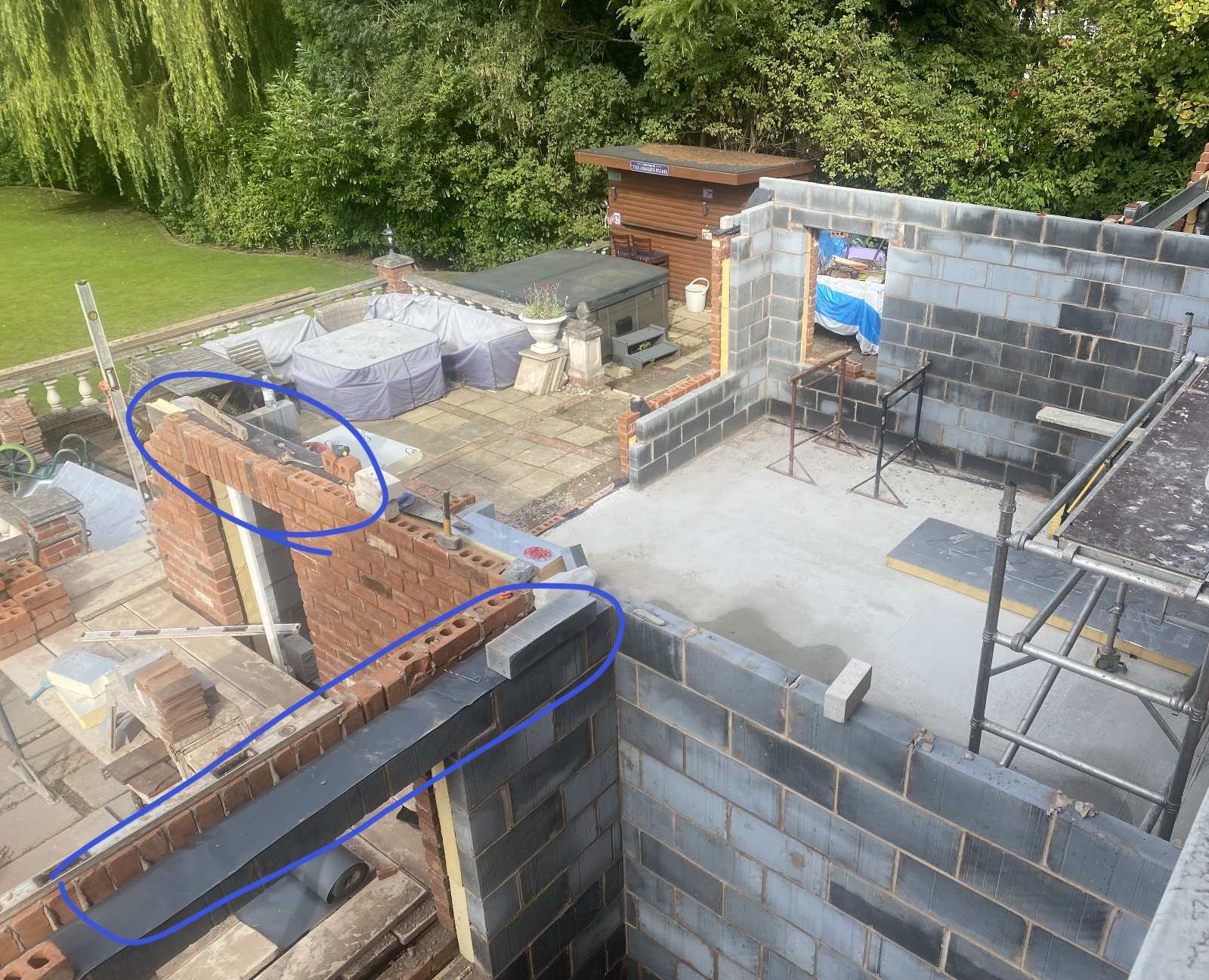
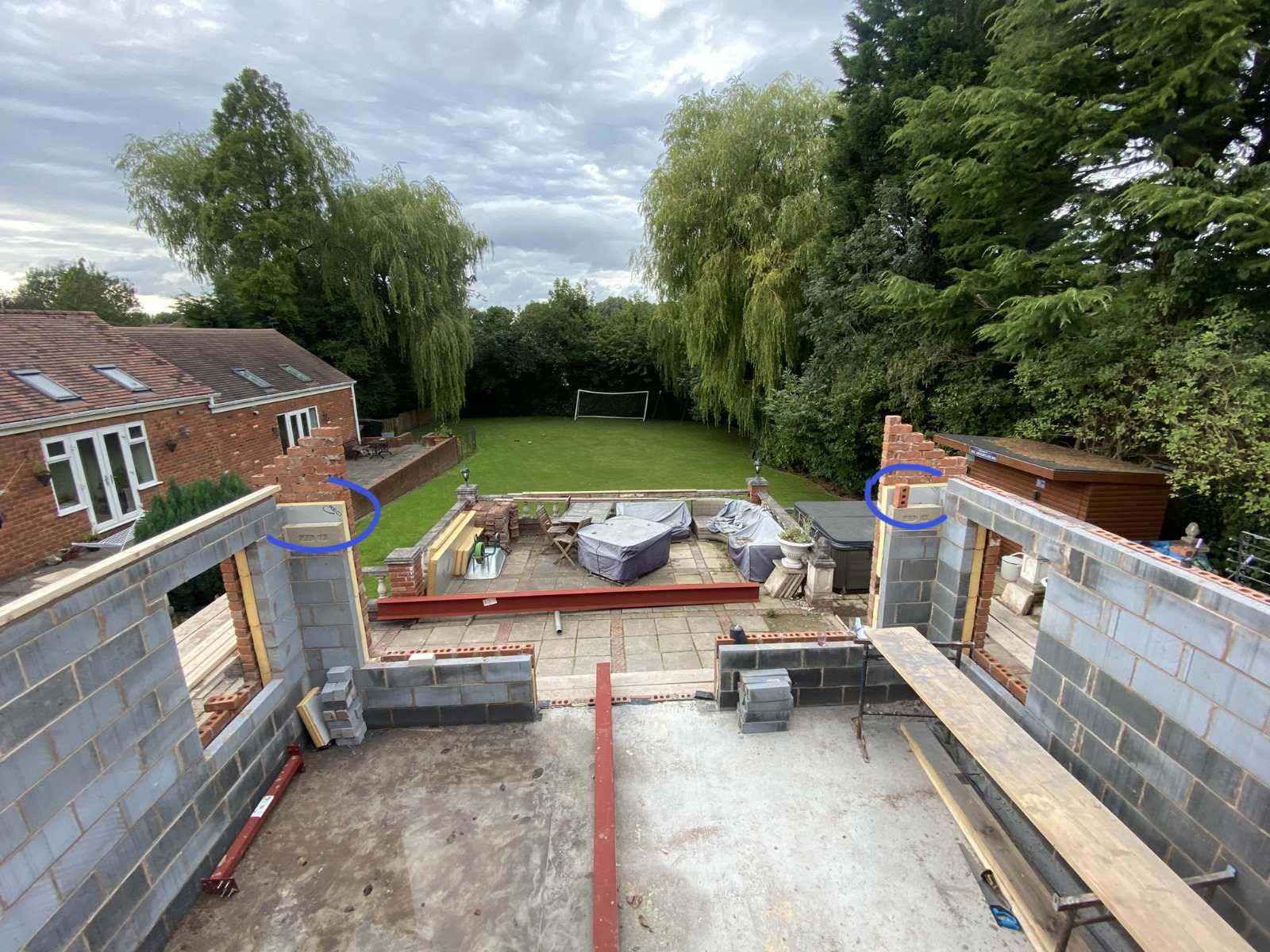
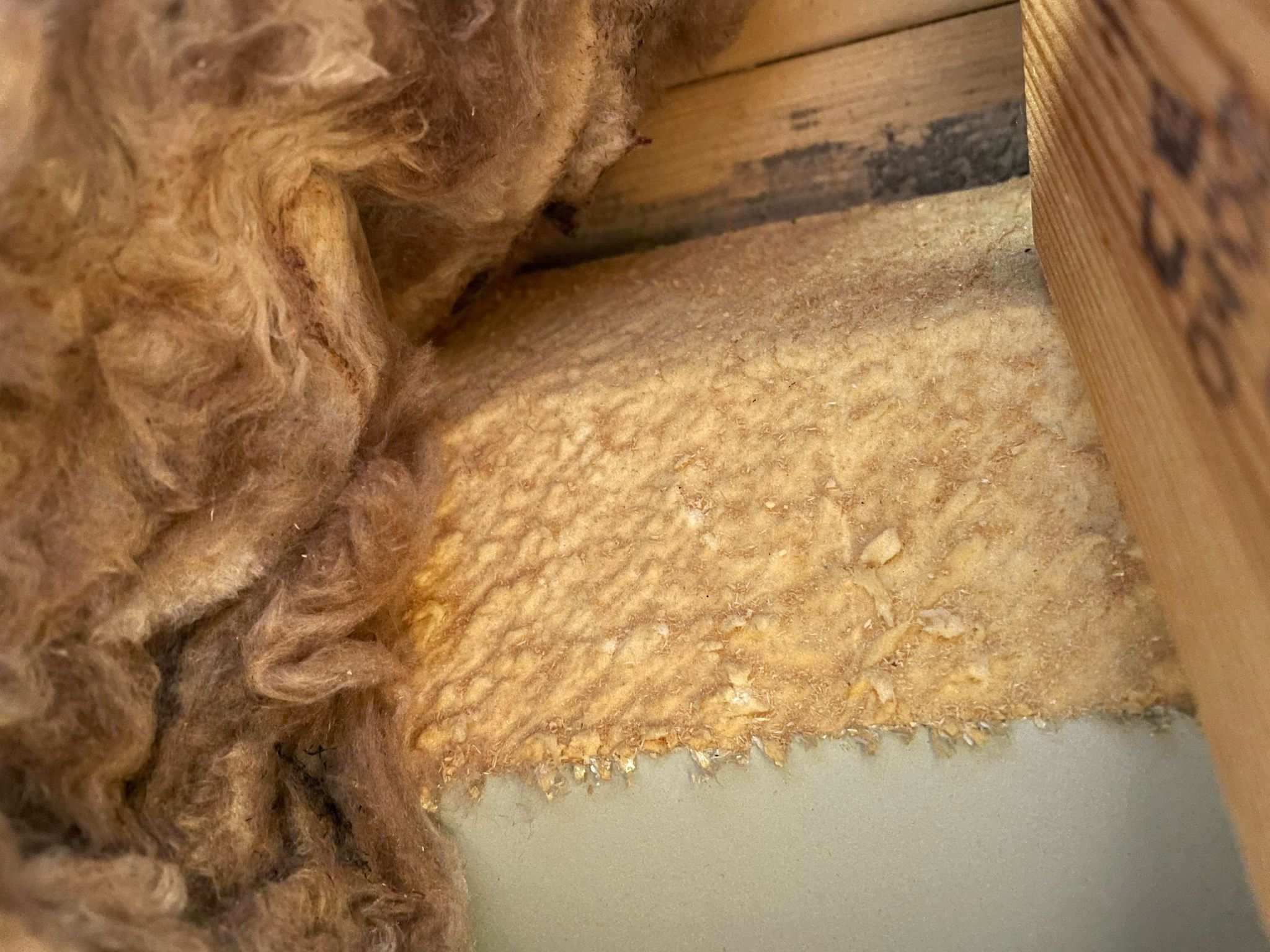
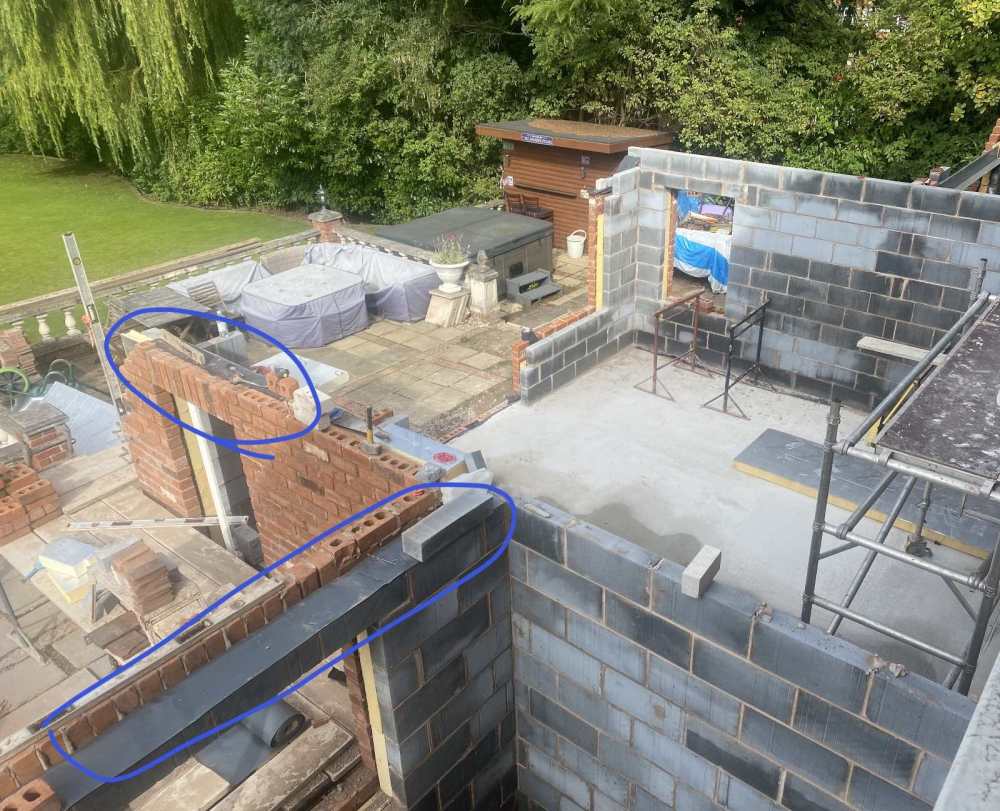
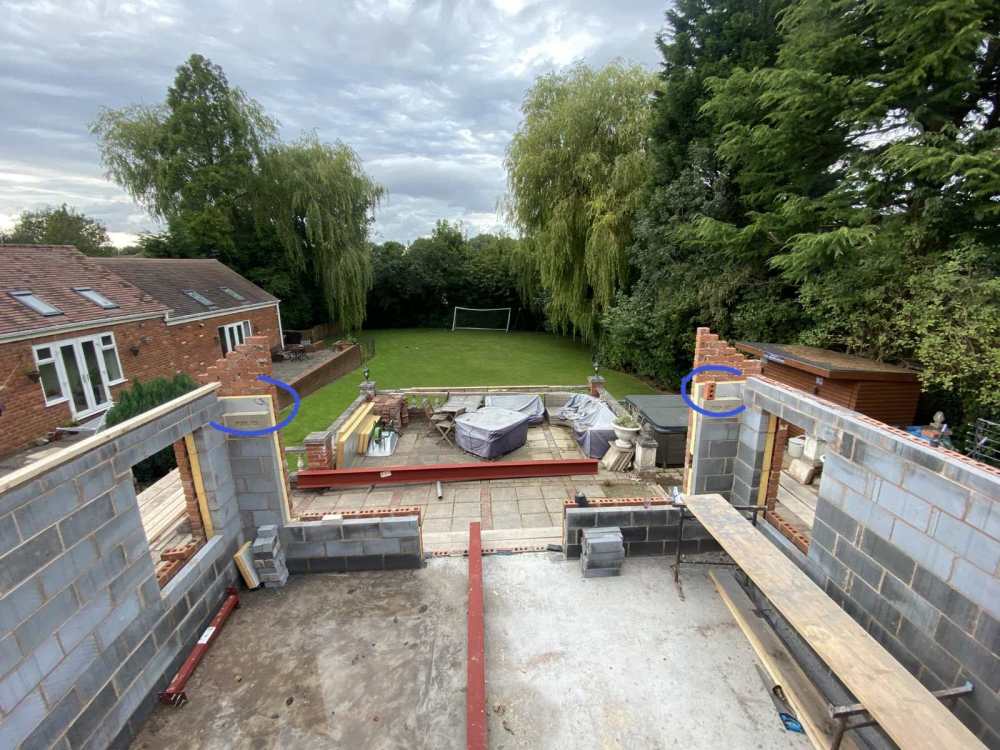
Another update on this one, So I took a look at another portion of the roof to compare. Had the same problem with gaps in the insulation and wall plate etc. But also noticed something interesting when I dug a little deeper. Beneath the wobbly pieces of wall PIR insulation, they looked to be sat atop of a black material that i'm wondering is a cavity closer? Video below. cav_closer_maybe.mp4 Looking back through the WIP videos of the building stages. Im guessing the blue circled stuff is what im seeing in that video? I assume that's a cavity closer? If it is , then based on these 2 images and difference in height between kingpan and inside leaf, it looks as if for whatever reason they've closed the wall cavity, then added another half a course of block, then added the wall plate, then sat another piece of PIR insulation atop the cavity closer. Is that weird? and is it an issue or fine?
-
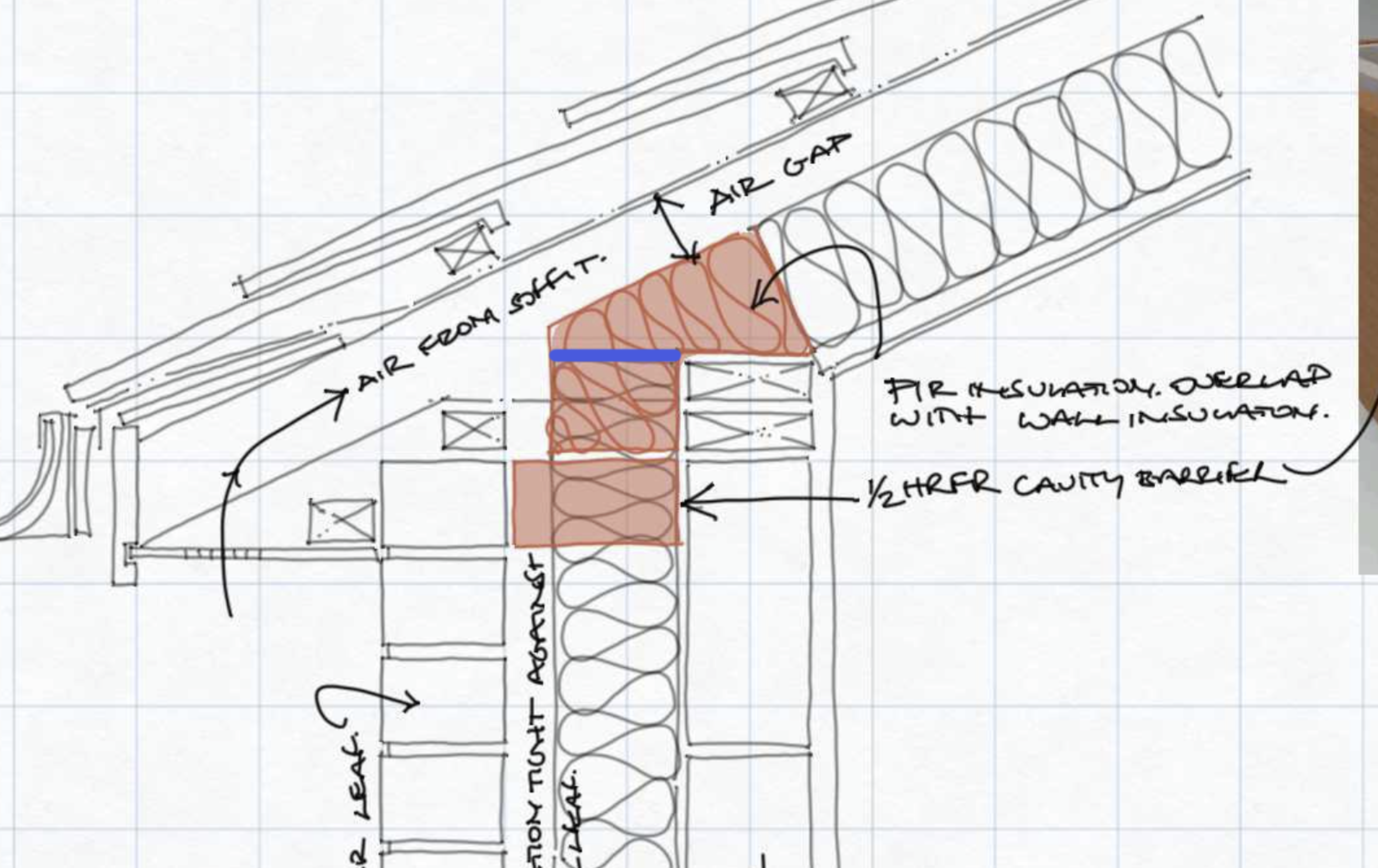
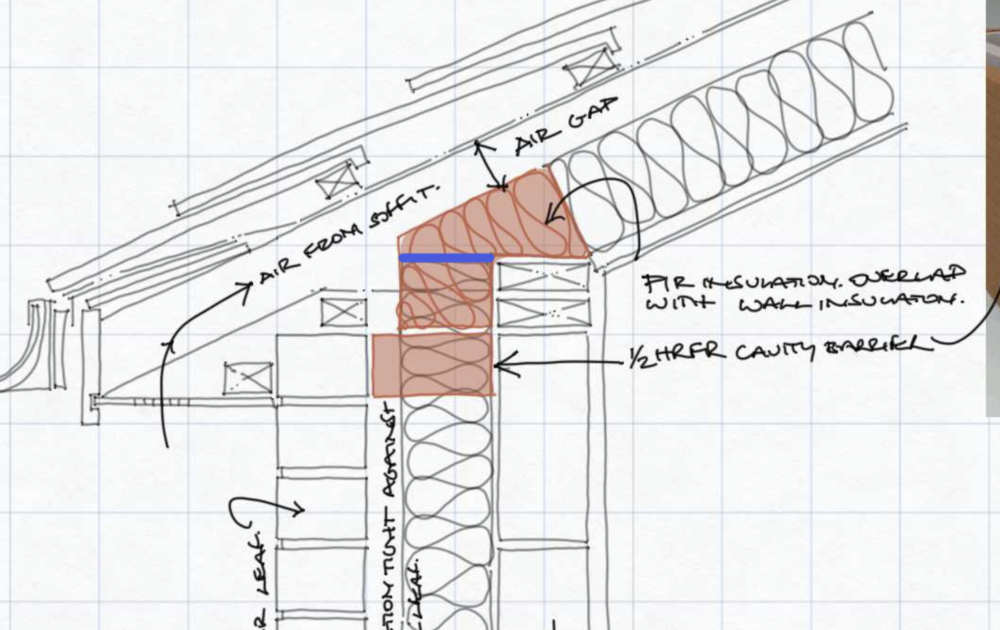
@ETCThat's really helpful thanks for sending that detailed cross section, it makes sense. I was hoping the PIR overlap bit could be achieved with rockwool atop of sealing all the gaps beneath it with foam etc. For the cavity barrier, Arc do a 150mm deep version which is what i'd need to close the cavity but it's also 120mm tall. The PIR wall insulation already sits higher than the outer leaf brick so i'm not sure how i could make that work. Unless i'm misunderstanding. Also the PIR overlap you detailed there, I assume i'd be fine doing that in 2 pieces? Like so
-
Thanks, I need to remove a load more tiles when I've got a dry couple days and take a proper look at what's going on. I'm hoping it is just the top board that's loose, but then I would've suspected to see a huge temperature difference from the internals in that case, and I didn't really. The issue I found was when I tried pushing that top board closer to the block, it didnt want to go.... but i'm thinking that may be because they've stuffed wool down the gaps between the wall kingspan and blockwork, obviously not in this rafter channel as i removed it, but in the ones adjacent. I'm thinking i'll need to remove all that wool, push the kingspan up close to the block, wedge it there with something, tape/foam/seal it. Then deal with the roof insulation and running that to the wall plate after i've sorted the wall kingspan gap. Out of interest what is a bagged cavity barrier? as in a cavity closer?
-
Yes, I never took a photo of it before I removed the wool. but they'd basically sat the wool atop of the wallplate. and had it sort of dangling down into the cavity between the insulation and block. But by no means air tight.
-
Tbh Im not surprised. Glad I found the source of some of the issues. I knew there'd be something, there had to be. That room is SO cold. Makes sense if the wall insulation layer is essentially negated. Hopefully can sort it.
-
I think that's a decent shout. I'd be surprised if they can get this stuff out though with it being the interlocking type. They'd have to remove loads of bricks. But you're right - I can absolutely see what they say.
-
I need the least invasive / best solution here, I can't remove the outer brickwork and can't remove the roof rafters etc. Original builder not an option now either and not contactable. (even if I would have them back)
-
It's 100mm insulation, I didn't measure the full cavity thickness annoyingly and it's dark now, but i'd hazard a guess at 150mm. The issue is even when I was pushing the kingspan toward the block with a fair bit of force I couldn't get it flush. Maybe down to 10mm gap. So thinking i'm gonna have to seal it with something, even with a wedge between brick and insulation. If that makes sense.
-
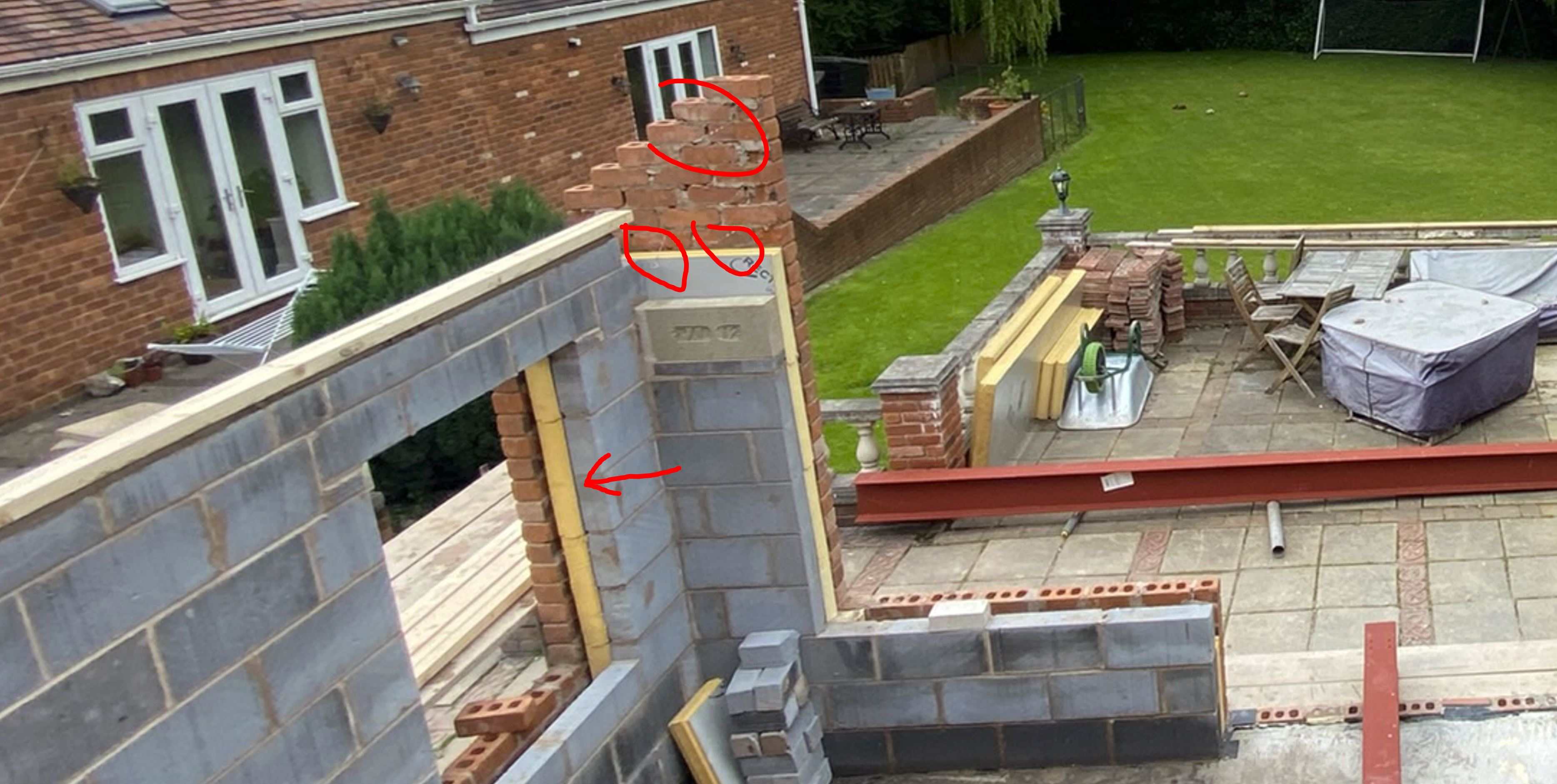
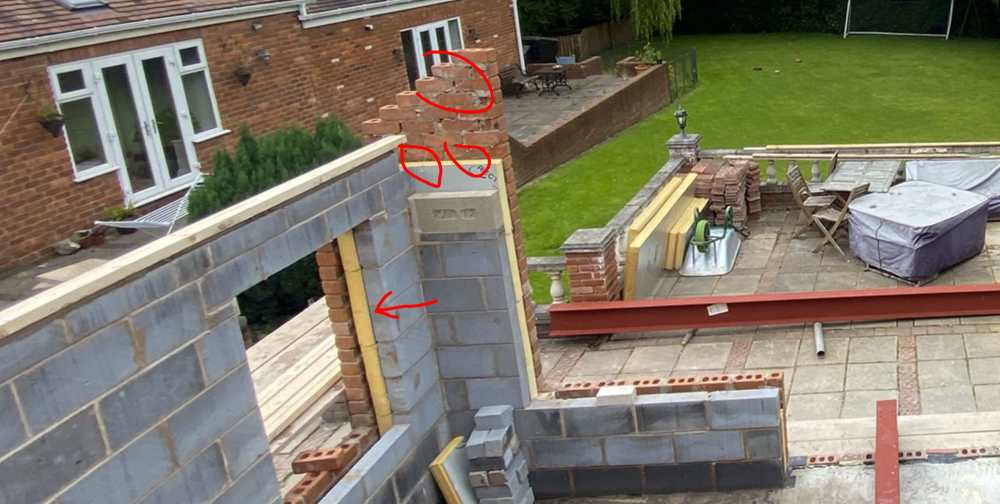
struggling to see them on the WIP photos but the bricklayer did have these little pin things that were holding the insulation in place. Edit: I think i've found an imagine with them on. (attached below) Also interesting to see the insulation is snug against the inner block wall on the images. So maybe it's just come away at the top where he's run out of using the plastric retaining rings?
-
Update on this one, I took some tiles off to have a better look at the eaves detail. Was difficult to photograph so i've done a short video instead. Summary of problems & questions. Gaps between roof kingspan and wall plate, Can the gaps here be simply foamed to improve insulation / stop wind draughts going into the plasterboard? Large gap between wall kingspan and inside block wall. It really shouldn't be like this right? again can the fix be foam the gap between block and kingspan, then put the wool back over?# Wall king span had quite a bit of movement / play in it. Do i need to fix this if i foam the gaps between the kingspan and block? Here's the video with all the detail. Eaves Detail Video-31.mp4
-
On which image are you seeing the 5.5 degrees? It'll likely be inside yes.
-
What sort of tradesman do i need for this do you think? I don't fancy it myself. I'll let them advise on the easiest / least messiest way. Just not sure who I need.
-
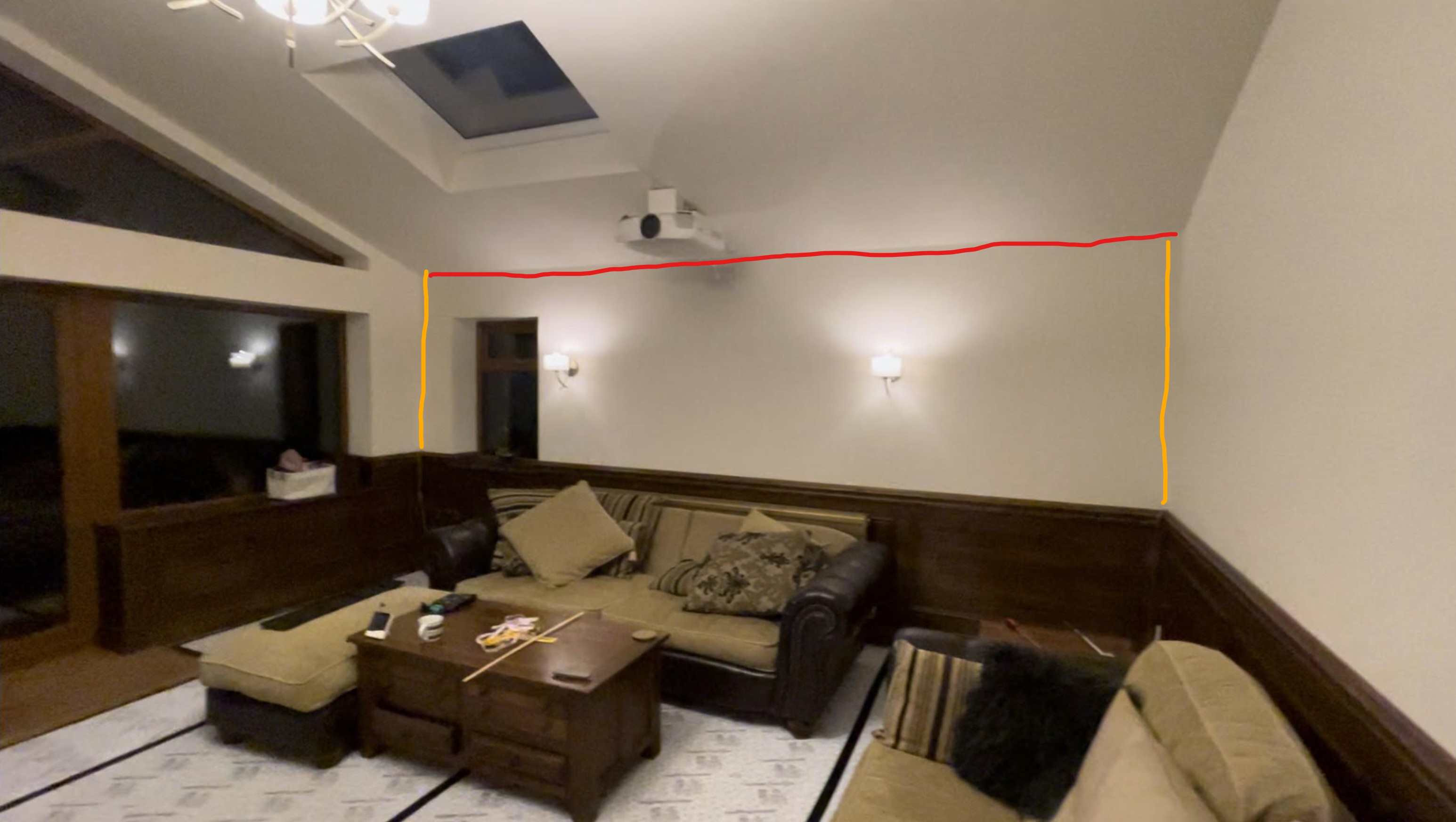
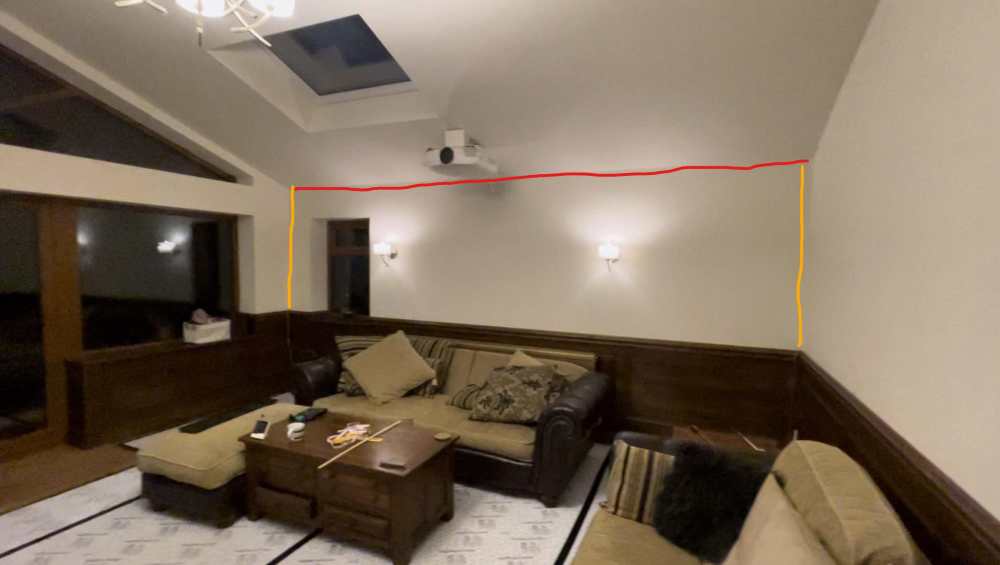
I don't mind the mess really, we can cover the radiators, panels etc... and there's no carpet in there yet etc. So all in all i'm fine with it as as a strategy. I actually had two things in mind to try and fix it... so cut a section of the plasterboard out, 10cm near the top of the wall. then:- :- I'd have good visibility to see down the back of the plasterboard that's remaining from above. I could either foam or wool the bits inbetween the dot and dabs, from above. :- Run a solid bead of adhesive across where the plasterboard has now been removed, and put a new piece of plasterboard back on the solid adhesive. I'd originally thought maybe I need to cut a horizontal piece out across the top of the wall (red line), and also cut out 2 vertical pieces where the wall joints the adjacent walls (orange lines), but on reflection I think the latter is a tad overkill and not worth the effort/mess.
-
I see your logic yeah. I'm just uncomfy with the fact that I can't see what it's doing on the other side to be honest. Not just because of the bulging, but also because I can't confirm that I stopped all the gaps etc. I know it seems OCD but i wanna visually confirm i've got em all if I'm gonna go to this level of effort to fix it. Id rather not spray and pray... for lack of a better term .... so yeah for where the wall meets the ceiling I figure i'll need a plasterer in to make good regardless so may as well do it with good visibility and chop the top 10cm away and fill all the gaps , is what im thinking. For the skirts at the bottom, i've already packed the gaps between the skirt and the floor with rockwool, and then silicone sealed.
-
I think you're right. I'd like to remove the first 3 rows of tiles from the eaves upwards and fix from outside, If I get decent access from above im hoping to be able to access and seal both; any gaps between wall insulation and block at the top. And any gaps between wall plate and roof insulation. If that doesn't fix it, id be tempted to take all tiles off and foam / tape all the gaps in the insulation between the roof rafters. The suggestion of 200mm holes and foaming scares me a bit after reading about the walls bulging and looking pregnant etc. Could I not instead just cut off the top 5-10cm of the plasterboarded walls and run a solid big long bead of adhesive all across the wall, then refit new plasterboard to that? Or is that silly? Im just thinking atleast then im not doing anything blind, as it were.
-
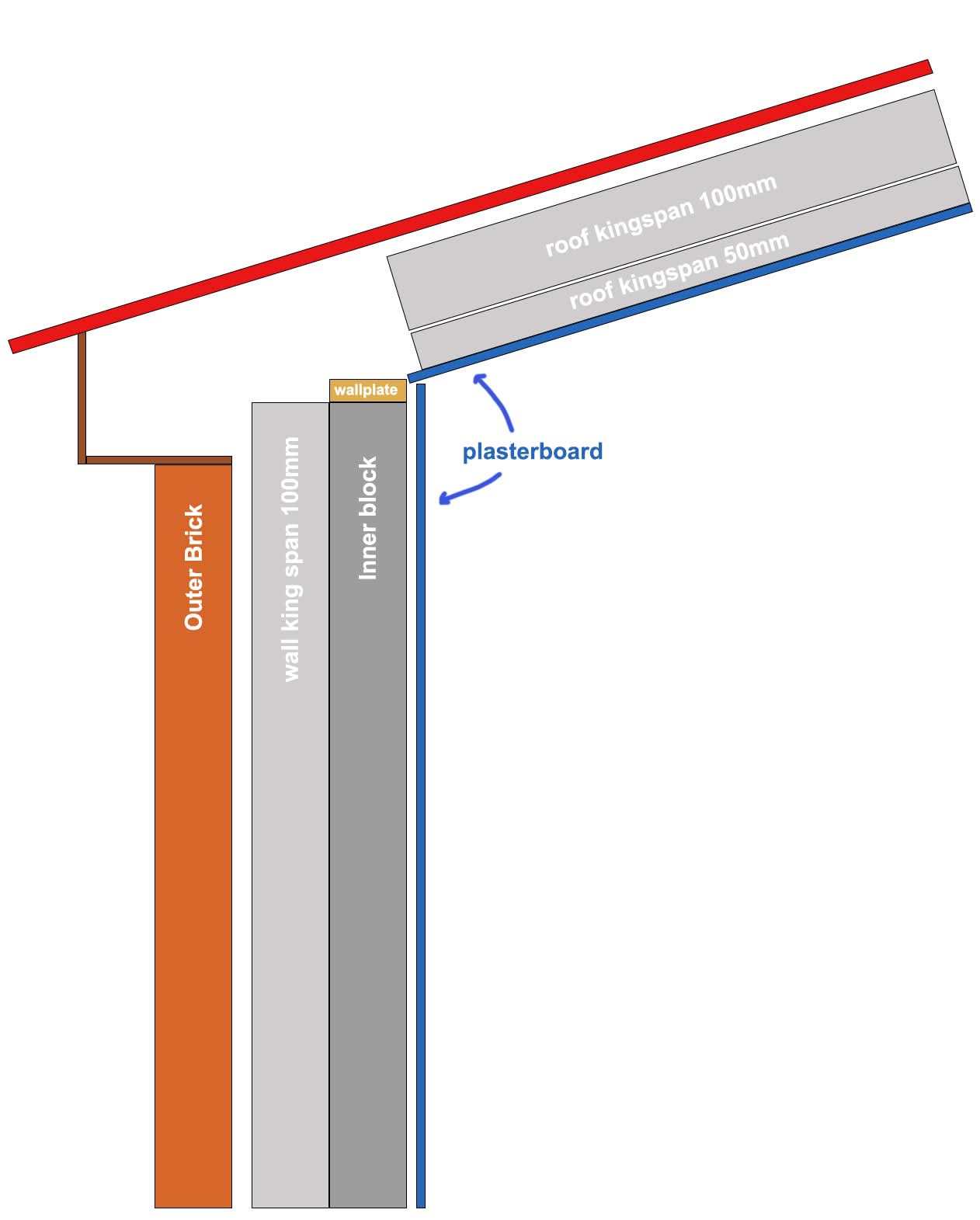
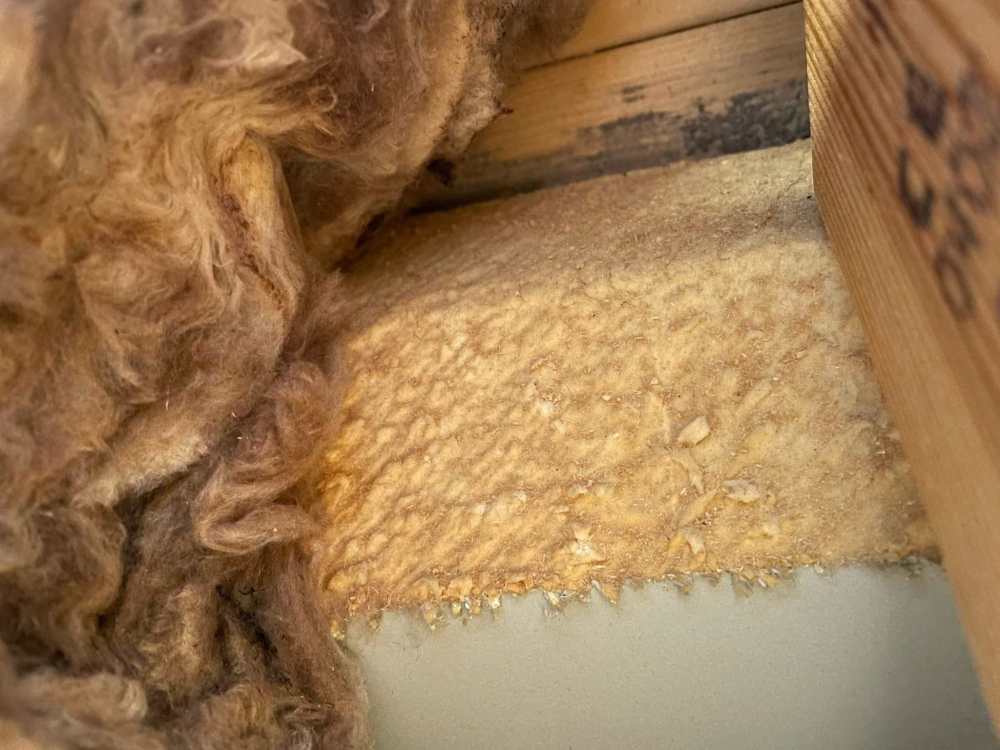
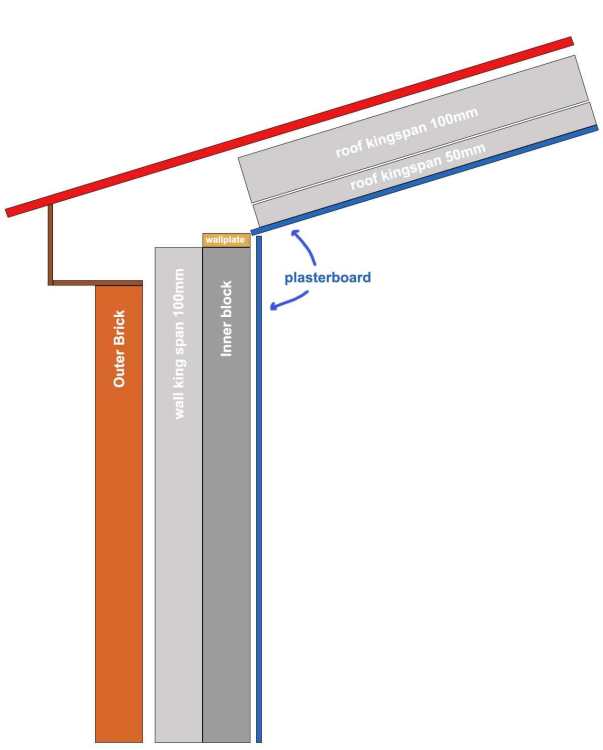
Also the piece above the wooden wall plate there, Am I correct to assume that would be the upper layer of the roof kingspan? as in the 100mm layer that's between the roof joists? I drew a little cross-section here to help get my head around it. Is this correct?
-
Also, lifted up a couple tiles on the bottom row of the pitched roof. Just to see what I could find. Was quite hard to see but put my camera in there, but I assume what i'm looking at there is the 100mm wall kingspan, up against the block and wallplate. with what looks like some rockwool over the top. Should the kingspan be up tight against the block there? it looks like there may be a bit of a gap. If I can't budge it, should I get that foam filled or stuff some wool down there etc? If there's a gap that's essentially bypassing all the wall insulation like that?
-
Had an air test done today, they have found a few more places of leakage which i'm on with sorting now. Worst offender was somewhere I wouldn't have even thought to look - Around the top and sides of the door architrave. Also pointed out a few places round the edges of the windows was quite bad, and weirdly beneath the coir matting near the french rear doors. So i'll be lifting that and having a look under there, I suspect that one particularly is where the skirting board isn't sealed properly.
-
I've stopped the draughts but putting rockwool around the sockets, well the space around them. For all future ones i'll be using the putty for sure. Though the concern is not just the draughts, it's that there's loads of air behind the plasterboard and making it real cold. I need to fix it at the source really. Rather than at the end of the air chain, if that makes sense!
-
What about the option of adding more internal insulation over the top? I know it won't fix the cold behind the plasterboard I have. But maybe it'll help with comfort levels for the room? i.e If I hard fix some insulated plasterboard to the already plasterboarded walls and ceiling? Or perhaps add studs to them with insulation inbetween and then plasterboard over the top. Do you think that will make much difference?
-
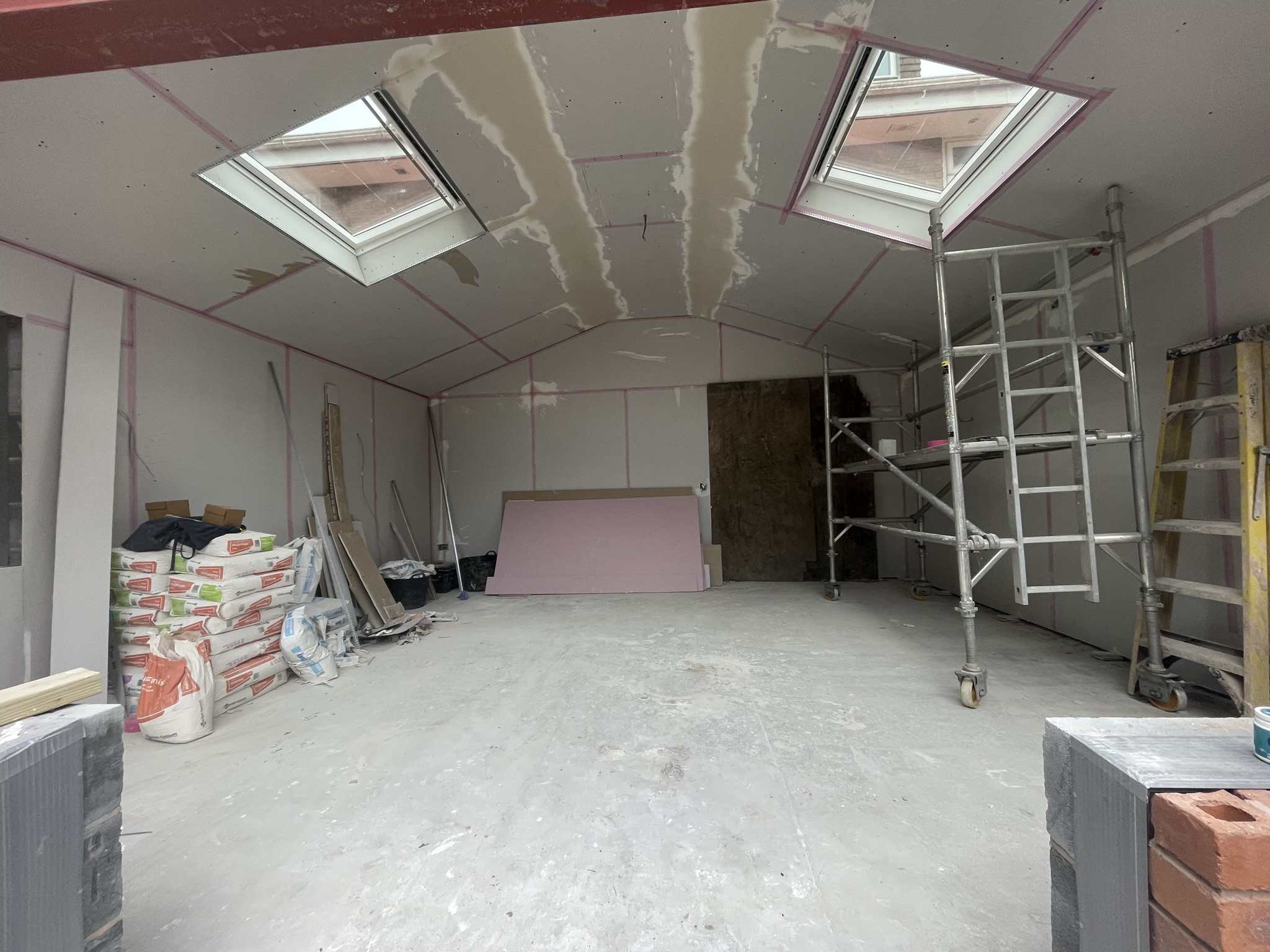
I agree based on the image where the roof kingspan installation is visible. I think ceiling down will be traumatic, as it has 50mm kingspan below the joists so to get to that 100mm between joists layer, id have to remove all the 50mm kingspan too. So thinking perhaps best to go from above? Tiles and membrane off? I was reading about this, it sounds fiddly and hard to tell whether you've squirted enough in to fix the problem? or too much and the wall starts bloating? plus how would one know if you've put foam over one of the places where the dabs are. Is it not easier just to try and add the continuous ribbon of adhesive by cutting some of the top of the plasterboards away and sealing, then re adding the plasterboard for that portion? It's 100mm kingspan between joists, 50mm under joists, normal plasterboard.
-
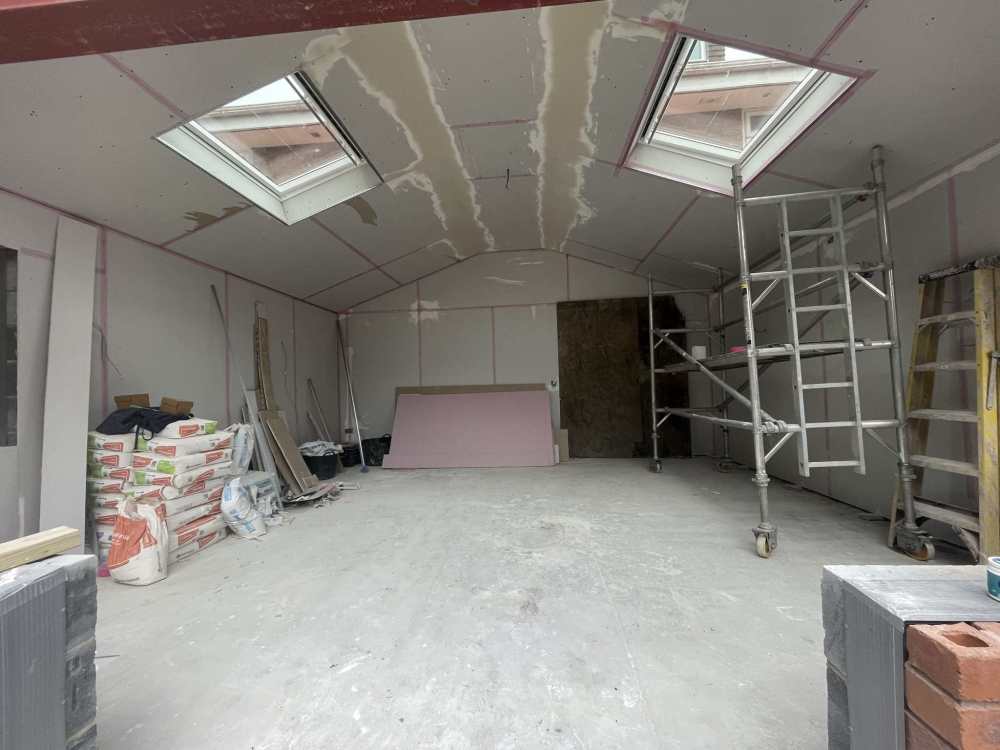
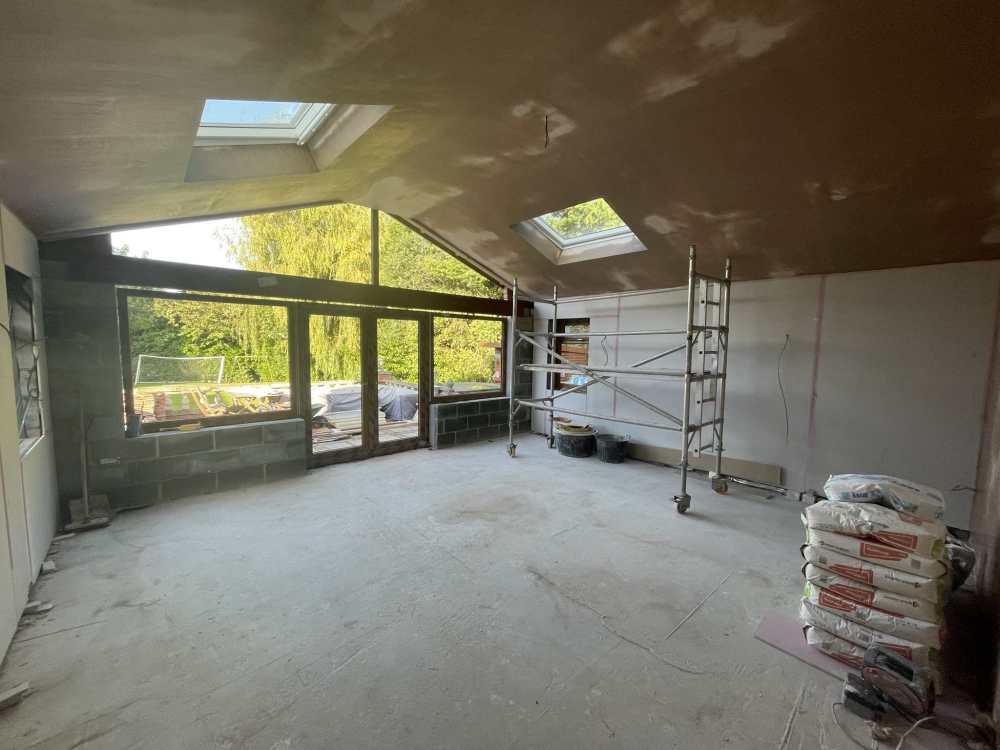
Could do, would my suggestion of cutting the top 5cm off the board and sealing the bottom of the angled plasterboards work then? No one confirmed if my idea was silly or not. I've not seen any evidence that they've used tape over the timber joists, but there is a another layer of 50mm kingspan below the joists. Not sure if there's an airgap between joist and 50mm kingspan however. Based on these two images, i'd say so. yes
-
The continuous line of adhesive im not sure whether it was done or not. But by "top" do you mean where the wall plasterboard meets the sloping roof plasterboard? if so, could I, for example cut off the top 5cm of wall plasterboard thats there now, and seal across the bottom of the roof plasterboard, then reboard that section on the wall? Or is that a daft idea?
-
Ok that's good, saw the price of replacement soffits and assume they're all nailed in and can't remove without damaging. So if it's possible to do with tiles that will save me some faff. I guess I only need to inspect a meter wide to see evidence, if confirmed I can take some more off and continue to fix. Time consuming but i dont mind if it will lead to an improvement. Forgive my naivety but parge coating as in a full sealing pass of the block before the plasterboard goes on? I assume it's too late for me now unless I remove all the plasterboard. likewise for wet plastering, as in no plasterboard and plaster directly the blocks?
-
yeah good spot, I saw the gaps in that this morning when flicking through the images. As it has another 50mm kingspan between that gappy 10mm layer and the plasterboard will that still be a problem though? ie where the wall plasterboard meets the ceiling plasterboard, the draught would have to get past that 50mm layer too right? or am I being silly? Also i was reading this morning about the issues with draughts in the dot and dab plasterboarded walls being caused by "The board not being glued around the perimeter and then cold air can come down from above and chill the whole wall" ... Any idea what that means? if its related and what I can do to fix that now?