LLL
-
Posts
113 -
Joined
-
Last visited
LLL's Achievements

Regular Member (4/5)
4
Reputation
-
Thanks for linking them together; that was the trigger. The pipe was cleaned and there is nothing inside, also a filter is added in the gutter to stop leaves into the pipe. I can;t see what is underground but i believe it is fine since I used my garden pipe to pour water through the gap for a while, seems nothing is below.
-
Indeed, that should be solved as well.
-
That is a boiler pipe.
-
Thanks Dave. The downpipe is only connected to the gutter for rainwater. I saw the reason the pipe (not the drain) was blocked: there are trees around and the leaves dropped in the gutter and blocked the pipe. Now it is fine (though all leaves are flushed down through the pipe).
-
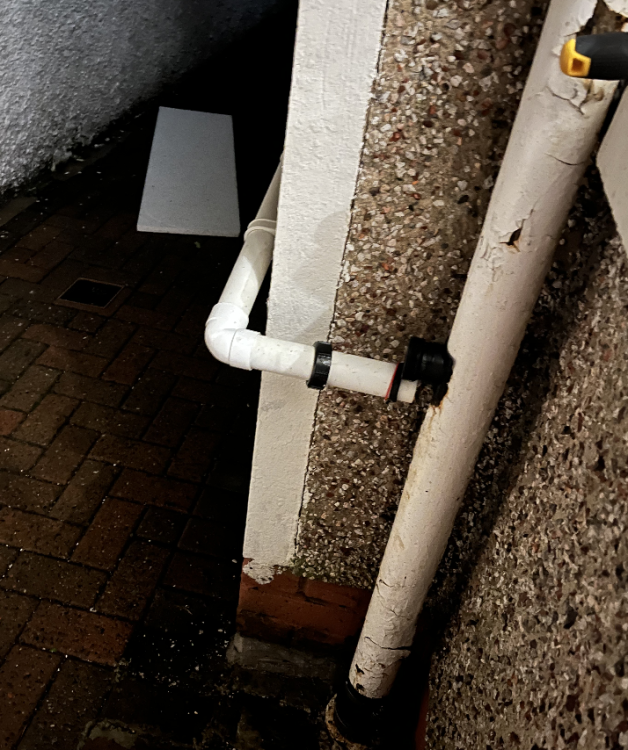
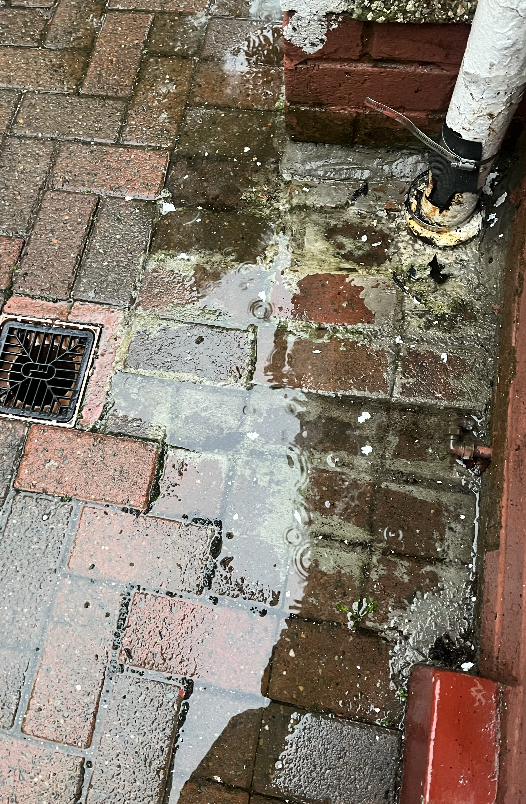
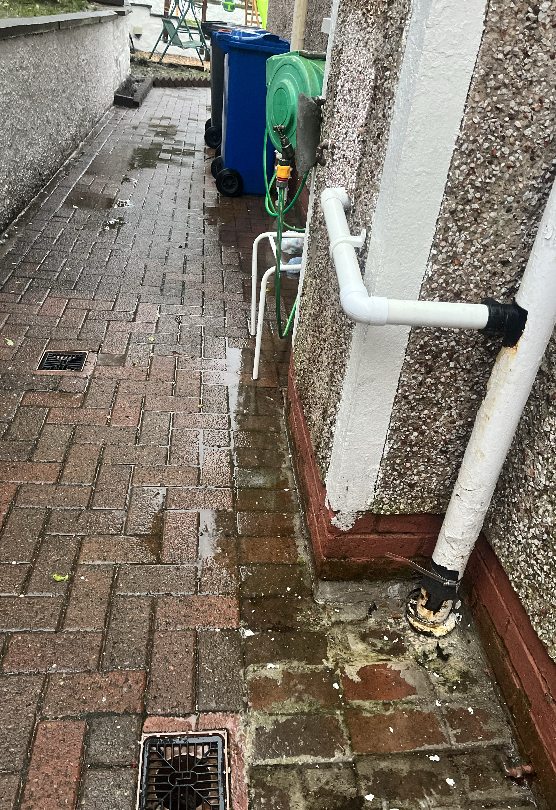
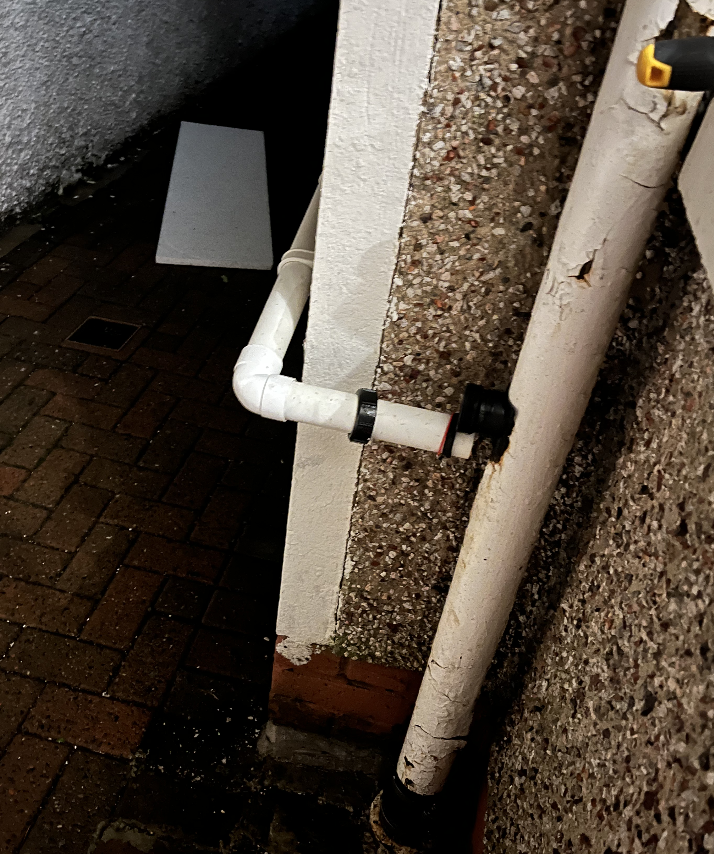
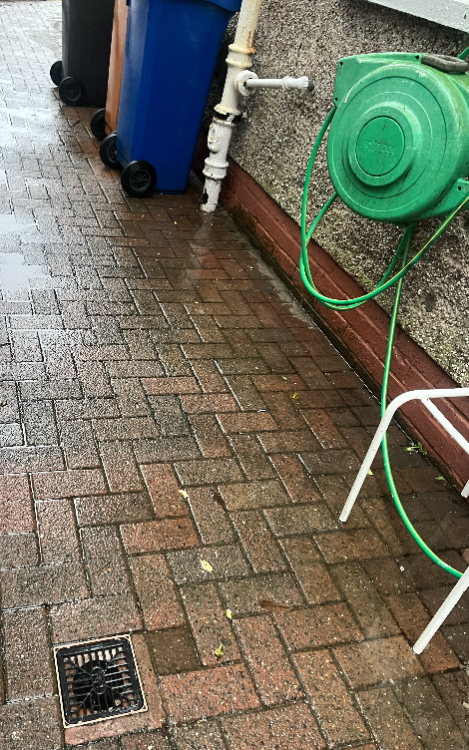
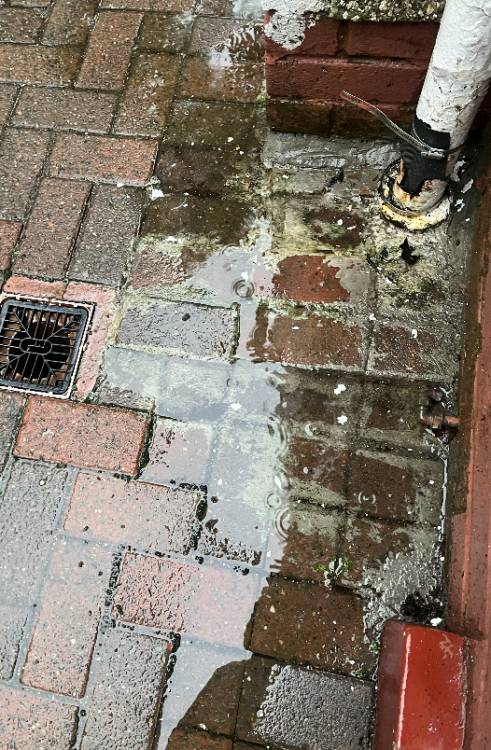
Hi everyone, I’m looking for some advice regarding a drainage issue beside my house. Rainwater tends to pool right along the external wall after heavy rain. The water usually drains away within about 30 minutes after the rain stops, but during the rainfall, it clearly sits lower than the nearby surface drains, so it doesn’t flow into them. The block paving along the wall appears to have sunk slightly over the years. I believe that when it was first installed, the paving would have been level or slightly higher than the rest of the driveway, but now the row closest to the wall is slightly lower. There are no cracks in the wall, and the property has a suspended timber floor with a ventilated crawl space underneath. The wall is a cavity wall. My main concerns are: Whether this amount of sinking is typical for block paving over time. Whether water pooling against the wall (even if temporary) could cause long-term damp issues or subsidence. Whether re-levelling a few rows of blocks would be the best solution - I am thinking to DIY. At the bottom of the downpipe there is an opening/gap (a plumber cut it previously when the pipe was blocked). I have temporarily covered it with tape, and water does not leak much from there, but I would like to know the proper way to seal or cap this gap in the long run. I've attached photos showing the pooled water and the relative height difference between the paving and the drains. Any advice or professional opinions and the best way to fix it would be greatly appreciated. Thanks!
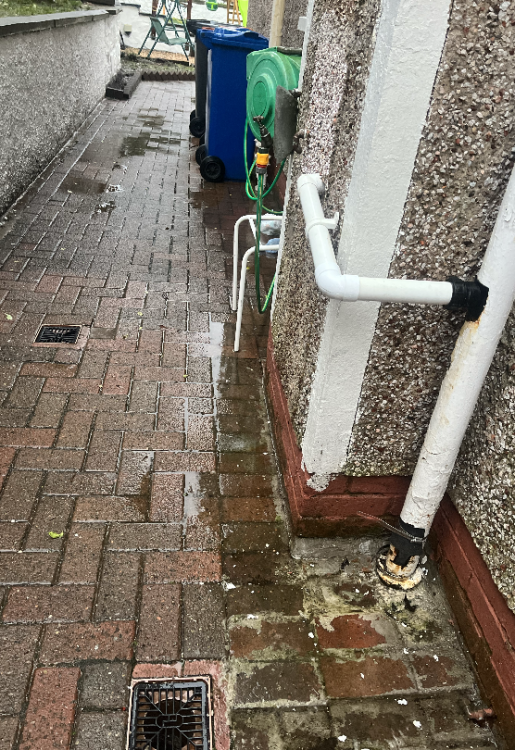
-
Thanks, compared with fiberglass, I am sure PIR is more tidy and easy to install. Do you leave a gap with the floor on the top to avoid moisture and potential mold?
-
there is nothing in the cavities. For the loft, i agree the thicker the better, but at the bottom (crawl space), there is nothing below, is it more efficient to add insulation there instead of the loft?
-
Also, compare with the heat loss from the wall and floor, is the draft (even a small one) much more serious and should be treated first?
-
Thanks a lot, I am new and very keen to learn. The questions you have asked show you are very experienced. But to add my knowledge, do I need to keep the temperature fixed the whole day to make it more energy efficient? Do we need to make the trickle open in the wintertime as well (I can feel a draft immediately if I open it up)? Also, let's assume I have solved the draft problem (I feel this is not very serious), the cavity wall and the crawl space, which will leak more energy in winter? If the cavity wall is the main issue, I won't bother to do the crawl space insulation. Thank you very much!
-
Condensation is on the glass, typically at the bottom half of the glass - I have no pictures today, but I can do it in some cold days. These days are warmer, with no condensation. Yes, there is a trickle vent on the top, I typically make it open during the summer time but off in winter to reduce the draft. The thermometre is set for the whole house; I put it in one of the bedrooms, there is no separate control for each room, unfortunately.
-
thanks, i will check tonight when i am back
-
Thanks a lot! The fibreglass insulation is quite thick, I think it should be around 15-20cm. I'll have a look at the window seals, but since the windows are relatively new (6-8 years), how can I know whether I should change them or not? Is the condensation caused by the seal and a sign to change? There are too many windows and doors could cause drafts, any way to measure? and how about the walls? I have the Worcester combi boiler and the room temp is set between 17-19 degrees, depending on the time, most of the time I just put it on, only switching it off for a few hours in the night. Do you see it will be more energy efficient if i keep it on at a fixed temperature? This week until Friday, from the HIVE app, it shows the heating is on for 62 hours (I live in the north, so the temperature is lower).
-
Hi everyone, I live in a two-storey detached house built around the 1960s. It has traditional double-brick cavity wall construction and a crawl space under the ground floor, approximately 70–80 cm high and accessible. In winter, the house feels cold, and even when the heating is on, I feel that the warmth does not stay in the room for long. The heating bills are especially high during colder months. I’ve also noticed that during winter, there is significant condensation on the inside of windows, even though they are modern double-glazed units. Here’s what I know and have already done: The loft is fully insulated with mineral wool insulation. All windows are modern double-glazed, but slight draughts can still be felt in very cold weather. There is an original air vents / air brick on the wall in each room, which I’m considering blocking, as the property no longer uses fireplaces. I’ve installed radiator reflective foil panels behind radiators located on external walls. The cavity between the double-brick walls is not empty. Given all this, I am trying to understand: Where is the majority of heat loss most likely happening in this type of house? Is it mainly: through the loft/roof, via the suspended timber ground floor into the crawl space, through the walls, or through windows and doors (there are many!)? I am considering insulating the ground floor from below by installing mineral wool insulation between the joists in the crawl space, supported by breathable netting. This might be some low-cost solution I can do myself, I believe. Is this a practical and worthwhile solution in terms of heat retention and cost-saving? Or would the benefit be relatively limited compared to other improvements? Thanks
-
Hello Nick and Dave, thank you for your answers. The boiler came back to work normally this morning. I believe it just dried overnight. Yes, the connection between the pipes is blocked. Last time was the rain water and this time, should be the pipe connection part blocked. I don't want this to come back every year; maybe it is time to look at the pipe and find a solution.
-
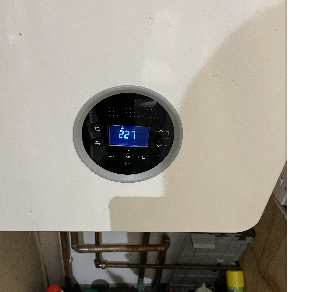
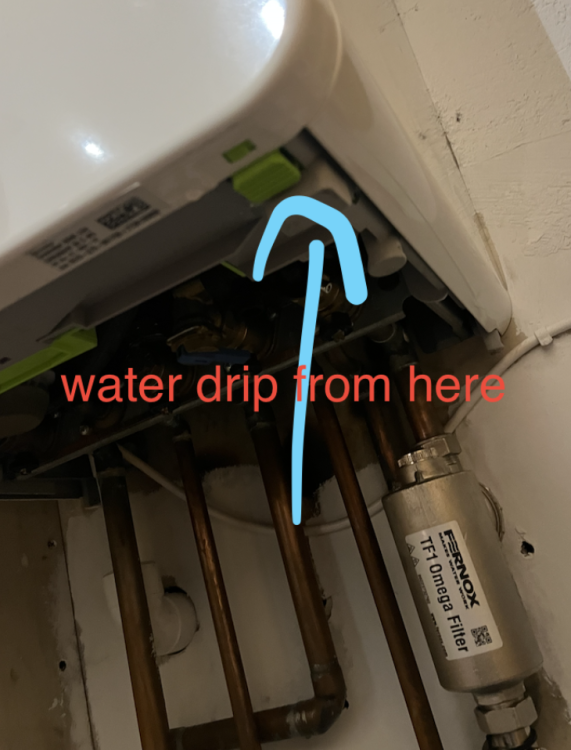
I’m looking for some advice regarding my Worcester boiler which is currently showing fault code 227, which I understand is related to ignition failure. I believe I may have found the cause. The condensate pipe from the boiler is connected directly to an external drain pipe, which seems to be blocked. We had heavy rain today, and I noticed that rainwater has likely backflowed into the condensate line, causing moisture or water ingress inside the boiler. There are some signs of dripping water and dampness inside the bottom of the boiler, although not very severe but i can see water drips in every 10 seconds or so (pictures attached). The same problem happened last year, and at that time it was much serious; the boiler fan was damaged and had to be replaced by an engineer. I watched the engineer to solve the problem. He replaced the fan and then only tried to dry the ignition components, then it worked. This time, I don't think the fan is damaged. I have turned off the power to let it dry out naturally but not sure if that will work. Do you think it might start working again after leaving it to dry for 12–24 hours, or is it likely that I will still need an engineer to inspect it (e.g. ignition electrode, fan, PCB, condensate trap)? Any suggestions would be really appreciated. Baby in the house so I prefer to solve the problem ASAP. Thanks!