Norbert
-
Posts
64 -
Joined
-
Last visited
Everything posted by Norbert
-
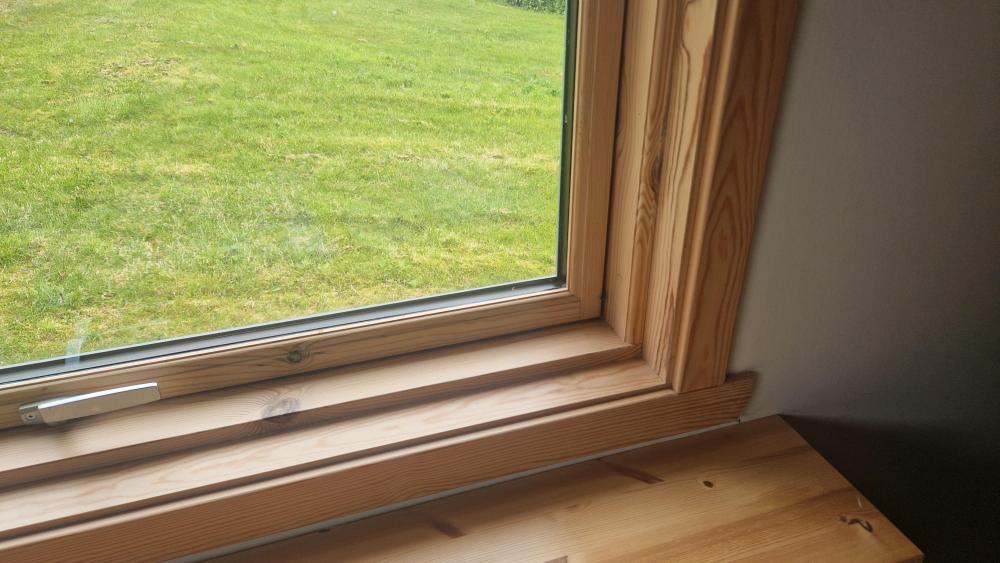
We both like wood, by preference we would always leave it as natural with oil or varnish finish, not painted. Has anyone had alu-clad windows supplied unpainted internally, so that they can be finished as natural wood with any other trims as necessary? I have done this in our second home in Norway. Very happy with the result. Would like to do it again in the UK.
-
Hello from someone considering demolishing and rebuilding
Norbert replied to Norbert's topic in Introduce Yourself
But what would be the problems with the block walls taking up some moisture in the event of a flood? The water would drain away and they would dry naturally over time. In the last flood 13 years ago all the gypsum plaster was removed,the brick, block and stone walls remained, allowed to dry then replastered. This time no gypsum or electrics down there, just blocks so should be naturally flood resiliant as far as I can see. I agree that if a future flood rose to 1.85 meters above the highest historic level so far and reached the TF structure that would indeed be a problem. However having lived on the site by the river for 40 years. and knowing the catchment very well, and the lie of the local land, I think that is very unlikely. However I will be comissioning a flood risk survey to get an official max possible flood level. That will be needed for planning permission. However the height of the TF house will be above other local houses that I not considered to be at flood risk. If we need to take the block walls higher than 2 meters to be sure then we can do that I guess. -
Yes, I have been pondering that one, but so far the view seems to be that it is not worth it. River temp in Jan/Feb was normally around 6C, fast moving water so good heat exchange
-
Thanks for the comments. I guess option 1, the normal approach, is the way to go for the practical reasons mentioned. Without some detailed data about how often the cellar, is how much warmer than the external air, and how much difference that would make to the running costs it is not possible to make a properly informed decision. regards using MVHR exhaust, ... interesting; but how do you mix a low volume MVHR exhaust into a high volume ASHP input? I suppose you could just have the MVHR output cowl in the wall behind the ASHP. Is that normal practice? Would it make a real difference? I guess it would cost nothing extra so why not? I already had it in mind that if the ASHP is external then I could certainly use the internal air for the MVHR input, without any of the potential problems. It would keep the MVHR input well away from the ASHP and HVMR output.
-
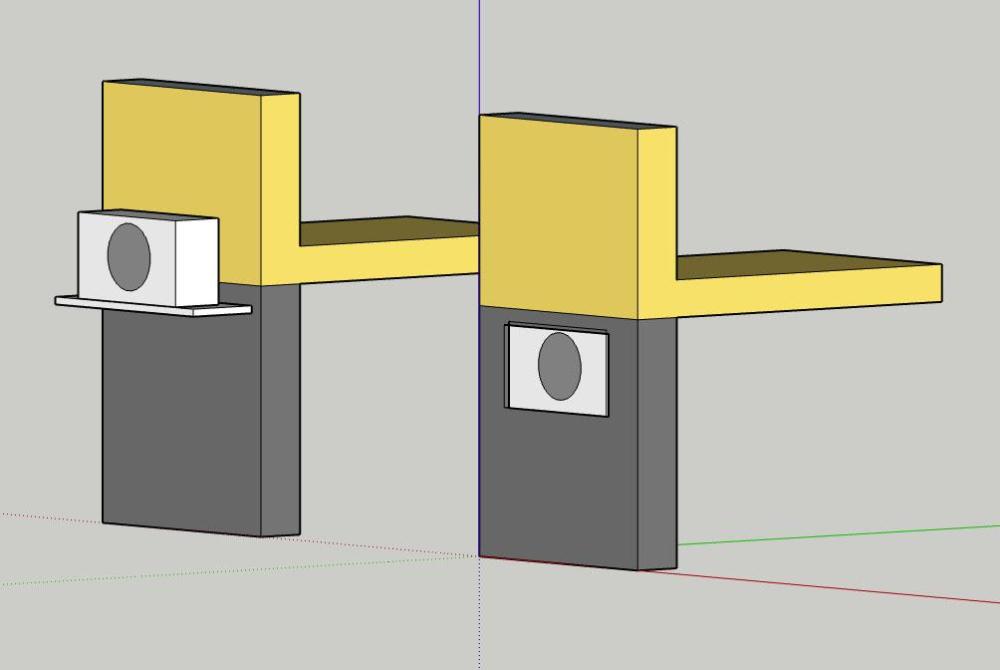
So I am considering my options for my future ASHP, with a view to making it as efficient as possible. My project is outlined in this thread However all that is necessary to understand for this topic is that this is a complete rebuild of a TF house on a 2 meter block wall to take the house above flood level. The plant room will be on the first floor. Below will be a block built base, 2 meters high. This will be very well ventilated. I seem to have 2 options for my ASHP On brackets fixed to the top of the block wall, so the ASHP is directly outside the plant room, say 400mm from the wall and at the same level. In a bespoke hole near the top of the block wall. The front of the ASHP flush with the outside of the wall. Thus it would take air in from inside and blow the cold exhaust out 1) would be the traditional option, but 2) would have the advantage of normally warmer air intake. I am thinking that on a cold still frosty night when temp falls rapidly, the inside air would probably remain well above 0C due to the thermal capacity of the block walls and slab. Installation costs would be similar, but running costs lower. No doubt there will be times when outside air is warmer then internal, but at such times I do not think the ASHP will be required. See this SketchUp daubing to illustrate. Any thoughts anyone.
-
Agreed, that is the plan
-
The original stone mill is a lot more than a nod away as it is. We will just be aiming for a modern house well insulated and airtight, but with a nod to all the other local houses that are a mixture of local stone a white render
-
No mill stream ,everything removed in the '60s. It is just a pebble dashed boxy house 17 meters from a river at the bottom of the garden. My original idea was to partially demolish, put a ring beam on top, then a TF on that. However such an approach would not qualify for zero VAT, so it would actually cost a lot more. Believe me there is no heritage to be seen or saved, well apart from a few old mill wheels as garden ornaments, and they will be staying.
-
Hello from someone considering demolishing and rebuilding
Norbert replied to Norbert's topic in Introduce Yourself
Exactly. Plus I cannot see the advantage of ICF as this whole level will be outside the thermal envelope. Some kind of vermin mesh needed between block base and TF. -
Hello from someone considering demolishing and rebuilding
Norbert replied to Norbert's topic in Introduce Yourself
That is in effect what I am thinking of doing, but not a car port, more a man cave, patio, garden room etc. -
Hello from someone considering demolishing and rebuilding
Norbert replied to Norbert's topic in Introduce Yourself
No, not yet. All to be done as part of getting planning permission. Regards insurers I am living there now and have insurance. I would think they would be delighted to have their risk reduced by raising the house 2 meters! -
Hello from someone considering demolishing and rebuilding
Norbert replied to Norbert's topic in Introduce Yourself
Yes it is a largish plot, but I cannot see any advantage in building up levels, other than my plan of raising the whole house by 2 meters on block walls. That inevitably creates a cellar, well unless it is just filled with rubble, but I cannot see any advantage to that. It would make no difference to what goes on top. Also I can see the cellar being useful, bit of a man cave and it would be easy enough to keep things above any likely flood level -
I am new to this forum. I have joined because we are considering the drastic sounding step of demolishing and rebuilding our house. Work will not commence for over a year, however I am putting in a lot of effort at the moment to understand the options and possibilities that we have. The purpose of this post, probably the first of many, is to outline the overall high level plan that is evolving in my mind. It seems important to me to get these early big decisions correct as they may otherwise have a big negative impact down stream. So here is the situation. Why are we doing this? The house is part of an old stone built mill, next to a river. It was given a very unsympathetic conversion to 2 flats in the 1960’s. Any sign of its heritage was obliterated, it is now just a pebble dashed box. It is on a sloping site, ground floor 1.4 meters below ground at the front, level at the back. River 17 meters away and at normal levels 2 or more meters lower. It is cold, poorly insulated, draughty and damp in places (no DPC). It is wibbly wobbly, not a lot is level and square. While it would be possibly to retrofit internally to a high standard, and at a high cost, it is subject to flooding. Just once in the 40 years we have lived there to a depth of 15cm, 13 years ago. However the way things are it will likely happen again. There is a party wall to neighbouring property, that has cellar plus 2 floors on top, so does not have the same flooding problem. Proposed plan. Completely demolish the house. New footings and drainage, then block walls to 2 meters above current ground floor. 2 story timber frame house erected on this base. New house to be say 1.5 meters from the existing party wall, so fully detached. First floor I beams with insulation in between, possibly factory made floor cassettes. I see no point in a concrete beam floor as that will need insulation on top and would increase the overall height of the house. Metal web joists would introduce a lot of thermal bridging in the thermal envelope. House constructed of factory made and insulated SIPS. Second floor web joists to facilitate distribution of services and MVHR ducting. Vaulted ceiling on second floor. Overall height cellar plus perhaps 1.75 storeys. There would be a high standard of insulation and air tightness, possibly to passivhus standard. All modern technology to be included, ASHP to UFH, MVHR, 3G windows, PV on the roof, possibly battery storage etc. External cladding to be part render and part natural local stone to fit in locally, there should be plenty available from the demolition Cellar to be designed to be flood resistant, allowing water to flow in and out in the event of a flood. Cellar part open to the garden to provide a cool shady patio type room with garden type furniture and basic services, water, electricity at ceiling level etc. Any comments on this overall high level plan appreciated. Especially anything that might prevent me saying when all is complete “If only I had known then what I know now, I would have done X and Y instead” No need to dive into the details of anything specific right now, no doubt I will post on specific topics when I am working on them and need advice.
-
We are considering the drastic step of demolishing and rebuilding our house where we have lived for 40 years. This is because in winter it is cold, damp and draughty, but it is not worth spending a lot of money to address these issues as it is also subject to flooding. The house is on a wonderful plot with great views. There seems to be absolutly no possibility of getting any equivavent plot in the area. The outline plan is to build a timber frame house, possibly to passivhus standard on a new 2 meters block wall on the same footprint. Thus it would be a 2 floor house with a full height cellar that is designed to take flood water in and drain away without damage. We are at the start of the project and have just appointed architects. I consider myself to be a competant DIYer having done a lot to this house, and another one over the years, with experience of most trades. My emotions vary from being excited by the prospect, to being terrified. At present I am spending a lot of time investigating aspects of technology, fittings, techniques etc. trying to get myself in a position where we can make sensible decisions when the time comes. I anticipate that I may be posting for help and ideas on a wide variety of topics as the project progresses.