


bodger53
-
Posts
3 -
Joined
-
Last visited
bodger53's Achievements

New Member (2/5)
1
Reputation
-
Afternoon, I'm applying for planning to knock down and build a replacement dwelling house in South Wales. Alongside the main application I'll also need to submit a separate SUDS application. I have experience with planning and design and aim to pull this all together myself. I've never had to do a 'full' SUDS application though and am unsure what to aim for in terms of level of detail and quantity of documentation. My go to is usually planning portals, but this doesn't exist for SUDS and all the examples I can find are for massive developments. There's heaps of info and resources out there, but it would be great to see an actual submission pack for something relevant. Would anyone be willing to share their submission for a small scale domestic project? - i.e. something that exceeds the 100m2 threshold, but isn't a housing estate! Thanks in advance!
-
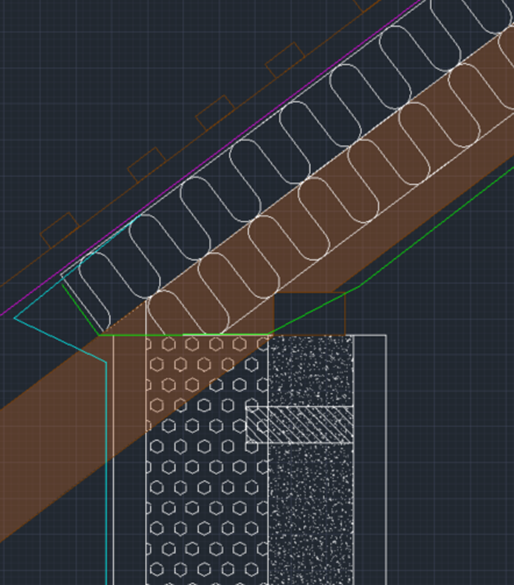
I’m building a small house in my garden with Isotex blocks. For various reasons I’m doing a lot of the detailed design as I go or just ahead of when needed - hence a bit of a late question. It’s a one bed lodge with fully vaulted ceiling throughout and small mezzanine at one end. I’ve decided on an unvented warm roof, but would also like to use the breathable nature of the walls. The walls are designed for this, but the roof construction I am proposing would be at risk of interstitial condensation without sealing. With a vapour barrier at the interface between the walls and roof I think the proposal below could work well. I’m sure it must have been done, but can’t find evidence of it. Has anyone else on here done this or can see any massive pitfall I’ve missed? Thanks in advance! Details below. Roof make-up · Slates · 25x50mm battens · 38x50 counter battens · Weather resistant, breathable membrane - Tyvek Supro Plus · 100mm Cellotex · 150mm rafters with 100mm Cellotex up against Cellotex overboarding) · Vapour barrier · Plasterboard · Plaster · Paint Vapour barrier & weatherproof membrane would be joined – essentially sealing the entire roof structure from below and allowing any moisture that does enter to leave through the breathable membrane above. I am aware this is a riskier construction. However, the additional space in the mezzanine is seen sufficiently beneficial and I’m confident there is sufficiently low chance of interstitial condensation with the above makeup. Walls · Timber cladding · 35x50 counter battens · Breathable membrane - Tyvec Home Wrap · Isotex blocks - woodcrete ICF; 170mm Neopor insulation outboard and 120mm warm concrete · Lime/breathable plaster (straight onto blocks) · Breathable paint If I continued the vapour barrier from the underside of the rafters over the top of the wall (green line below), the only moisture bridge (is that a thing?) would be the wallplate to rafters which I think would be pretty negligible?
-
Good afternoon, Hopefully an easily answered question... Does the drainage field area include the untouched strips of ground between parallel trenches or is it only the trenches that count towards the area? Part H just refers to the 'floor area of the drainage field' and doesn't specify. Thanks in advance!
